
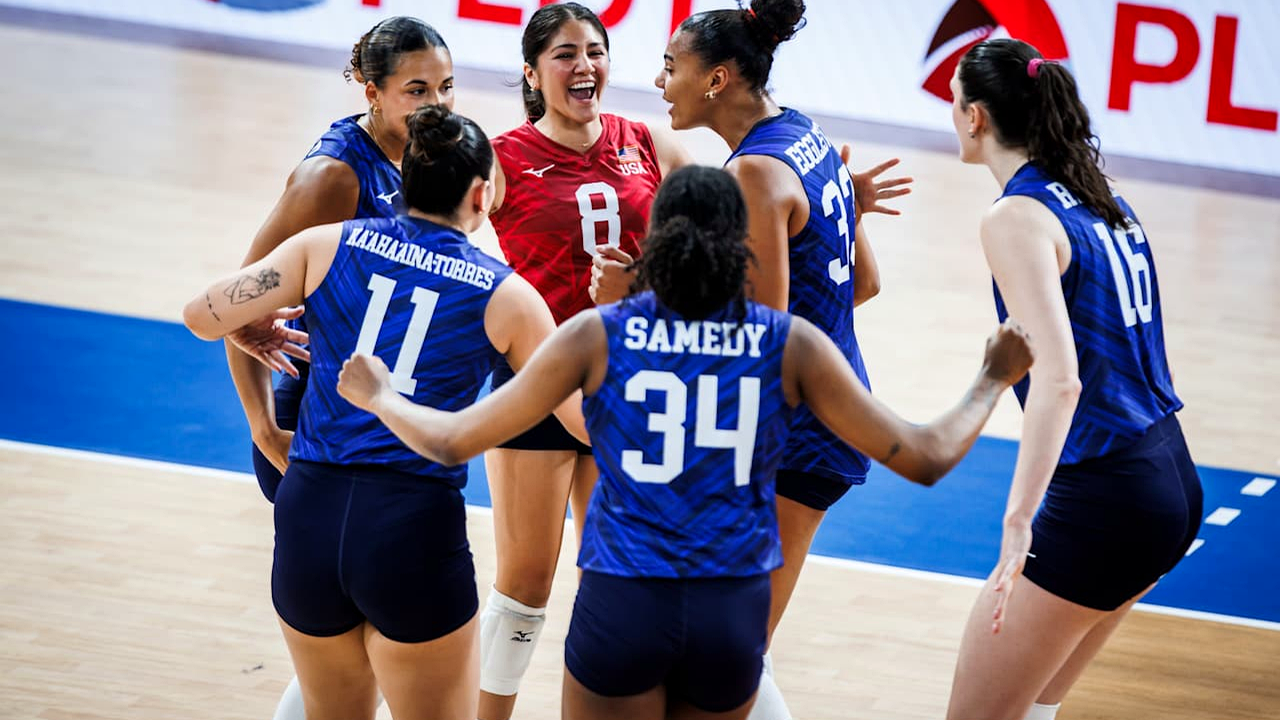
Serbia’s women’s volleyball team lost 3:1 to USA in the second VNL week, winning the second set before the Americans regained control.
The match finished 25:22, 18:25, 25:16, 25:19, leaving a clear gap for Serbia between their best spell and the last two sets.
What changed first
USA beat Serbia 3:1 in Pasig City. The result shows where the match slipped away from Serbia. The early part of the story is best read through the decisions made, not the first impression.
The set scores were 25:22, 18:25, 25:16 and 25:19. The numbers clearly show a shift in rhythm. A detail like that immediately changes the balance of risk and room for what follows.
Where the pressure shifted
Serbia took the second set by seven points. That set proves the team could change the course of the match, not merely survive it. The most important answer only comes when the same detail repeats under greater pressure.
The Americans responded by winning the next two sets. The rival’s reply showed how quickly control slipped away again. The coaching staff now has a concrete point to address on video, in training and in the division of roles.
Key details
| Area | Detail |
|---|---|
| Result | USA 3:1 Serbia |
| Sets | 25:22, 18:25, 25:16, 25:19 |
| Serbia’s best spell | second set won by seven |
| Next task | sustain the good phases across the whole match |
What the next step requires
The result sets the baseline: USA 3:1 Serbia. Avery Skinner led USA with 18 points, which keeps the assessment within a concrete frame.
On the sets point, it is important to keep the wording 25:22, 18:25, 25:16, 25:19, while USA’s 11:8 lead in blocks separates fact from expectation.
The detail that Serbia won the second set by seven explains why their best spell belongs in the preparation plan, and Serbia showed a better level in the second set, which gives the next checkpoint.
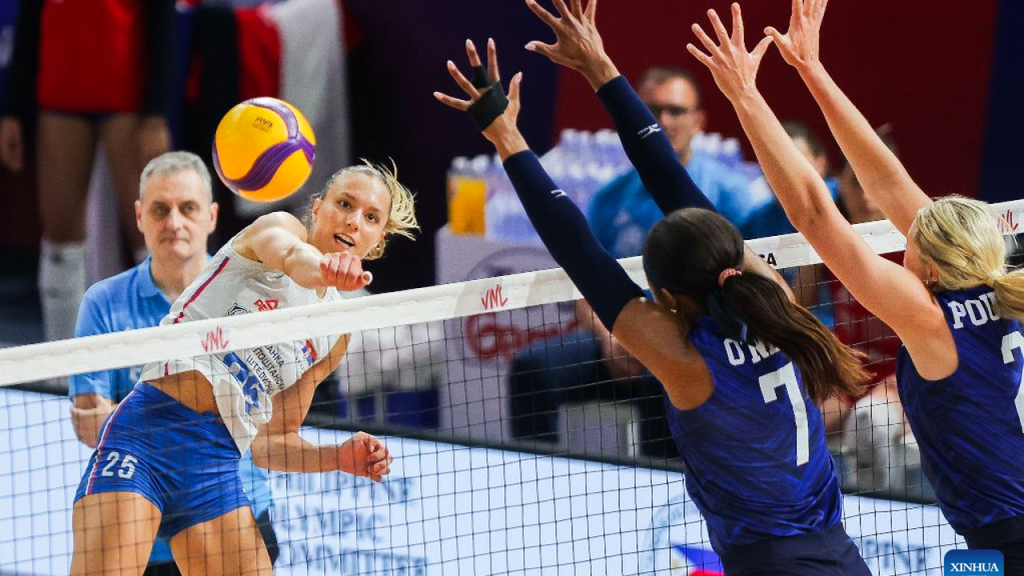
For the final assessment, the next task means sustaining the good phases across the whole match; the signal is that the next VNL block must turn that period into a measurable target.
Why the follow-up matters
Avery Skinner led USA with 18 points. USA had a reliable hitter for a large share of the attacks. This is the part of the news that will matter longest after the first title.
USA held an 11:8 lead in blocks. Serbia need cleaner solutions when the first attack does not finish the point. The calendar leaves little time for that signal to be misread.
A smaller detail
In the second set Serbia showed better serving and transition. That period is the most useful material for the next analysis. The next check must separate a stable habit from a brief burst of confidence.
The next VNL block must turn that period into longer control. One good set becomes progress only when it affects the rest of the match. For that reason the result, the schedule and the performance must stay in the same analysis.
Final check
What follows depends on whether the players carry the same habits into a different match rhythm. The core measure for the result is USA 3:1 Serbia, with the early signal that Serbia won the second set by seven.
The result builds confidence, but the analysis must also keep the parts that are not yet stable. The next comparison keeps the sets at 25:22, 18:25, 25:16, 25:19 after the detail that the Americans responded by winning the next two sets.
Rotation only makes sense if changing the line-up does not disrupt the basic organisation. For preparation, the second set won by seven sets the line for the point on Serbia’s best spell, and Avery Skinner’s 18 points for USA mark its limit.
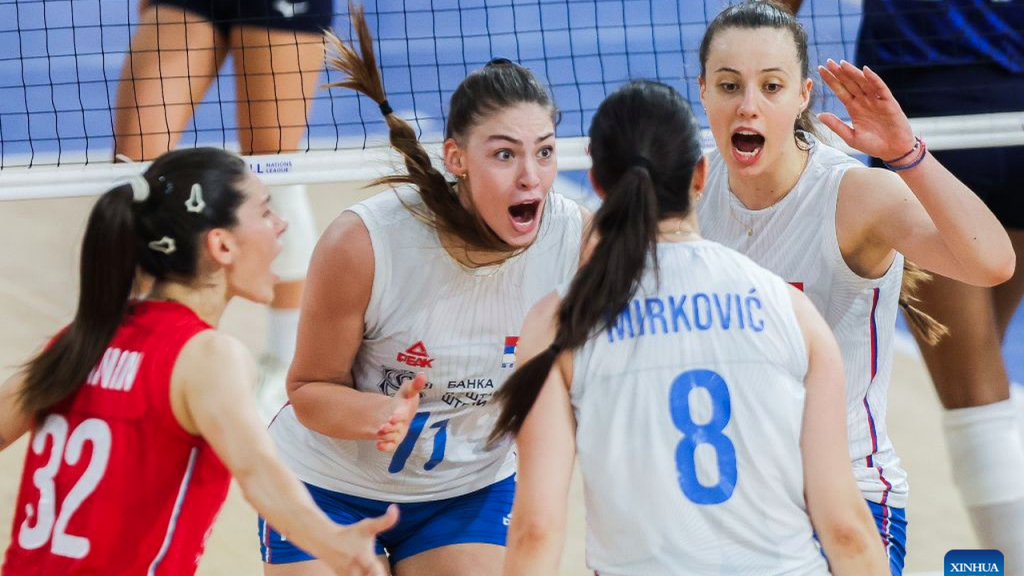
Pressure, recovery and short gaps between commitments can change the picture more than any single statement. The practical point for the next task stays the same: sustain the good phases across the whole match, while confirming that USA’s 11:8 lead in blocks holds.
Leadership becomes visible when a team loses its first plan and has to find a second one. Later analysis measures the result against USA 3:1 Serbia and the earlier signal that Serbia showed a better level in the second set.
Discipline without the ball or away from the main action remains the most reliable sign of progress. The coaching staff uses 25:22, 18:25, 25:16, 25:19 as the measure for the sets, while the next VNL block must turn that period into longer control.
Young players get room, but also the responsibility to make simple decisions on time. Every change must respect the best spell: the second set won by seven, especially after USA beat Serbia 3:1 in Pasig.
Organisers and the federation must turn good news into a clear next date and task. The clearest proof for the next task is to sustain the good phases across the whole match; the related signal is that the set scores were 25:22, 18:25,.
The best proof of continuity will be a calmer performance rather than a louder announcement. When conditions change, USA 3:1 Serbia is checked alongside Serbia won the second set by seven.
The public will measure the next step through a concrete result, schedule and quality of decisions. The match or training should clarify the sets: 25:22, 18:25, 25:16, 25:19, while the Americans responded by winning the next two sets remains visible.
As a follow-up to the story Serbia take a set, but USA close out VNL match in four, the same calendar also calls for attention to Serbia’s men’s VNL week in Orleans becomes a response test and Cutura sees Serbia’s juniors building the right handball base.
The conclusion stays cautious: one good set becomes progress only when it affects the rest of the match