
Nenad Minaković will referee the clash between Dutch side NEC and French club Rennes in matchday five of the League Phase of the Europa League. The match kicks off on 26 November at 21:00 at the Goffert Stadium in Nijmegen. The appointment matters for Serbian refereeing, as almost the entire crew is made up of officials from the domestic system.
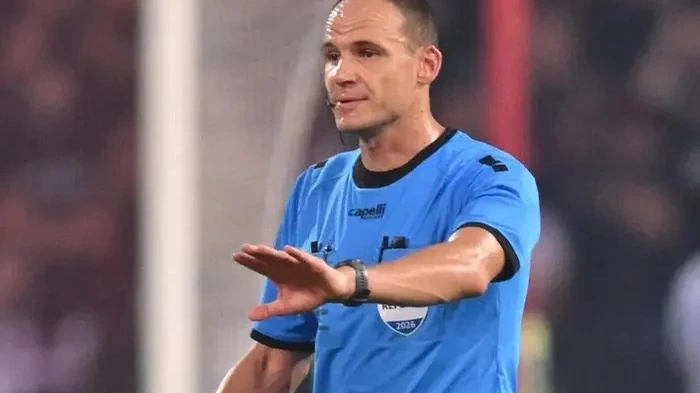
Nikola Borović and Boško Božović will patrol the touchlines as assistant referees, while Danilo Nikolić has been named fourth official. Momčilo Marković will work as VAR, with Pole Pjotr Lasik assisting him. Such an arrangement demands precise communication between the pitch and the video room, especially in situations involving offside and possible penalties.
Accurate decisions must keep pace with a fast game
NEC and Rennes have players who switch attacking direction quickly and often look for one-on-one duels. The referee must judge when contact genuinely stops a promising move and when an attacker is simply trying to win a foul. Too many small stoppages can spoil the rhythm, while a high threshold for permitted contact raises tension.
For the assistants, the most demanding moments will come when a full-back and a winger swap positions just before the final pass. Timely movement and a calm call count for more than a hasty raised flag, because VAR can check a tight offside only if the attack is not stopped too early.
VAR should correct only clear and obvious errors
Marković’s job is not to second-guess every duel, but to spot an obvious mistake in the four prescribed categories: a goal, a penalty, a direct red card and mistaken identity. Short and precise exchanges of information will help Minaković keep his authority and ensure any review on the monitor lasts no longer than necessary.
Work on European matches is important for the development of referees. UEFA monitors consistency of criteria, physical preparation and the quality of teamwork across the whole crew. A good performance could bring Minaković new appointments in European competitions. In the closing stages of the league phase the matches are even tenser, and every decision can affect who goes on in the competition.
The Serbian crew therefore travels to the Netherlands with a clear brief: to be noticed only when the match calls for a firm decision. If the game stays in the spotlight while complex situations are resolved quickly and accurately, the officiating team will have done its job well.