
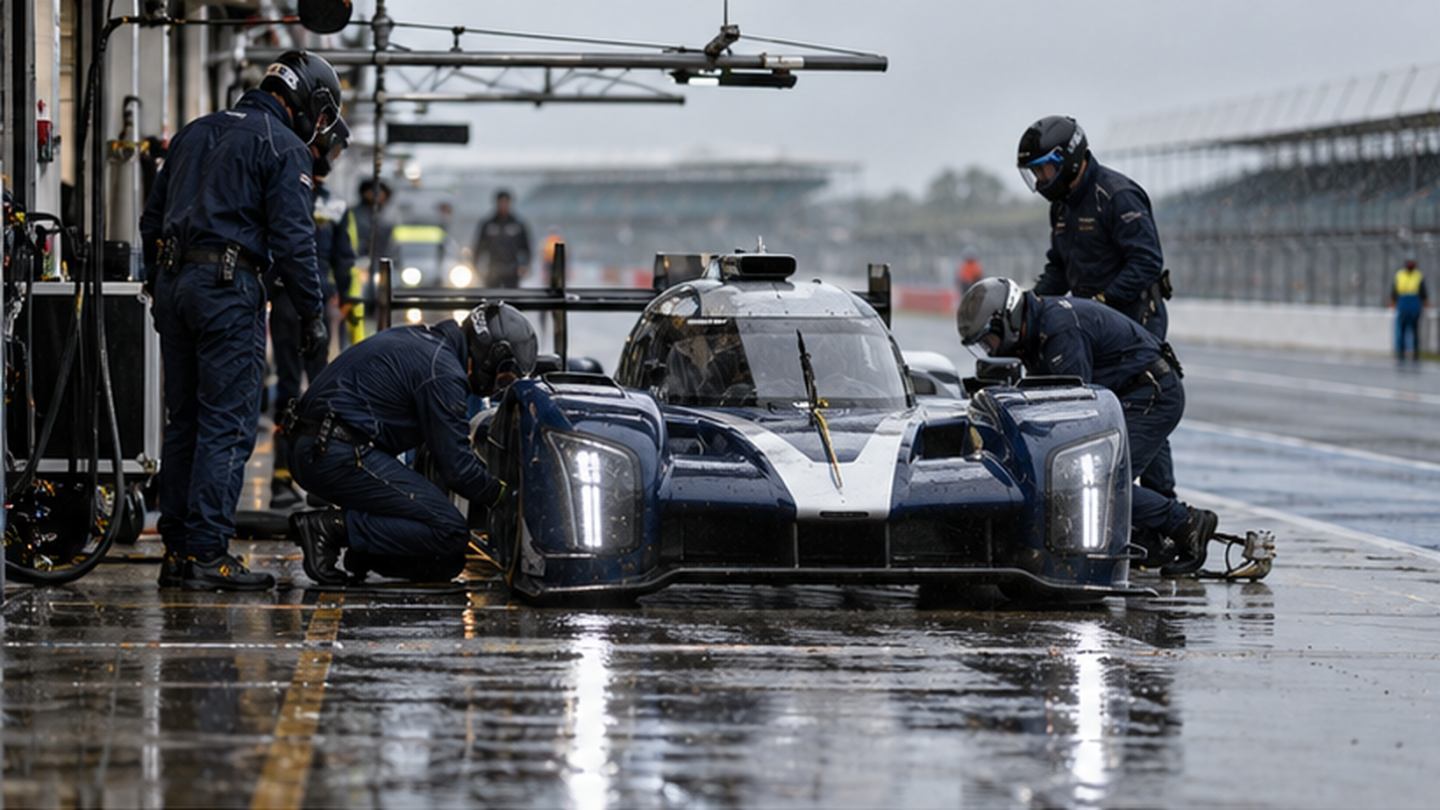
Ford has wrapped up a two-day test of its new LMDh hypercar at Silverstone, continuing preparations for its entry into the 2027 FIA World Endurance Championship. Nick Yelloly, Sébastien Buemi and Logan Sargeant shared the car on the first day, while Sargeant alone drove the final session. Changeable British weather allowed the team to work on dry, wet and gradually drying track surfaces. It was the first time the team had completed longer runs of laps, and it also showed the prototype with its integrated headlights.
Silverstone is the third major test stage after Paul Ricard and Portimão, but the first at a circuit that will be part of the WEC calendar in 2027. That raises the value of the data, as engineers can compare simulations with real bumps, corners and shifts in load. The aim was not to set a publicly comparable lap time, but to check reliability, hybrid systems, braking and tyre behaviour over longer running.
Changing weather sped up data collection
Rain usually complicates a new car’s programme, but for Ford it offered a rare chance to test a wider range of conditions in two days. A wet track reveals how predictable the torque distribution is, how the electronics respond to low grip and whether the driver can clearly feel the limit. The drying phase was also useful, as the racing line changes from lap to lap, so the system and setup have to work across a broad range.
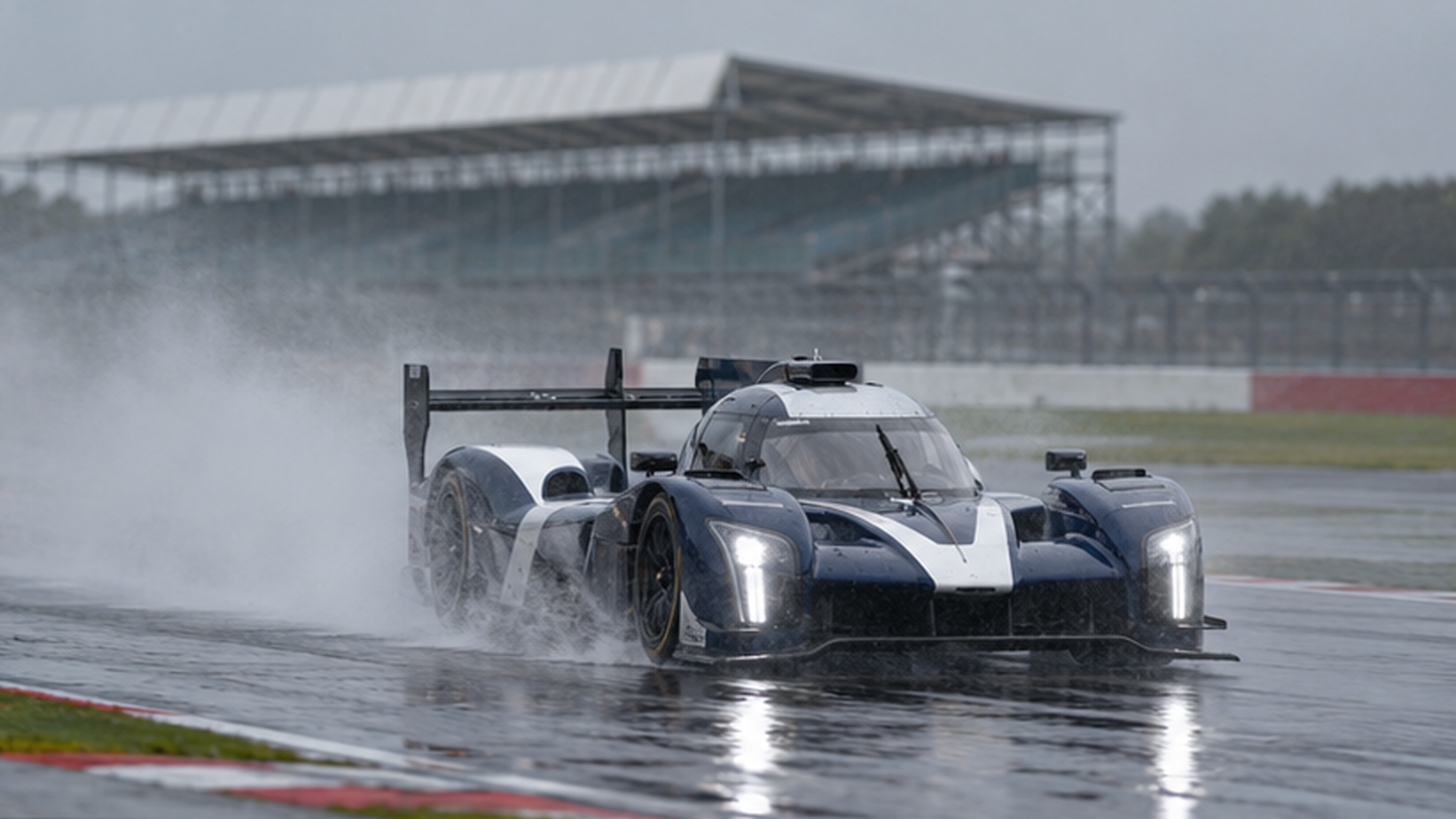
Longer runs are an important step towards six-, eight- and 24-hour races. A short test can confirm basic function, but it does not show how brake temperatures rise, how the balance shifts as fuel burns off or how tyres wear. Engineers now have more stable patterns and can spot a minor issue before it becomes a failure. Each reliable kilometre lowers the risk at the debut, although no test can fully replicate a race.
The car uses a 5.4-litre naturally aspirated V8 and a chassis built to LMDh rules, which allows Ford to compete in the WEC and other compatible series. The project has a strong historical link with Le Mans, but the modern category demands far more than engine power. Aerodynamic efficiency, the hybrid system and energy management must work as one. A distinctive sound can draw in spectators, but the result depends on reliability and average pace.
Drivers help turn a simulation into a real car
Yelloly, Buemi and Sargeant bring different experiences, so the team can compare their feedback and separate personal driving style from the car’s core characteristics. When all three report the same problem under braking or on a change of direction, the priority is clear. When opinions differ, engineers check the data and look for a setup that delivers predictability without limiting speed. That process builds a shared language before the race weekend.
The next test is planned at Monza, where long straights and heavy braking will raise different questions. After the European programme, Ford will continue work in North America. Variety of circuits matters because a homologated car has no unlimited freedom to change later. Before its debut, the team must understand how the car behaves in slow corners, over high kerbs and with low aerodynamic drag.
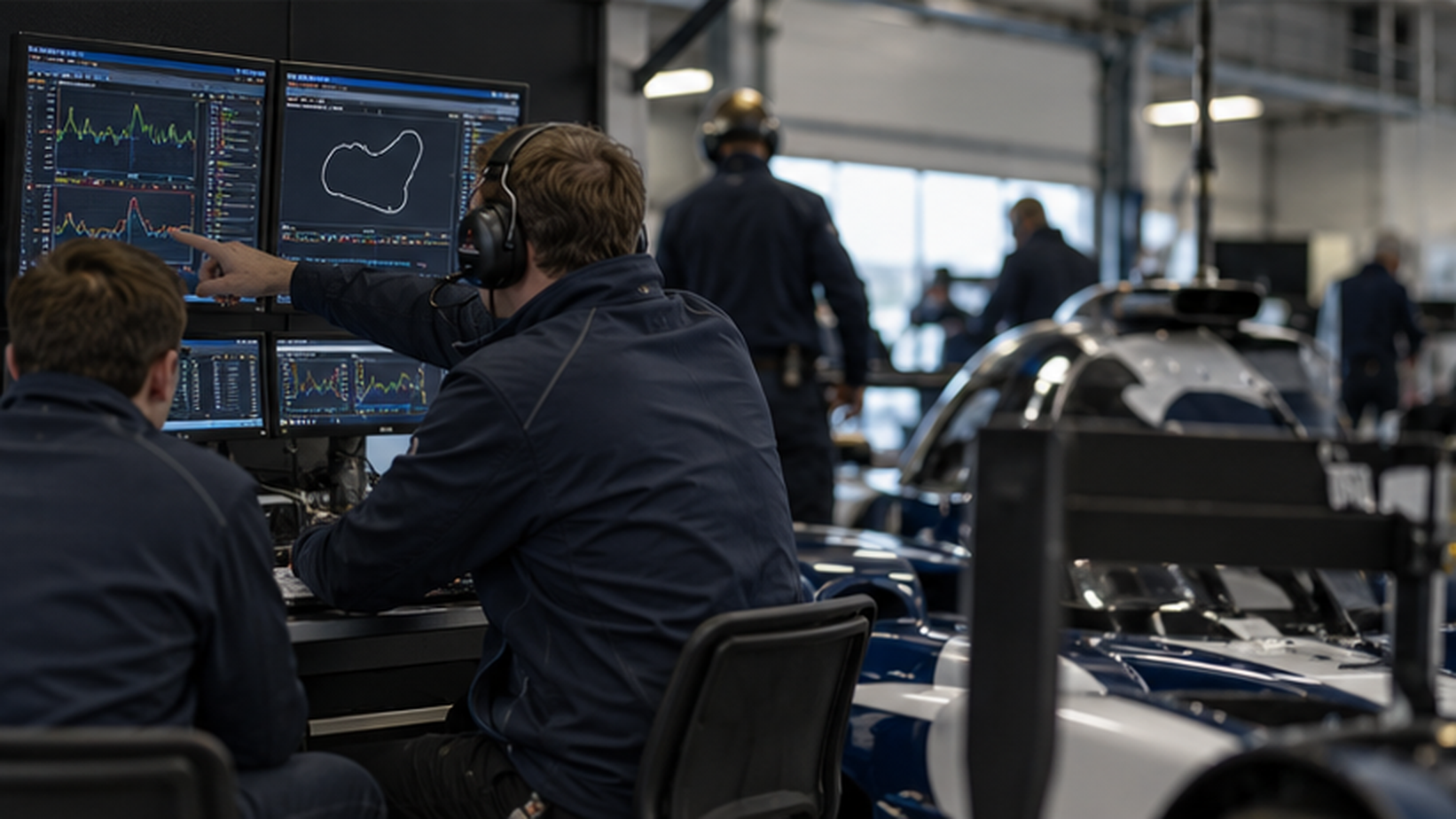
The two days at Silverstone passed without any major reported problem, which is a good sign, but the programme remains at an early stage. Ford still has to confirm its pace over a full stint, running in traffic and night conditions. The car’s lights symbolically mark the approach of endurance racing, but true maturity will be measured in kilometres without interruption. Each following test must increase the workload and bring the prototype closer to the demands of Le Mans. Engineers will now link telemetry with driver feedback and decide which changes must be finished before Monza. They will be especially interested in stability over a longer stint, system temperatures and how the car behaves as the fuel load falls. A test only has full value once every recorded problem has a cause, a priority and a solution that can be checked at the next circuit.