
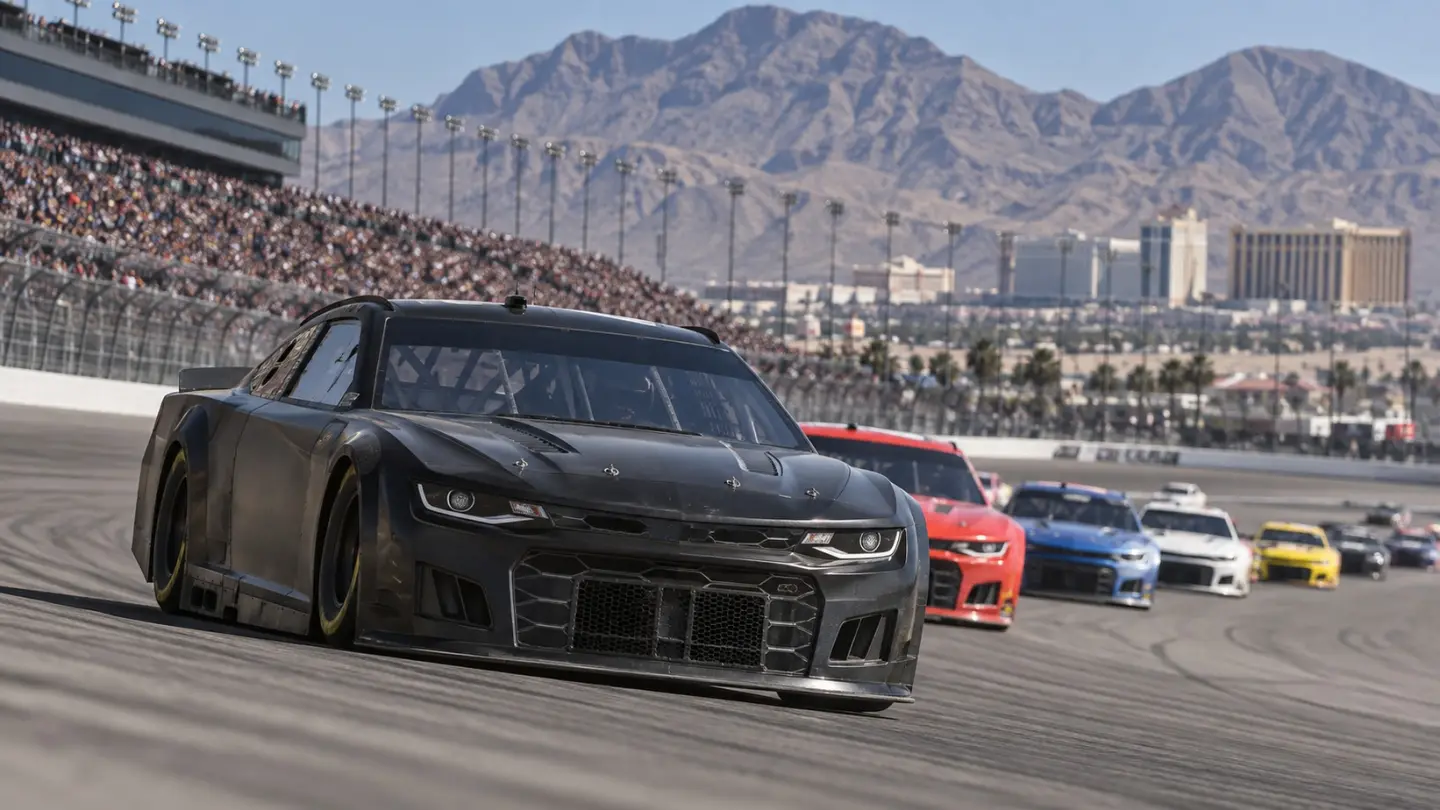
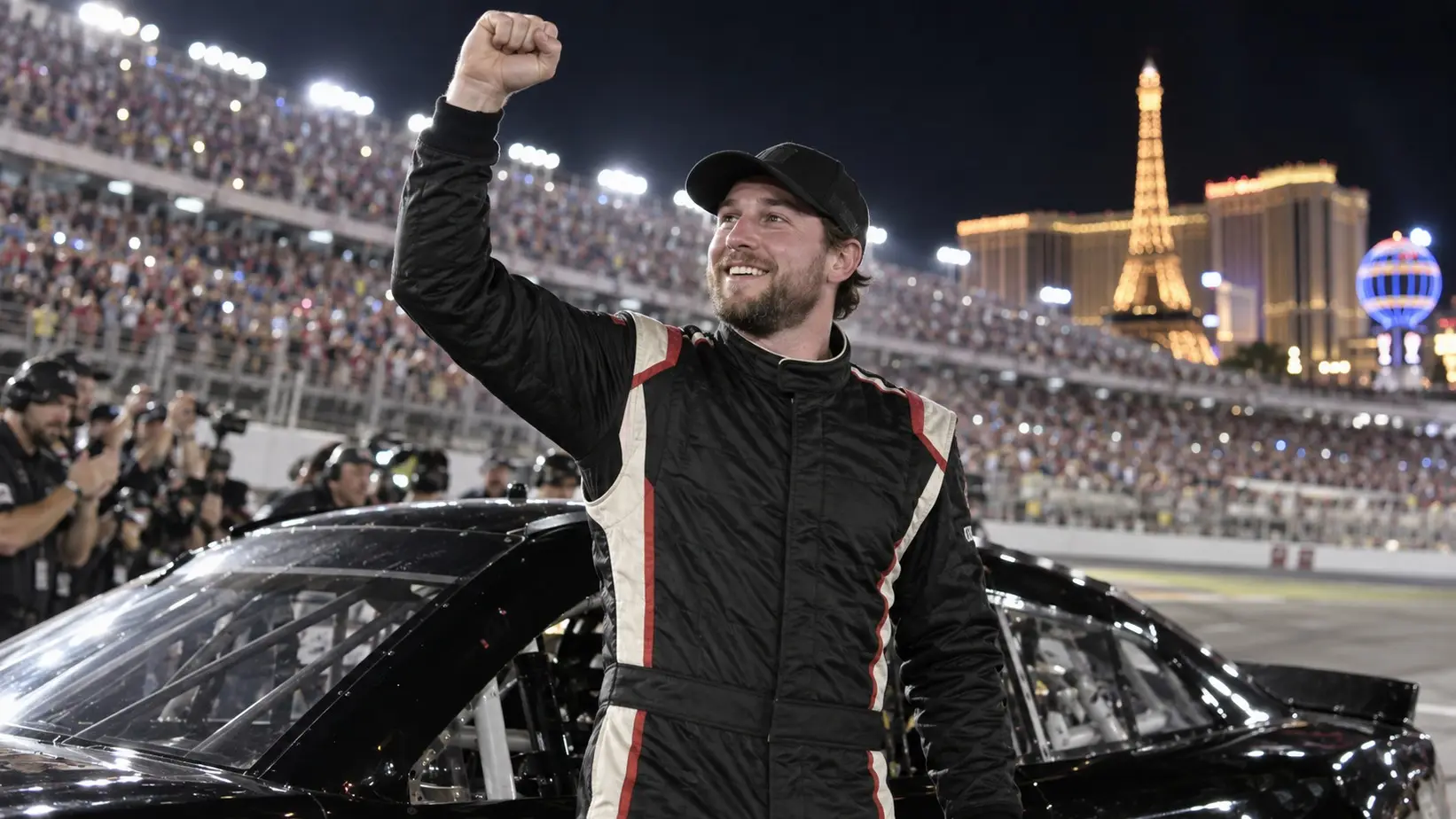
Chase Briscoe took the win in the NASCAR race South Point 400 at Las Vegas Motor Speedway, his second triumph of the season. He won both stages and led 175 of the race’s 267 laps. Kyle Larson finished second, 1.376 seconds back, while Tyler Reddick took third after a dramatic final lap.
Briscoe’s dominance was not confined to one tyre run or a short burst after a restart. The car kept its pace through longer green-flag periods, when grip falls away and the rear begins to slide more. Leading for 175 laps shows that the team found a good balance between speed at the start and preservation of the tyres.
Taking both stages brought valuable points and let Briscoe control his position on track. At Las Vegas, clean air in front makes the car easier to handle, while running behind rivals heats the tyres and reduces front grip. The crew therefore used precise pit stops to protect the advantage and stop a rival’s quicker short run from changing the order.
Two stage wins confirmed Briscoe’s control
Larson and Reddick fought hard over the final lap, with contact after which Larson touched the wall. That duel eased Briscoe’s closing metres somewhat, but it did not create his victory. The leader already had control and a comfortable gap, while the battle behind him only decided the order of the remaining podium places.
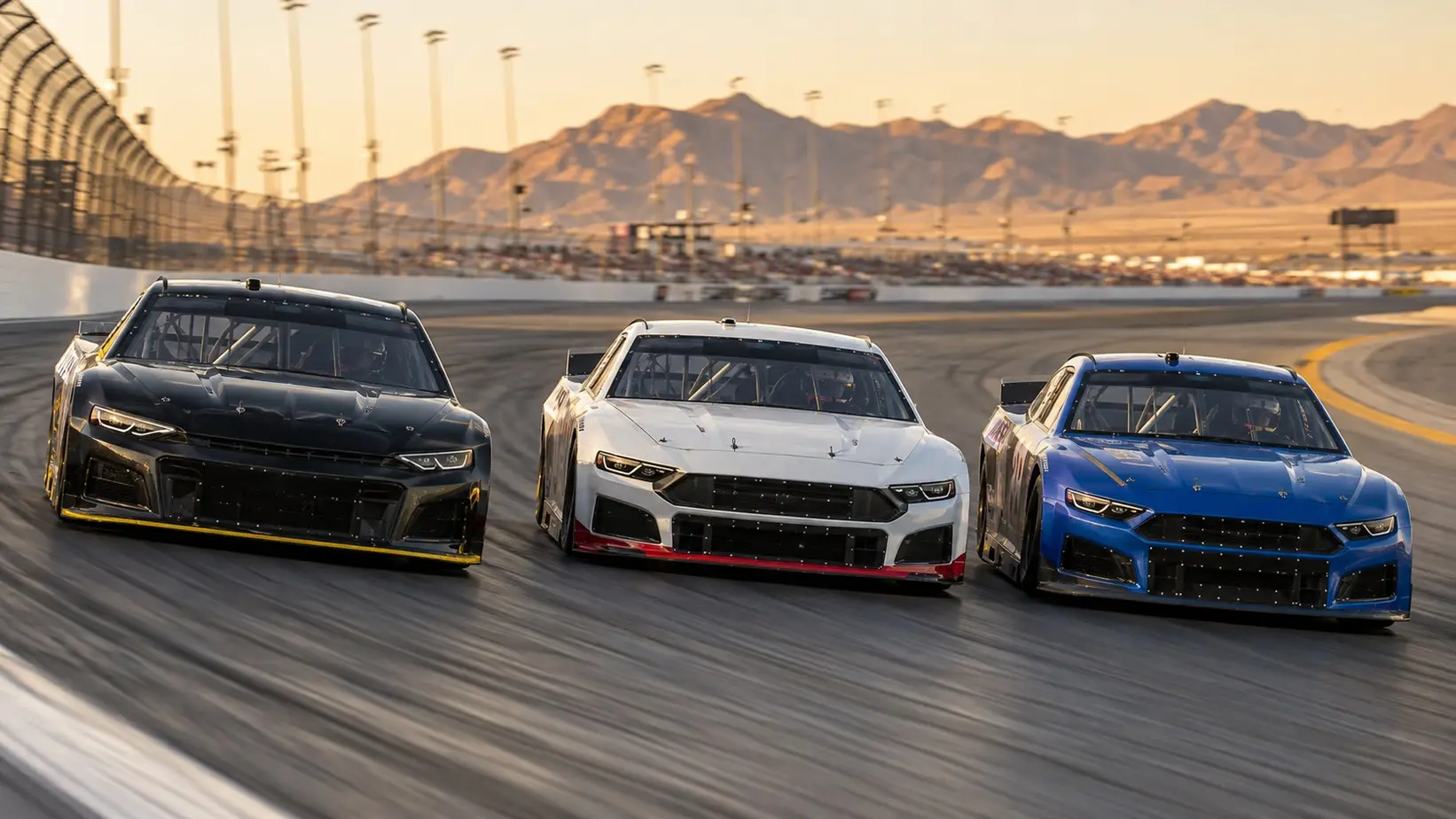
The second win of the season arrives in an important stretch of the playoffs, where a single weak result can undo several good weekends. Briscoe now gains points and confidence, along with useful data for similar tracks. The setup changes that worked in Las Vegas will not transfer completely, but the direction of the suspension and tyre pressure adjustments remains worth keeping.
Five races remain in the season, leaving little time for major experiments. Teams must refine details without losing their basic speed. Briscoe’s crew can use this weekend as a reference for pit work, communication and decisions during caution periods, since every part of the system worked well enough to keep the car out front.
Late Larson and Reddick duel opened a calmer route to the finish
For Larson, second place is a solid total, but analysis of the final lap will show whether the battle with Reddick carried too much risk. In the playoffs the gap between second and third matters, yet a damaged car or a retirement can cost far more. The line between a decisive attack and an unnecessary collision is becoming ever narrower.
Reddick confirmed his pace with third place, although the closing duel brought him no gains. His team needs to establish where the car was stronger on shorter runs and where it was better on longer ones. If they find a way to save tyres earlier in the race without losing position, they will be able to attack the lead before the final lap rather than from a harder outside line.
In Las Vegas Briscoe combined speed, strategy and precise execution, so the result did not depend on luck in the finish. Leading for almost two thirds of the laps is the strongest evidence of that. The next challenge is for the team to carry the same quality of decisions over to a different configuration, because the title goes to the driver who can turn a dominant weekend into a consistent run.
For a full assessment, it is worth tracking Briscoe’s pace on older tyres, his average pit stop time and the number of positions he kept after restarts. That data will show whether the result came from a pattern that can be repeated or from a few exceptional moments. The final score describes the outcome, but it does not reveal how stable the plan was when the balance of power shifted and when the opposition tried a different solution.
The immediate technical task is for the team to adapt the Las Vegas setup to the next track without losing basic speed. Success will depend on keeping the strongest part of the current performance and fixing the weakness we saw without making too big a change. That approach creates a clear link between this result and the next challenge, rather than treating each outing as a separate story with no measurable follow-up.