
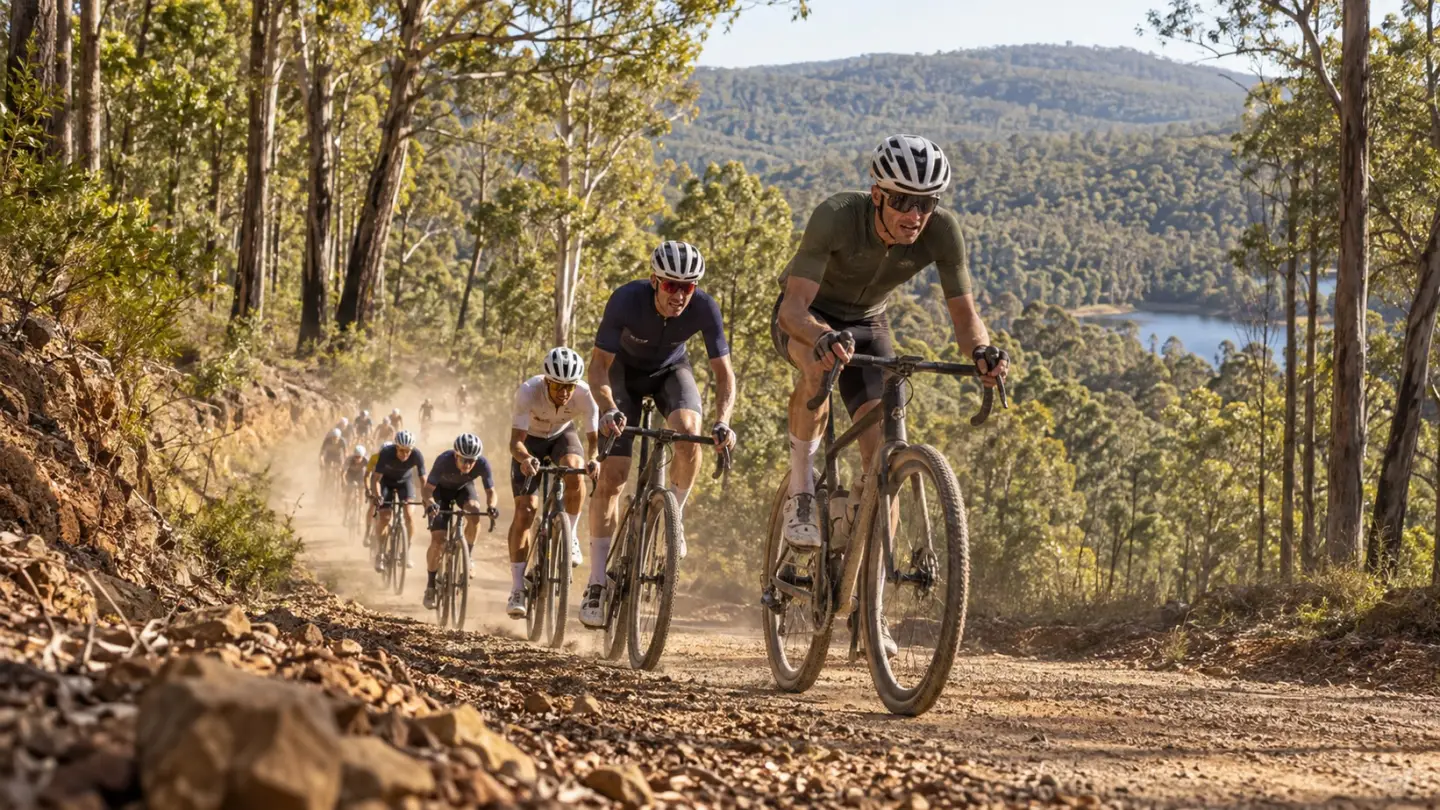
The Gravel Cycling World Championships take place on 10 and 11 October around Nanap in Western Australia. The course reuses several recognisable stretches of the SEVEN race, including the Brokman, Ellis Creek and Arkadija climbs, while the closing sector has a new layout. The men’s elite race is the longer version, and the mix of loose gravel, short climbs and changing surfaces calls for a different plan from a conventional road race.
The gravel title is not only a test of raw power. Riders have to pick a line through loose material, protect their tyres from side impacts and keep an eye on every attack. A small mistake on a technical section can cost more than ten extra watts on the flats, because chasing back into the group burns energy just before the next climb.
Riders who have raced the SEVEN event will know Brokman and Ellis Creek well. That gives local competitors information about the surface, but the world championships bring a bigger field and a more aggressive position going into each section. A line that is fast on an empty track can become blocked in a crowded bunch, so positioning before a climb matters as much as the pace itself.
Familiar climbs remain the core of the Australian route
The Arkadija climb on the longer men’s course may serve as a selection point, but the new finish stops teams from simply copying earlier plans. The organisers have kept the main features of the terrain and changed the section where the final attack is judged. Riders therefore need to turn their course reconnaissance into concrete notes on wind, road width and passing opportunities.
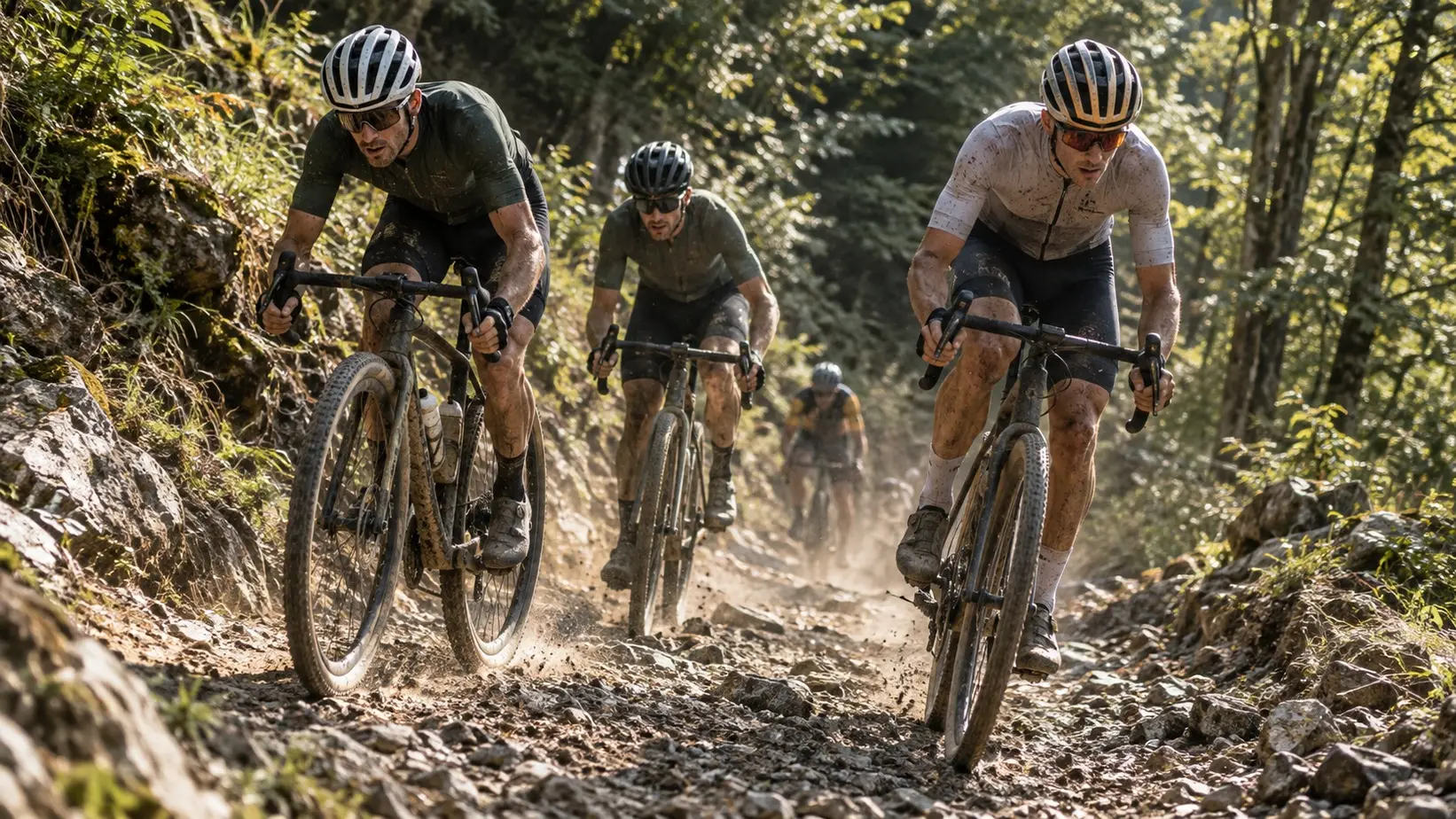
Tyre choice will be one of the biggest compromises. A wider tyre at lower pressure gives control and less risk of slipping, but it can add rolling resistance on the faster sections. Higher pressure saves energy on smooth ground but punishes the rider who hits a rock or loses grip in a corner. Teams will have to base that decision on the condition of the track just before the start.
Team support exists, but it is less predictable than on asphalt. A puncture can drop a leader out of the zone where a teammate could quickly bring them back, and the narrow track limits any organised chase. Favourites should therefore carry basic repair kit and know how much time a safe fix will cost, rather than risk more damage by riding on.
The new finish changes the moment for the decisive attack
The first useful sign will be how many riders stay in the leading group after each known climb. If the group does not shrink, the decision moves to the new finish and the value of a short burst rises. If the selection happens early, the leaders will have to judge whether to co-operate, because constant attacks may only allow a larger group to come back.
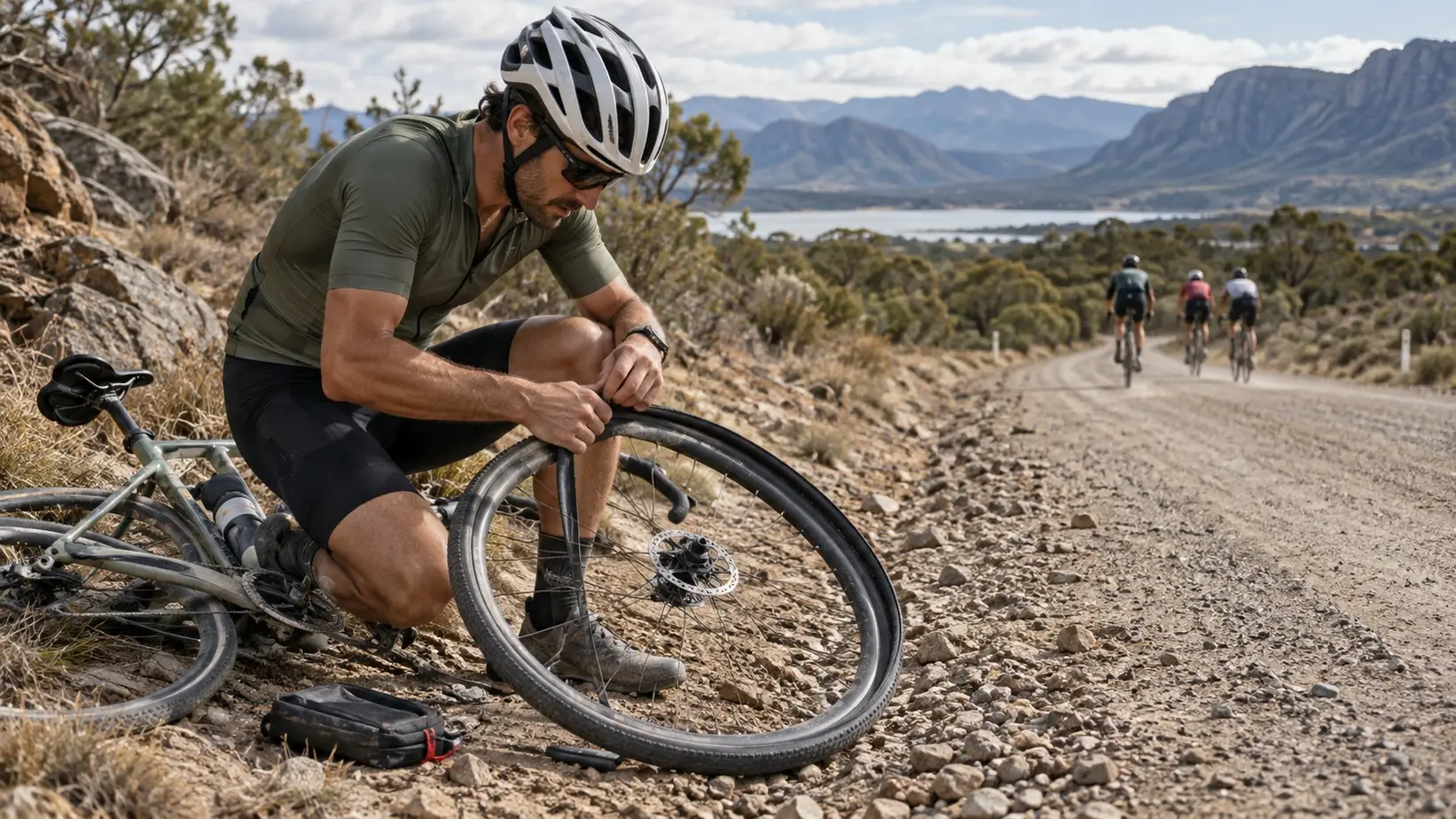
The second sign is the balance between mechanical problems and pure physical selection. Many punctures would mean that equipment and line choice decide more than expected. In that case a cautious passage through the roughest sections may bring a better result than gaining a few seconds. The world title is won on total time, not on the fastest single pass over the stones.
The route around Nanap rewards the complete gravel rider: strong on the climbs, precise on the surface and calm when something goes wrong. The known sections make preparation possible, but the new finish introduces enough uncertainty that previous results will not guarantee anything. The best plan will be the one that saves tyres and energy until the point where an attack can no longer easily be closed down.
The weather forecast before the start will shape tactics further. Rain would make the roots and stones more slippery, while a dry track kicks up dust and cuts visibility for riders behind the leaders. Being in the top ten then becomes a safety advantage but costs extra energy, so a favourite has to decide where to pay the price for a good place in the group.
Technical assistance points and the rules on receiving equipment should be studied before the start. A rider who knows in advance where a wheel or bottle can be handed over makes a calmer decision when trouble strikes. Improvising on a remote sector often costs more time than the mechanical problem itself.