
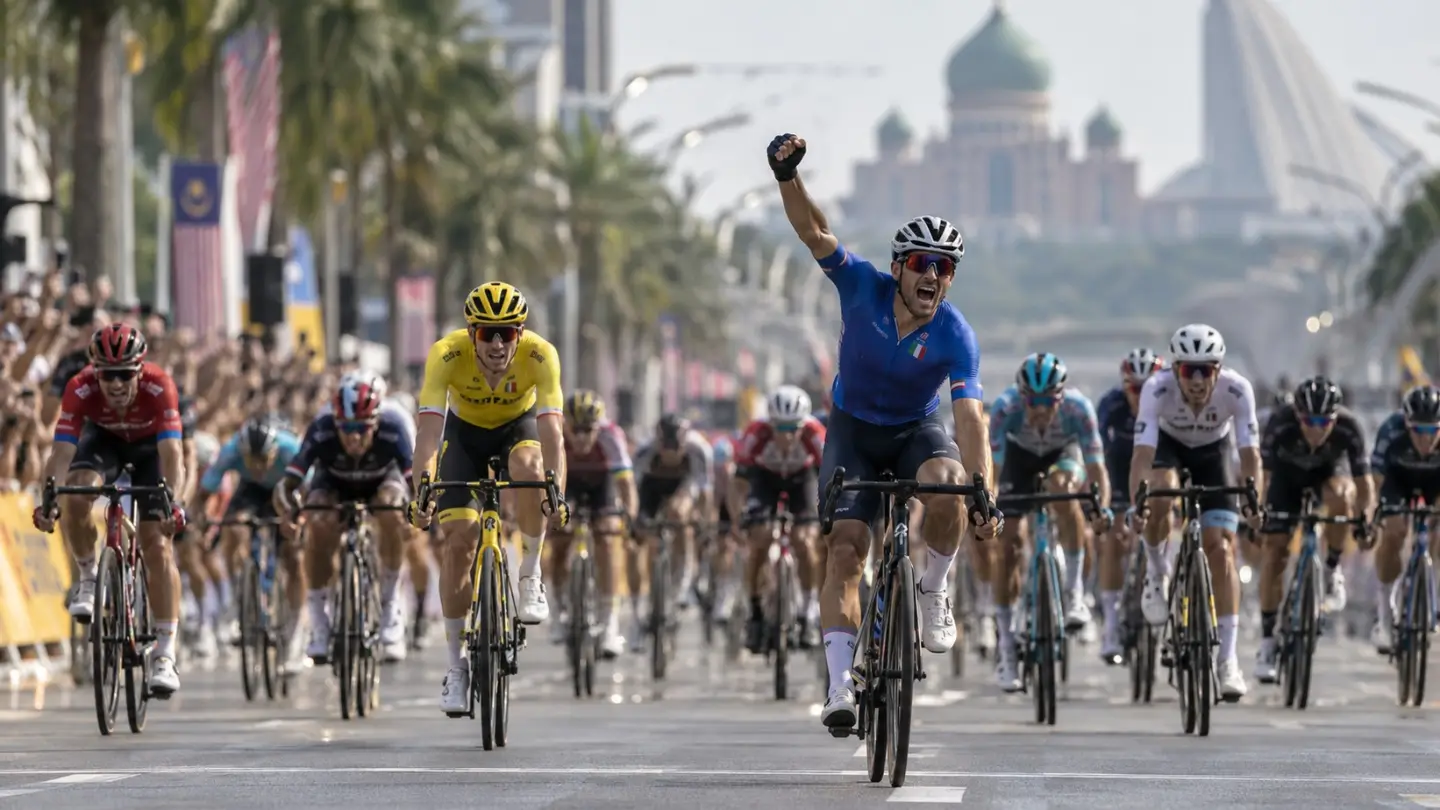
Lennart Jaš claimed the overall classification of the Tour de Langkawi after holding on to the race lead on the final stage from Muar to Putrajaya. The German rider took the top spot after the second stage and kept it through varied terrain, shifting time gaps and attempts from his rivals. The last day belonged to the sprinters: Mateo Malucelli was quickest over 188.3 kilometres, earning his third stage win of this year’s race.
Jaš’s overall victory had been built well before the finale, yet the last stage was no formality. A crash, a crosswind or a mechanical problem could have undone seven days of work, so his team had to keep him near the front of the main bunch without getting drawn into the dangerous fight between the sprint trains. That position costs energy, but it lowers the risk of the peloton splitting. Getting safely through the final kilometres was the last tactical task on the road to the trophy.
A lead held from the second stage became an overall win
Holding the lead from the second stage shows that Jaš did not win with a single late attack. He had to respond to a range of threats and spend his strength each day according to his closest rivals. In a stage race the yellow jersey changes how the whole team behaves: teammates control breakaways, fetch water and close gaps, while the leader avoids unnecessary reactions. The consistency of that system let his advantage survive all the way to Putrajaya.
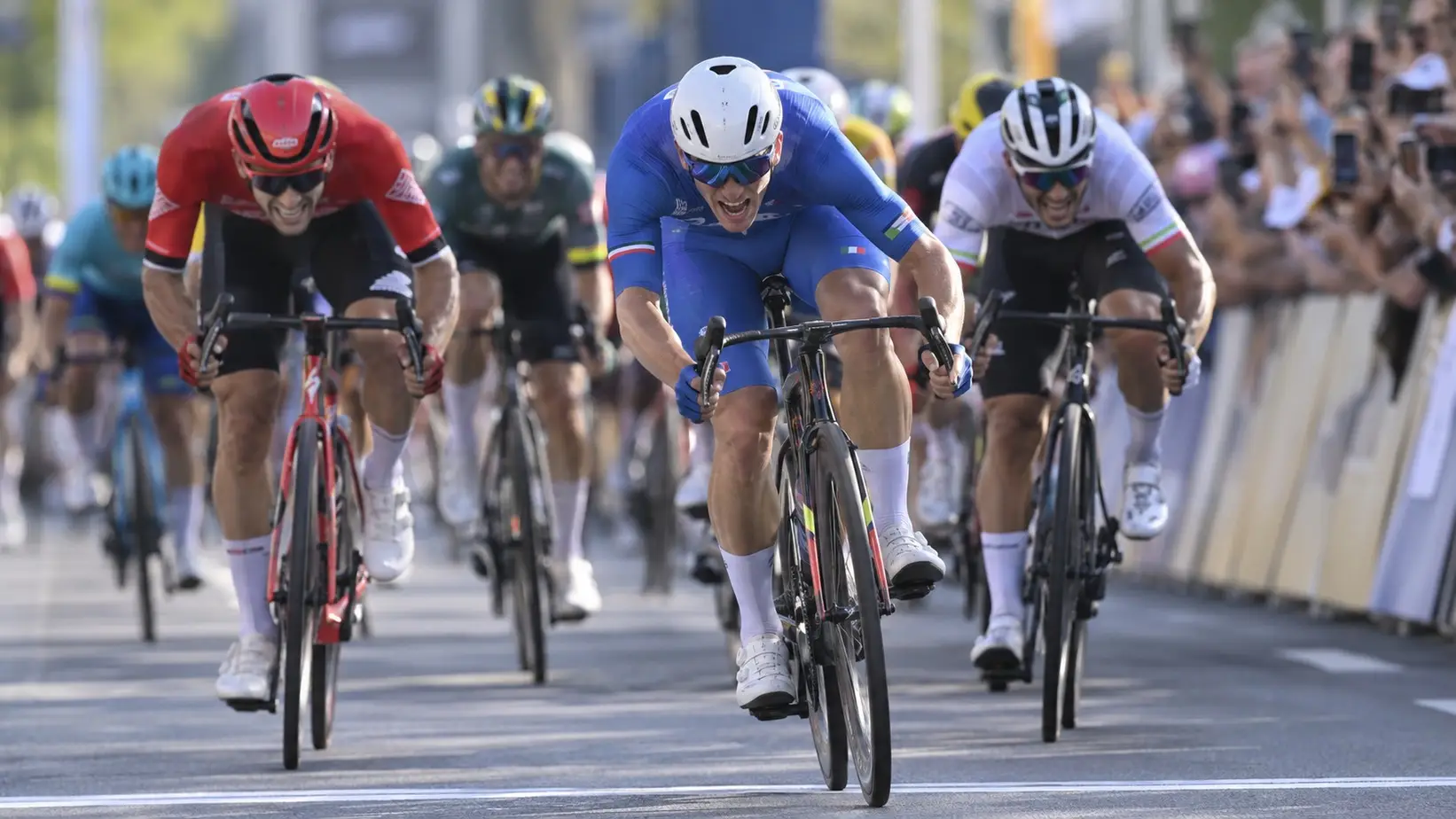
In the closing kilometres Malucelli relied on his team’s work and timed his acceleration after more than four hours in the saddle. A third win in the same edition confirms that his speed did not depend on one perfect lead-out. A sprinter has to find a wheel, hold position through the corners and launch far enough out to avoid being caught exposed. His ninth stage win on the Langkawi also underlines how well the conditions and style of this race suit him.
Malucelli’s third sprint rounded off a successful final day
For Jaš the title is a step towards becoming a general classification rider in tougher races. The next level will bring longer climbs, stronger opposition and less room to defend a small advantage. The team can now analyse his power on the key stages, his recovery between days and how he handles the pressure of the leader’s jersey. The result will be most valuable for development if it shows which qualities can be carried forward and where he needs more support.
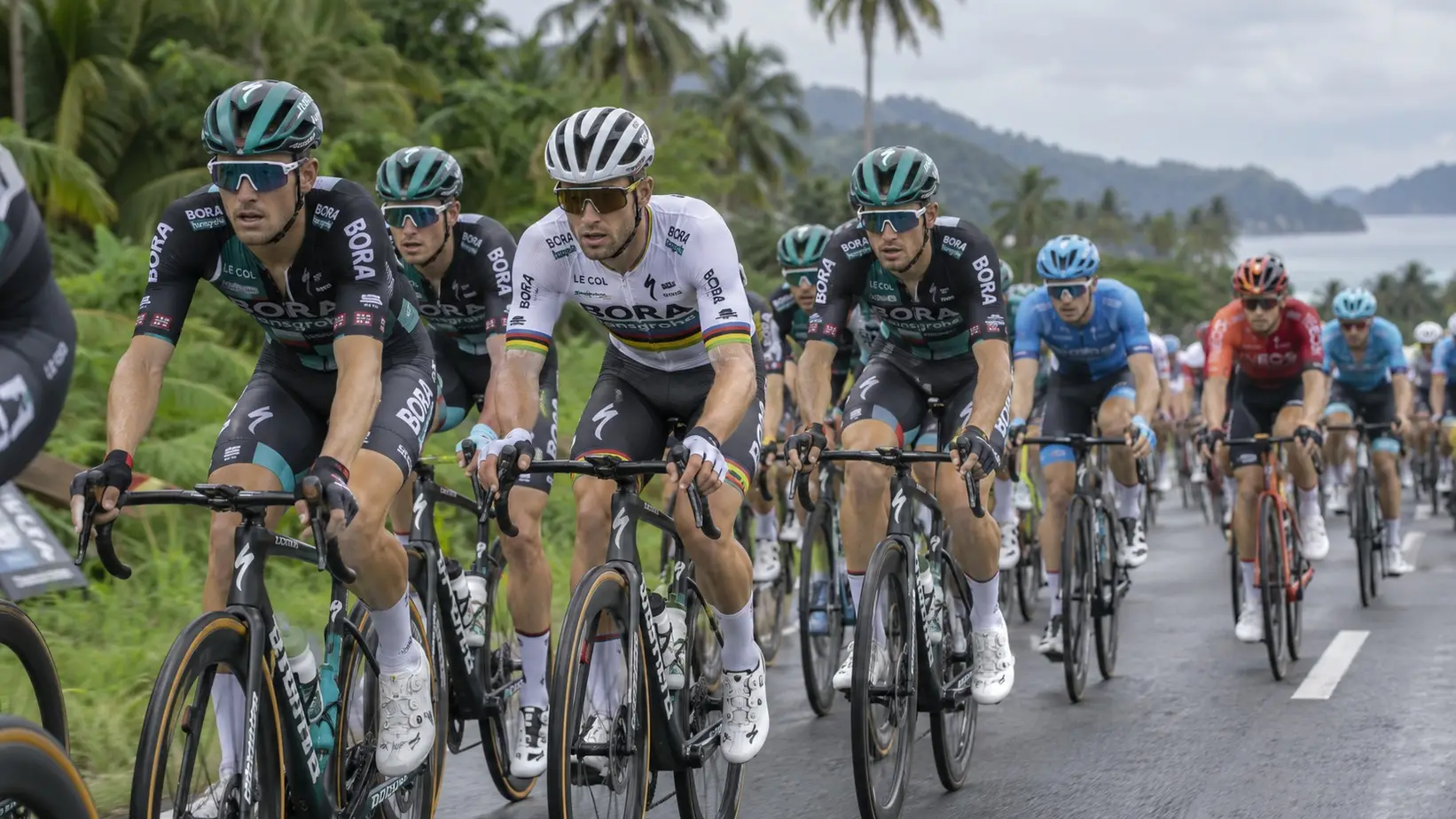
Because of the heat, humidity and travel, the Tour de Langkawi tests recovery just as much as raw power. Riders must take in enough fluid and carbohydrates and show up every morning ready for another effort. Jaš kept that routine going for eight days. Malucelli kept his explosiveness for three finishes. Their successes take different forms, but both rest on the steady work the public does not see between one finish line and the next start.
The overall winner and the best sprinter of the final day therefore share the main story of the finale. Jaš showed he can control a race from the early stages to the last kilometre, while Malucelli once again turned a good position into speed. One result rewards eight days of stability, the other precision in a few closing seconds. Putrajaya confirmed both qualities and delivered a finish with no change in order that could overshadow their earlier work.
After the race, the teams will compare power data, body temperature and fluid loss with how the riders actually felt. This helps Jaš plan more precisely how to defend a lead, and helps Malucelli preserve his explosiveness after long stages. The numbers do not replace on-the-road decisions, but they show where energy was spent without gain and how the next multi-day event can be ridden more economically.
Overall classification and stage wins demand different teams, yet the Langkawi has shown that both goals can coexist within the same squad when the roles are clear. Helpers must know in advance when to shield the leader and when to build a sprint train. Conflicting tasks waste energy; a good division of labour ensures Jaš and Malucelli get support at the exact moment that decides their result.