
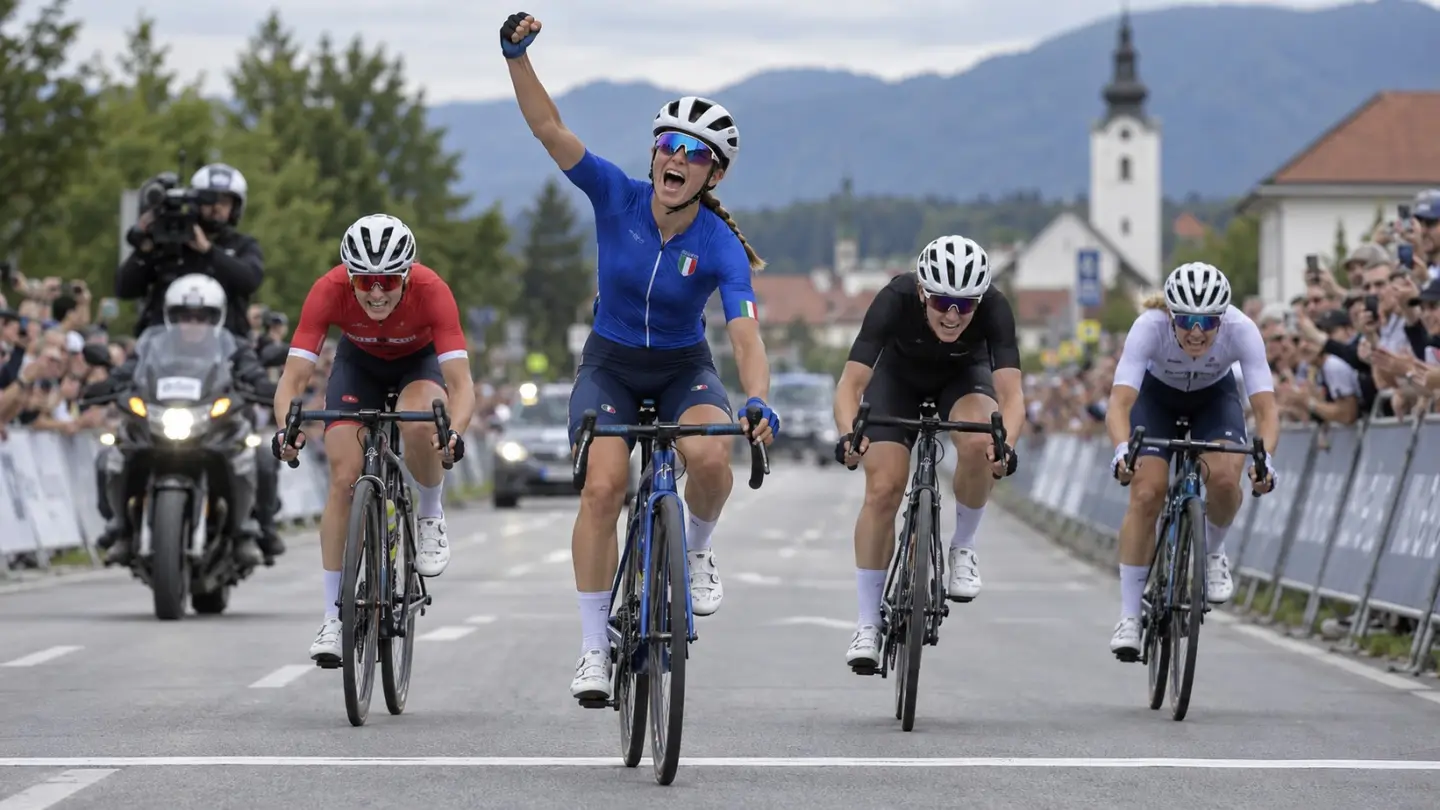
Italy’s Azura Balan won the junior road race at the European Championships in Slovenia, outsprinting a group of four to the line. Morgan Lestrad of France finished second, with Germany’s Klara Dvoracek third. The race around Šenčur was run over three laps of 22 kilometres, with the steep climb at Možjanca setting the selection from the outset.
The leading group came together during the second lap, when long sections with double-digit gradients shed the less prepared riders. Alongside Balan, Lestrad and Dvoracek, Leni Burger also remained at the front. Germany thus had two riders in the four, which gave them a tactical advantage but also the task of deciding who would attack and who would save themselves for the sprint.
In the closing stages Burger tried to set up Dvoracek, but Balan did not open her sprint too early. The Italian stayed sheltered in the slipstream, waited for the speed to rise, and then came out into clear road. Her advantage at the finish was clear, even though the group arrived together. Timing her move mattered more than launching the longest possible attack.
The Možjanca climb split the race
A 66-kilometre junior race demands careful management of energy. Možjanca offered an opportunity to attack, but too much effort on the first lap could have ruined the finale. Balan got over the hardest section without losing contact, then refused to waste strength on unnecessary accelerations. In doing so she saved exactly what she would need over the final few hundred metres.
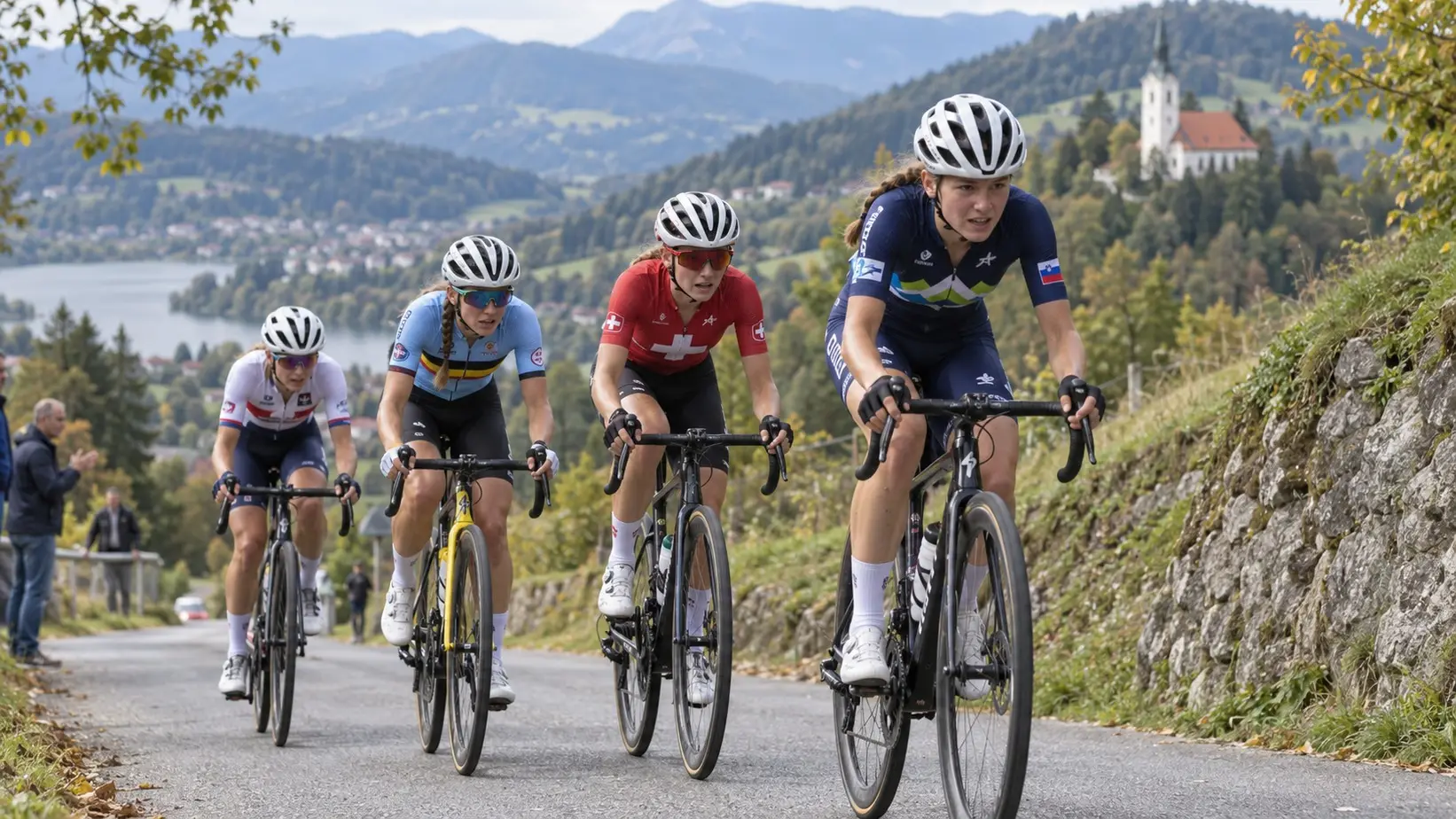
The presence of two Germans in the leading group complicated the decisions of the others. If one attacked, rivals had to respond while the other could stay in the slipstream. Balan and Lestrad did not allow such a move to make a major difference. They kept the gap under control and forced the German pair into the final sprint without a decisive break.
For junior riders, a European medal is about more than the result of one week. It influences the interest of development teams, the programme for the following season and the chance to race in stronger international events. Balan showed she can survive a steep climb and finish from a small group, a more valuable profile than a pure flat-road sprinter.
The Italian distributed her strength best in the four-rider sprint
The Italian coaching staff now has to protect her development without raising the load too early. Moving from junior to senior competition brings longer distances, more climbing and more experienced rivals. Group riding technique and recovery become as important as maximum power. The title builds confidence, but it does not change the need for gradual progress.
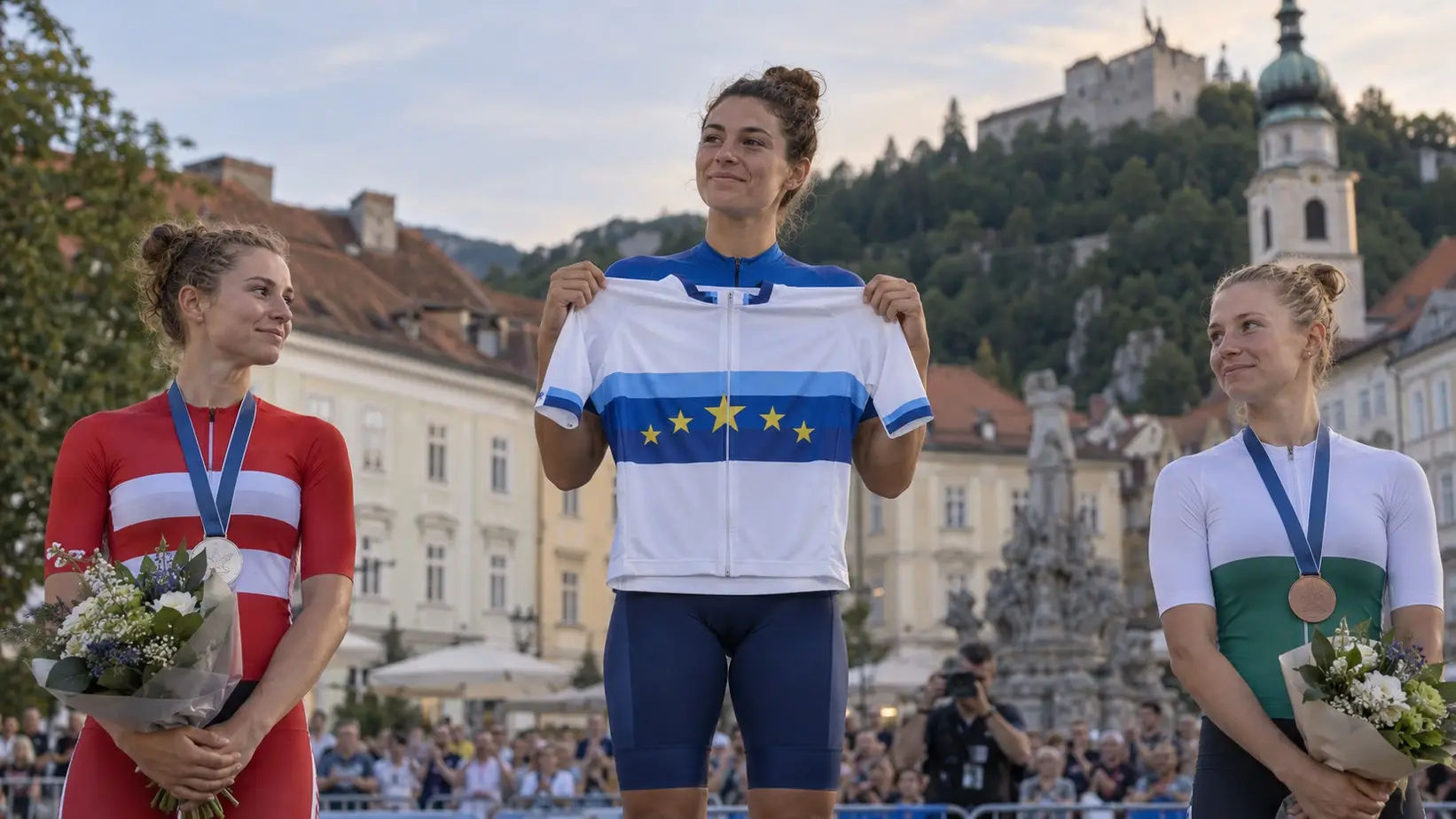
Šenčur showed that Balan has two important qualities: composure in a tactically complex section and explosiveness once a winning gap opens. Lestrad and Dvoracek also leave with a strong result, while the German team will analyse why their numerical advantage did not turn into gold. A single finale offered a lesson for the whole generation on how medals are won after a hard climb.
Post-race analysis should separate speed from circumstance. Starting position, traffic, wind, surface and the moment a pace change happens can all inflate or hide the real quality of a performance. The team will therefore compare sections and decisions, not just the final placing. That approach shows where the result was genuinely earned and what can be repeated in different conditions.
Recovery of equipment and athlete begins at once. Mechanics check load marks, while the coaching staff monitors fatigue, hydration and minor aches that are not fully felt during competition. The next start is not earned through extra training at any cost. It is more useful to remove one technical weakness and arrive at the line with reliable equipment and a clear plan.
Rivals will now use this result as a new reference. Opponents may change the tempo, attack earlier or try to close off the winner’s strongest line. For that reason a successful plan must not stay fixed. Its value lies in the principles of energy distribution, risk assessment and precise communication, while the concrete move is adapted to the next course or route.