Serbia name swimming team for European Championships in Paris

- Author: SerbianSport
- SerbianSport
Serbia has named its swimming team for the European Championships in Paris. The competition runs from 10 to 16 August. Velimir Stjepanovic and Andrej Barna bring the strongest senior experience.
The men's 4x100 freestyle relay returns after winning European gold in Belgrade. Stjepanovic and Barna join Nikola Acin and Justin Cvetkov. That event gives Serbia an established team entry in Paris.
The squad also includes swimmers across freestyle, butterfly and breaststroke events. Martina Bukvic represents Serbia in the women's 100 breaststroke. Several younger swimmers will make important senior appearances.
Stjepanovic brings a decorated European record
Stjepanovic enters another European event as Serbia's most decorated active swimmer. He has won three continental titles and one silver medal. That record covers several stages of a long international career.
In Paris, Stjepanovic is entered in the 100 freestyle. The event rewards speed from the start and control through the return length. Small details around the turn often separate the leading swimmers.
His experience also matters around the wider Serbian squad. He understands call-room routines and the rhythm of championship heats. Younger teammates see that preparation throughout the championship week.
Stjepanovic also remains part of the 4x100 freestyle relay. His role connects individual speed with a proven team combination. The relay enters Paris with a recent European title behind it.
Barna arrives with leading sprint speed
Barna holds Serbia's national record in the 50 freestyle. His best performance this season ranks second among European swimmers. That position places him among the important sprint names in Paris.
The 50 freestyle allows almost no time to repair a weak start. Reaction, underwater speed and clean surface movement decide the race quickly. Barna's recent times show strong form in that exact event.
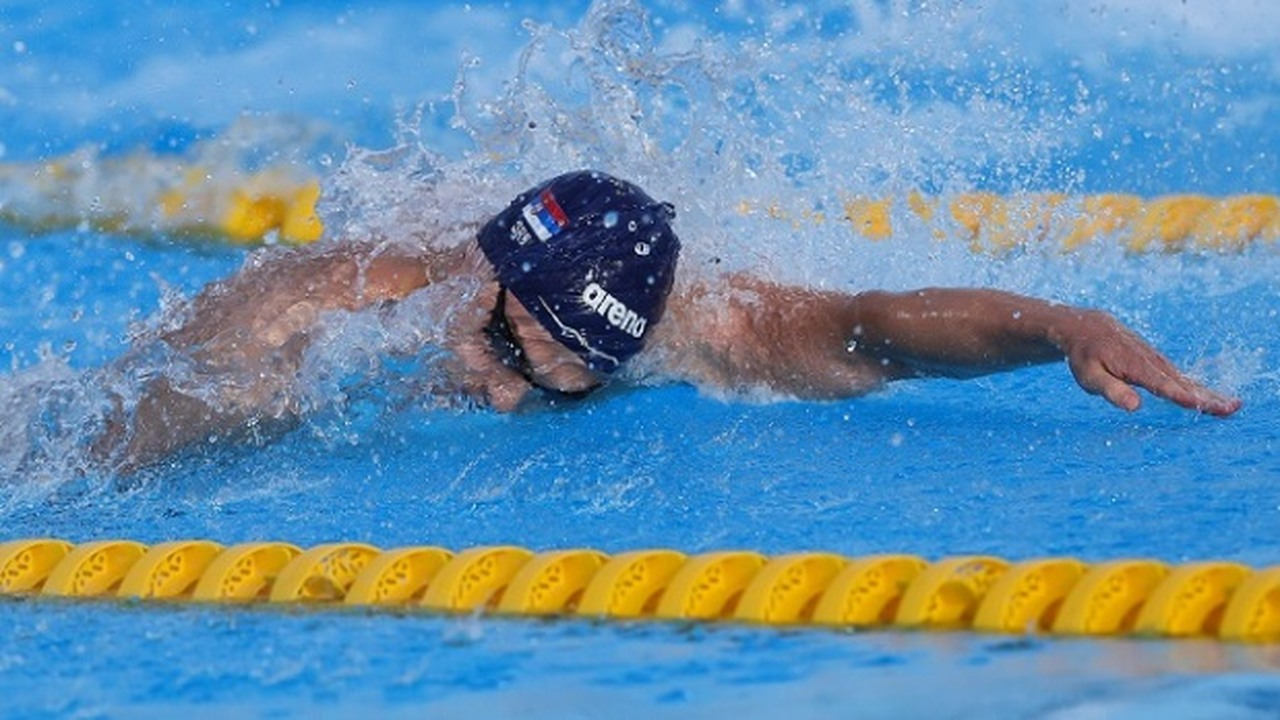
A Serbian swimmer races butterfly in an indoor competition pool.
He also contributes to the men's relay group. A relay leg adds an exchange and a different starting procedure. Barna already knows those demands from Serbia's major competitions.
The sprint programme gives him limited recovery between some sessions. Heats, semi-finals and finals often follow within a short period. Championship experience helps manage that repeated high-intensity work.
The relay returns after gold in Belgrade
Serbia won the men's 4x100 freestyle title at the previous European Championships. That victory came in Belgrade in front of home supporters. The same core combination now travels to Paris.
Stjepanovic, Barna, Acin and Cvetkov form the selected relay group. Each swimmer completes one full-speed leg of the race. Their combined time depends on both swimming and exchange accuracy.
Relay takeovers differ from an individual race start. The incoming swimmer touches while the next swimmer leaves the block. A clean exchange saves time without risking an early departure.
The Belgrade title gives Serbia confidence but not an automatic result. Other nations arrive with changed lineups and new season times. Paris begins as a separate championship with fresh heats.
Cvetkov adds an individual freestyle start
Cvetkov will also swim the individual 100 freestyle. That event provides direct competition before or around the relay schedule. His individual swim also supplies another measure of current speed.
The young Serbian has already experienced a European relay victory. Paris gives him a chance to build on that team result. The individual race brings a different kind of responsibility.
Acin completes the four-man relay entry. His role remains important even without a separate headline event. A relay title depends equally on every completed leg.
Together, the four swimmers provide continuity from the Belgrade lineup. They already understand each other's approach to exchanges. The coaches select the final order from the swimmers' championship form.
Younger swimmers cover three different strokes
Nemanja Maksic will make his first senior appearance at a major championship. He is entered in the 50 butterfly. The event combines an explosive start with strict stroke timing.
Uros Zivanovic represents Serbia in the 50 breaststroke. That sprint demands a powerful underwater phase and precise finishing touch. A small technical error carries a large cost over one length.
Nikola Simic takes the longest pool event in the men's programme. He is selected for the 1500 freestyle. The race requires sustained pace across thirty lengths of the pool.
Those entries give Serbia a wider programme than the sprint group alone. Butterfly, breaststroke and distance freestyle bring different competitive demands. They also broaden the team's presence across the championship week.
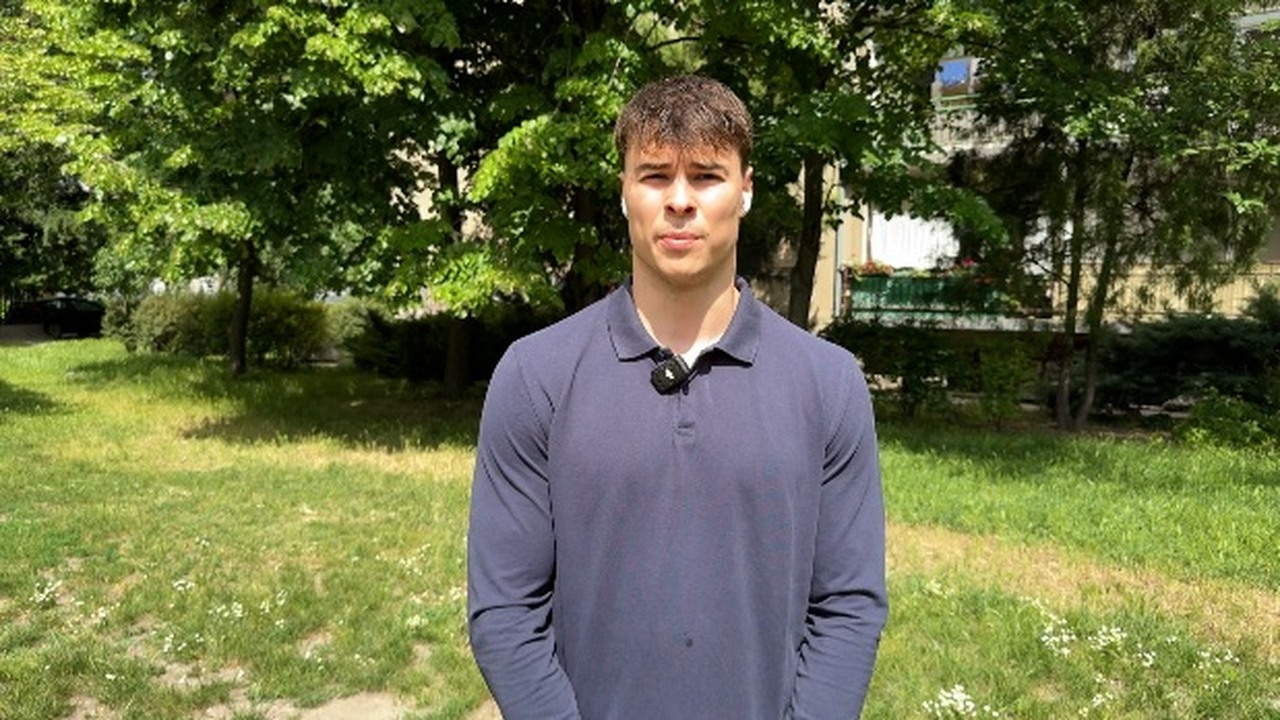
Serbian swimmer Andrej Barna stands outdoors during an interview.
Bukvic carries the women's entry
Martina Bukvic is selected for the women's 100 breaststroke. Her event includes two lengths and one decisive turn. The race balances opening speed with technique during the return.
Bukvic adds a women's event to Serbia's Paris programme. Her start also provides experience against the leading European breaststrokers. The first target is a strong heat and an accurate time.
Breaststroke has strict rules around every underwater movement. Officials watch the start, turn and finish closely. Clean technique remains essential even during the fastest parts.
Her presence completes a squad built around both experience and development. Senior medal winners lead several younger international swimmers. Each athlete enters Paris with a clearly defined event.
Paris offers a full week of championship racing
The European Championships begin on 10 August and continue for seven days. Morning heats decide which swimmers return for later sessions. Semi-finals and finals then raise the level of pressure.
Serbia's programme includes one established medal opportunity in the relay. Barna also arrives with one of Europe's leading sprint times. Stjepanovic adds a long record of success at this level.
The younger swimmers give the team a second purpose. They gain senior championship experience in demanding events. Their results also show the current depth behind Serbia's leading names.
Paris brings those separate paths together inside one national team. Serbia enters sprints, distance races and three different strokes. The relay champions remain the central reference for the complete squad.
The squad combines proven results with first appearances
Serbia's selected team contains several very different international records. Stjepanovic owns European titles and Barna holds a national record. Maksic approaches his first senior championship at this level.
That combination gives the team both immediate and longer-term interest. The established swimmers enter events with clear performance references. The younger group learns how those references are built.
The relay connects both sides of the squad most clearly. Experienced sprinters work beside younger teammates inside one timed effort. Their Belgrade gold gives the group a shared achievement.
Paris now offers a new pool, new opponents and another full programme. Serbia arrives with entries from fifty to fifteen hundred metres. The range gives the national team a presence throughout the championship.
Discuss the news - leave a comment!
Go to comments ↓
Comments
0