
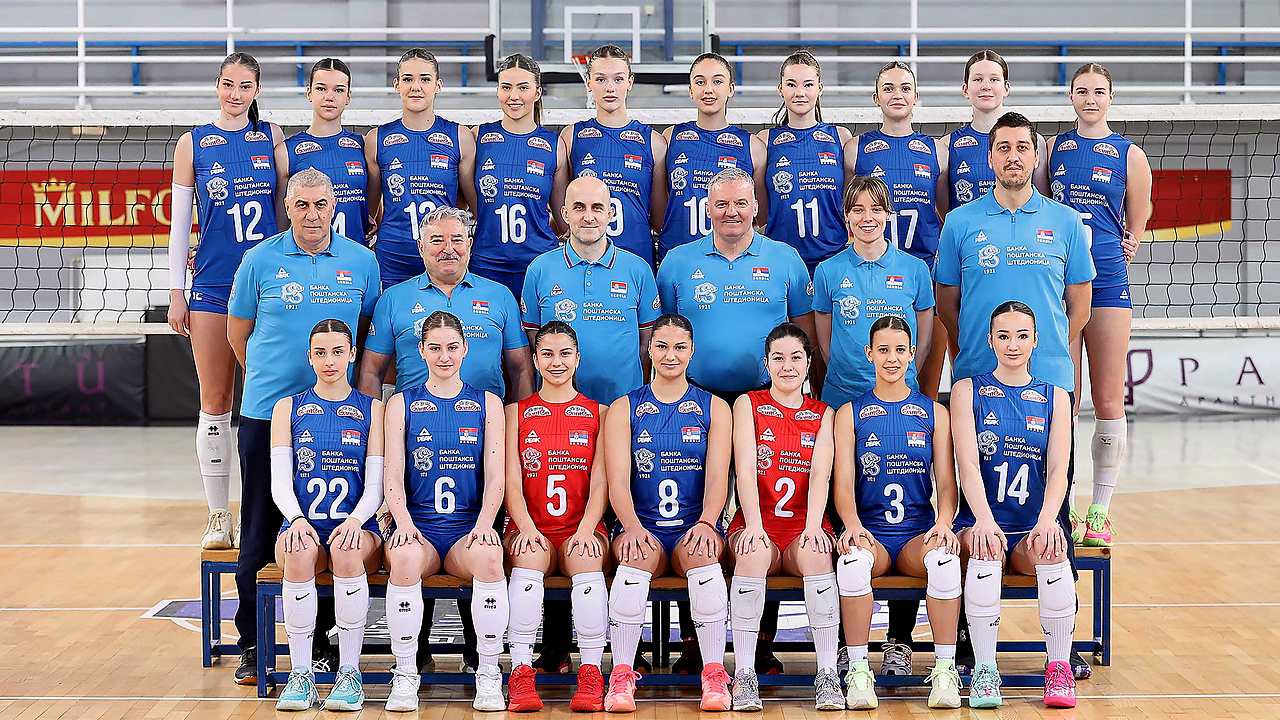
Serbia’s young senior women open their programme in The Hague against Portugal, giving the squad a clear first test.
The opening match of a compressed tournament often sets the tone, as coaches quickly see which combinations, receiving lines and rotations are ready.
Portugal as the first stop
Opening against Portugal gives Serbia an immediate check on its organisation. The first match is the quickest way to reveal nerves, serve pressure and communication.
For this younger senior group such matches carry particular value, because the coaching staff can test players who may later move closer to the senior rotation.
Why the first match matters
The Hague also matters because of the packed schedule. Teams must adapt quickly, and players who mentally reset from set to set tend to earn confidence more easily.
Serbia’s key need is a stable base in reception. Without it the attack becomes predictable, and the developmental value of the tournament diminishes.
| Area | Detail |
|---|---|
| Opponent | Portugal |
| Venue | The Hague |
| Team | Serbia’s young senior women |
| Main need | stable reception and quick adjustment |
Key details
The next sign will be the reaction after the first demanding run of sets. Young squads are judged not only by control but by how quickly they recover it.
This is a genuine volleyball development story, since it links a real schedule with the wider path towards the senior squad.
The broader picture in domestic sport continues through Serbia’s women footballers face two playoff rounds after defeat to Denmark and Serbia and Hungary’s boxing memorandum points to a wider regional path, because the consequences are not confined to a single section.
What Serbia needs from The Hague
The clear conclusion is that Portugal is not simply an opponent but the first measure of the road to The Hague.
Serbia needs a performance that gives the coaching staff both results and information about its play.
The first follow-up point is Portugal. In this context that detail matters because it shapes Serbia’s next preparation, not just the memory of a result.
The second point stays tied to The Hague. The coaching staff gets a direct measure for when the same kind of opponent or pressure returns.
The practical question comes from the matter of Serbia’s young senior women. If that part repeats, the story gains weight; if it fades, the conclusion has to be more cautious.
The pressure point is built around stable reception and quick adjustment. It is the detail that most easily separates a useful sporting step from a passing entry on the calendar.
The next useful check should be measured through Portugal. Serbia does not need drama here, only a next performance that confirms a concrete gain.
The closing point remains The Hague. The squad gets a clear marker it must hold before the next match shifts the conversation on.
The selection question is Serbia’s young senior women. In this context that detail matters because it shapes Serbia’s next preparation, not just the memory of a result.
The competitive warning stays tied to stable reception and quick adjustment. The coaching staff gets a direct measure for when the same kind of opponent or pressure returns.
The clearest comparison comes from the Portugal point. If that part repeats, the story gains weight; if it fades, the conclusion has to be more cautious.
The short-term task is built around The Hague. It is the detail that most easily separates a useful sporting step from a passing entry on the calendar.
The development layer should be measured through Serbia’s young senior women. Serbia does not need drama here, only a next performance that confirms a concrete gain.
The calendar detail remains stable reception and quick adjustment. The squad gets a clear marker it must hold before the next match shifts the conversation on.
The tactical concern is Portugal. In this context that detail matters because it shapes Serbia’s next preparation, not just the memory of a result.
The recovery detail stays tied to The Hague. The coaching staff gets a direct measure for when the same kind of opponent or pressure returns.
The rotation question comes from the point of Serbia’s young senior women. If that part repeats, the story gains weight; if it fades, the conclusion has to be more cautious.
The confidence marker is built around stable reception and quick adjustment. It is the detail that most easily separates a useful sporting step from a passing entry on the calendar.
The point linked to the opponent should be measured through Portugal. Serbia does not need drama here, only a next performance that confirms a concrete gain.
The coaching staff’s priority remains The Hague. The squad gets a clear marker it must hold before the next match shifts the conversation on.
The trace in play belongs to Serbia’s young senior women. In this context that detail matters because it shapes Serbia’s next preparation, not just the memory of a result.