
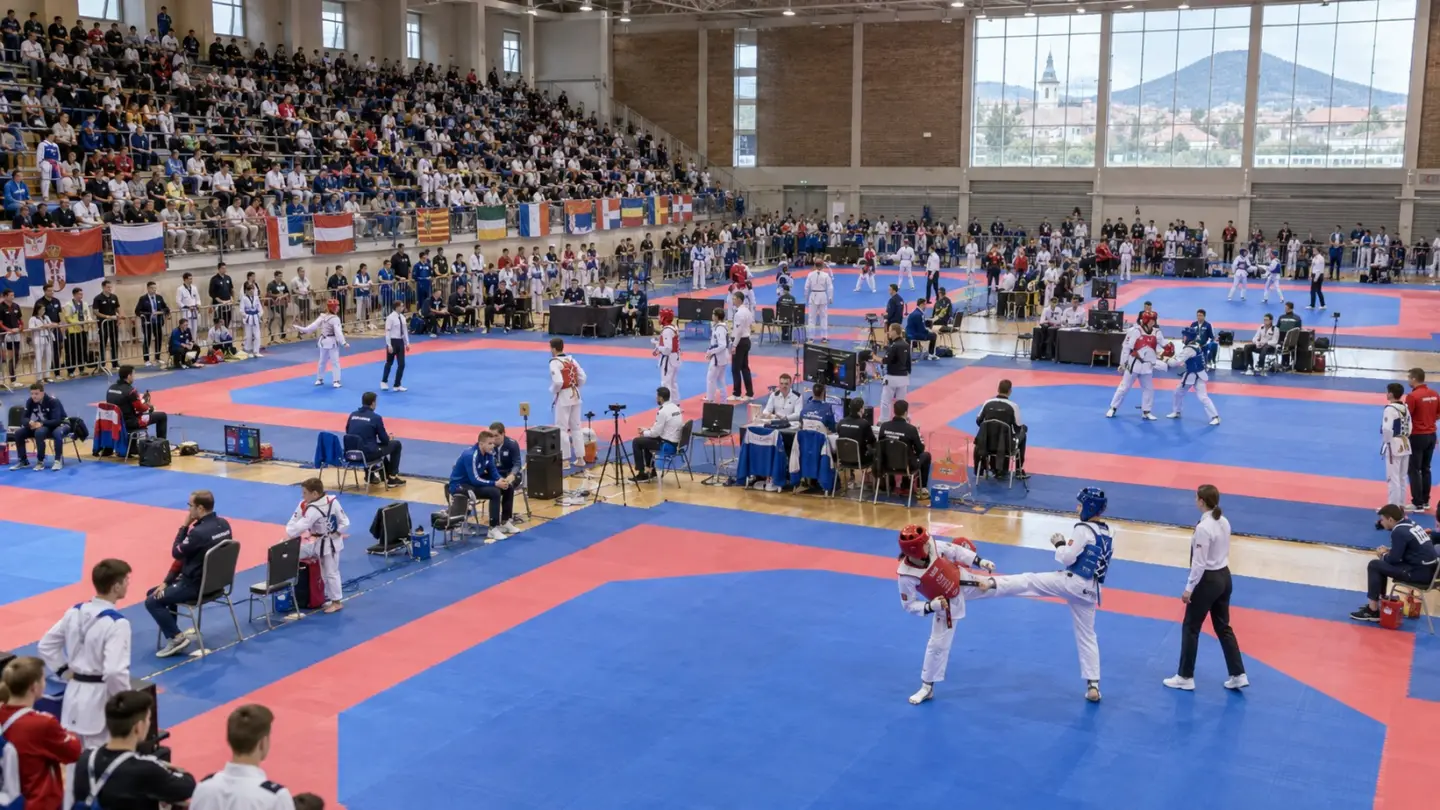
Vršac will stage the ETU Grand Prix Open qualifying tournament in taekwondo for cadets and juniors on 17 and 18 October. The entry list stands at 856 registered competitors, and the event holds E-6 rank. The programme is divided by age group and weight category across two days, so that weigh-ins, warm-ups and the bout schedule remain manageable despite the large field.
For Serbian clubs, a home tournament cuts travel costs, though not the sporting demands. European opposition brings a range of styles, from the aggressive front leg to the patient counter. A young fighter has to adjust to the distance within the first minute, because in an elimination format there is no time to discover the opponent’s dominant side only in the second round.
E-6 status raises the ranking value of results and turns every round into an important step towards later draws. Still, points should not change the basic plan. A competitor who thinks about the final placing before the first bout easily becomes tense. It is more useful to focus on the first attacking movement, control of the centre and the result at the end of each round.
A large entry demands precise logistics for weigh-ins and fighting areas
With 856 entries, the organisers must tightly control roll calls, electronic equipment and the timing of entries onto the fighting areas. A delay on one mat can carry through the whole day and shorten a winner’s recovery. Clearly marked warm-up zones and timely publication of bout numbers help coaches raise intensity at the right moment, without long waits in full kit.
Weigh-ins are especially sensitive in the younger categories. Coaches should not chase short-term weight cuts that jeopardise hydration, growth and reaction time. An advantage in one category means little if the fighter enters the mat exhausted. Stable body weight, regular meals and enough sleep provide a safer base for both results and the athlete’s healthy development.
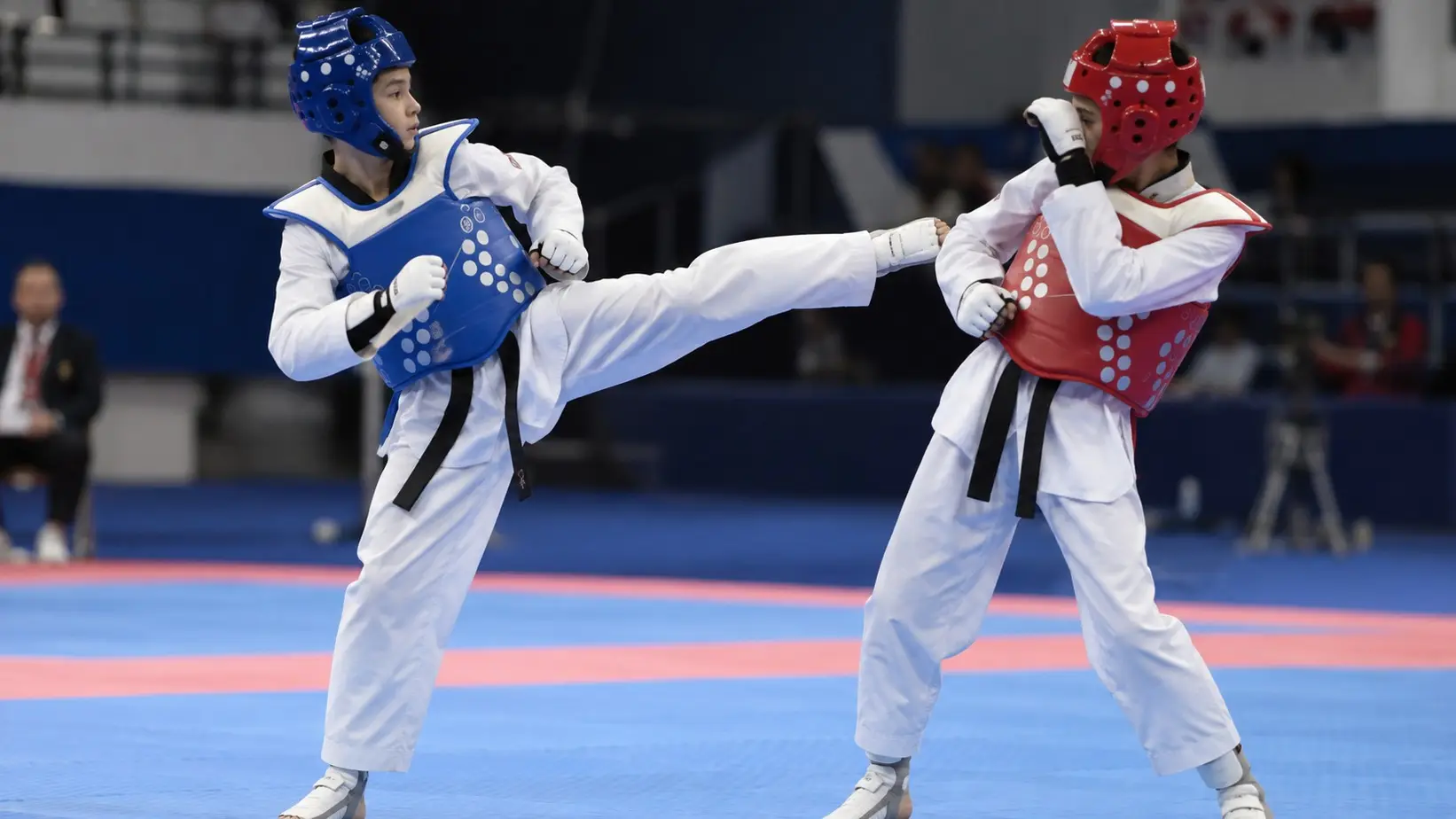
On the mats, electronic protectors will reward the precision of contact, so a visually strong kick without correct surface does not necessarily score. The fighter must quickly recover guard and position after an attack. Otherwise an attempt at a point becomes an open invitation to a counter. Coaches should give one or two clear pieces of information between rounds, rather than a long list of corrections.
E-6 status raises the value of every round for young fighters
The most useful indicator will be the ratio of points scored to penalties received. A young competitor may have a good attack and still lose through leaving the area, falling or uncontrolled contact. Discipline under fatigue separates a prepared fighter from one who depends on a single kick. The final thirty seconds deserve particular attention, since the score changes the level of risk.
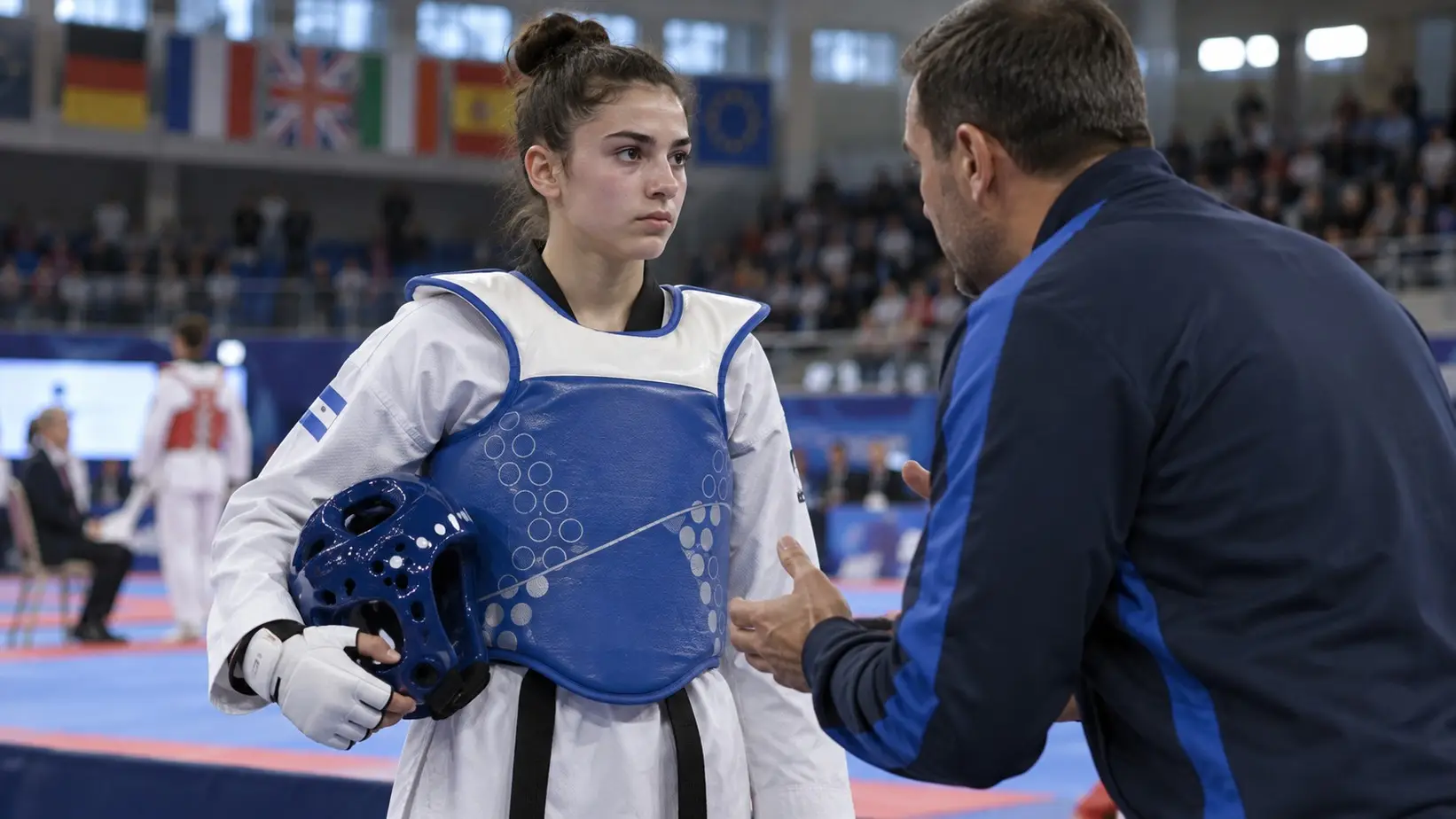
The second indicator is how a fighter responds after losing the first round. A quality competitor does not simply repeat the same entry faster, but changes the angle, timing or target. A tournament with many bouts rewards those who analyse briefly and apply the correction at once. That ability matters more for long-term development than an easy win against one convenient style.
Vršac gains a strong youth event, and domestic taekwondo gets a chance to measure itself against a large European field without a long journey. The figure of 856 competitors confirms the interest, but the real quality will be decided by safe measurement, an accurate schedule and consistent judging. For the fighters, the best aim is to earn ranking points through a disciplined plan they can repeat at the next tournament.
Parents and clubs should view the result within the context of development, especially among cadets. A single defeat to a more experienced opponent can teach a clearer lesson than an easy medal in a weak draw. Video analysis should pick out two correctable decisions, so that the competitor from Vršac leaves with a concrete task, whatever the final placing.
Referees and technical staff must resolve any electronic system interruptions quickly, so that the concentration of young fighters is not needlessly disturbed. An identical procedure on every mat builds trust and ensures that the result remains the consequence of technique, tactics and discipline.