
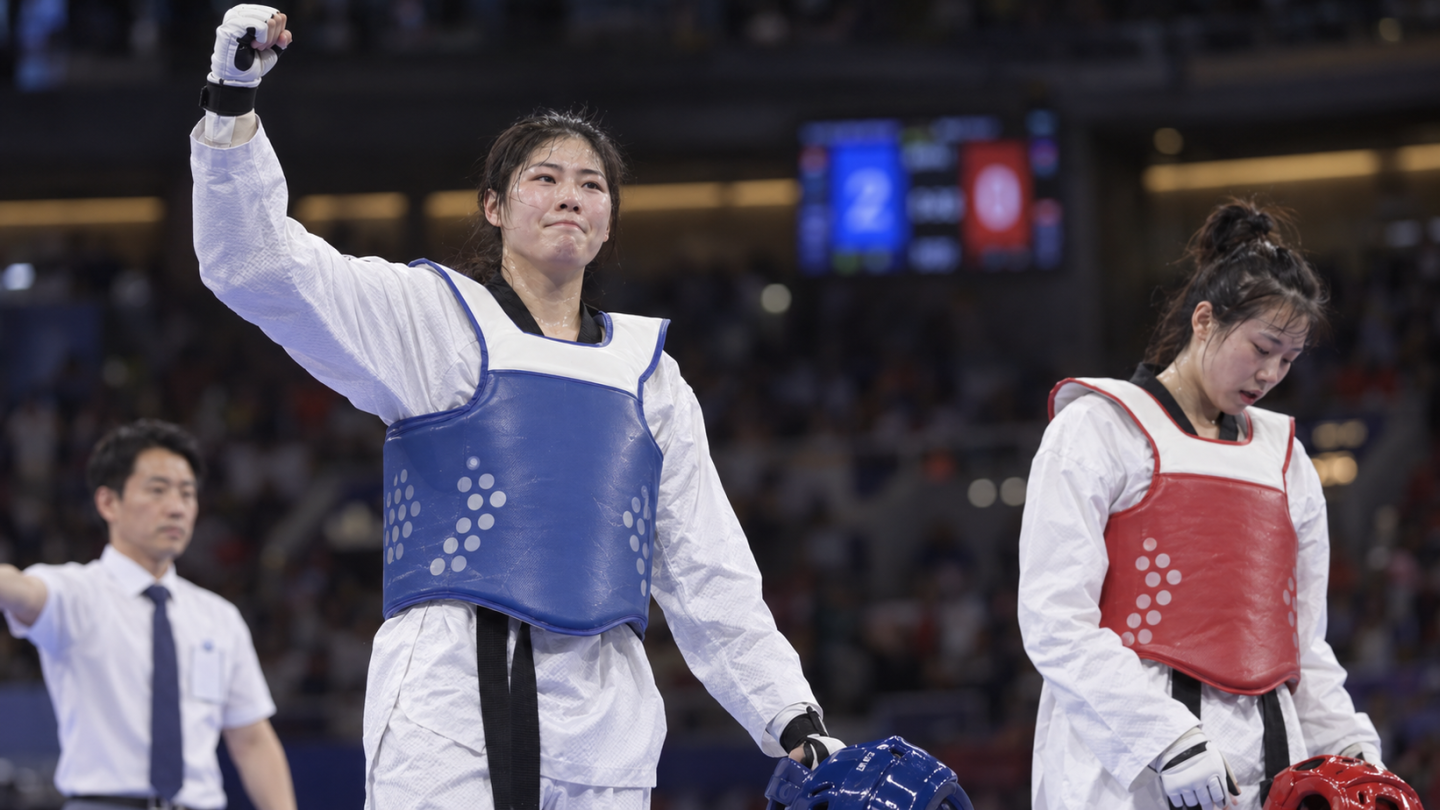
Song Da-bin took gold in the over 67 kilogram category at the Asian Games, defeating China’s Mu Wenya 2:1 on rounds. The final in Toyohashi was her first appearance in this event and gave South Korea its first gold in the fighting discipline of taekwondo. The round scores were 4:2, 4:10 and 8:5, so the title was settled in the final seconds of the third period.
The Korean had beaten Iran’s Fateme Ahmadi 2:0 in the semifinal, and in the final she answered a difficult second period. In the decisive round she moved ahead with body kicks, reached 6:2, then conceded a head kick for 6:5. Instead of backing off, she struck the body again and closed the bout three points clear. That response showed an ability to take active decisions under the heaviest pressure.
Body kicks decided the third round
The second round showed why the final was never simple. Mu linked body and head attacks, pushed Song to chase the score and exploited the space she opened. The Korean tried to fight back through pressure, but conceded extra points and a penalty. The break between rounds was therefore decisive: the plan was simplified to controlling distance and attacking the protector early, without an unnecessary hunt for the spectacular head kick.
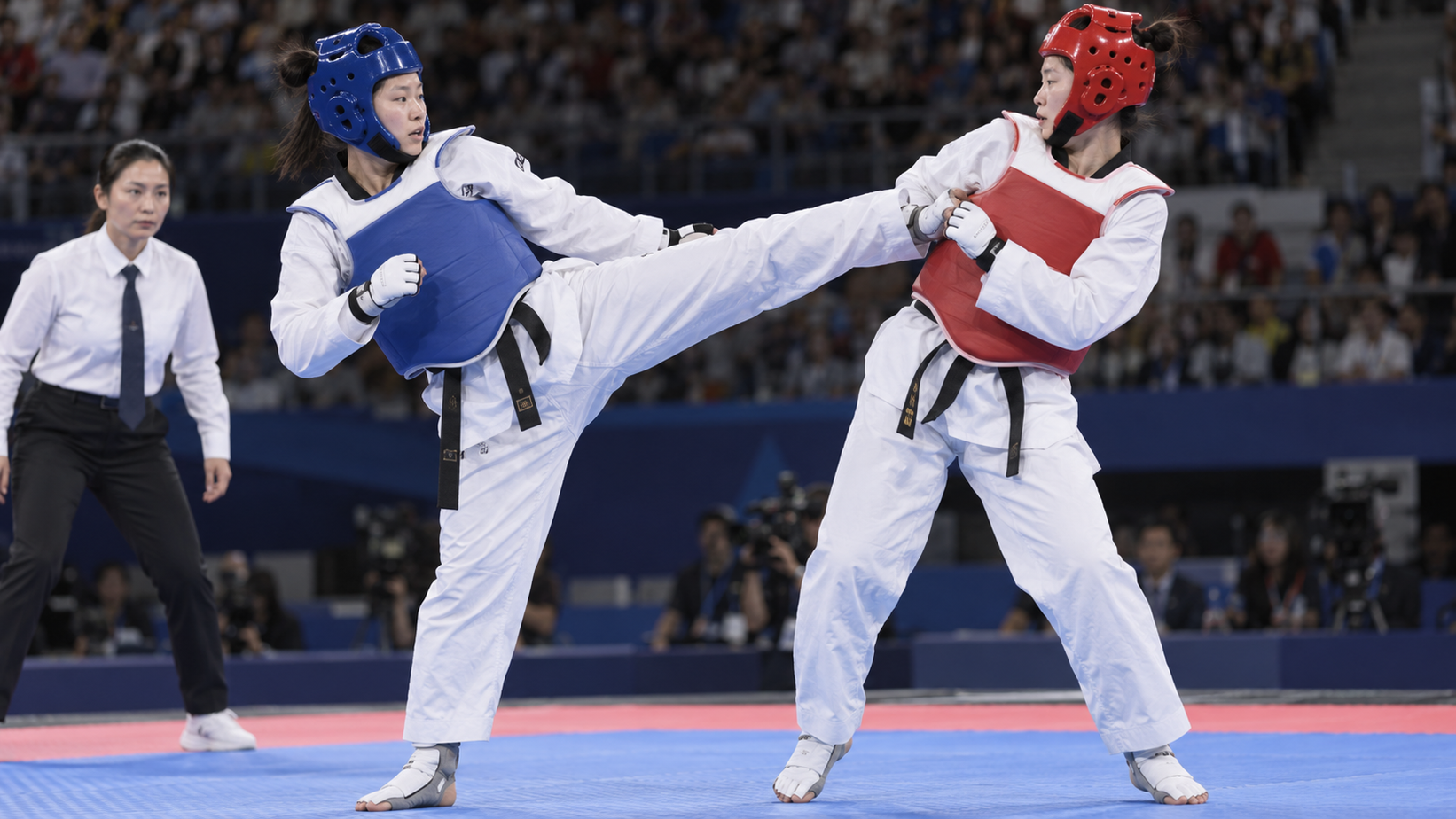
In the third round Song first built her lead with safer body kicks. That choice forced her opponent to drop her guard and opened the way for a later change of level. When the gap fell to just 6:5, she could have protected the space, but that would have handed over the initiative. The closing body strike showed competitive courage: there was risk, but she attacked at the moment her opponent expected her to retreat.
Korea kept its gold run going since 1986
The gold continued South Korea’s record, as the country has stood on the top step at every one of the ten Asian Games since taekwondo joined the programme in 1986. In this category Song took over a tradition that Lee Da-bin had built with gold in 2018 and silver in 2023. The result nonetheless belongs to the new champion, who had already won the Universiade and recently the Grand Prix in Muju, so she did not arrive in Japan without major wins behind her.
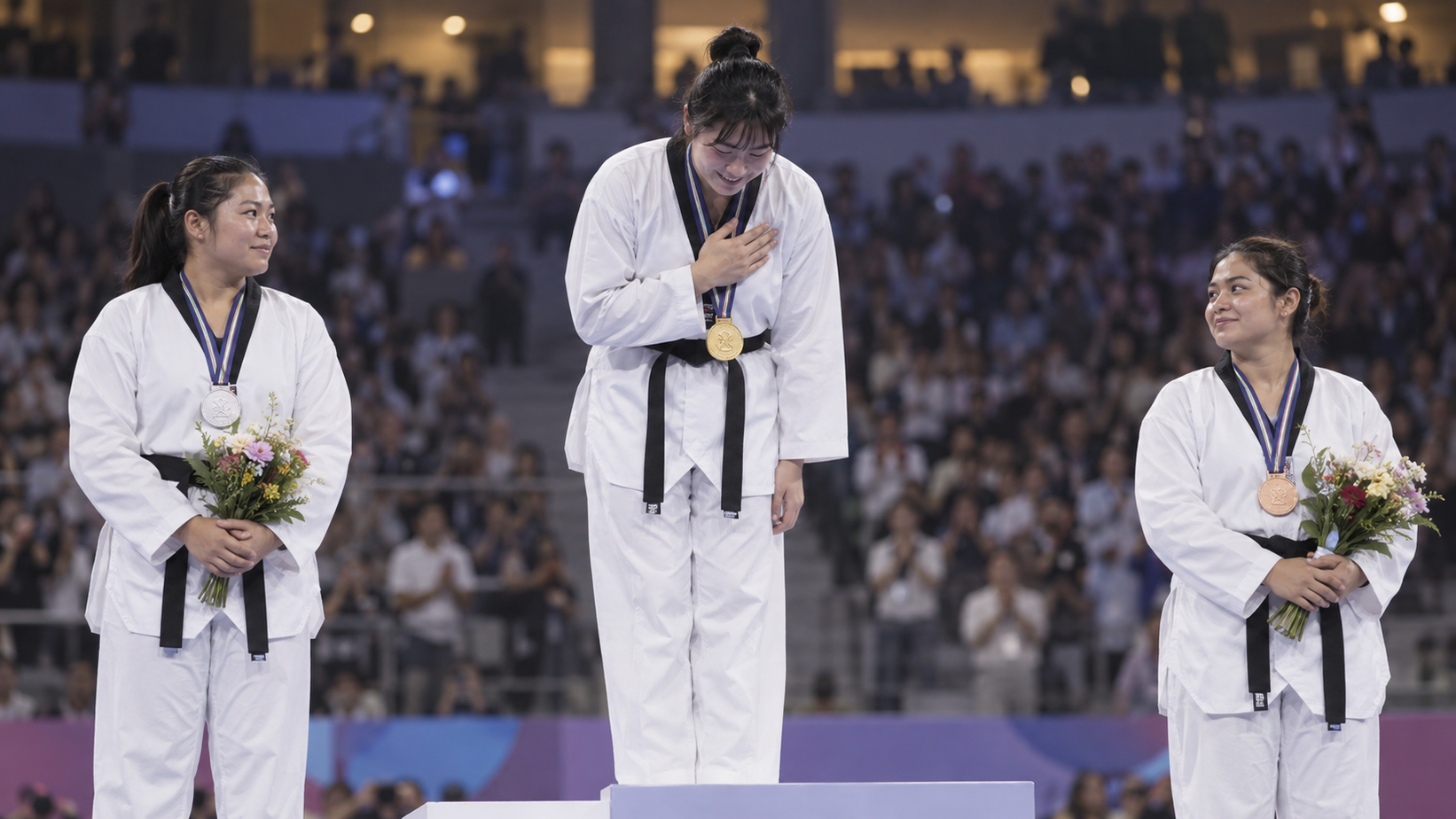
Now Song faces a period in which the medal must turn into consistency rather than an excessive number of appearances. The coaching staff will analyse why she was slow to defend her head in the second round and how she restored distance in the third. That contrast offers more useful material than the convincing final. Her first Asian gold confirms her rise, while the way she reacted at 6:5 shows the quality needed for the biggest world and Olympic bouts.
The Korean team also finished the fighting day with two bronze medals in the men’s categories, so Song’s gold adds extra value to the overall picture. It does not erase the semifinal defeats, but it confirms that the system still produces champions in the most demanding weight classes. Coaches will assess each result separately, since one shared conclusion does not explain different styles. For Song, it will be important to keep the body kicks that worked and improve her defence during changes of level. The electronic scoring system rewards precise contact, so a small shift in the protector or the angle of the foot changes the outcome. Her final round provides a good model: a safe point first, then control of distance and an attack when the opponent has to take risks. That structure can be the basis against taller, more patient rivals on the world stage.
The standings in the over 67 kilogram category will now shift because of the points earned at this continental event. Song does not need to plan her schedule around the mathematics alone, but a better position can bring a more favourable draw at the next major tournament. The team will therefore align recovery with compulsory appearances and avoid sudden weight cutting. Stable health and regular quality bouts matter more than piling up points through appearances without full preparation.