
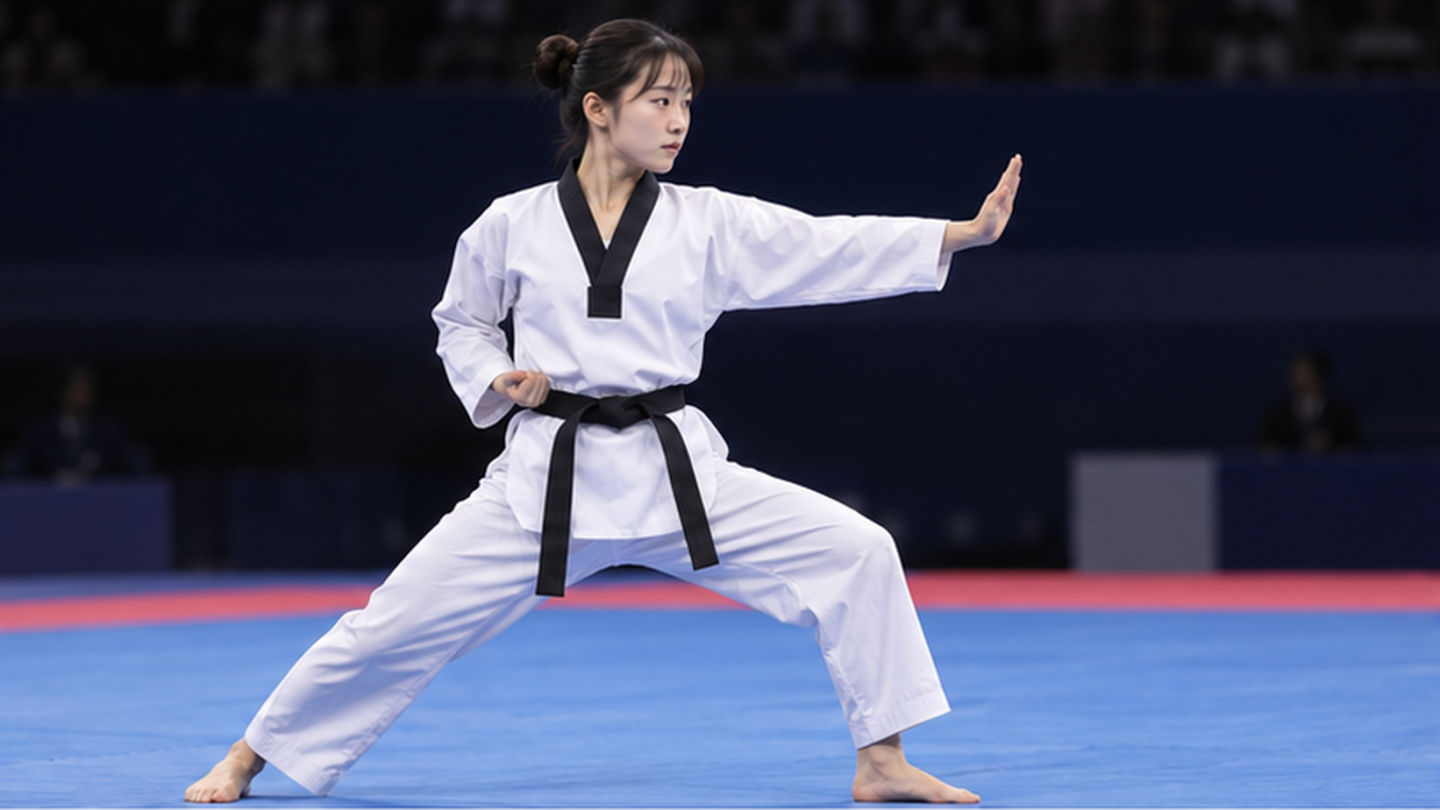
South Korea’s Jeong Ha-eun took gold in the individual poomsae event at the Asian Games in Japan, giving her country its first taekwondo title at this competition. In the final in Toyohashi she scored 9.3100, ahead of Julyana Michael Candelaria of the Philippines on 9.1300. Bronze went to Titaree Kawolanwas of Thailand and Japan’s Yuiko Niwa. The result underlines the strength of the Korean school in a discipline that demands precision, body control and consistent quality in every movement.
Poomsae differs from combat in that the competitor does not react to a direct opponent, yet the pressure is no lighter. Judges assess technical accuracy, balance, power, rhythm and expression. A small slip in stance or in the finish of a kick affects the whole impression, and there is no later round in which the point can be recovered. Jeong had to keep the same intensity through the full routine while linking explosive techniques with calm transitions.
A 9.3100 score shows high control
At this level the gap between gold and silver does not come from one spectacular movement. It is decided by a series of details: the direction of the gaze, the placement of the feet, the height of the stance and the exact moment a technique ends. Jeong managed to hold her balance and clean lines under the greatest pressure. The Korean system has traditionally invested in standardising the fundamentals, so competitors can perform a complex routine without losing technical purity.
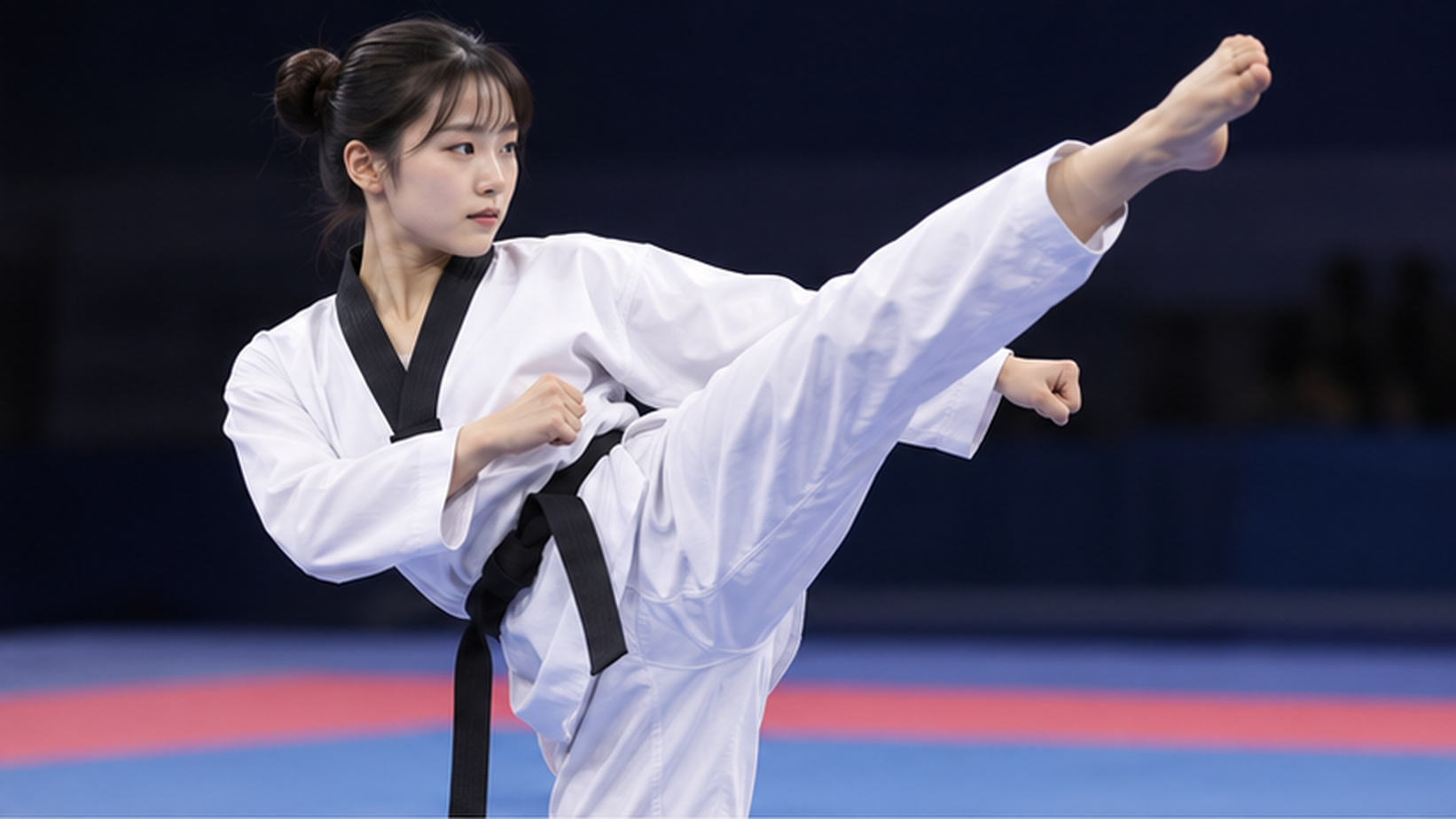
Candelaria’s 9.1300 confirmed the progress of the Philippines and showed that the top of poomsae is spreading beyond the traditional centres. A margin of 0.18 points looks small, but in the judging system it stands for several separate details. Silver still carries real value and can accelerate investment in the discipline. The competitors from Thailand and Japan further demonstrated how deep Asian competition has become.
Home fans had expected a medal for Yuiko Niwa, and bronze confirms her quality, although it did not bring a place in the final. Competing in front of a home crowd can lift energy but also heighten tension. In poomsae, excess effort is easy to see in a stiff movement or a poor rhythm. The best competitors use the atmosphere without trying to perform every technique more forcefully than in training.
Gold confirms the Korean development system
South Korea remains the benchmark in taekwondo, but modern competition demands constant innovation in preparation. Video analysis lets coaches compare angles and the timing of movements, while conditioning work reduces the drop in quality at the end of a routine. Jeong’s gold shows that a traditional technical base and modern analysis can work together. It also sets a standard for younger competitors who want a place in the national team.
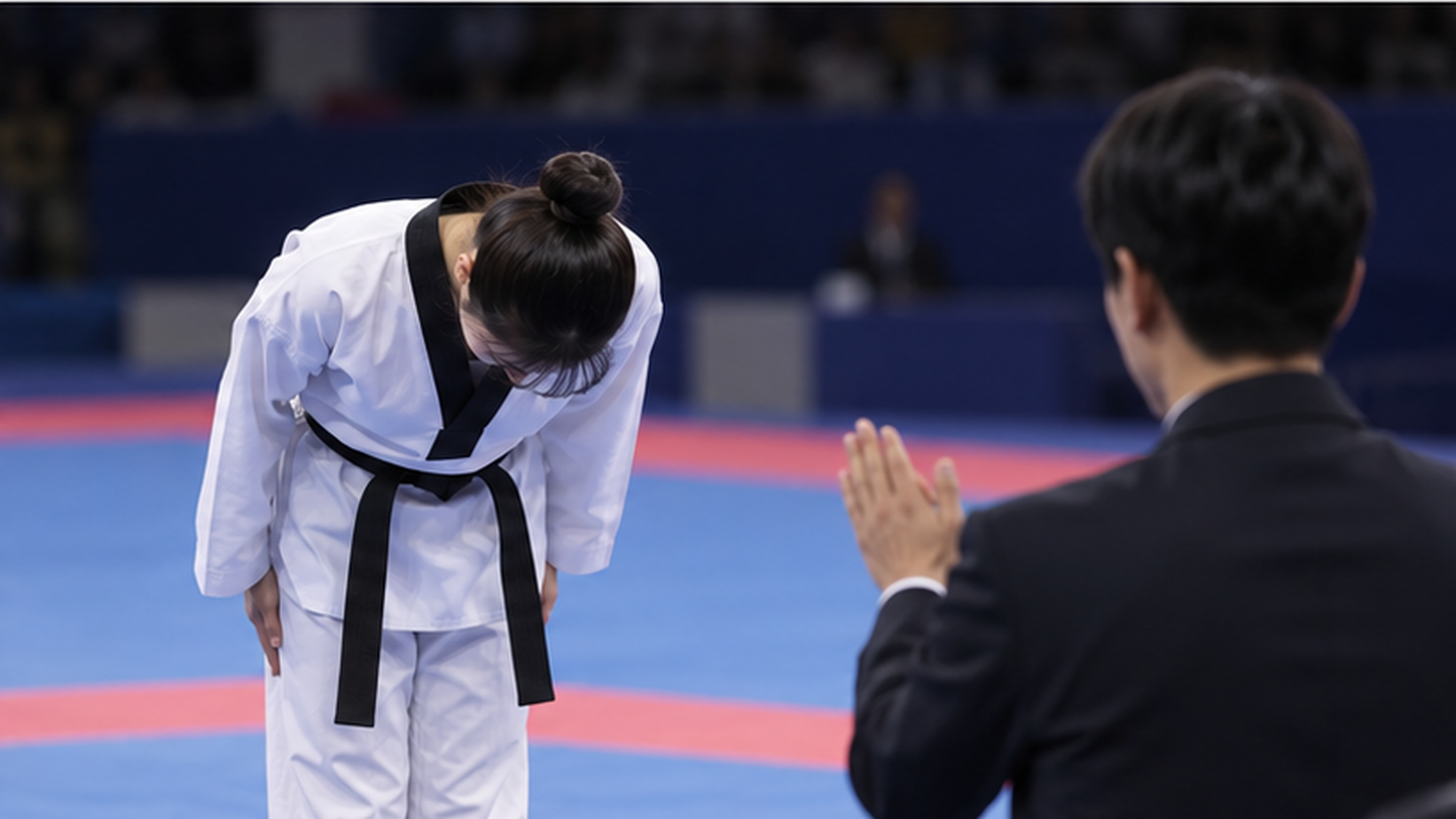
Poomsae has gained greater visibility through the Asian Games and the development of new formats, including freer choreographies and digital competitions. Still, the classic individual discipline remains the foundation for assessing technique. Medals at a major event help the public understand the difference between precise execution and mere demonstration. Every stance has a purpose, and the score is the sum of control, power and correctness.
Jeong Ha-eun now has a result that sets her apart in a strong generation, but one gold does not close the season. An analysis of the final will reveal details she can refine further, because rivals learn quickly from the best performances. For South Korea the medal is a fine start to the taekwondo programme at the Games. For the rest of the field it is a clear target: to move closer to a level where the routine is performed precisely even when a single performance decides everything. The judging criteria can shift slightly between competitions, so the team must track which details the panel penalises most strictly. That does not mean adjusting technique to each individual, but understanding the standard of performance. Jeong’s high score shows that her routine was convincing across several elements. Maintaining that level requires repetition under fatigue, because the final movements must look as precise as the first.