
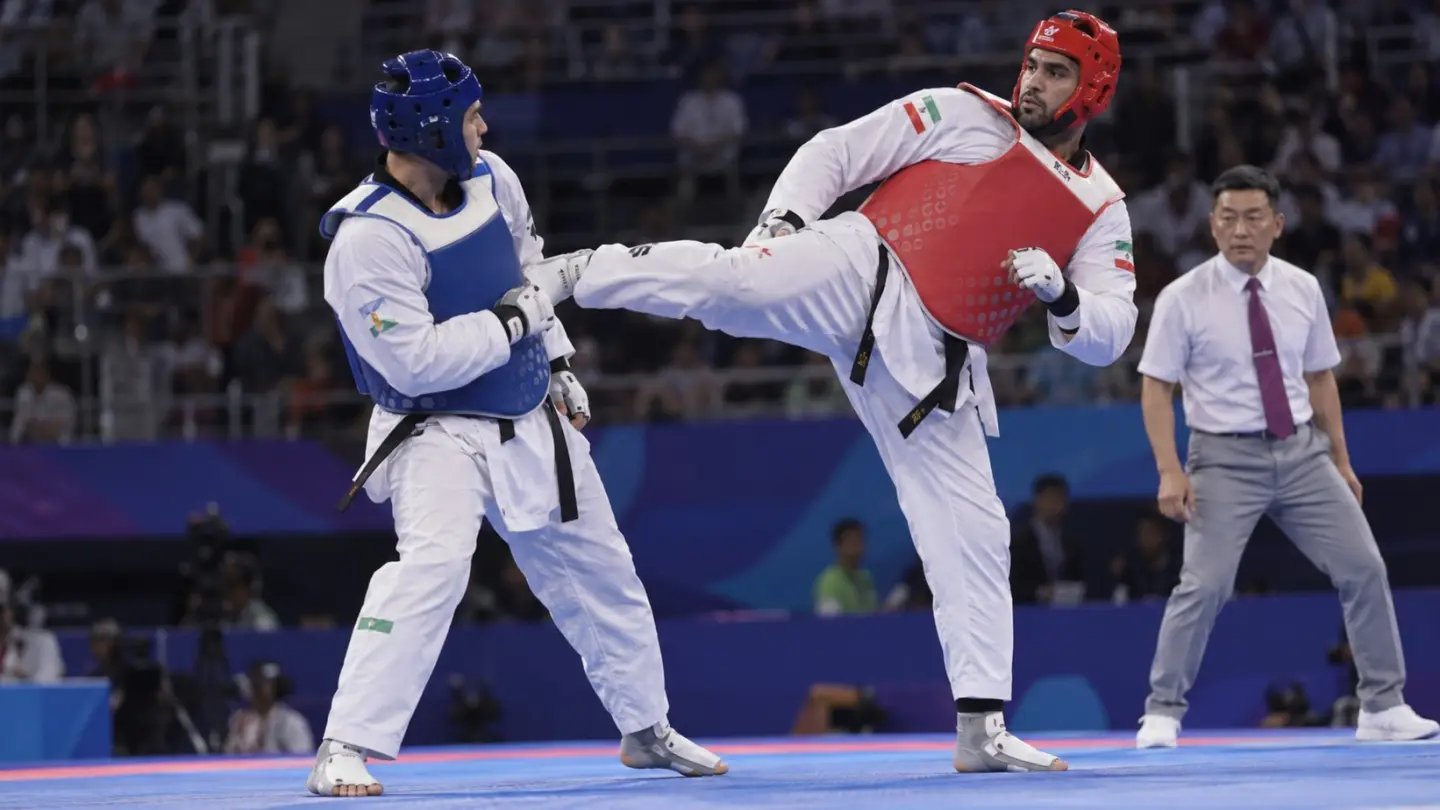
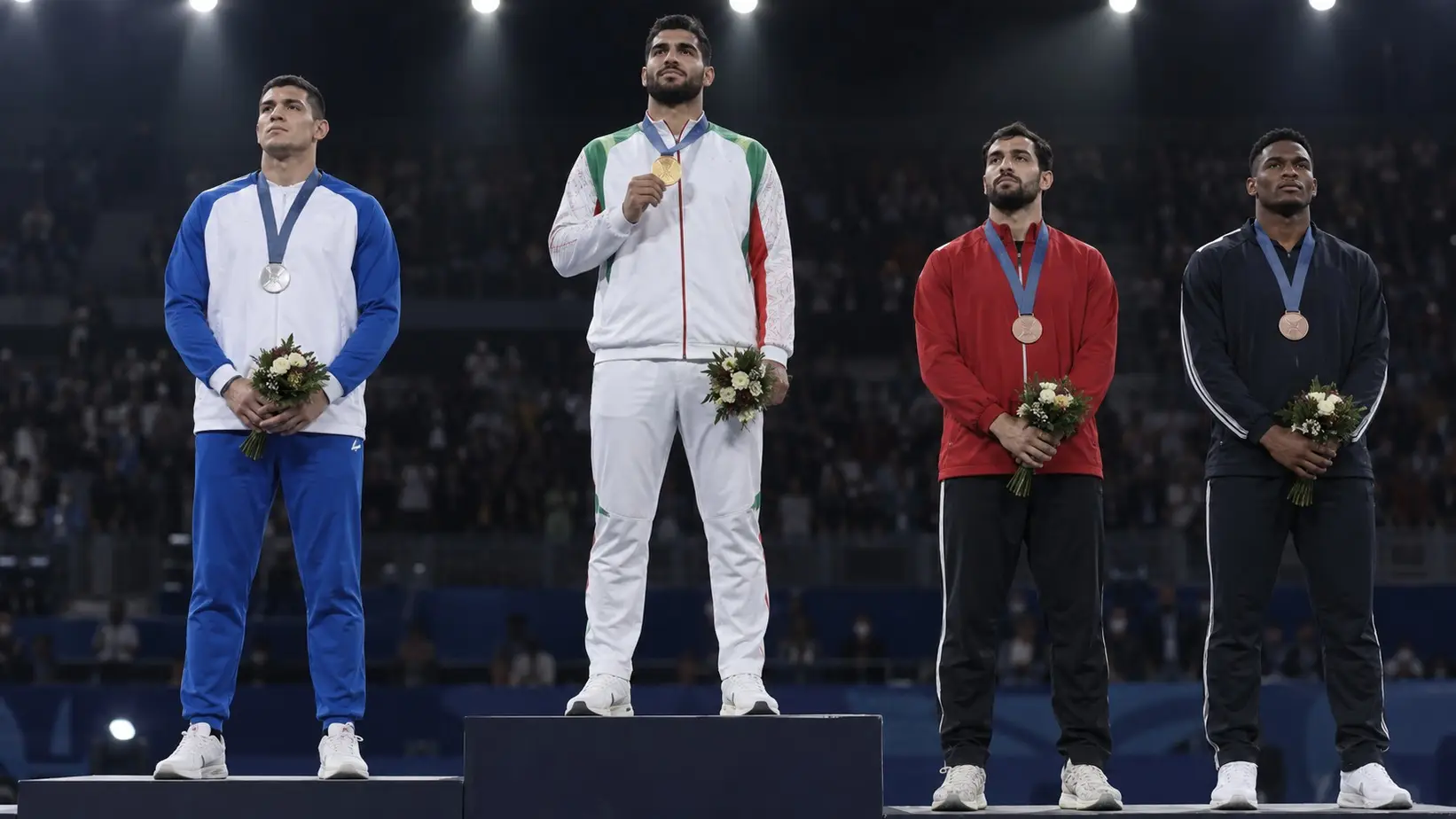
Arijan Salimi claimed gold in taekwondo at the Asian Games in the over-80 kilogram category. The Iranian beat Marat Mavlonov 2:0 in rounds, with scores of 26:4 and 20:8. The wide margin in both periods showed control from the first signal to the last. Bronze medals went to Mohamed Aladarbi and Kang Sang-hyun, and Iran ended the tournament with another top prize.
Salimi used his leg length and a well-timed first strike to keep his opponent outside the range he wanted. Mavlonov had to move in from distance, and each such attempt opened space for a direct hit to the body protector or a counter. The 26:4 scoreline in the first round gave the Iranian great confidence, but it did not change his discipline. He kept choosing clean contact over unnecessary, flashy risk.
The 2:0 final was decided by distance control and strong attacking
In the heaviest category a single strong kick can quickly shift the pattern, so a big lead is no reason to relax. In the second round Salimi kept his lead leg active and stopped Mavlonov from setting up an attack calmly. When his rival tried to close the gap, the Iranian stepped off the line rather than staying in front. That protected his balance and reduced the chances of a close-range strike.
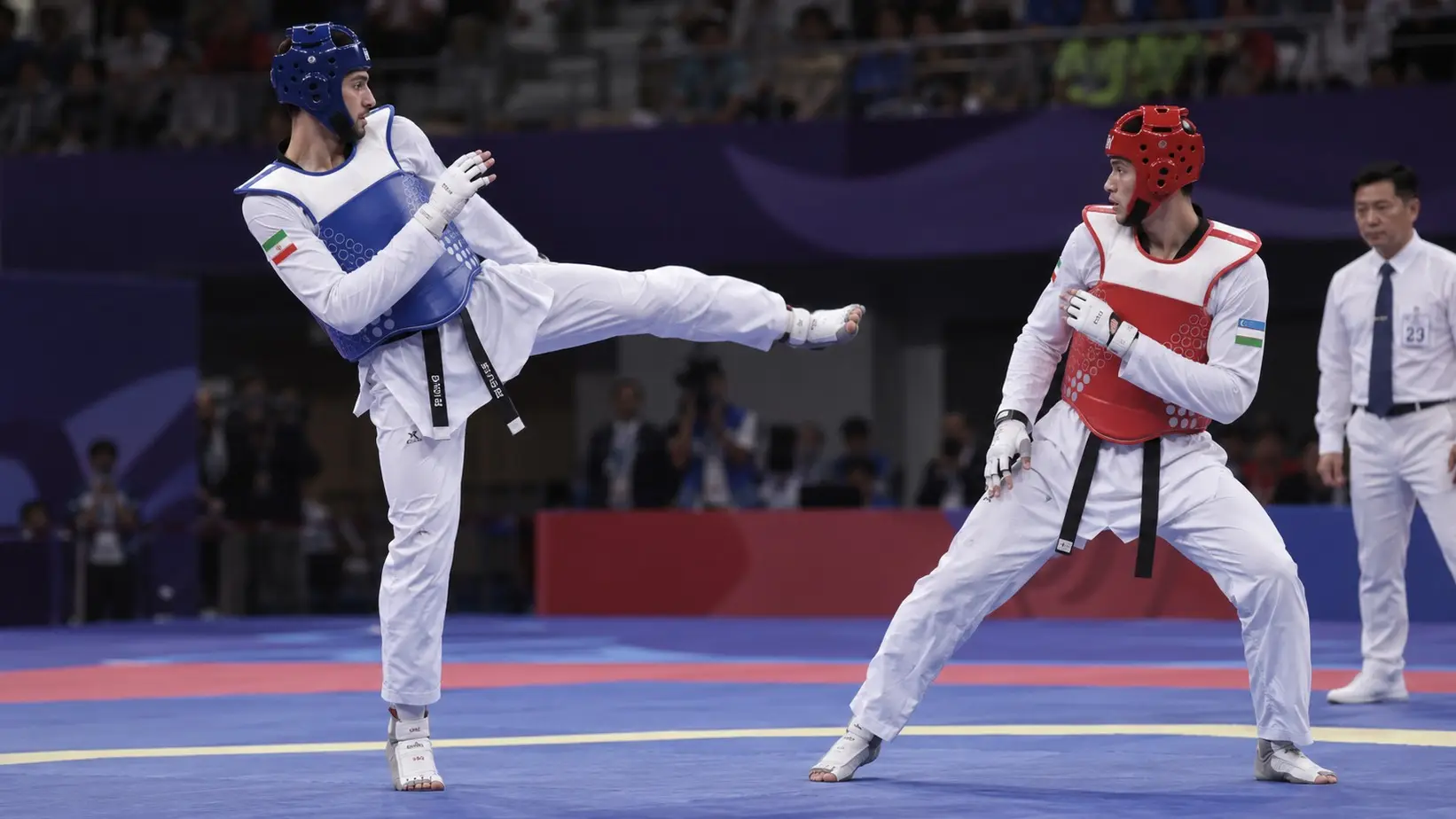
The electronic scoring system rewards sufficiently powerful and precise contact, which is why the position of the foot and hip carries so much value. Salimi was not kicking merely to stay active; he was preparing an angle from which the sensor registers a clean hit. His convincing total was therefore the product of repeatable technique. Coaches will particularly value that he could maintain the same execution after building a lead, when attention easily drifts towards the scoreboard.
Iran’s second gold rounded off a successful tournament
For Iran this was its second taekwondo gold at the Games, giving an overall haul of two golds, one silver and one bronze. Such a spread shows the depth of the team across several weight categories. Salimi’s result should still be viewed on its own, since every fighter has a different path and tactical profile. His strength was the ability to impose distance, not only the physical advantage that is expected in the category.
After a major tournament, recovery needs careful management. Strikes to the body protector, sudden changes of direction and repeated high kicks load the hips and shins even when there is no visible injury. A medical check and several lighter days should come before a new training cycle. Returning to full sparring too quickly would not improve quality and could erode the form Salimi has just confirmed.
Asian gold gives Salimi points, confidence and a stronger position ahead of the next world challenges. The most important message from the final is that he controlled both scenarios: attacking from distance and responding when his rival has to press. Opponents will now try to take away his space through earlier pressure or more frequent changes of guard. If the Iranian continues to develop his lateral exit and his defence in the clinch, the convincing win over Mavlonov could become the foundation of a stable place at the top rather than an isolated result.
Analysis should separate points from first attacks, counters and penalties awarded against the opponent. Salimi will thus see whether he created the big gap through his own initiative or by exploiting Mavlonov’s entries. Both skills matter, but they require different preparation against a passive opponent. A champion becomes complete when he can open a contest on his own terms and then keep the penalty count in his favour against an opponent who has to take risks.
Opponents will try to force Salimi into shorter range, where his reach has less room to work. Work from the clinch, a quick break of contact and the first step backwards will therefore matter in the coming cycle. If he combines these elements with the outside-zone control he has already proven, he will be able to choose where the fight is decided. That kind of freedom usually separates the winner of a single tournament from a consistent favourite.