
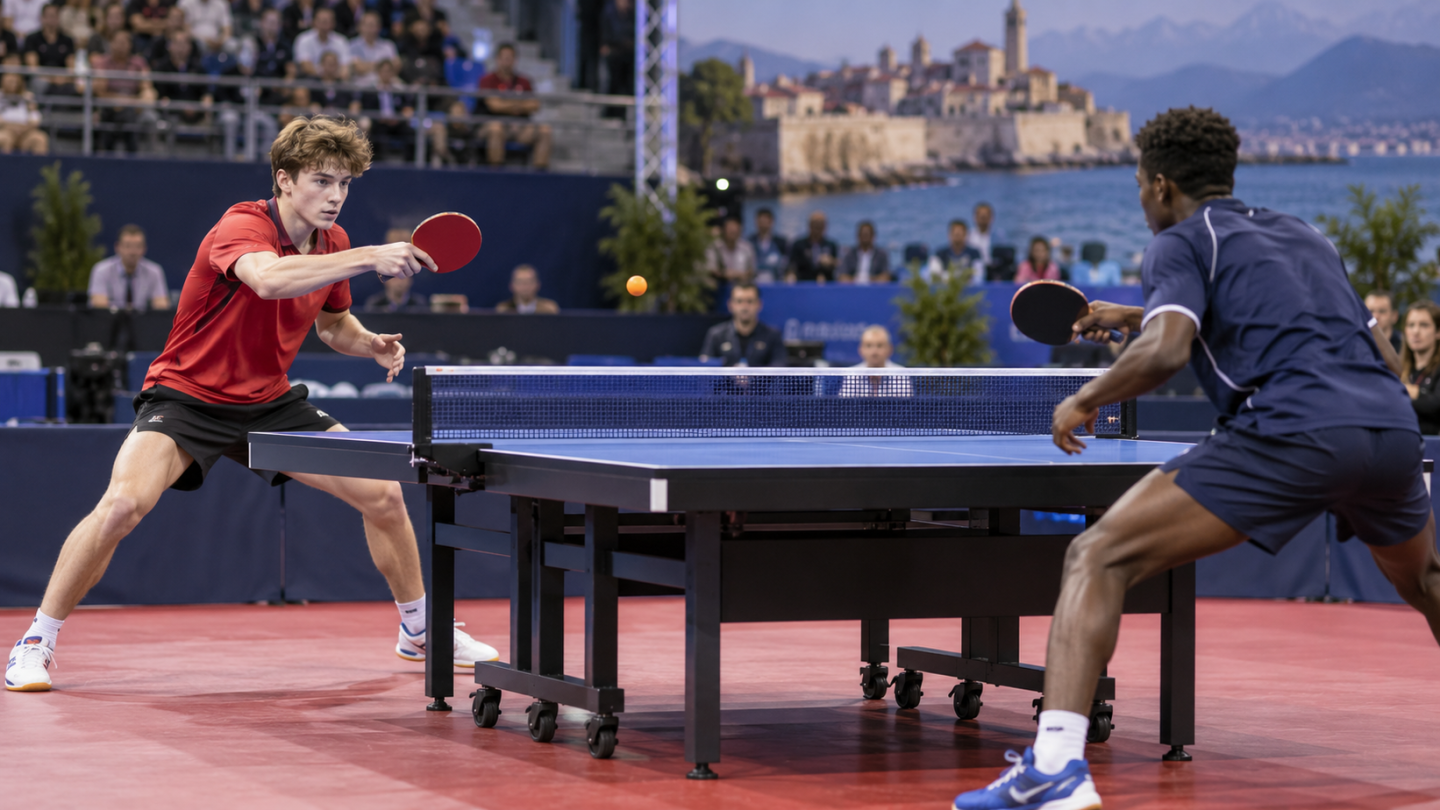
Dmitrij Samohin and Matthew Quti Abiodun finished the opening three rounds of the European Top 10 youth tournament in Antibes without a single defeat. In the Under-19 category, both beat opponents of very different styles and immediately upset the expected seeding order. Samohin’s wins included a victory over the top seed, which left the standings wide open after just one day.
Samohin had beaten Iulijan Istrate and Balint Arpas by 4:2 in each match, so he did not enter the clash with the favourite without rhythm. Abiodun also got past three different tests and showed that his record is not the product of a single upset. In a league format there is no easy route through a kind half of the draw: every player plays several matches, and the final placing rewards the ability to repeat a level against different serves, tempo and handedness.
Samohin unsettled the top seed by changing the pace
Against the top seed, Samohin gained the upper hand by varying the length of his returns. A short ball denied his opponent a direct attack, while the occasional long return caught him off guard and pushed him back. That kind of variation only works with good control of height, since a short return that sits up too high becomes an easy opportunity. The young player managed to keep the risk within limits and more often launched his first attack from a prepared position.
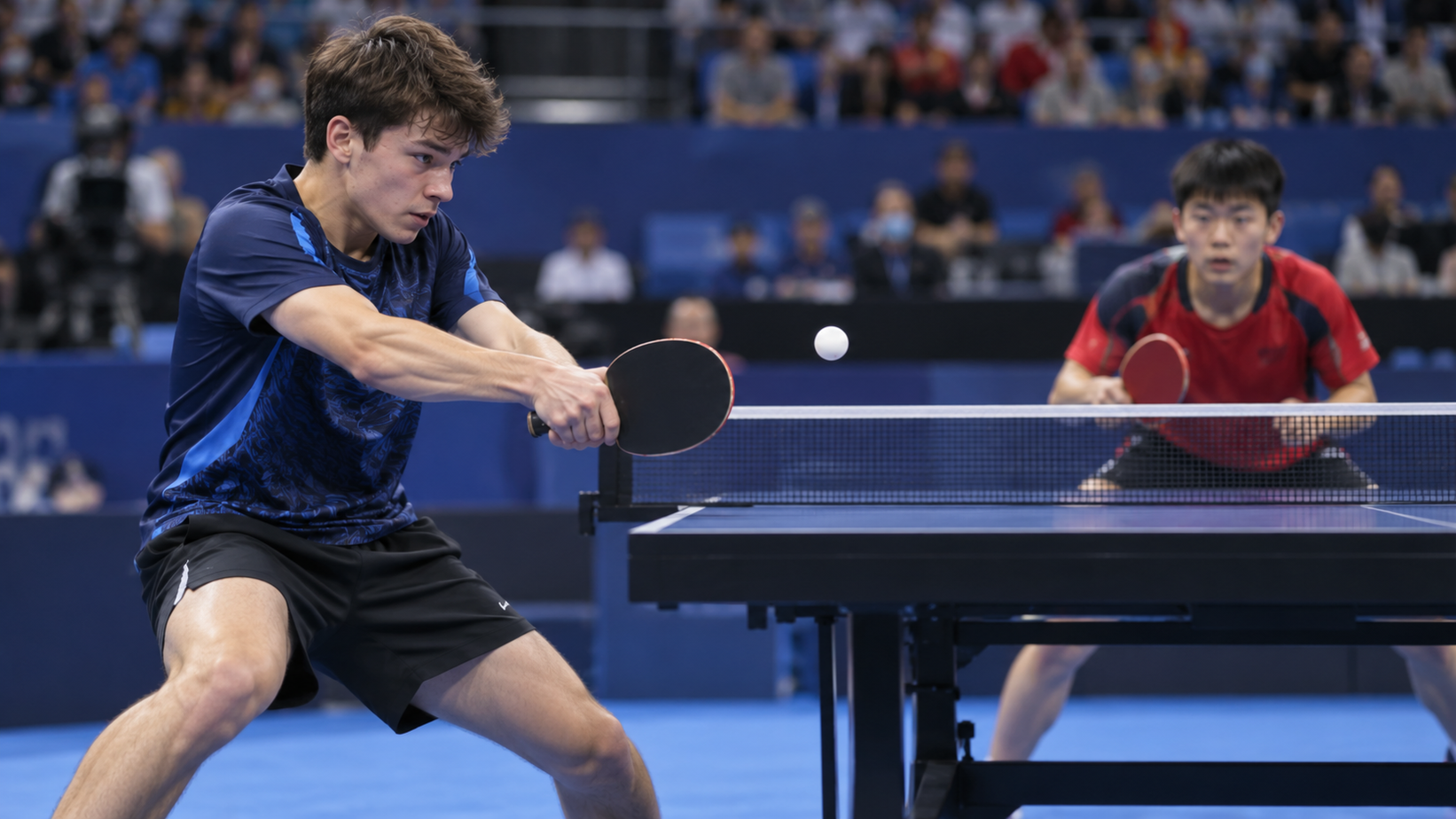
Abiodun’s run shows how much consistency between matches matters. At a tournament with several rounds on the same day, there is little time for celebration or disappointment. A player has to take two useful pieces of information, change his shirt, regain fluidity and start preparing again. Dwelling too long on the previous opponent can blur the plan for the next one. His three wins suggest he made that transition without any visible drop in energy.
The league format punishes any lapse in concentration
The first day does not decide the final placing, however. As the tournament goes on, opponents gather more footage and recognise serving patterns or first-attack habits more easily. Samohin and Abiodun will have to introduce small adjustments to their starting positions without abandoning what already works. Matches after a first defeat, should it come, will be especially important, because the league format only leaves room for a comeback to a player who quickly separates a result from the next task.
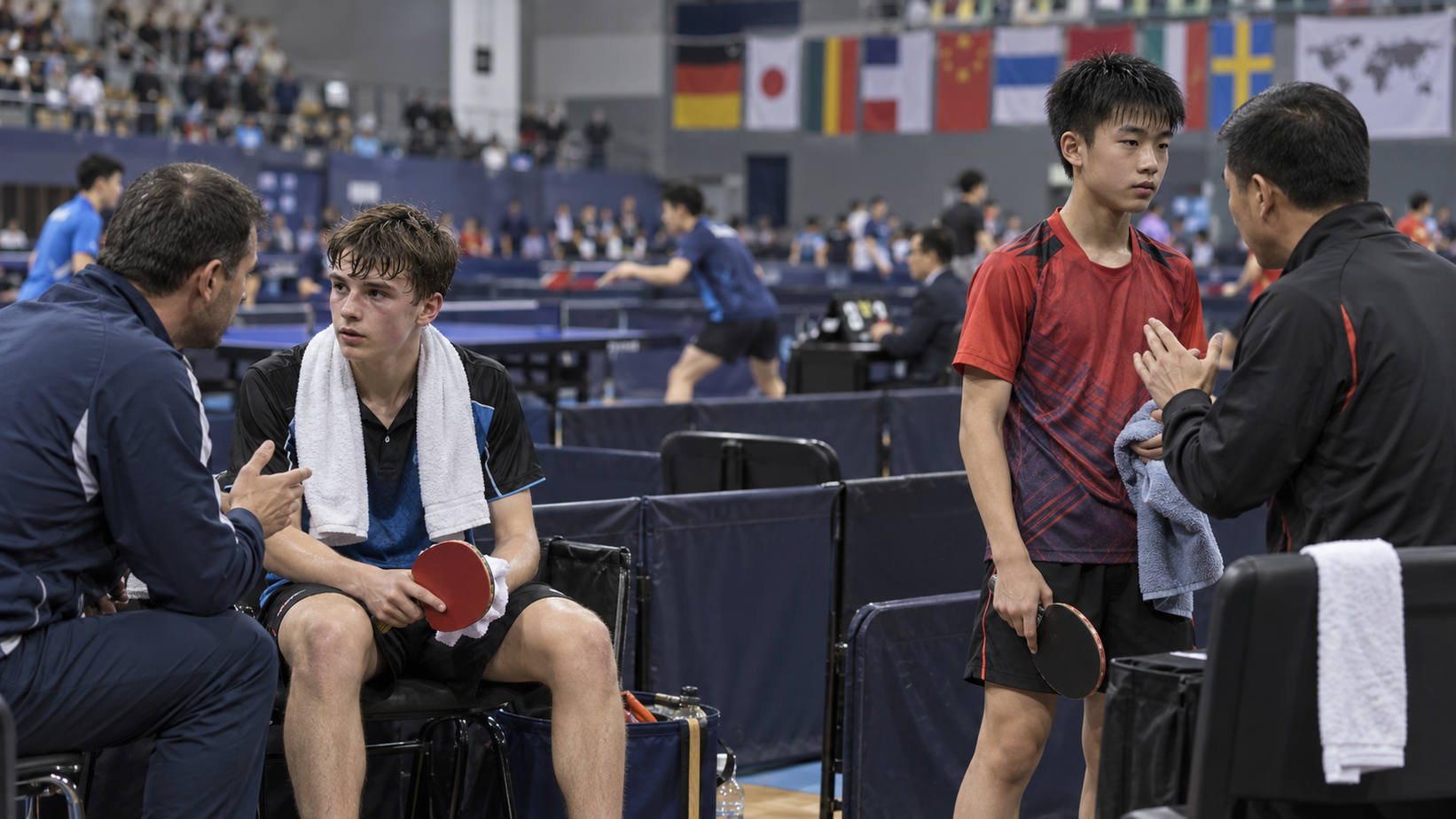
Antibes has therefore already produced an open contest in which seeding is not a reliable guide. The unbeaten pair have a solid base, but the biggest test lies ahead: repeating their level when they are no longer a surprise. If they keep their receive precise and stay calm in the sixth and seventh games, Samohin and Abiodun can remain at the top. Their first day showed that European junior tennis has depth and that the order changes from round to round.
Velichkov also affected the order on the first day and was a reminder that the fight is not limited to the two unbeaten players. Any player can take a point from a direct rival and change the calculation for medals. Coaches therefore cannot save energy only for the biggest names, because the final table often turns on a lower-seeded opponent. The quality of sleep and meals between days will matter as much as the last training session. In the younger categories, physical fatigue quickly affects footwork and then the precision of the first backhand. Samohin and Abiodun now carry extra attention, but their preparation should stay the same: a clear serving plan, active receiving and a short analysis after each match. If they focus on execution rather than the table, they are more likely to turn an unbeaten start into a final result.
Serving rules and strict umpire monitoring of the toss require that variations remain fully legal. Young players under pressure sometimes shorten the motion or hide the ball behind the body, which can bring a warning and disrupt their rhythm. Samohin and Abiodun should build their advantage through rotation and placement, not through a movement that depends on a marginal decision by the umpire. A clean serve is a more dependable tool across the whole tournament and leaves room for tactical preparation of the third ball.