
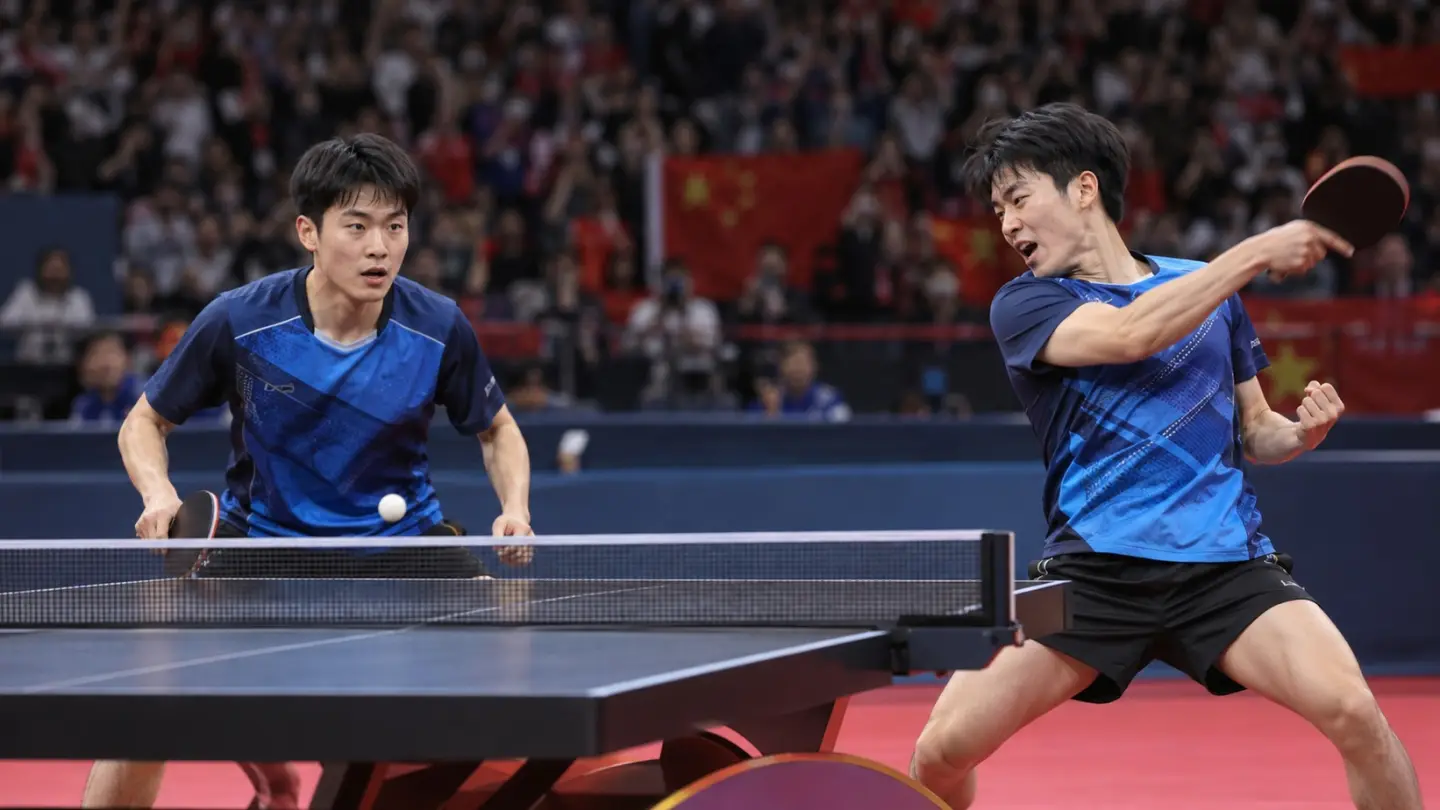
Lim Jonghoon and O Junsung claimed the men’s doubles title at the China Smash tournament in Beijing. The scoreboard tells the outcome, but the way the match unfolded shows how steady the performance was. It is worth separating the early initiative, the opponents’ response and the final decision, because the same end result can come from total control or from a brief turnaround. That distinction shapes realistic expectations for the next test. The link between the confirmed performance and the coming challenge therefore matters more than any single standout shot.
The final was played on the closing weekend of the event, which ran from 1 to 11 October and brought together the world’s leading players. The difference shows most clearly in the process: who sets the terms, who has to give ground first, and how quickly a correction arrives. Two similar scorelines can come from play of quite different quality. The analysis therefore looks for a cause that can be repeated, rather than an explanation based only on the last move. The sequence of key phases shows where the gap opened and how long control really lasted.
The Korean pair seized the initiative on the receive
The Koreans used short receives to stop the first strong attack, then quickly opened space for the left-hander in the third-ball pattern. The tactical value comes from the order of actions, not the number of ideas. A player must first secure position and control, then attack the space that has genuinely opened. The coaching staff settles the signal for a change in advance, so that one error does not set off a chain of improvised moves and pull the team or athlete away from their core advantage. The quality of a plan shows in how fast decisions come, how clear the roles are and where the pair stands after a failed attempt.

Doubles punishes any delay in rotation, so a wrong receiving side or an overly wide step is a bigger danger than a single technical error. Managing risk decides how long a plan can hold. A neutral outcome sometimes preserves position, energy or possession for a better chance, while forcing the play without preparation opens the door to a counter. The balance of gain and danger shifts with time and the score, so the same decision is not equally good at the start and in the closing stages. Discipline is measured by how often the danger is recognised before it turns into a costly mistake.
The title confirms South Korea’s depth in men’s doubles
Points won against the opponents’ serve, the success of the third ball, the number of easy errors in the first four strokes and the way games were closed explain the gap. These figures make it possible to check the conclusion after the event. The final score shows the outcome, but only a comparison by period reveals where the advantage came from and whether it can be repeated. It is especially useful to separate the opening plan from decisions made under fatigue, because that is where the stability of technique and the quality of preparation become visible. Taken together, these measures separate a sustainable advantage from a short run or a chance deviation.

The trophy gives South Korea an important result against Chinese depth and strengthens the pairing before the next major national team commitment. The significance does not end with the last point or the final decision. A good performance opens a new opportunity, but consistency is what confirms that the change will last. A weaker result can still be useful if it produces two or three precise tasks. Changing everything at once usually hides the real cause and makes the next check harder. The next appearance therefore becomes a concrete test of continuity, not just another entry on the schedule.
Lim and O won because they controlled the start of the rallies better, which reduced the significance of longer exchanges. The conclusion must therefore stay tied to the evidence currently available. The best next check uses the same control points in different conditions, so it becomes clear what belongs to genuine quality and what to circumstances. Repeating a good pattern against a new challenge carries more weight than a single striking action. The final assessment stays anchored to the same set of indicators and the next comparable official result.