
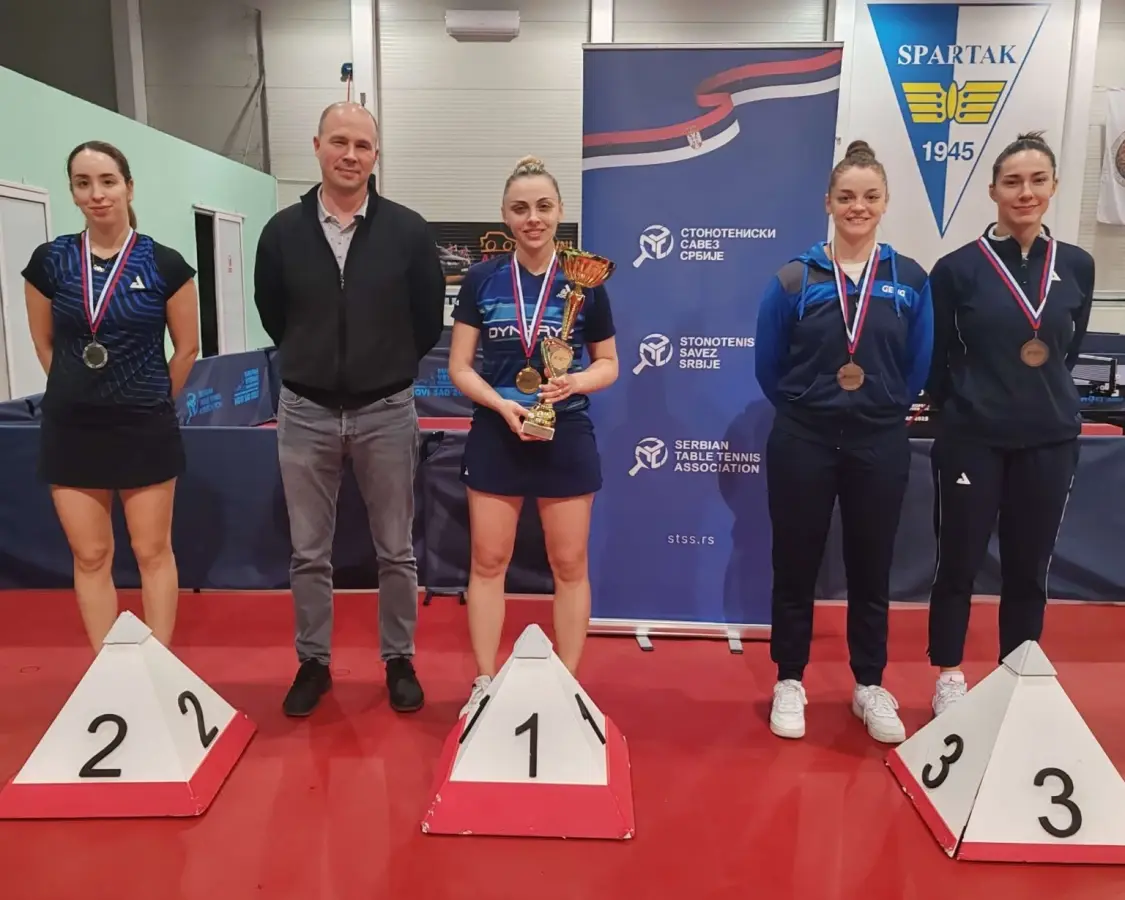
Izabela Lupulesku and Sabina Šurjan won bronze for Serbia in the women’s team table tennis event at the Mediterranean Games. They took both singles against Turkey and then closed out the medal contest together in the doubles.
Šurjan kept her composure in the opening match
Sabina Šurjan was the first to take the table against Edže Harač, and she needed all five sets to deliver the opening team point. The tie stayed open right to the end, so she had to hold her focus through every shift in rhythm. The win gave Serbia the lead, though the medal was not yet guaranteed.
The first singles carries particular pressure because no team has a result it can protect yet. Šurjan accepted that responsibility and left Lupulesku to start the second match from a steadier position. The opening victory mattered both practically and mentally, while Turkey had to find an answer straight away.
Lupulesku controlled the second singles
Izabela Lupulesku then beat Sibel Altinkaja without dropping a set. She did not let the match turn into another long test. A convincing result does not mean every point came easily, but it shows that Lupulesku held a steady tempo and closed out sets before her opponent could change the course of play.
The Serbian side had therefore handled two different tasks. Šurjan came through an uncertain finish, while Lupulesku ran the next singles more calmly. Those wins brought confidence into the doubles and left the Turkish pair very little room for error.
| Order | Match | Result |
|---|---|---|
| 1 | Sabina Šurjan – Edže Harač | 3:2 |
| 2 | Izabela Lupulesku – Sibel Altinkaja | 3:0 |
| 3 | Lupulesku/Šurjan – Harač/Altinkaja | 3:0 |
The doubles confirmed the medal
Lupulesku and Šurjan then took the court together against Harač and Altinkaja. They won the doubles without losing a set and confirmed the bronze medal. A further match was no longer needed, as Serbia had already secured every team point in the completed run.
The doubles win was more than a formality at the end. Both players had to leave the rhythm of singles behind, share the space and set up each other’s next shot. The calm finish showed they had switched roles without losing the discipline from earlier matches.
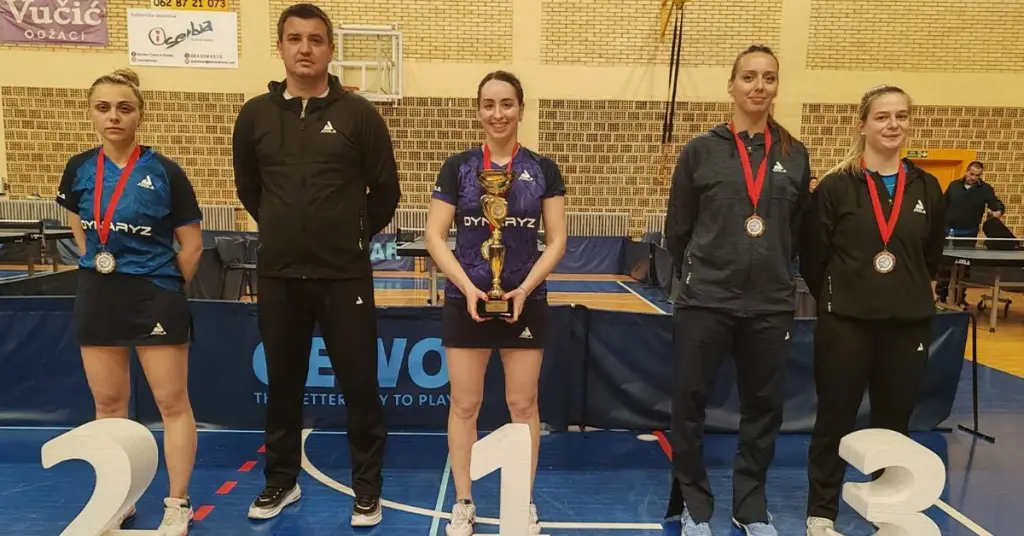
Moving from singles to doubles requires quick adjustment
After their singles, both Serbian players had to switch to a shared plan in the doubles. Movement, serving and the decision about who takes the next ball all change at that point. A player cannot simply repeat her singles game while a partner stands beside her. The pair has to divide the court clearly and open a better position for the next shot.
The transition was executed well, and both athletes played a direct part in the final point. Šurjan won the demanding opening match, Lupulesku controlled the second singles, and together they closed the tie. The bronze was therefore the result of three linked tasks rather than one isolated performance.
The table separates team points from sets
The official team result was 3:0 for Serbia against Turkey. The table lists the sets within each singles and doubles match, so readers can see the details without repeating the same team figure in every paragraph. These are two levels of one completed event, not competing versions of the outcome.
The distinction matters because each singles or doubles match contributes one point to the team total. Šurjan took the first, Lupulesku added the next, and their pair supplied the last. The order is clear and the same result does not need to be recounted in each section.
Three connected wins brought bronze
Serbia did not wait on results from another venue or an additional tie. Lupulesku and Šurjan secured the medal through their own performances. The first contest demanded patience, the second rewarded control, and the doubles required two players, who had only just competed on their own, to move in step.
The conclusion remains simple and accurate. Serbia finished the bronze-medal contest without losing a team match. Šurjan, Lupulesku and their doubles pair each made a direct contribution. The event is over, and this text does not present it as a preview of a future result.
The course of the match can be followed without repeating the figures. Šurjan delivered the first team point, Lupulesku continued with a secure singles win, and the two of them then finished the job in the doubles. The medal was confirmed at their table and did not depend on a later result from another team.