
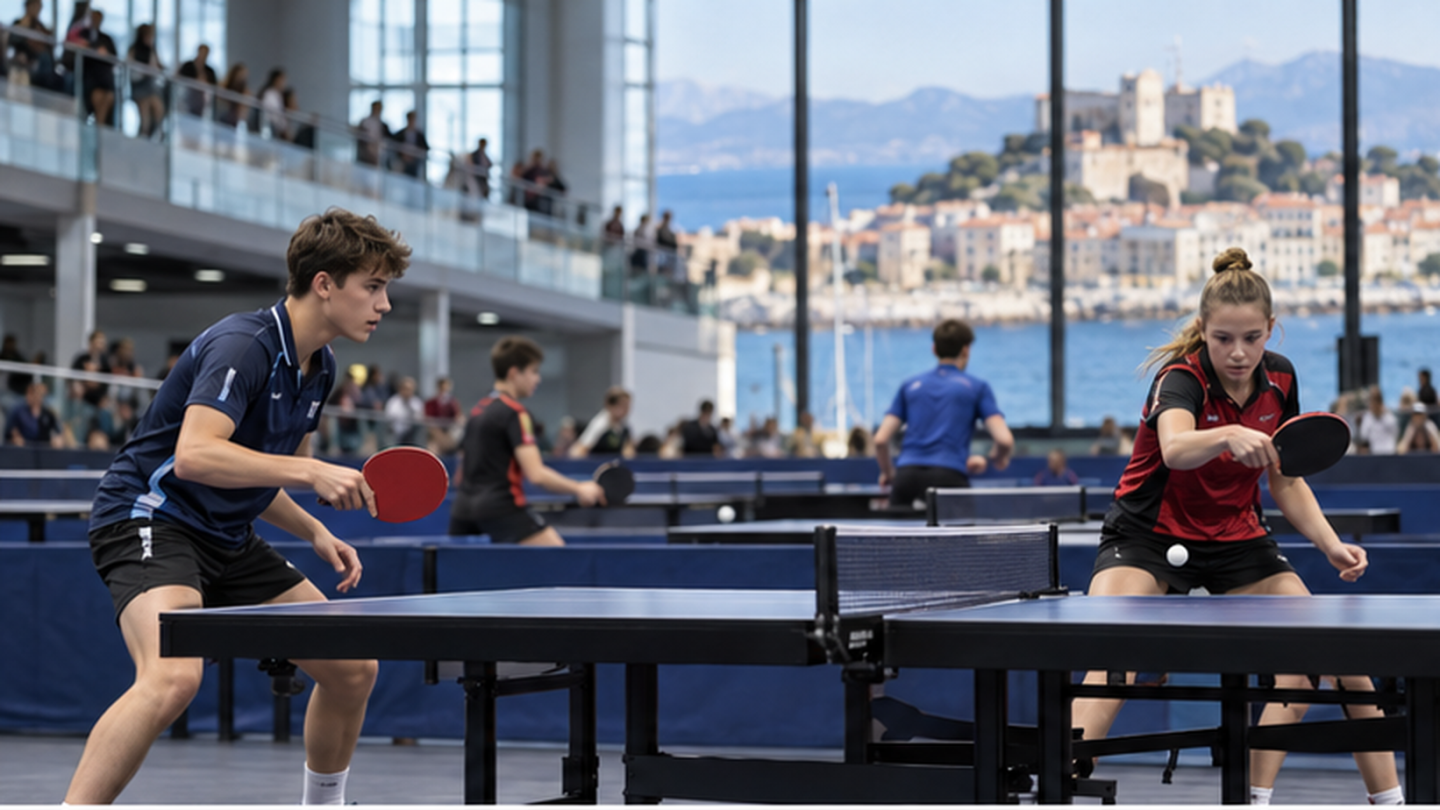
Europe’s leading under-19 table tennis talents will gather in Antibes for the Top 10, one of the most demanding development events on the European Table Tennis Union calendar. Unlike a conventional knockout draw, the round-robin format gives no one the chance to ride a favourable pairing into the final. Each player has to solve several different playing styles, recover between matches and keep their focus across the whole weekend.
The tournament is a useful marker of the step up from junior to senior competition. At this age, the speed of a shot is already close to professional level, but the real difference is often made by how a player receives serve, which first ball they attack, and how quickly they can change their plan. A player can dominate an aggressive attacker and then face an opponent who uses heavy spin and a slower rhythm. Antibes therefore tests the breadth of a player’s game, not just their best single shot.
The format rewards consistency over a single upset
In a system with nine different opponents, a defeat does not end the event, but a poor reaction to losing can spoil the next two matches. Coaches must extract useful information quickly and avoid overloading their players with technical detail. The table is built one win at a time, and the set ratio can become decisive when several competitors finish level on results. That is why every set won carries value, even when a match looks lost.
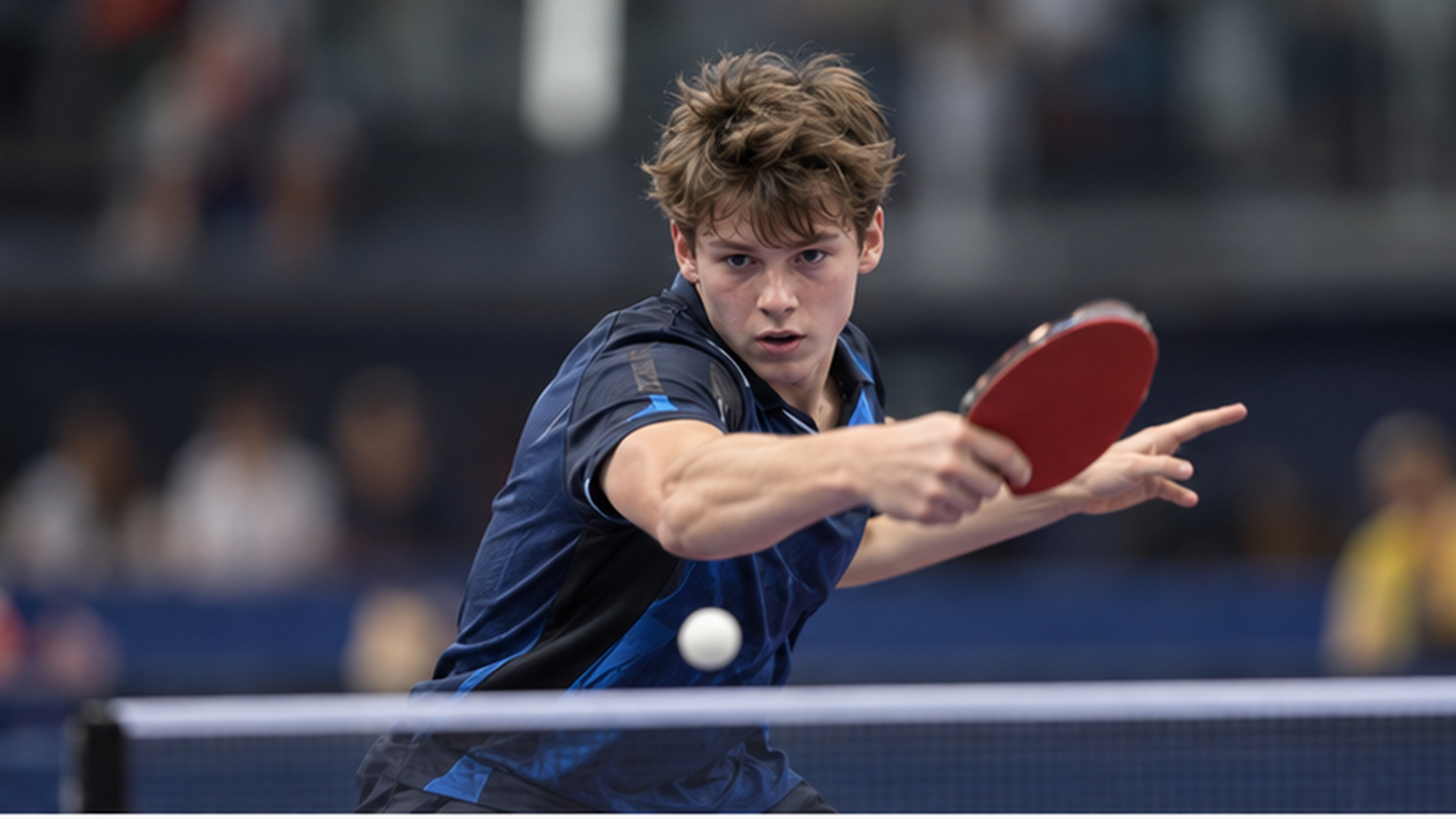
Serve and receive will be especially important, because young players often meet opponents trained in completely different schools for the first time on a regular basis. Scandinavian, French, German and Eastern European systems develop different habits, so video preparation helps only up to a point. At the table, decisions are made within fractions of a second. Those who recognise spin faster and find a safe first ball will give away fewer easy points under pressure.
The result also matters for senior development
National selectors follow the Top 10 because it shows who can withstand several quality matches in a short period. This resembles the pattern of qualifiers and team championships at senior level. A high finish does not guarantee professional success, but it offers a good signal about tactical maturity and physical preparation. Defeats are just as informative when they clearly expose a weakness in receive, movement or play against a particular rubber on the racket.
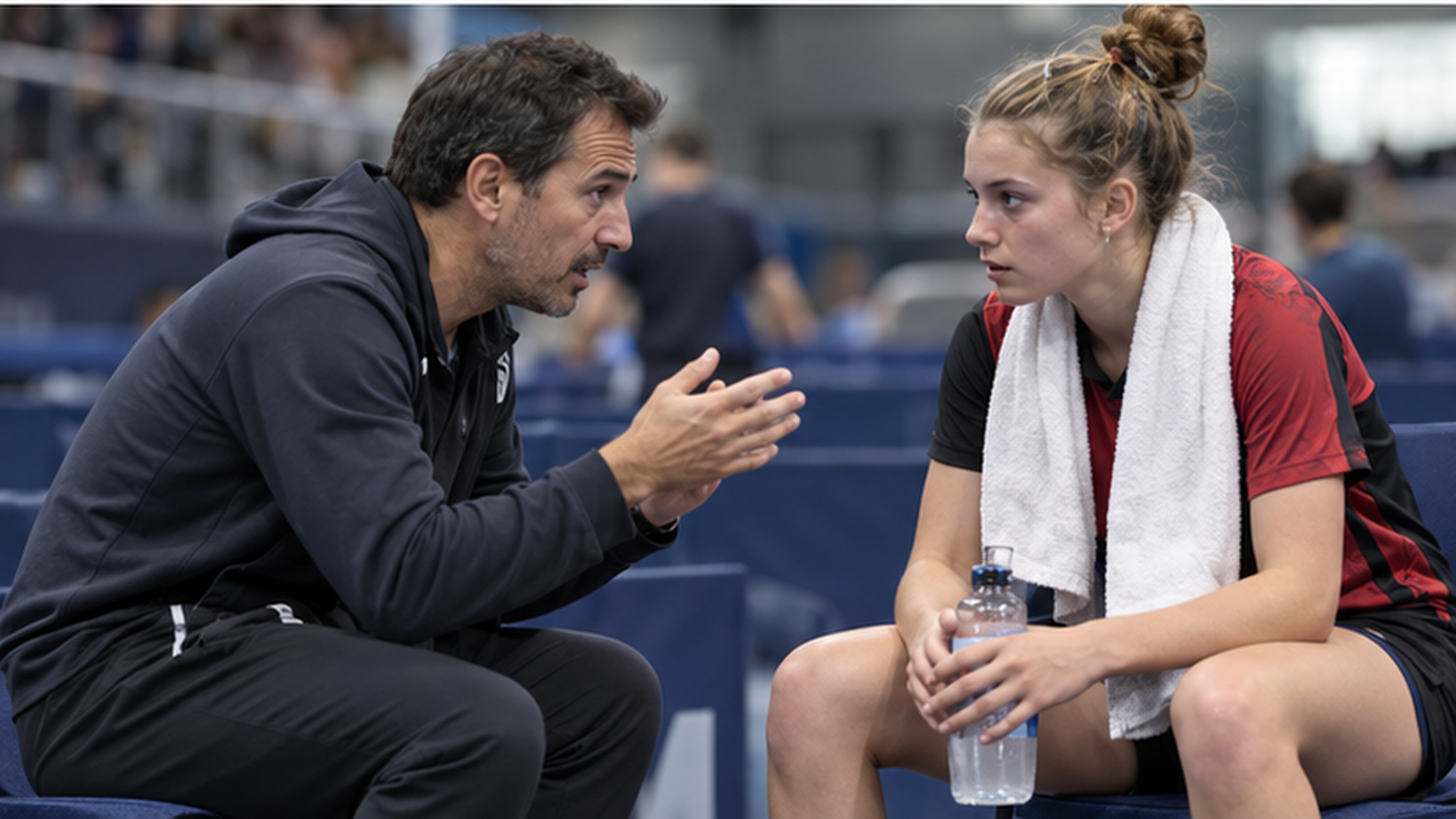
Antibes will therefore offer more than the names of the winners. The final table will show who was the most consistent, while each coaching staff will receive a precise list of areas for further work. Young players are entering a phase where speed, travel and expectations all increase, so managing their workload is as important as training. The Top 10 is a controlled test of that next step and an opportunity to compare Europe’s best young talents directly.
France, as host, has the chance to expose its strongest juniors to home crowd pressure and direct comparison with the European elite. A familiar venue helps with preparation, but expectations can weigh on young players. Coaches will therefore try to keep routines simple: the same warm-up period, a clear serve plan and a short review between rounds. Too much information after every match can slow decision-making, particularly when the next opponent plays in a completely different style.
The event is also useful for national federations weighing investment in junior programmes. The number of representatives says little on its own; what matters is the quality of play, physical endurance and progress compared with the previous season. A federation without a champion may still gain confirmation that more players are moving closer to the top. Conversely, one medal does not hide a problem if there is no depth behind it. The Top 10 therefore works both as an individual competition and as a snapshot of the development of Europe’s table tennis schools.