
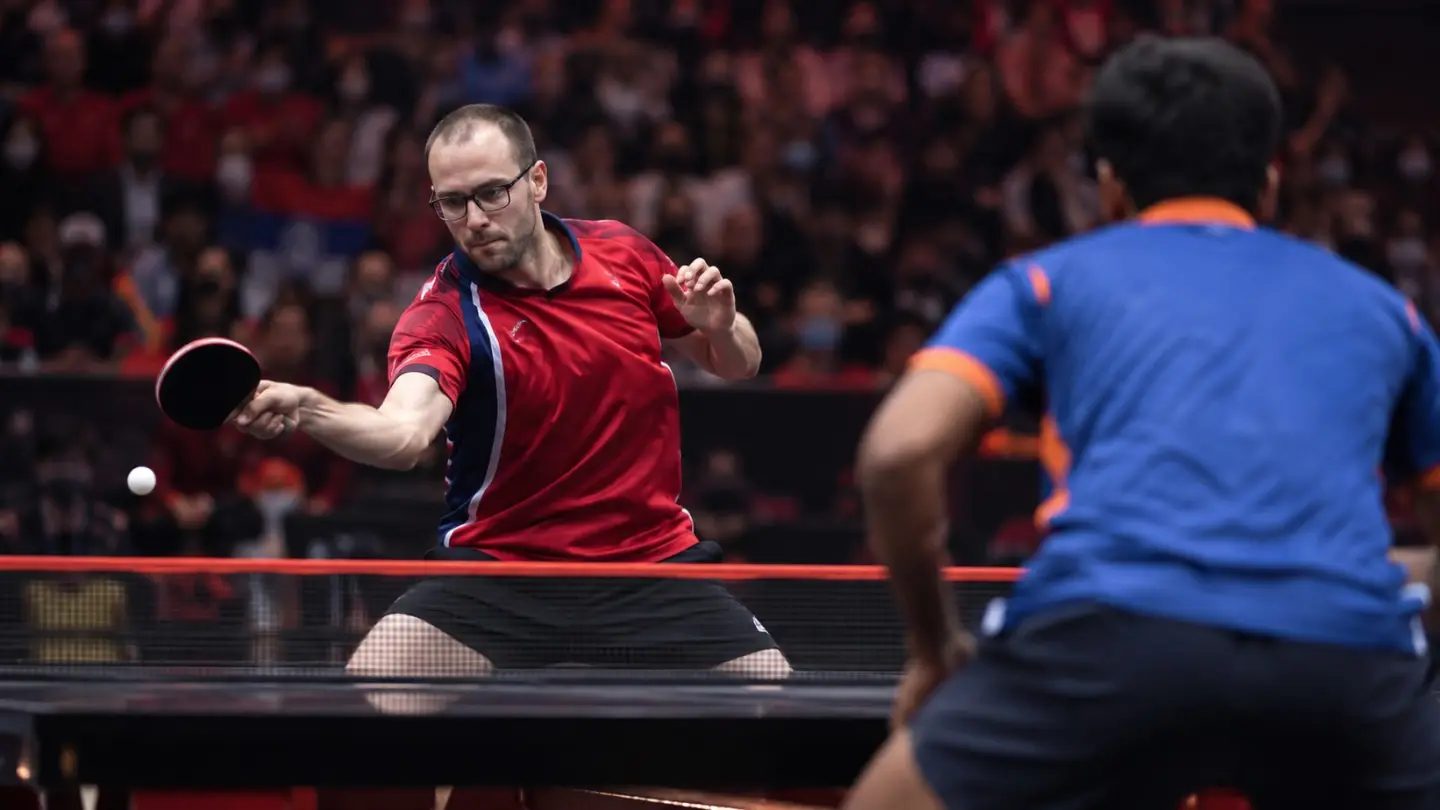
Dimitrije Levajac defeated Ankur Batacharjee 3:0 in the qualifying rounds of the major China Smash tournament in Beijing. The Serbian table tennis player cleared his first assignment without losing a single set and kept his energy for the next stage of the qualifying draw. At an event like this, one win does not secure a place in the main phase, but a clean scoreline reduces the physical and mental strain in a schedule with short gaps between matches.
From the outset, Levajac had to neutralise his opponent’s serve and prevent easy attacks off the third ball. Safe receiving is about more than simply getting the ball back over the net; length, height and the amount of spin decide who takes control. When he kept the return low or pushed it deep into the body, Batacharjee had less room for a full swing. The Serbian then opened the exchange from a steadier position.
Solid receiving took away the opponent’s early advantage
A 3:0 result may look straightforward, yet every set contains moments when two points can swing the direction of play. Levajac avoided long stretches of errors after a mistake and kept the same routine between serves. That matters particularly in qualifiers, where opponents differ in tempo, grip and spin. Trying to win every point in the same way quickly becomes predictable, so variation was part of his control.
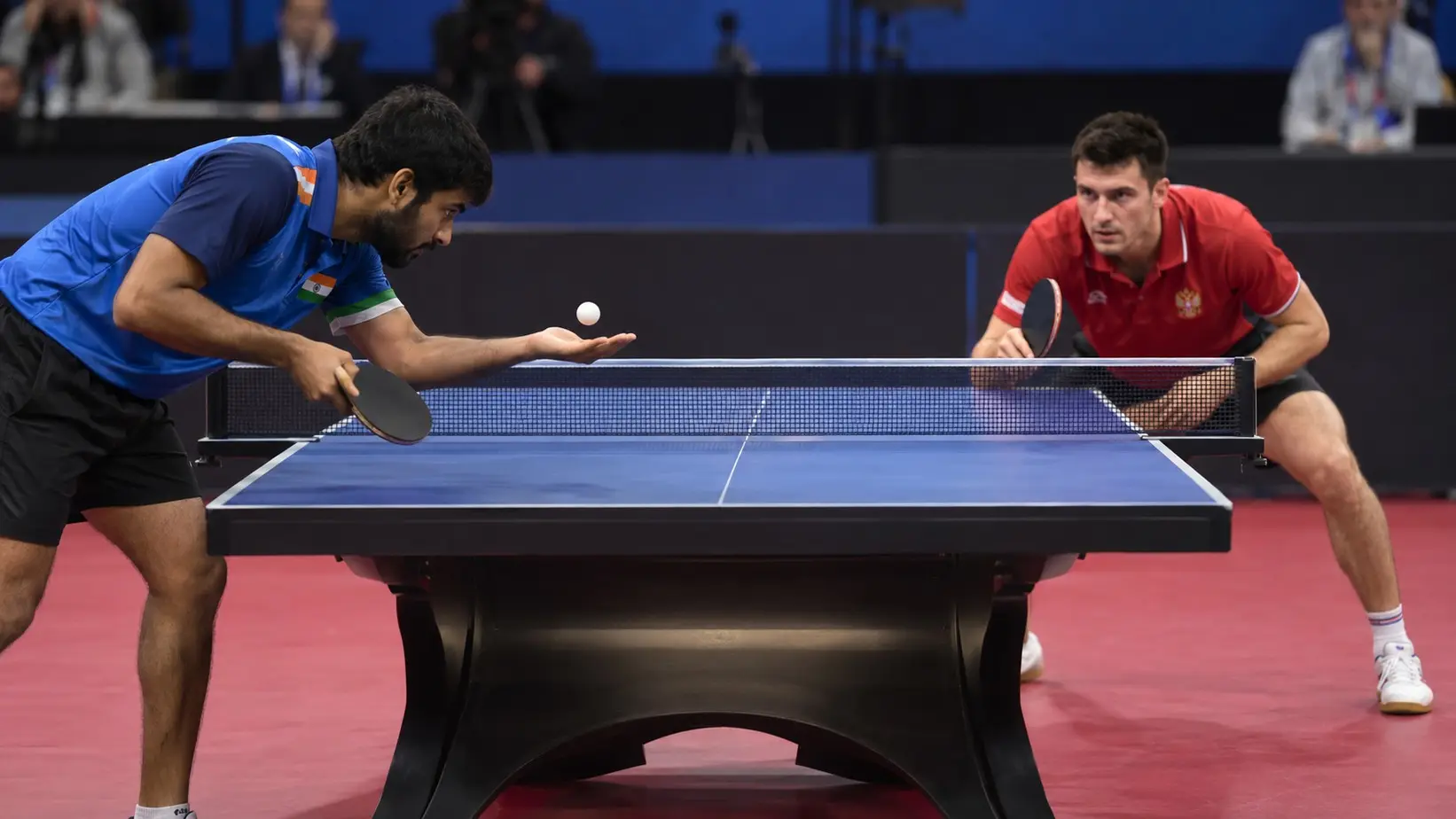
Footwork allowed his backhand and forehand to work as one unit rather than separate parts of the game. After receiving, Levajac took a small adjusting step, left space for his body and was able to respond to changes of direction. When a player stands too close to the table without a base, the next quick ball forces a passive block. Better positioning gave the Serbian the chance to turn that block into an active shot and press his rival again.
The next round demands the same intensity without leaning on the 3:0 scoreline
His next opponent will have footage of this match and will likely try to change the length of their serve or attack Levajac’s middle channel earlier. For that reason, a 3:0 win should not lead to exactly the same preparation. The coaching staff will single out the patterns that worked, along with the points in which Batacharjee still created an advantage. The most useful material often comes from lost rallies inside a won set, because they reveal a weakness before a tougher test.
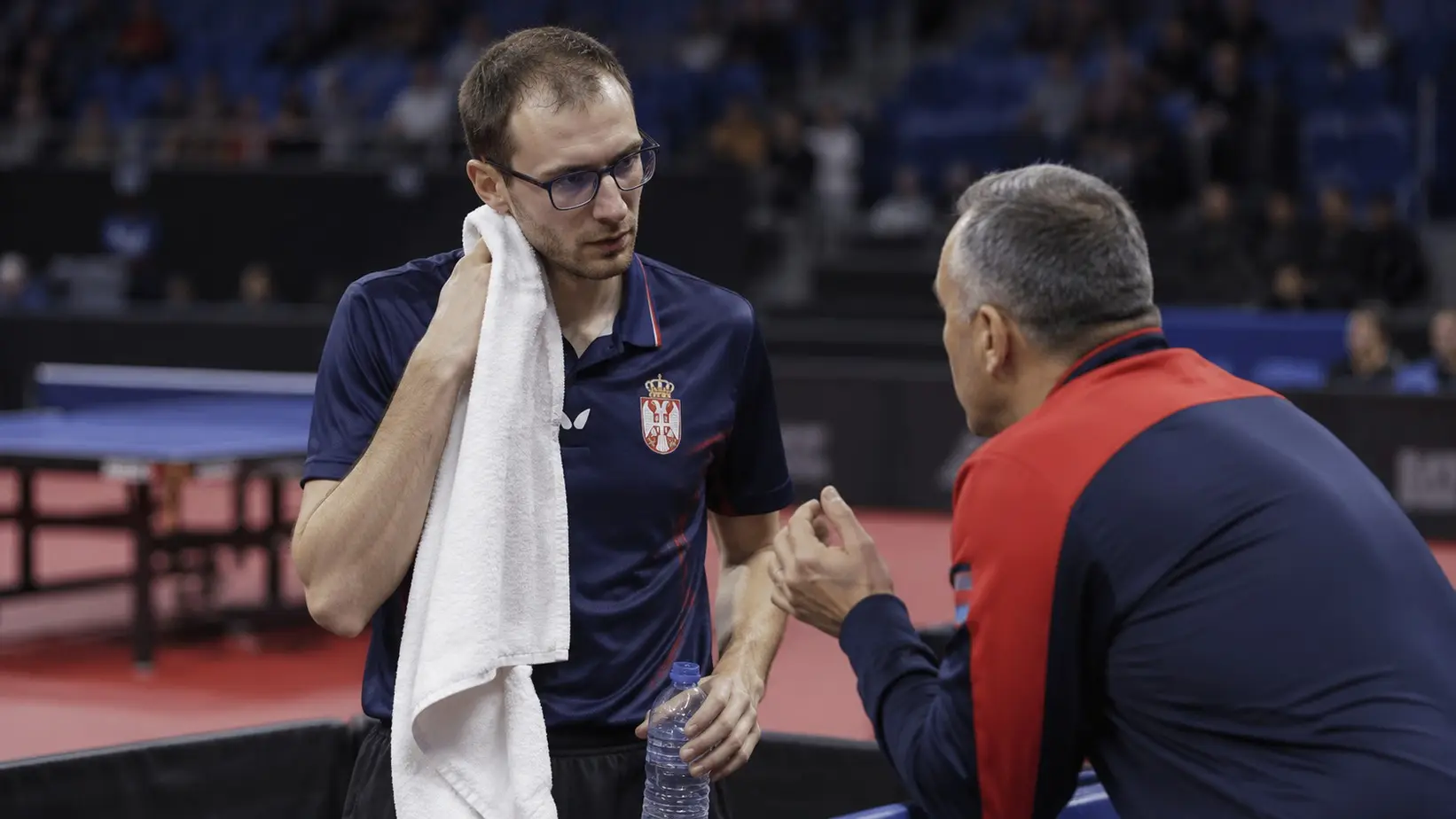
China Smash brings together a far wider field than a standard international event, so progressing through qualifying carries real weight in itself. Levajac must manage his warm-up, meals and rest so that every appearance starts at full speed. An overly long celebration after a convincing win, or an extra demanding training session, can take away freshness. A brief analysis and two clear tasks for the next match give a better balance between gain and wear.
For Serbian table tennis, a result like this brings visibility on the biggest stage, but the real goal remains consistency. Levajac took the first step in a controlled way, without losing a set and without needing to recover from a large deficit. Going forward he will need more precise receiving and courage in the closing stages of tight sets. If he keeps his footwork and varies his serve rhythm, he has the basis not merely to take part in the qualifiers in Beijing, but to become a genuine candidate for the main draw.
Serve and receive statistics will only be useful if they are linked to the third and fifth balls. Levajac can win a point later in the rally, but the cause often lies in the quality of the first contact. If he identifies which variations most often give him the initiative, he will be able to rely on them in tight finishes. The qualifying run will then not depend on improvisation at 9:9.
The large hall in Beijing changes the sound of contact and the sense of distance, so a quality warm-up is an important part of adjusting. A player has to check the bounce, the speed of the table and the lighting without altering basic technique because of one unusual shot. Levajac passed the first test calmly. The same routine will help him treat the external conditions as information to adjust to, rather than as an excuse.