
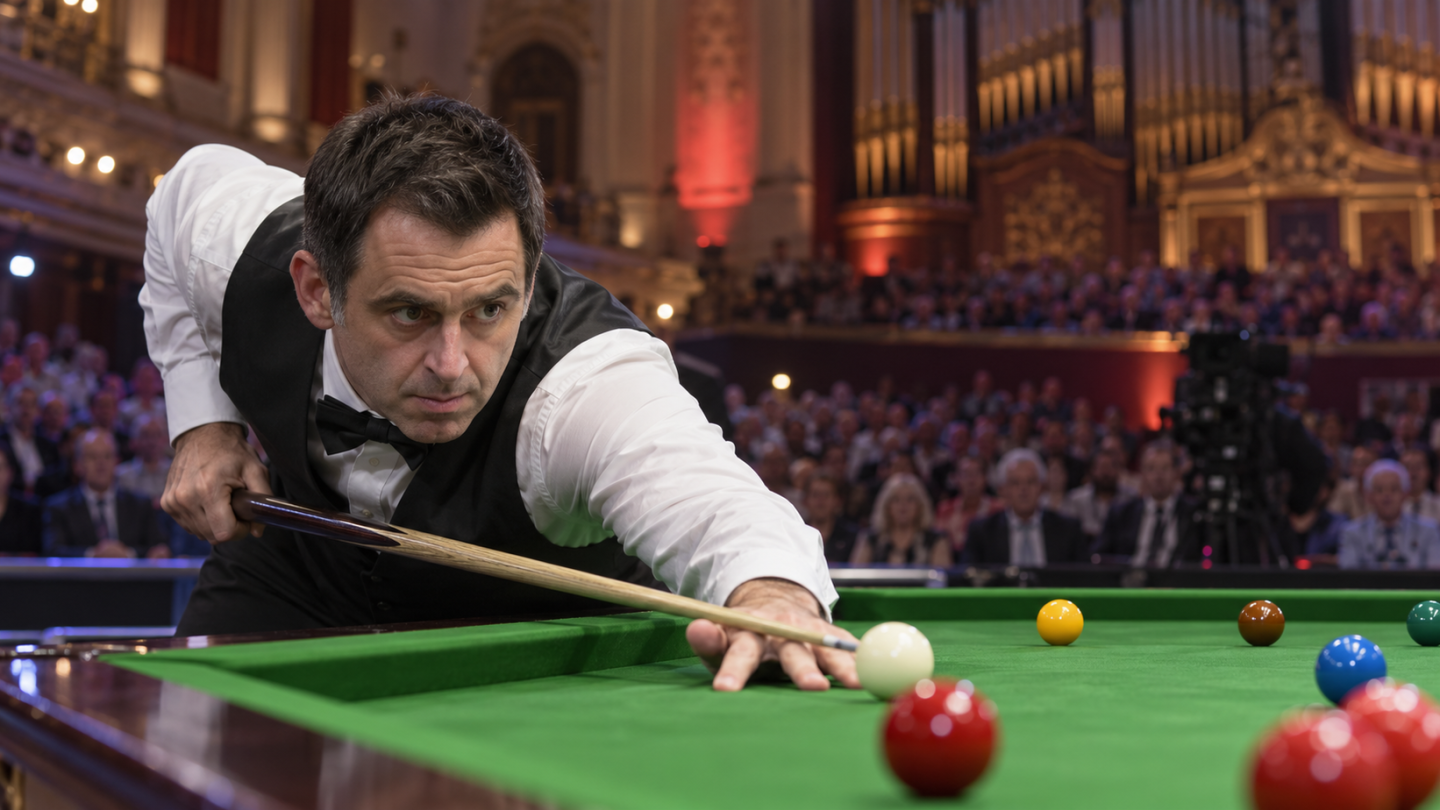
Ryan Day has been confirmed as a competitor at the UK Seniors Championship, which will be staged at St George’s Hall in Liverpool from 19 to 21 February 2027. The Welshman, a four-time winner of ranking tournaments, joins defending champion Peter Lines, Jimmy White, Ken Doherty, Joe Perry, Robert Milkins, Matthew Stevens and Anthony Hamilton. The line-up brings together former world champions, seasoned professionals and players in strong current form.
Day reached world number six, made three quarter-final appearances at the World Championship, and last claimed a ranking title at the British Open in 2022. The announcement follows his first World Seniors Snooker Tour title, secured with a 4-1 victory over Andy Lavin. That result took him to the top of the one-year Race to the Crucible list and showed he is in the senior programme on merit rather than on reputation alone.
Snooker 900 changes the rhythm and shot selection
The event will be played under the Snooker 900 format: each frame lasts no more than 900 seconds, or 15 minutes, and a player has 20 seconds per shot. That limit changes the basic logic of classic snooker. A long safety exchange can consume too much of the clock, so players must accept attacking risk sooner. The plan is not simply to make the biggest break but to manage both the scoreboard and the clock.

Day has enough experience to read a position quickly, but he must shorten his preparation without losing his routine. Twenty seconds is enough for a familiar shot and very little for a complicated escape from a snooker. The best preparation will be practice with a running clock and pre-set options. If the first line is not available, the second decision has to come automatically, because hesitation can cost more than a technically average solution.
Day’s form raises the standard in Liverpool
Familiar names bring the crowds, while Day’s current form keeps the competitive level high. White and Doherty have vast experience on big stages, but a compressed format can reduce the importance of long tactical manoeuvring. A player who finds the rhythm of the table and the speed of the cushions quickly gains a major advantage. One missed simple shot can leave too little time to recover, even when the opponent makes no big break.

Liverpool will therefore host a tournament that blends nostalgia with real pressure. For Day, the appearance is a chance to confirm his seniors credentials against a broader and better-known field. His aim will be to keep the composure of a standard match while making decisions at the speed the new format demands. If he finds that balance, he could be more than an attractive addition and become one of the main contenders for the trophy.
Organisers will use this line-up to test whether a faster format can attract audiences without losing the essence of snooker. The clock adds visible pressure, but precision, cue ball control and risk assessment remain the same core skills. If players simply speed up their movements, quality will fall; if they decide sooner, the tempo can rise without technical loss. Day has a few months to adapt his training and study how experienced rivals use the time rule. His strengths are his current competitive routine and his recently gained confidence. A possible weakness is a habit of lengthy assessment of complicated positions. The tournament will reward whoever best recognises when to accept a simple safety shot and when the clock demands attack. In such a setting, experience and adaptability are equally valuable.
The crowd will immediately see which decision genuinely saves time without sacrificing accuracy.
A result near the end of the time calls for particular awareness of the value of each ball. A player who is ahead must not withdraw automatically, since an overly passive game can leave an open chance, but he also need not accept every difficult pot. In training, Day will likely simulate the final two minutes with different score gaps. Such exercises turn the pressure of the clock into a familiar calculation and reduce the chance that instinct overrides a good decision.