
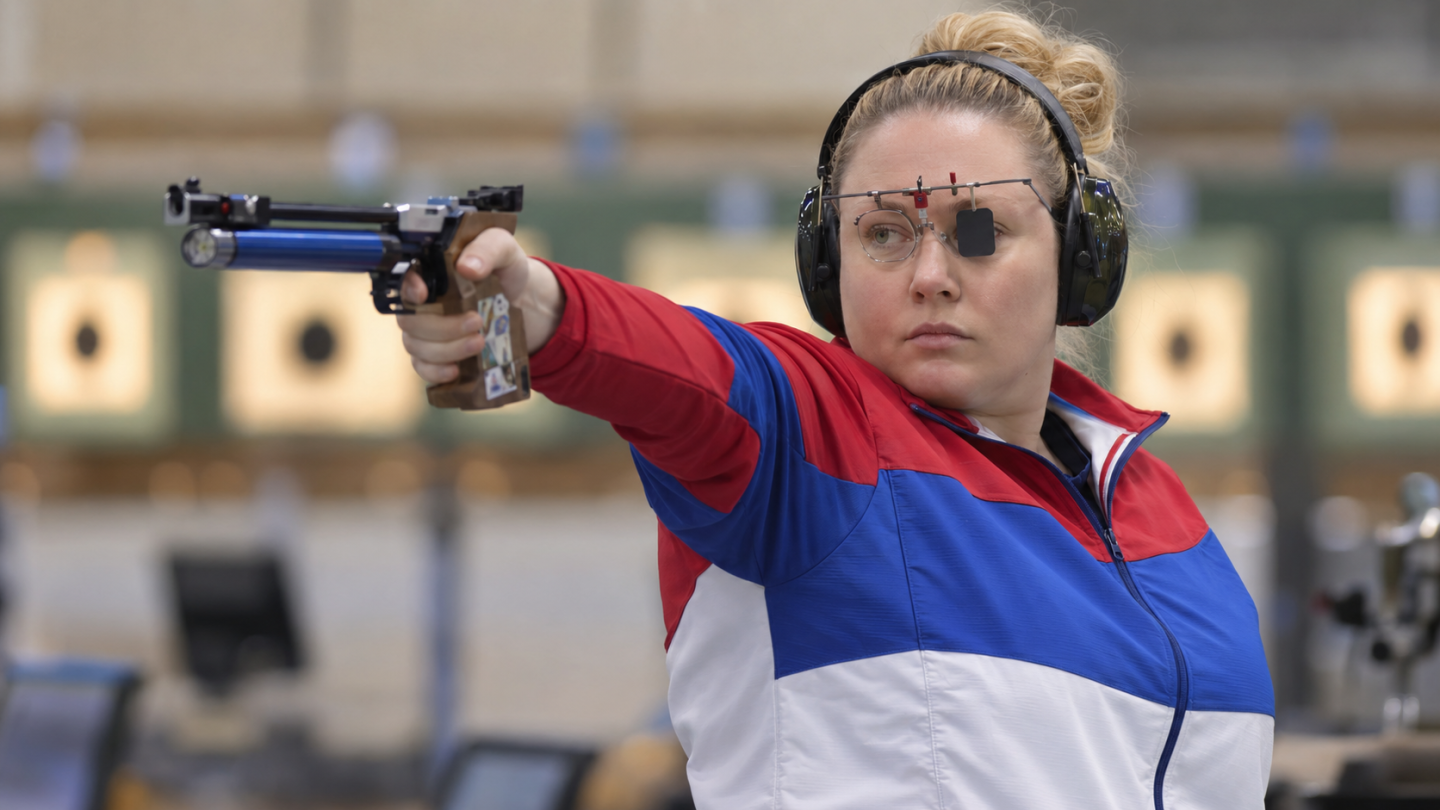
Zorana Arunović has brought her professional shooting career to a close after 26 years. The Serbian Olympic champion announced her decision in a message in which she thanked the sport for the memories and hinted at a new chapter in life. It marks the end of one of Serbia’s most decorated sportswomen, who for many years carried the heaviest results burden for the national team in air pistol and small-bore pistol events.
Her greatest moment came at the Paris 2024 Olympic Games, when she and Damir Mikec won gold in the mixed 10 metre air pistol event. That medal held a special place because it came after long joint work and several Olympic cycles in which Arunović was among the leading contenders. Leaving professional sport is therefore tied not to a single result but to the consistency that kept Serbia among the world’s best for years.
A career built on major competitions
Arunović won two gold medals at World Championships and nine European titles. She added four golds at the Mediterranean Games and two at the European Games, giving her a total of 17 gold medals at major international competitions. The number of medals speaks to her longevity, but the variety of conditions in which she won is just as telling: individual and mixed events, continental and world tournaments, and different final formats under the pressure of Olympic cycles.
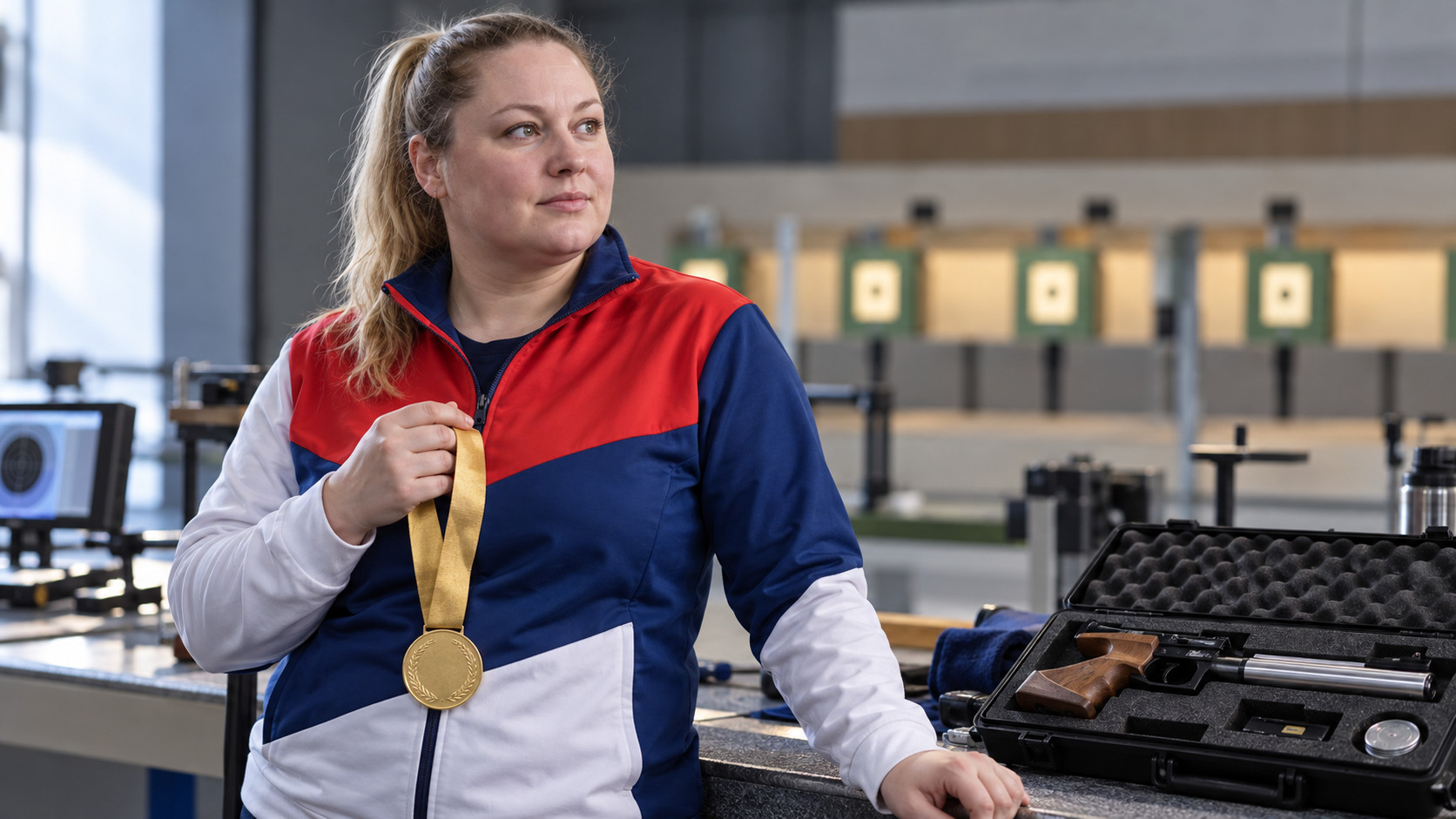
In shooting, a top result is often decided by a single shot, which makes mental stability as important as technique. Arunović stayed competitive across several generations of rivals and changes in format, and her partnership with Mikec became one of the recognisable symbols of the Serbian Olympic team. Her Olympic gold did not erase earlier disappointments; it turned them into evidence of persistence and precise work across her entire career.
What her departure means for Serbian shooting
The national team now loses a shooter who consistently brought medals, experience and composure in the biggest finals. That loss cannot be replaced by a single selection or one young name. The federation and coaches will need to share responsibility, continue developing junior shooters and preserve the system that prepared Arunović and her colleagues for the major tournaments over many years. The mixed events will be a particular challenge, as the understanding between partners has a direct effect on results.
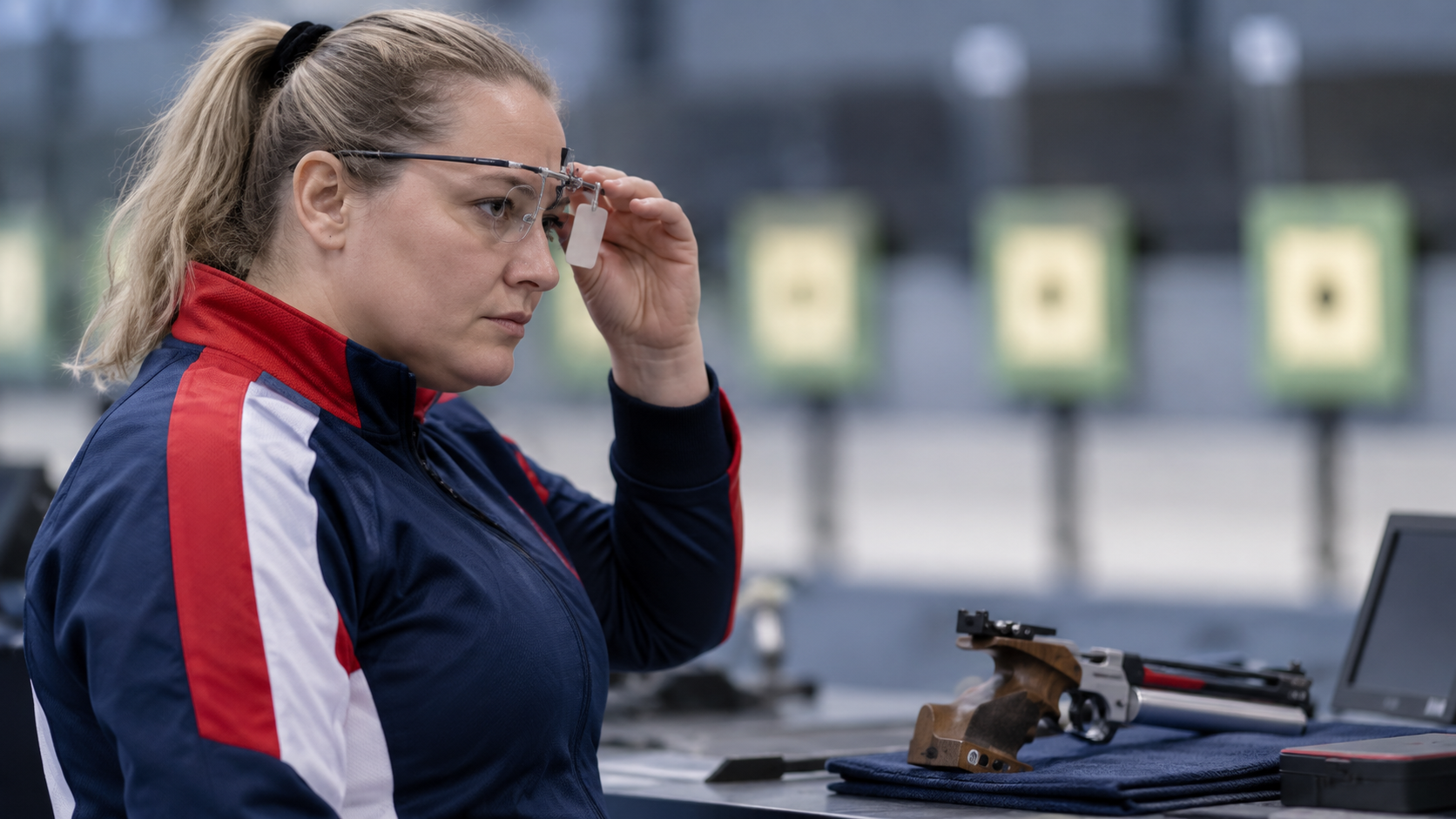
The announcement did not include a detailed plan for her next professional step, so it would be premature to assume a coaching or administrative role. What is already certain is the place she holds in the history of Serbian sport: she ends her career as an Olympic champion and a two-time world champion. Future official moves will show whether her experience carries beyond the range, while her sporting record remains the benchmark against which future generations of Serbian shooters will be measured.
Her impact can also be seen in how the Serbian public has started following pistol disciplines. Tournaments that once stayed within a narrow circle of the sport drew wider attention when Arunović and Mikec regularly reached finals. That effect matters for clubs, because children’s interest, local support and investment in equipment often grow only when national team athletes stay recognisable on the biggest stage for a long time. Her legacy is therefore not just medals but greater visibility for a sport that demands patience, safe conditions and years of technical refinement. Future national team members will receive more attention precisely because the previous generation showed that Serbia can win Olympic medals.
A final competition result cannot by itself define the value of such a long career. What sets her apart is that Serbia could count on Arunović across several Olympic cycles, even as opponents, rules and public expectations kept changing.