Serbian SuperLiga begins a 14-club transitional season

- Author: SerbianSport
- SerbianSport
The Serbian SuperLiga begins its 2026-27 season with 14 clubs. It is a transitional campaign before the league moves to 12 clubs in 2027-28. The regular phase contains 26 rounds. Each club meets every opponent once at home and once away.
After round 26, the top six enter the championship group. The remaining eight enter the relegation group. Each group then plays a single round of additional matches. The format gives top-six clubs five extra games and lower-group clubs seven.
How the 26-round phase works
Fourteen clubs create a double round-robin schedule of 26 matches per team. There is no idle club in a normal round because the league has an even number. The standings after those matches determine the split. Points collected before the split remain part of the competition record.
The six-eight division creates two groups of different sizes. Clubs in the top group play every other member once. Clubs in the lower group play seven further matches. The published calendar places the final matchday on May 16, 2027.
The regular phase contains 182 matches across the league. The championship group then adds 15, while the lower group adds 28. That produces 225 matches over the full competition. A top-six club plays 31 league games in total. A lower-group club plays 33 because it has two more opponents after the split.
The season starts in July
The opening programme begins on Friday, July 17. Crvena zvezda host Macva, while Zeleznicar meet Radnicki Nis. Both matches are scheduled for 20:00. Other first-round fixtures follow across the weekend under the official league calendar.
The autumn schedule runs until December 6. Competition resumes on February 6 after the winter break. Those dates come from the national federation's calendar. Individual kick-off times may still change for television or stadium reasons.
Points won in the first 26 rounds remain in the standings after the division. They are not reduced or halved. A strong autumn can therefore protect a club later, while a poor start cannot be erased at the split. The new groups change the opponents and the number of remaining matches, not the value of results already earned.
Why this season is transitional
The federation chose a gradual reduction from 16 clubs to 12. The 2026-27 season sits between those formats with 14 participants. Four clubs are due to leave the top division at the end of the campaign, while two places come from the second tier.
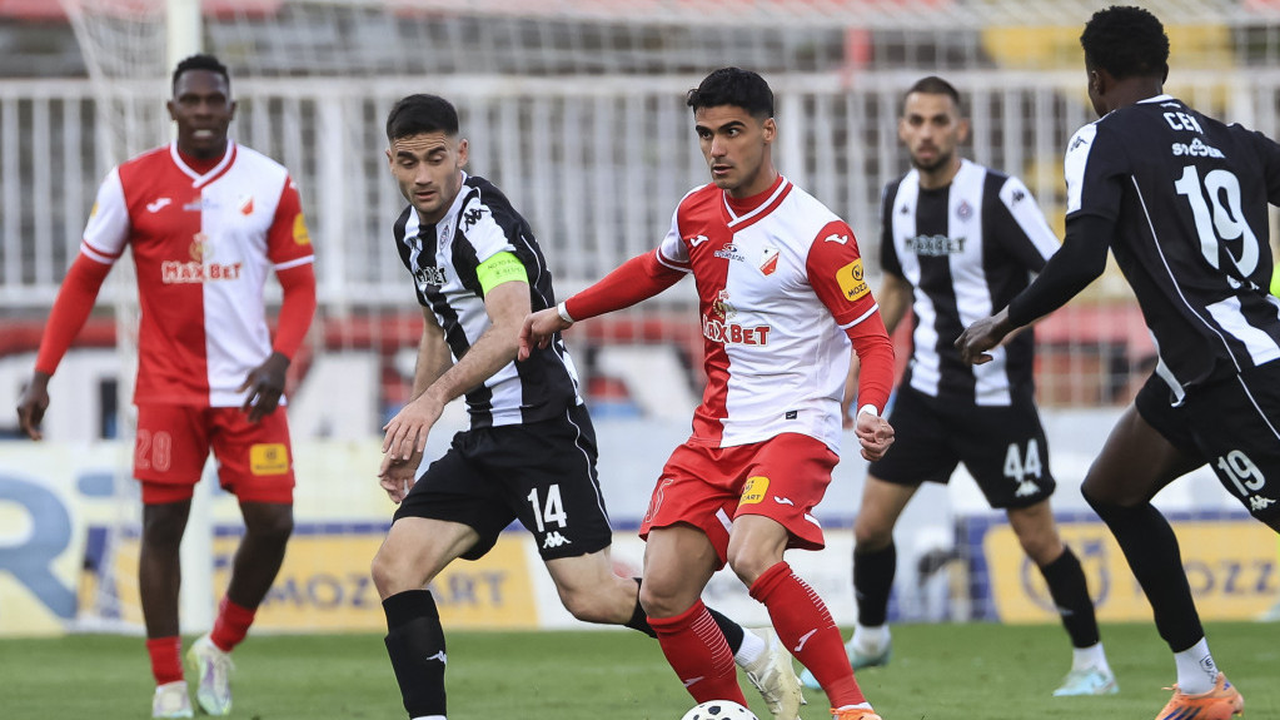
Vojvodina and Partizan players competing during the 2025-26 Serbian SuperLiga
Teleoptik are preparing for the new domestic season through Teleoptik's preparations for the First League.
That movement produces a 12-club league for 2027-28. It also makes the lower group important beyond one relegation place. Exact promotion and relegation procedures follow the official competition rules. The central reform has already been approved.
The reduction to 12 clubs explains the unusual relegation pressure. Four teams are due to leave the top division, while two arrive from the second level. That is a larger movement than in a normal season. Clubs around the middle of the standings must consider sixth place and the lower danger area at the same time.
| Signal | Meaning |
|---|---|
| Clubs | 14 |
| Regular phase | 26 rounds |
| Split | Top six championship group; bottom eight relegation group |
A different race around sixth place
Sixth place is the line between the championship and relegation groups. A club just above it receives five matches against leading opponents. A club just below it enters a larger group with seven fixtures. The split therefore changes both opposition and match totals.
No club begins with a protected place in either group. The first 26 results decide the division. Early points have the same value as later points. The shorter league also means each opponent appears only twice before the split.
The two groups also create different closing schedules. Championship clubs meet only rivals from the top six once more. Lower-group clubs face every other team in that group once. Home and away balance cannot be identical in a single round-robin phase, so the official schedule decides which clubs receive each fixture at home. The format leaves top-six teams on 31 league games and lower-group teams on 33.
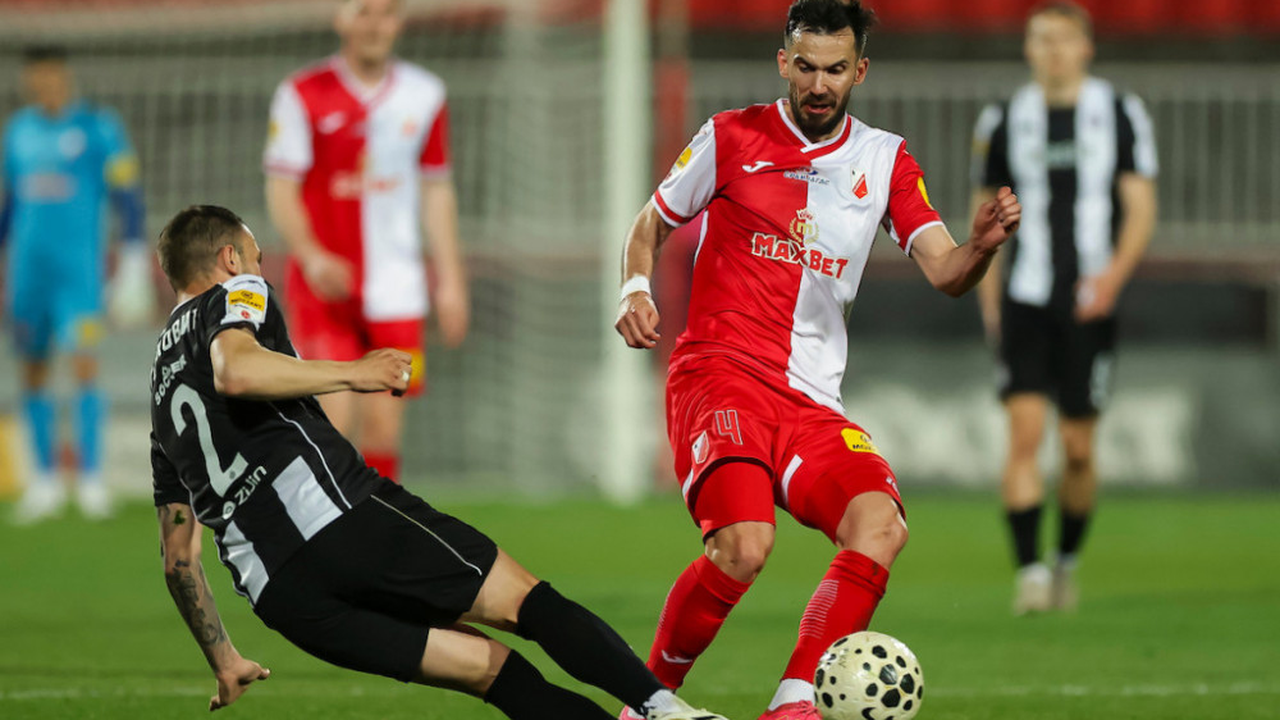
Vojvodina and Partizan players in a SuperLiga match at Karadjordje stadium
Other changes around matches
League officials also presented updates covering refereeing, VAR, player registration, equipment and medical conditions. These measures concern match administration rather than the basic points system. Their exact application follows the official regulations and referee instructions.
The changes set common procedures for clubs and officials. They cover how matches are administered rather than guaranteeing a higher playing level. Players, coaches, pitches and decisions will still shape the quality seen during the season.
The facts before the opening round
The confirmed structure is 14 clubs, 26 regular rounds and a six-eight split. The top group plays five more matches, while the bottom group plays seven. The season ends with a planned reduction to 12 clubs for the following campaign.
That format is more important than broad predictions about the title. Crvena zvezda begin as defending champions, but every club starts from zero points. The opening weekend begins a competition whose two main races separate only after round 26.
Discuss the news - leave a comment!
Go to comments ↓
Comments
0