Red Star cadets beat IMT 4-0 with control in both halves
- Author: SerbianSport
- SerbianSport
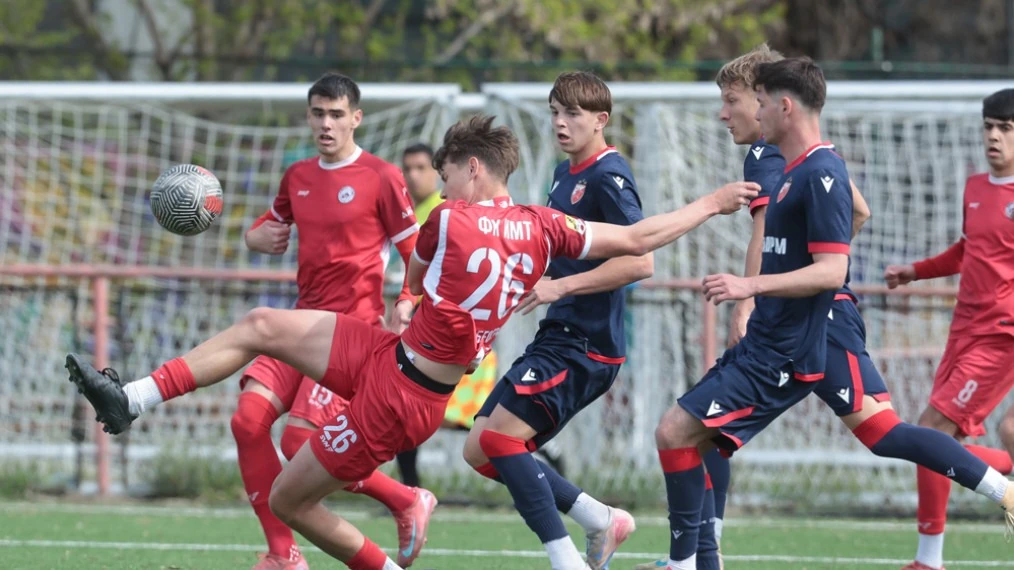
Red Star's cadet side defeated IMT 4-0 in the national cadet league. The official match record confirms a clean sheet and a result built across both halves rather than one brief scoring burst. The hosts established control, protected the center when possession changed and continued to create organized attacks after gaining a clear advantage. For an academy team, that combination matters as much as the final margin.
The opening phase required patience
IMT began with enough numbers behind the ball to make a direct central route difficult. Red Star had to circulate possession, use the width and wait for a receiver to appear between lines. Academy players often confuse control with the need to force an immediate shot. The home side benefited from keeping the next pass available and moving the defensive block before trying to enter the penalty area.
Pressure after a lost ball protected the attack
A youth team can create a good move and then concede because too many players remain ahead of the ball. Red Star's nearest midfielders reacted quickly when an attack ended. That response slowed IMT's first pass and gave defenders time to hold useful distances. The clean sheet began with those actions far from goal, not only with saves or clearances inside the penalty area.
| Match detail | Confirmed record |
|---|---|
| Competition | Serbian Cadet League |
| Teams | Red Star cadets and IMT cadets |
| Winner | Red Star |
| Defence | Clean sheet |
| Final | 4-0 |
The lead did not remove the need for structure
After moving in front, the hosts kept recognizable roles. Wide players continued to stretch the field, while central teammates offered support instead of standing on the same line. This made later chances easier to create and limited the temptation to attack with too many touches. A larger margin is most valuable for development when it comes from repeated good decisions rather than from an opponent losing all order.
IMT needed a safer first pass
The visitors' best route back was to survive Red Star's immediate pressure and carry possession into a quieter area. When the first pass stayed close to danger, the next receiver had little time and few angles. A more secure outlet toward the side could have moved the contest away from the home team's strongest pressure. That is a precise training point rather than a broad judgment on the whole group.
Second-half changes kept the contest useful
Substitutions gave coaches a chance to test players in a match whose score had become difficult to reverse. New arrivals still needed clear tasks and the same standards of positioning. Red Star continued to look for organized openings without abandoning defensive cover. IMT could use the minutes to judge reactions under pressure and identify players who kept asking for the ball despite the result.
Four goals should be separated by how they were created
A useful video review groups chances by origin: controlled buildup, recovery high on the field, wide combination or set play. If several finishes came from the same pattern, Red Star have a repeatable strength. If they came from different routes, the match shows attacking variety. The coaching value lies in the action before the shot, not in replaying only the final touch.
A clean sheet still contains defensive corrections
IMT may not have scored, but Red Star should review moments when the visitors reached space or forced a recovery run. A favorable result can hide poor body position or a late handover between defenders. Correcting those moments now protects the players when a future opponent finishes more efficiently. Development requires the same honesty after a win as after a difficult defeat.
The next match will test whether the habits travel
Home control against IMT becomes a stronger sign if Red Star reproduce the same spacing and reaction in a tighter contest. The staff can carry forward three points: patient circulation, immediate support after possession changes and disciplined roles after building a lead. IMT can focus on the first pass and the distances that help a team leave pressure. Both groups leave with specific work rather than only a table entry.
Individual praise should remain connected to the team task
A scorer or goalkeeper may receive the clearest headline, yet academy assessment must include decisions away from the final action. Coaches can note who created width, who protected a teammate's forward run and who offered the simple pass under pressure. This prevents young players from believing only goals and saves count. A complete evaluation rewards the habits that make those visible moments possible and prepares the group for senior football.
Discuss the news - leave a comment!
Go to comments ↓
Comments
0