Partizan cadets protect their lead and beat Zeleznicar 3-1 at Teleoptik
- Author: SerbianSport
- SerbianSport
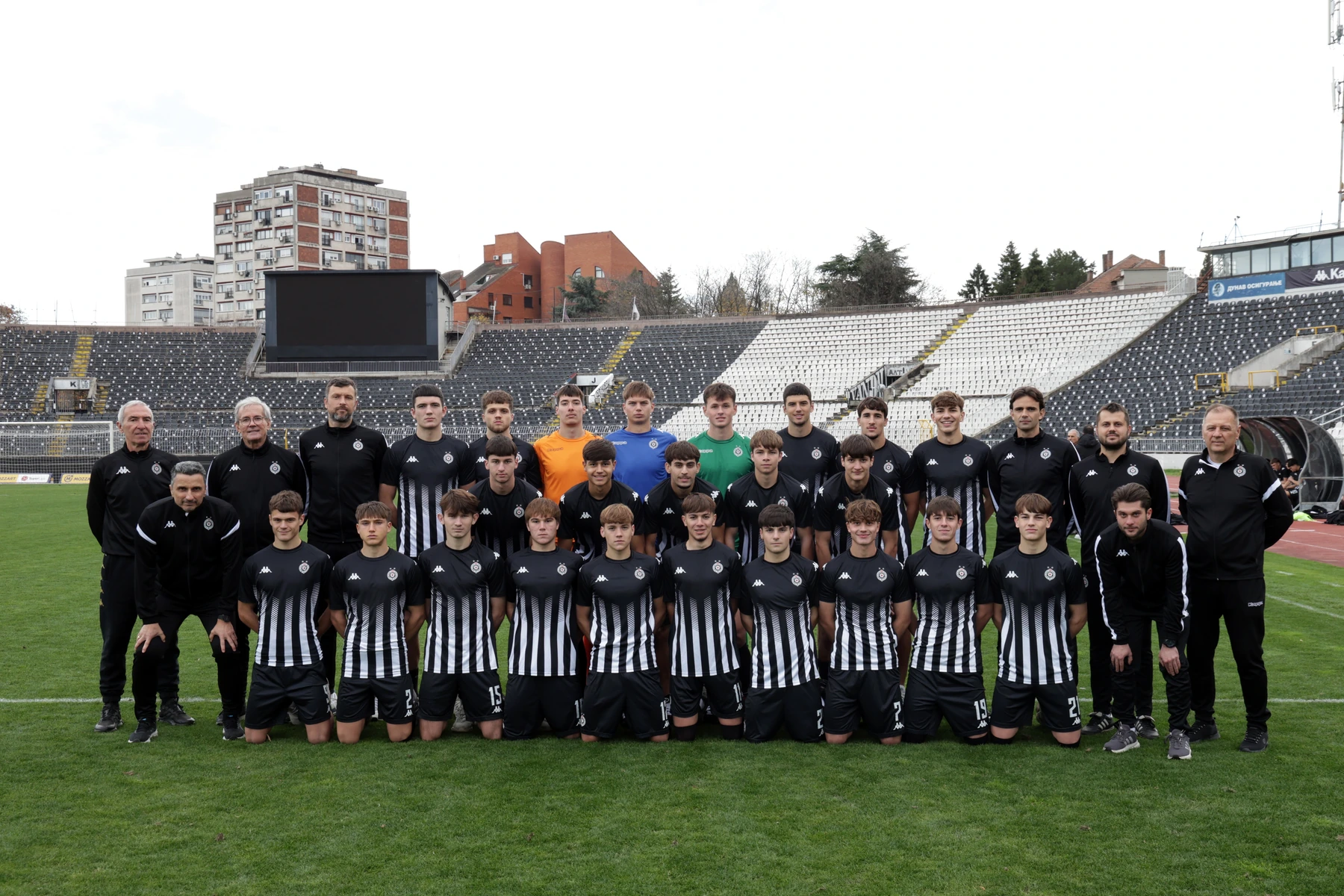
Partizan's cadet team defeated Zeleznicar Pancevo 3-1 in the fifth round of the national cadet league at SC Teleoptik. David Stamenic opened the scoring in the 20th minute, Stefan Ristic doubled the lead in the 35th, and Milos Antic replied for Zeleznicar before half-time. Aleksa Duljaj scored in the 90th minute to confirm a result that had remained competitive through most of the second half.
Partizan built the lead through two different moments
Stamenic's goal in the 20th minute gave the hosts a platform, while Ristic added the second after another 15 minutes. A two-goal advantage can encourage a youth team to force a third immediately, but it can also create careless distances between midfield and defence. Partizan had to keep the same basic structure after scoring. The official sequence suggests that the hosts used their stronger phase well, although the match was not settled before the interval.
Zeleznicar changed the half with a quick response
Antic scored in the 33rd minute, only two minutes before Partizan's second goal is recorded at 35 in the official report's event order. The visitors therefore reached half-time within one goal and carried a reason to press after the break. For Partizan, the response was a reminder that an academy match can change quickly. The home side needed to protect the central space and avoid giving away another direct route before the interval.
| Match detail | Confirmed record |
|---|---|
| Competition | Serbian Cadet League, round five |
| Half-time | Partizan led 2-1 |
| Final | Partizan won 3-1 |
| Partizan scorers | David Stamenic, Stefan Ristic, Aleksa Duljaj |
| Venue | SC Teleoptik, Zemun |
The second half became a test of control
There was no goal between the break and the 90th minute. That long period matters because it shows that Partizan could defend a narrow advantage without the match turning into repeated scoring at both ends. The hosts still had to decide when to attack and when to slow the next phase. Zeleznicar remained close enough to threaten an equalizer, so every lost ball carried value. Control in this situation comes from distances and decisions, not from keeping the ball without purpose.
Substitutions changed energy without changing the scoreline
Both teams used several replacements across the second half. Partizan introduced fresh players while protecting a one-goal margin, and Zeleznicar tried to add attacking energy. Youth coaches also use these matches to develop players, but the competitive situation cannot be ignored. A substitute needs one clear instruction on arrival: which player to follow, which space to protect or which run to make. The stable middle of the half suggests that neither side lost all organization during the changes.
Duljaj's late goal confirmed rather than created the win
Aleksa Duljaj scored in the 90th minute. The finish gave Partizan a safer final score, but it should not be written as if the previous hour did not matter. The home side had protected a 2-1 lead through the most uncertain part of the contest. The third goal rewarded that patience and removed the final risk of a late equalizer. It also gives the attacking group a useful example of continuing to look for a clear opening without abandoning defensive balance.
Academy results need development context
A league win matters, yet the purpose of a cadet team includes preparing players for higher levels. Coaches will examine how Stamenic and Ristic found scoring positions, how defenders reacted after Antic's goal and how the group handled a tight second half. A strong review can praise the result while identifying decisions that would be punished by an older and faster opponent. Development becomes visible when the same correction appears in the next performance.
Zeleznicar have useful evidence from a competitive hour
The visitors were not out of the match after their first-half response. They can study the periods when Partizan could not extend the lead and identify what allowed them to remain within one action of an equalizer. The late third goal should be reviewed separately from the earlier structure. A team learns more by finding the exact moment when pressure weakened than by describing the entire second half as unsuccessful.
The score should appear once in the story, then the play takes over
Partizan won 3-1 after leading 2-1 at half-time. Repeating those two figures in every section would make the article harder to read without adding meaning. The useful details are the early platform, Zeleznicar's response, the scoreless period after the break and Duljaj's final action. That order explains how the match developed and avoids turning four goals into a confusing collection of separate totals.
Youth results need context beyond the table
The cadets protected their lead while continuing to search for the third goal. That balance matters at this age because a team can learn little by defending passively after gaining an advantage. Coaches can review how the midfield supported both directions and whether the final pass arrived at the right moment. The victory is useful when those decisions become part of the players' development, not only another number in the standings.
Discuss the news - leave a comment!
Go to comments ↓
Comments
0