Jovana Arsić wins Mediterranean Games rowing silver after a steady final
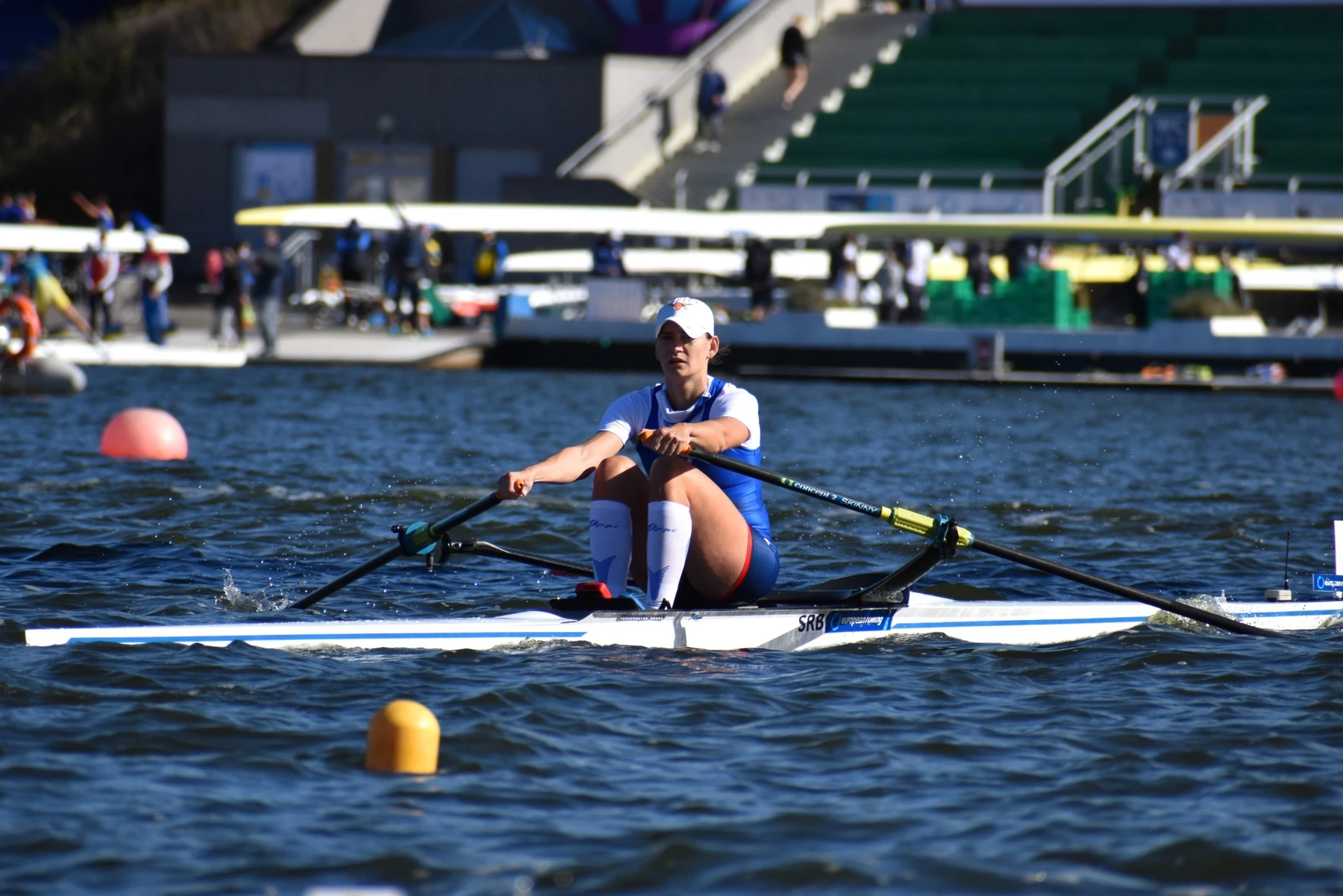
- Author: SerbianSport
- SerbianSport
Jovana Arsić won the silver medal in the women's rowing final at the Mediterranean Games. She finished in 8:03.87. Evangelia Anastasiadou of Greece won gold in 7:52.30, while Nina Kostanjšek of Slovenia took bronze in 8:07.42.
Jovana Arsić controlled the boat from start to finish
In single sculls, one athlete controls direction, rhythm and power from the start to the finish. She could not rely on a crew member to correct an uneven stroke or call a change of pace. Her time of 8:03.87 placed her second in the Taranto final. Conditions and opponents differ between competitions, so this performance can be evaluated on its own: She completed the Mediterranean Games final with the silver medal.
A fast start followed by a stable rhythm
A strong start helped Arsić establish her position, but continuing at the opening pace for too long would have used energy needed later. She had to move from a fast start into a rhythm that she could maintain. Every stroke connected leg drive, body movement and the pull of the arms. A poor sequence would send energy upward instead of moving the boat toward the finish. A controlled transition allowed her to remain competitive after the first part of the course.
| Medal | Athlete | Time |
|---|---|---|
| Gold | Evangelia Anastasiadou | 7:52.30 |
| Silver | Jovana Arsić | 8:03.87 |
| Bronze | Nina Kostanjšek | 8:07.42 |
Jovana Arsić kept a straight line through the middle of the course
Small steering corrections cost time in a single scull because the same athlete also produces all of the boat's power. She had to remain in her lane while judging opponents that she could not watch continuously. Several strokes that were too hard or too weak could disturb the race plan. A stable rhythm kept the boat moving between strokes and preserved energy for the final acceleration. Her second-place finish showed that she maintained control through this demanding part of the race.
Official times for all three medallists
Evangelia Anastasiadou won the final in 7:52.30. She finished second in 8:03.87, and Nina Kostanjšek was third in 8:07.42. The Serbian rower reached the finish 3.55 seconds before the bronze medallist. Anastasiadou had created a larger advantage at the front, while She kept enough speed during the final part to protect second place.
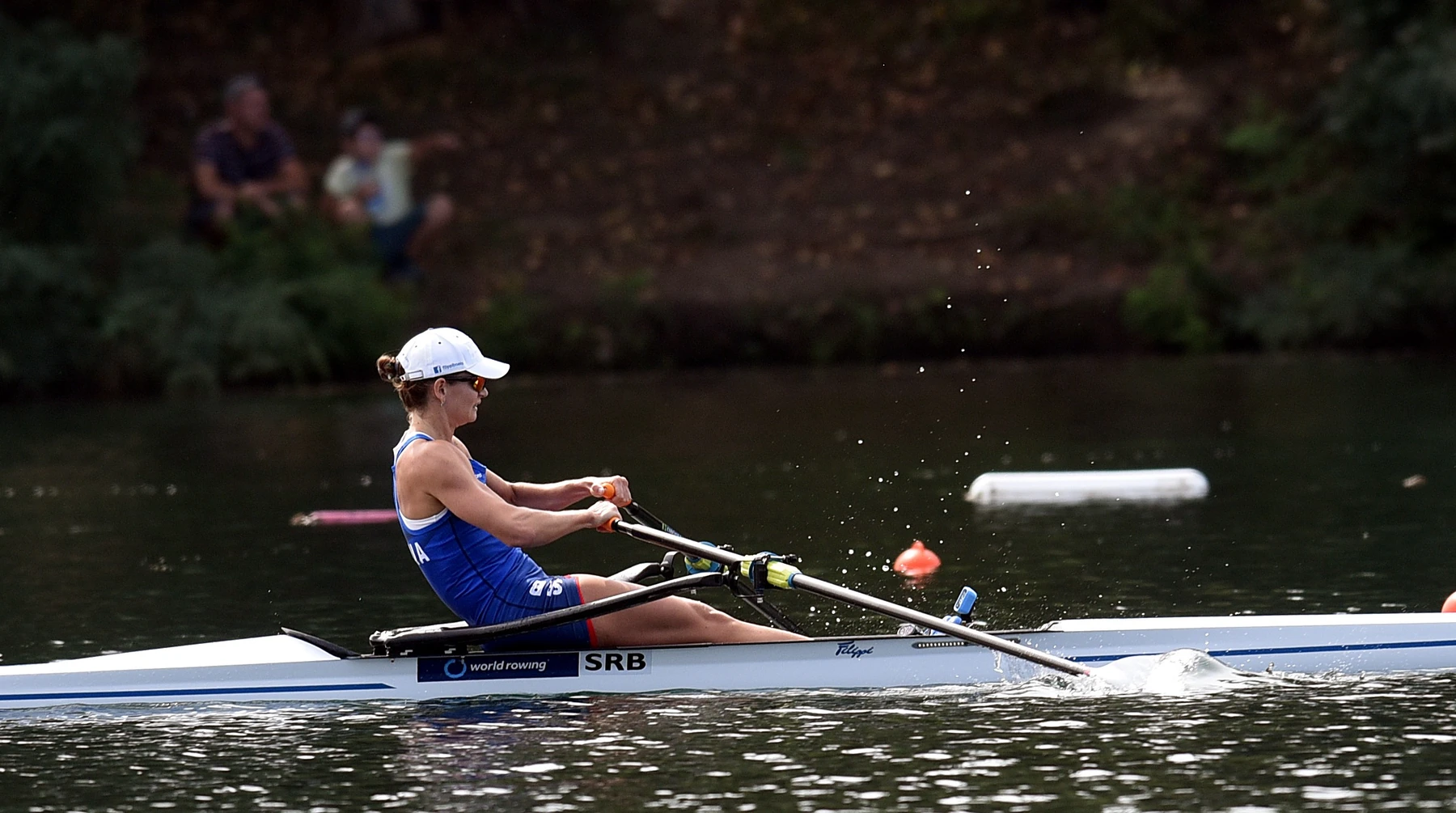
Technical control during the final acceleration
A rower increases the stroke rate near the finish, but speed can fall if the blade enters the water poorly or the body opens too early. She needed to accelerate without shortening the powerful part of each stroke. Fatigue made coordination harder while her legs and back were under their greatest load. She maintained enough technical control to stay ahead of Kostanjšek and crossed the line in second place.
New race data for the coaching team
The Taranto final gives the coaching team current information about Her start, pace through the middle and speed over the last part of the course. Video and split times can show where Anastasiadou created the leading gap and how She protected her advantage over Kostanjšek. This analysis can guide later training, while the silver medal remains a significant international result for the Serbian rower.
Second place in the completed final
She completed the final with a confirmed silver medal. She finished behind Anastasiadou and ahead of Kostanjšek. The race is over, so the next step is recovery and technical analysis rather than another change to the result. Her performance in Taranto provides a useful reference for future training and a completed medal result for Serbia at the Mediterranean Games.
A steady race brought the silver medal
She remained between the leading boat and the third-place rower at the finish. The gap to Anastasiadou shows where more speed will be required in future races, while the advantage over Kostanjšek confirms that the Serbian protected second place. The silver medal came from managing the full distance: a strong opening, a stable rhythm through the middle and enough technical quality to maintain speed when fatigue increased near the line.
Discuss the news - leave a comment!
Go to comments ↓
Comments
0