
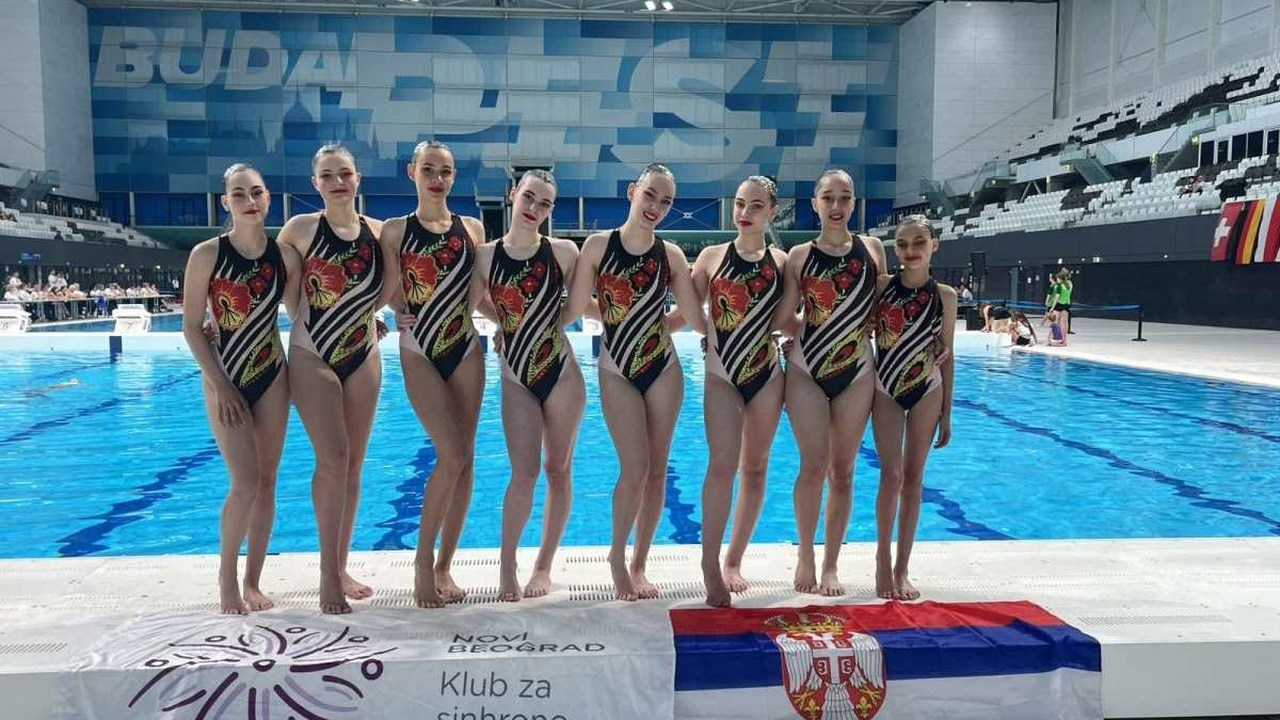
Young Serbian artistic swimmers pose beside the competition pool in Budapest.
The Serbian Artistic Swimming Federation will introduce its junior national team ahead of the World Championships in Budapest. The selected athletes are completing their preparations in Belgrade.
The programme covers solo, duet and team routines. At the presentation, the federation will confirm which events each member of the squad will compete in.
The presentation will reveal the final lineup
Throughout the season the federation worked with a wider pool of athletes. The list for Budapest represents a smaller group chosen for this competition.
Coaches must allocate swimmers across solo, duet and team performances. Some athletes may take part in more than one routine.
The support staff travelling with the team will also be presented. Their responsibilities include coaching, medical support and music preparation.
Following the event in Belgrade, the squad moves into its final training block. The main structure of the routines must already be set before the trip.
Budapest is once again hosting the junior championships as part of its wider aquatic sports programme. The Duna Arena offers competition and training space within the same complex.
Judging panels assess technical difficulty and execution separately. A demanding routine earns its full value only when its elements are clear and controlled.
Each event demands a different kind of control
In the solo routine, a single swimmer carries the entire technical and artistic programme. Every transition, expression and underwater element must remain clear.
The duet adds the challenge of precise coordination between two athletes. Body positions and movements must match even when the swimmers cannot see each other well.
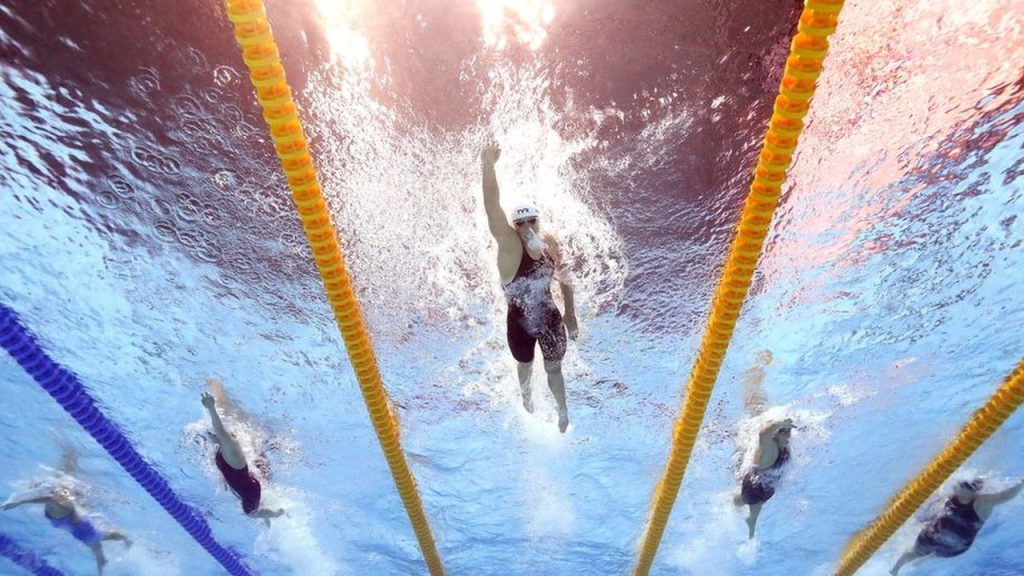
Young athletes rehearse the underwater entry for a team piece.
Team routines present the greatest scheduling challenge. The squad must hold its formation through rapid changes, lifts and underwater movements.
For that reason, Serbia is preparing its events in separate blocks. Coaches link these sessions with conditioning work for the whole national team.
Teams arrive early to complete familiarisation training. The athletes use that time to check the pool, the sound system and the route they will take to the competition area.
The wider junior championships programme also includes mixed events. Federations select entries according to the athletes available to them.
Judges reward difficulty that stays clean
Artistic swimming combines technical elements with performance. A difficult routine loses its value when rhythm or formation breaks down.
The swimmers perform without relying on the pool floor. They must control their breathing, body height and direction while the music continues above the water.
| Competition | World Junior Artistic Swimming Championships |
|---|---|
| Host | Budapest, Hungary |
| Dates | 12 to 16 August 2026 |
| Serbia’s entries | Solo, duet and team routines |
The final preparations focus on reliable execution. Coaches correct small differences, since one delayed movement can disrupt the entire formation.
Conditioning is just as important. The athletes need strength for lifts and stamina to keep their expression clear through the final movement.
Music is part of the performance plan rather than background decoration. The swimmers count precise beats while part of the movement takes place below the surface.
The final allocation will determine how Serbia uses its travelling squad. A swimmer competing in more than one routine must also manage recovery between them.
The Duna Arena offers the conditions of a major championship
The World Championships will be held at the Duna Arena. The Budapest venue has already hosted major competitions in swimming, diving and water polo.
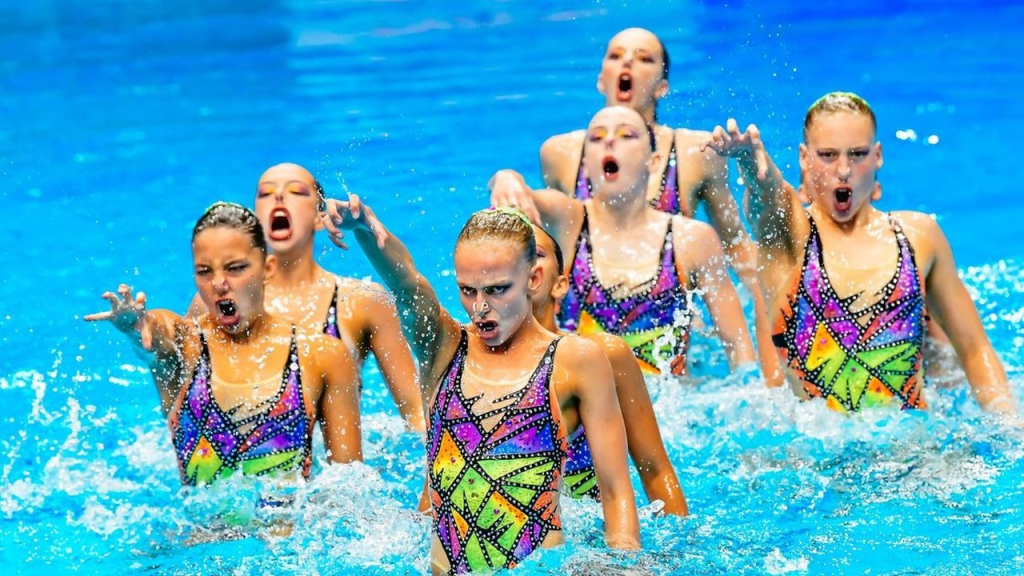
A team piece shows the precision required at international level.
Teams will be given time to get used to the pool, the lighting and the sound system. Music in a large arena can sound different from how it does in training.
A clear audio cue matters because the first movement must begin on the exact beat of the music. Familiarity with the venue helps swimmers hold their rhythm.
The championships will bring together a wide range of international competitors. Serbia’s juniors will measure their routines against programmes developed in different systems.
Underwater control places heavy demands on breathing. The athlete must surface at the planned moment without disturbing the shape of the routine.
Budapest is an important step towards the senior stage
The junior championships do not test a single routine alone. The athletes learn to manage travel, training, waiting and repeated performances.
Those habits become important in senior competition. Quality must be repeated after a long day and in front of strict international judges.
A recent result from Serbia’s water polo players brings another update from domestic aquatic sports.
Serbia now has a clear task: to present the team, finish preparations in Belgrade and deliver the planned routines in Budapest.
Lifts require a different kind of cooperation. The swimmers beneath the surface generate the power, while the lifted member controls body position above them.
The Belgrade presentation completes the selection
The federation will name the swimmers for the solo, duet and team routines. The squad then completes its final training block before travelling.
Budapest will provide the first international comparison for the selected group. The competition at the Duna Arena begins after the official familiarisation sessions.