
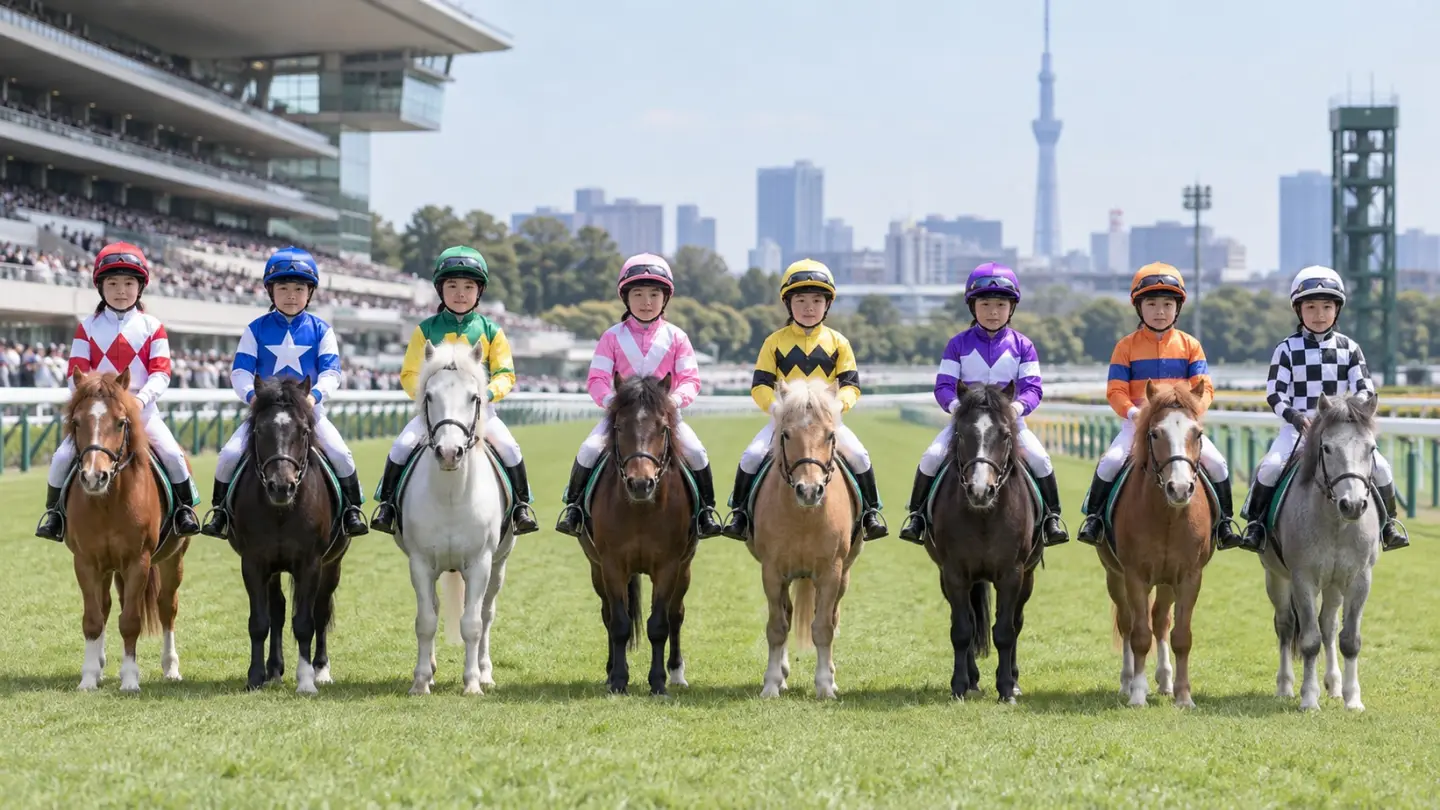
The Tokyo racecourse will host the final of the 16th National Pony Championship Jockey Babies on 11. October. Eight children who came through qualifying in seven Japanese regions will race on a turf straight course of 400 metres. The riders are sixth-graders from primary school and first-year students from secondary school, and the start is set for 16.50, after the regular racing card has finished.
A short 400 metres leaves very little room for correction. The start, the rider’s first position in the saddle and how quickly the pony settles into a rhythm may decide more than a late push for speed. The young jockey needs to be active enough to send a clear request to the animal, yet without a sudden pull that unbalances the pony and shortens its natural stride.
All the ponies belong to the Japan Racing Association, which allows the organiser to match each animal’s experience to the ability of each rider with care. Perfect equality is not possible, since every pony has its own rhythm and reactions, but getting to know the animal beforehand reduces unpredictability. Above all, the child must understand how the pony accelerates and how much room it needs to keep a straight line.
A 400-metre sprint rewards a clean start and balance
Places are earned through regional qualifiers, so the final is more than a single brief appearance. Eight riders arrive with experience of competing and of working under the eye of a coach. The big racecourse still brings a new atmosphere, a crowd and a wide finishing straight. Keeping nerves under control will matter just as much as technical preparation in the saddle.
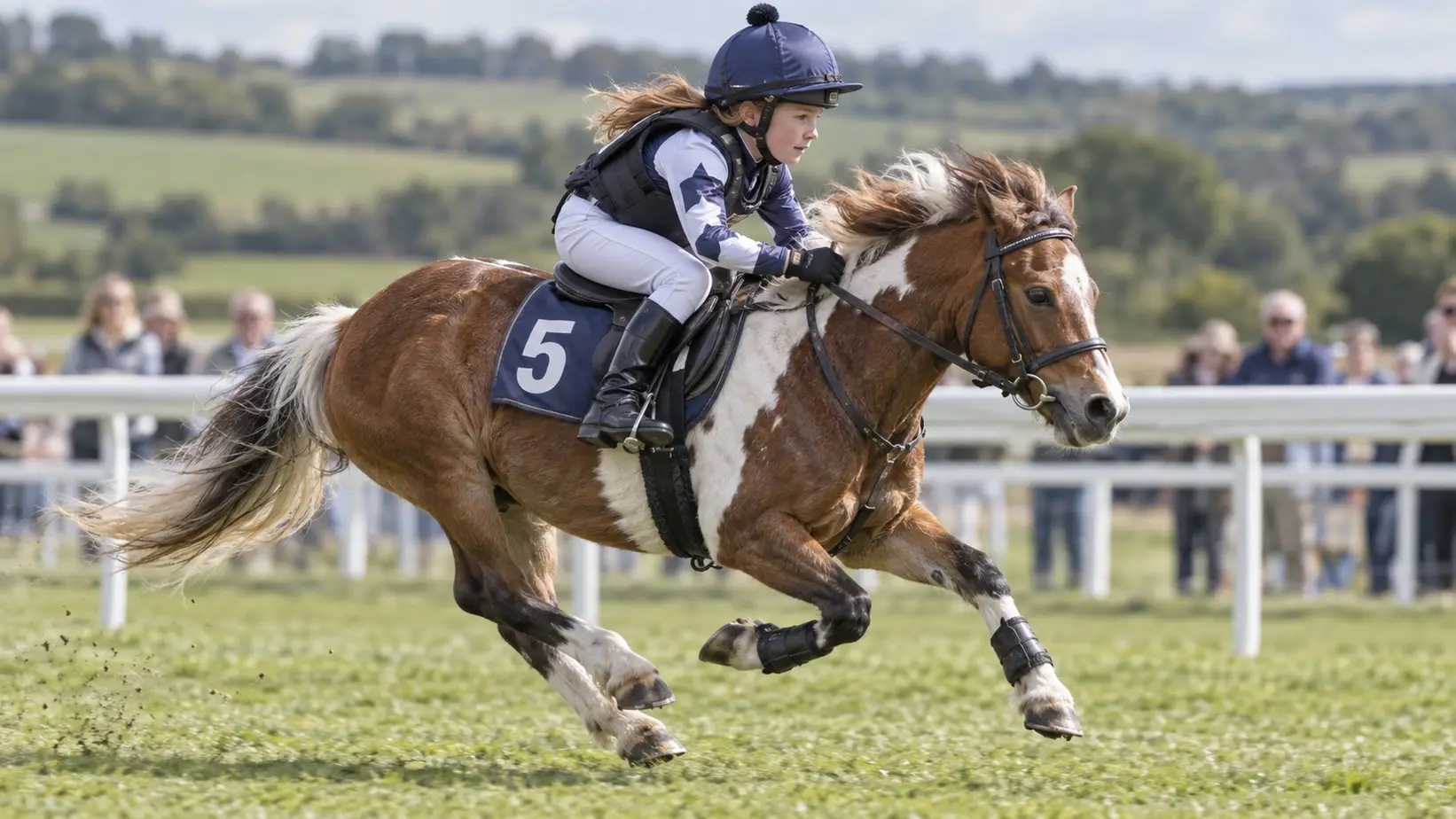
Safety must come before the result. A helmet, correctly fitted equipment and clear rules on keeping a straight line reduce the risk in a group. Over 400 metres there is no excuse for a risky cut across the track to gain one place. Young riders learn that a sporting decision carries responsibility towards the pony and the other competitor, not just the urge to win.
The event has educational value for Japanese horse racing. The children gain experience on a major stage, while spectators see the first step before a professional jockey career. Not every entrant will become a professional, but sound technique, care for the animal and calm composure before the start form a foundation that stays useful in every part of equestrian sport.
The national final links pony sport with the school of great races
To judge a performance, watch how quickly each pair finds an even gallop after the start. An early lead does little good if the pony wastes energy through uneven strides. A rider who stays quiet in the upper body and allows the stride to stretch properly may be faster in the second half, even if they pass the first few tens of metres behind the leader.
Another important detail will be holding a line without interfering with the neighbouring pony. In a short sprint, a small sideways drift wastes distance and breaks rhythm. Coaches will therefore value clean, controlled riding far more than a desperate finishing effort. The result of the final matters, but the quality of decisions shows how ready the young jockey is for more demanding tracks.
Jockey Babies brings eight regional stories to Japan’s biggest stage. The race is short, but behind it lie months of work with the pony, qualifying runs and lessons in safety. The winner will be decided by a combination of the start, balance and cooperation with the animal. For every entrant, simply stepping onto the Tokyo turf is an experience no training session can fully replicate.
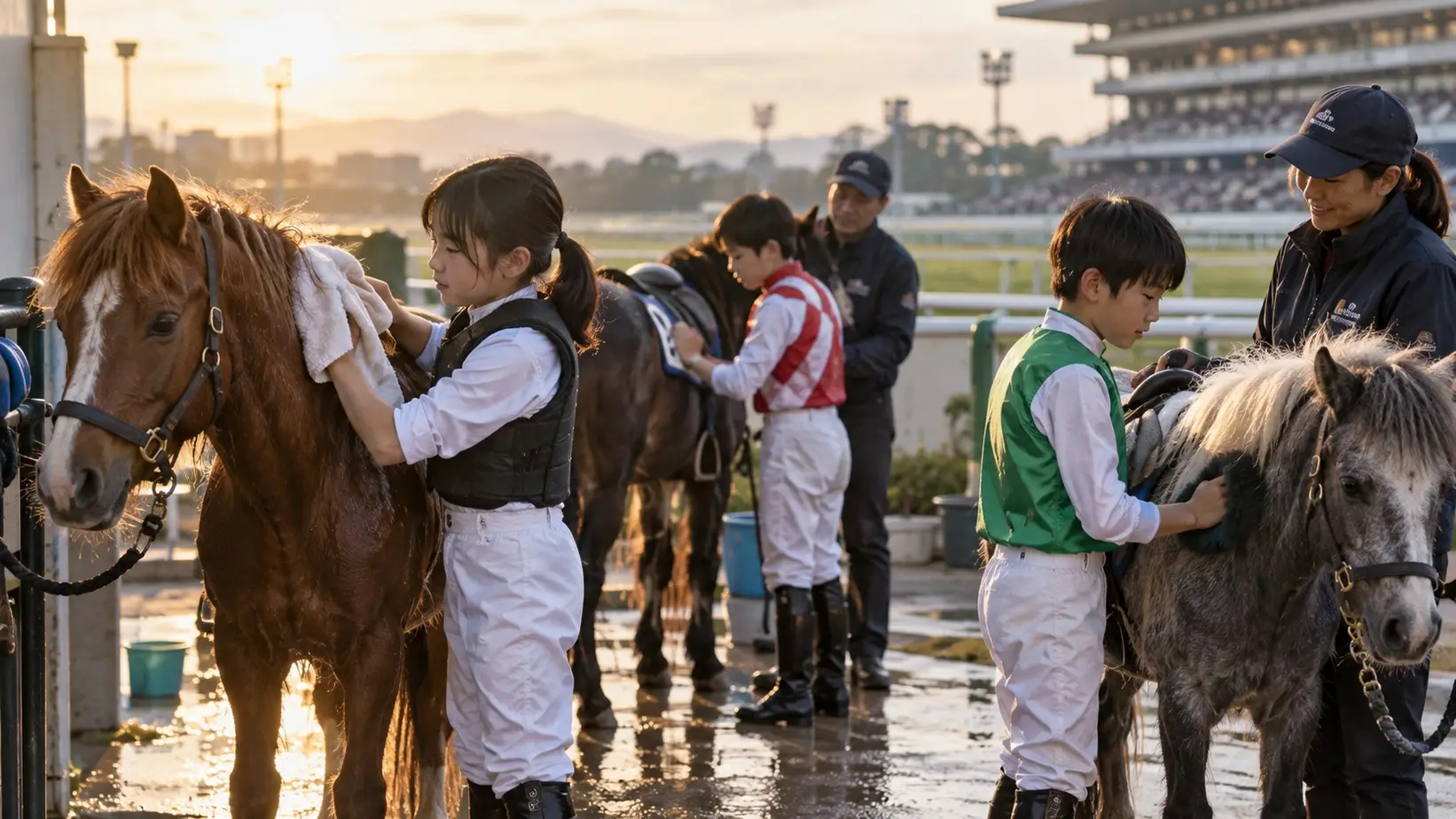
After the race, organisers will also need to watch how the ponies behave on the way back, because the animal’s welfare does not end at the finish line. Calming them down, checking the equipment and proper aftercare are all part of the lesson for young riders. In this way the final remains a sporting experience that builds responsibility, rather than just a short contest for first place.
For the crowd, the most important thing will be to support all the competitors without putting extra pressure on the children. Warm applause should reward correct riding, a safe finish and care for the pony. That kind of atmosphere protects the competitive spirit while keeping education at the heart of the event.