
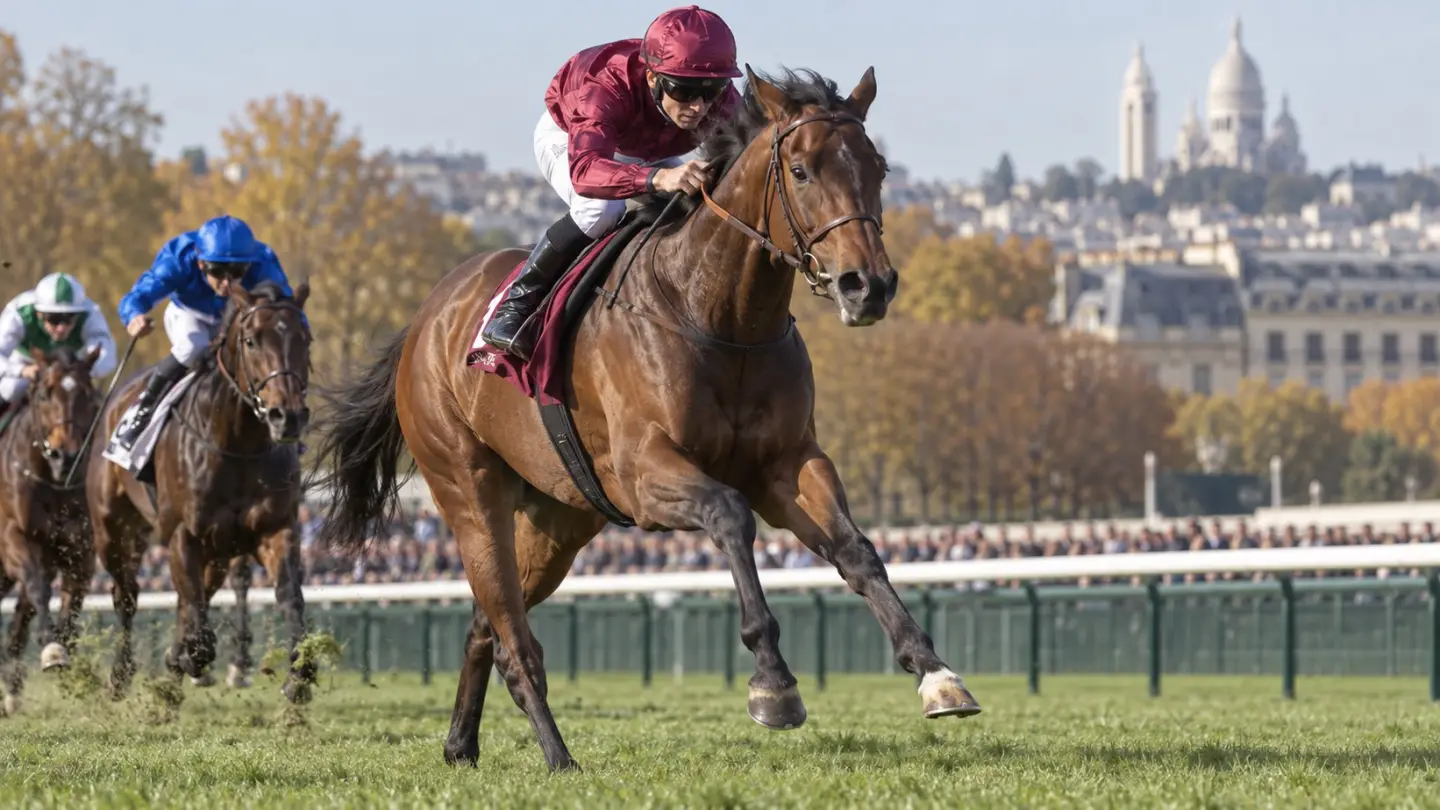
Miss Scot claimed the Prix de l’Opera at Longchamp in Paris, earning her first victory in a Group 1 race. The three-year-old filly held off the Irish challenger Prisaiz by a length and a half, while Pink Panther finished third, the same distance back from the runner-up. The race was run over 2,000 metres on good turf.
Jockey Christophe Soumillon kept Miss Scot settled as the field sorted itself out, declining to ask for her maximum effort too early. At this trip a horse needs to stay relaxed through the first half, since a fight for position can drain the energy required for the final furlong. Miss Scot found clear ground once the pace began to quicken.
Prisaiz tried to respond, but the winner held her speed over the closing stretch and pulled clear by a length and a half. The margin is wide enough that the result never hinged on a photo finish, yet narrow enough to underline the quality of the runner-up. Pink Panther held on to third and completed a podium of strong international fillies.
Miss Scot found her acceleration at the right moment over 2,000 metres
For trainers John and Thady Gosden, the victory confirms that the three-year-old has progressed in the second half of the season. It is her second consecutive group win, but her first success at the highest level. Moving up from lesser group company to Group 1 demands not only more speed but also the ability to carry out a plan under heavier pressure.

For Soumillon, this is his fifth win in the Prix de l’Opera, which speaks to his familiarity with the demands of the race and of Longchamp. A jockey has to judge where a gap will open and how early a filly can quicken without fading over the final hundred metres. His composure allowed Miss Scot to save her energy until the result was genuinely being decided.
The owner, The Thoroughbred Racing Corporation, won two Group 1 races on the same day, as Green Empress had earlier taken the Prix Marcel Boussac. A double like that over the Arc weekend carries considerable value for breeding and for the sport. For Miss Scot, the significance of her upcoming starts grows, since she now carries the confirmed status of a winner at the top level.
Her first Group 1 success confirmed a rapid rise
Choosing her next race will have to take into account her recovery after a demanding effort over 2,000 metres. A quick comeback could bring another big result, but there is also a risk that the filly will not repeat that closing burst. The team will monitor her appetite, movement and muscle recovery before deciding whether to continue the campaign or save her progress for next year.
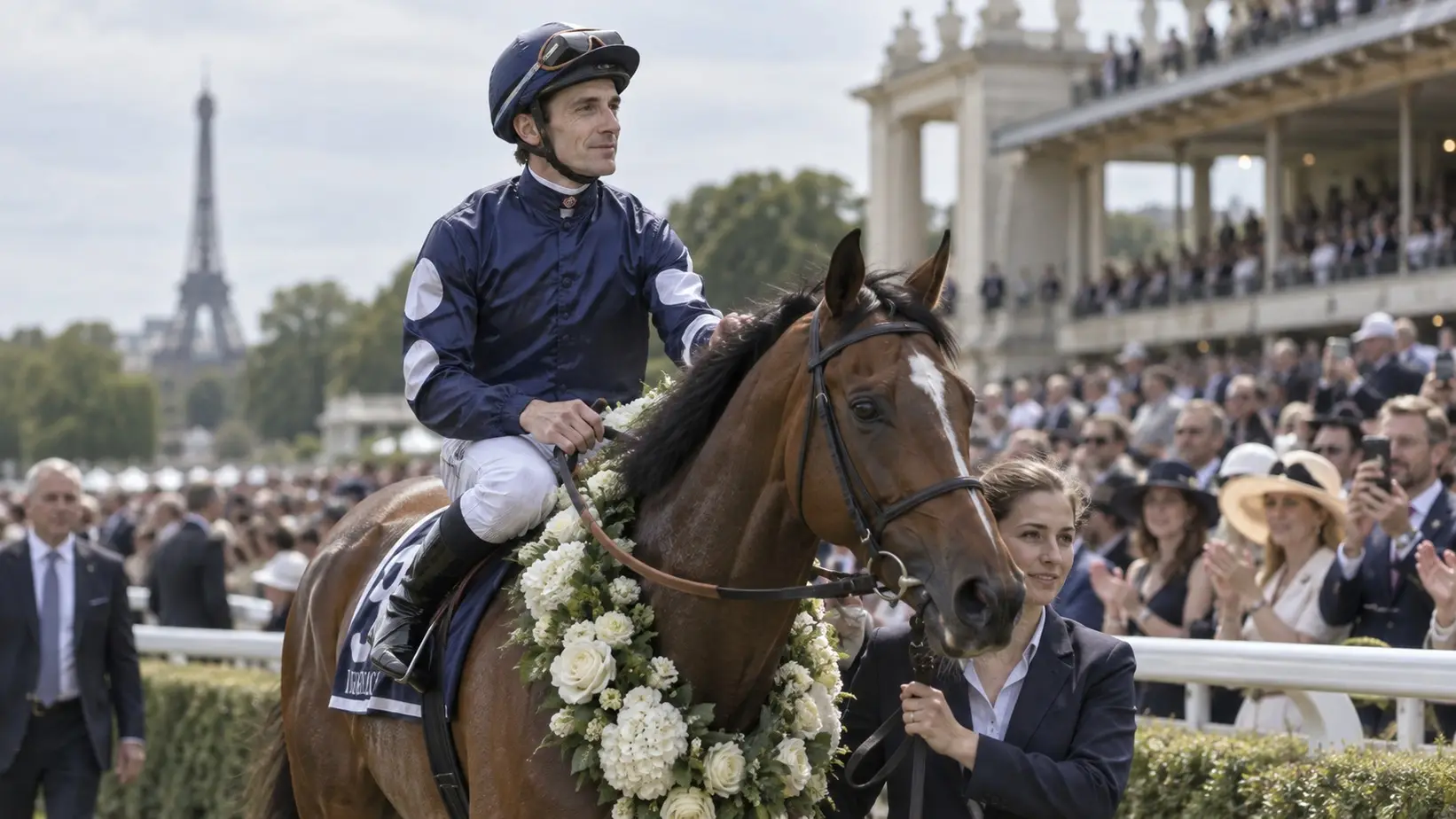
The time and the margin at the line should be read alongside the way the race unfolded. Miss Scot did not have to make up a large deficit through traffic, nor did she have to lead from the start. She was given a passage that suited her and then turned the position into victory with quality. That is a more repeatable pattern than a win that depends on rivals collapsing completely.
Her first Group 1 trophy changes where Miss Scot sits in the programme and in expectations for her next outings. She is no longer just a promising filly but a rival that other stables will target. A winning margin of a length and a half shows there is room for further development, while the way she accelerated gives reason to think she can stay competitive against older and more experienced fillies.
For a full assessment, it is worth watching Miss Scot’s final 400 metres, her recovery after Longchamp and the choice of her next distance. That information will show whether the result came from a pattern that can be repeated or from a few exceptional moments. The final score describes the outcome, but it does not reveal how stable the plan was when the balance of power shifted and when the opposition tried a different approach.
The immediate task for her team is to protect that progress and pick a race that will not use up a three-year-old winner too early. Success will depend on preserving the strongest elements of this performance and correcting any visible weakness without making major changes. That approach draws a clear line between this result and the next challenge, rather than treating each run as an isolated story with no measurable follow-up.