
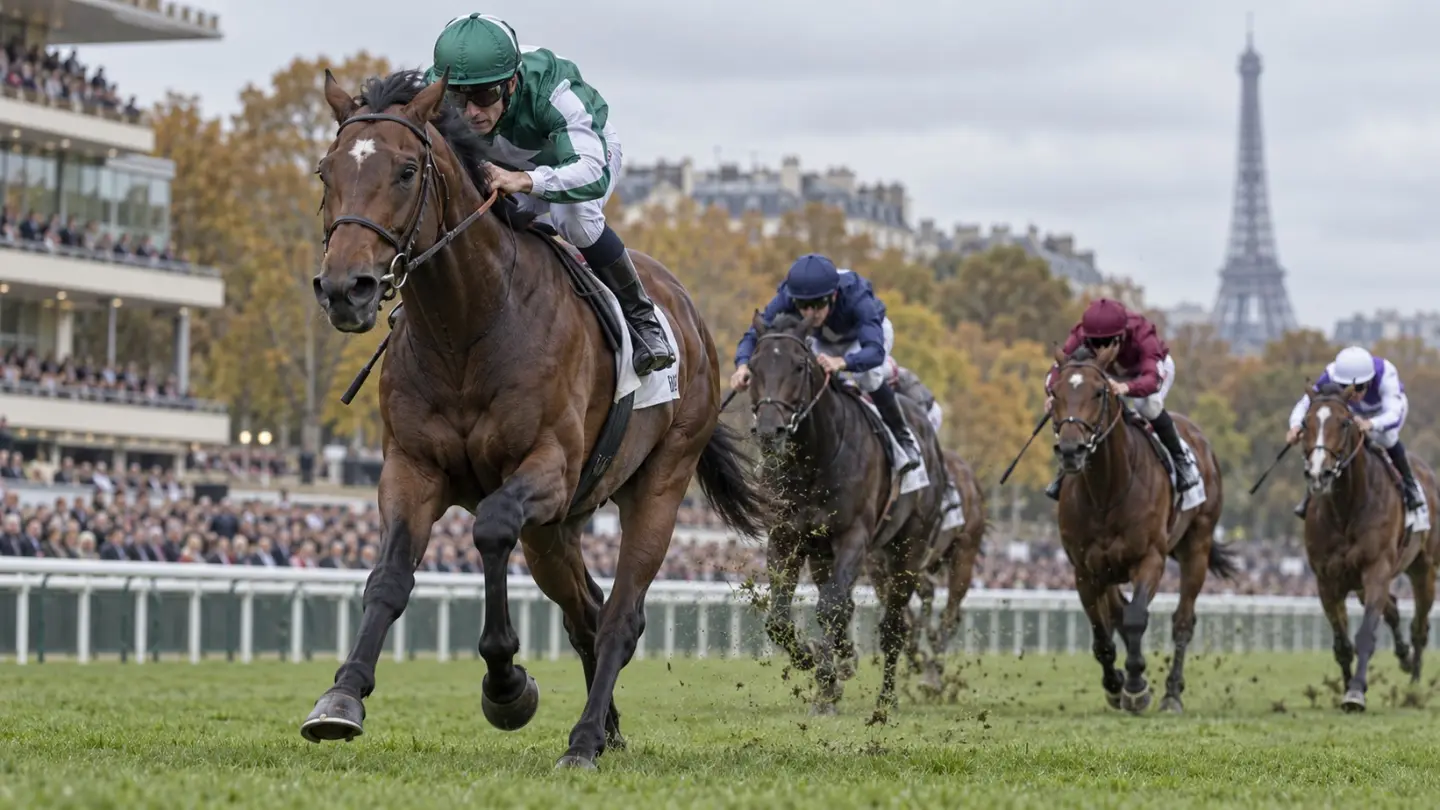
Dariz became the first colt since Alleged in 1977 and 1978 to successfully defend his title in Europe’s most prestigious flat race, winning the Arc de Triomphe at ParisLongchamp for a second consecutive year. Trained by François-Henri Graffard and ridden by Mickael Barzalona, he finished ahead of Bay City Roller in the closing stages and confirmed his status as favourite in a field of 16.
Over 2,400 metres, the race drew horses from five countries, which made position within the pack especially important. Dariz did not need to dictate the pace from the start. Barzalona kept him close enough to the leaders not to lose touch, without spending energy in unnecessary battles early on. That positioning preserved his strength for the long run to the line, where the champion could fully stretch his stride.
Bay City Roller was once again a serious rival and forced Dariz to win with a full effort. The winner opened a clear gap in the final strides, although the margin does not reveal the ease of every part of the race. Barzalona had to wait for a gap and judge when his challenge would leave the rival too little time to respond.
Barzalona saved Dariz for the final burst
Defending the Arc is rare because each season brings a new crop of three-year-olds carrying favourable weights, while an older horse must reproduce top-level form. Dariz carried the expectations of a champion through the year and arrived in Paris without any hidden agenda. His rivals knew his style and his position, yet none could stop the closing acceleration.
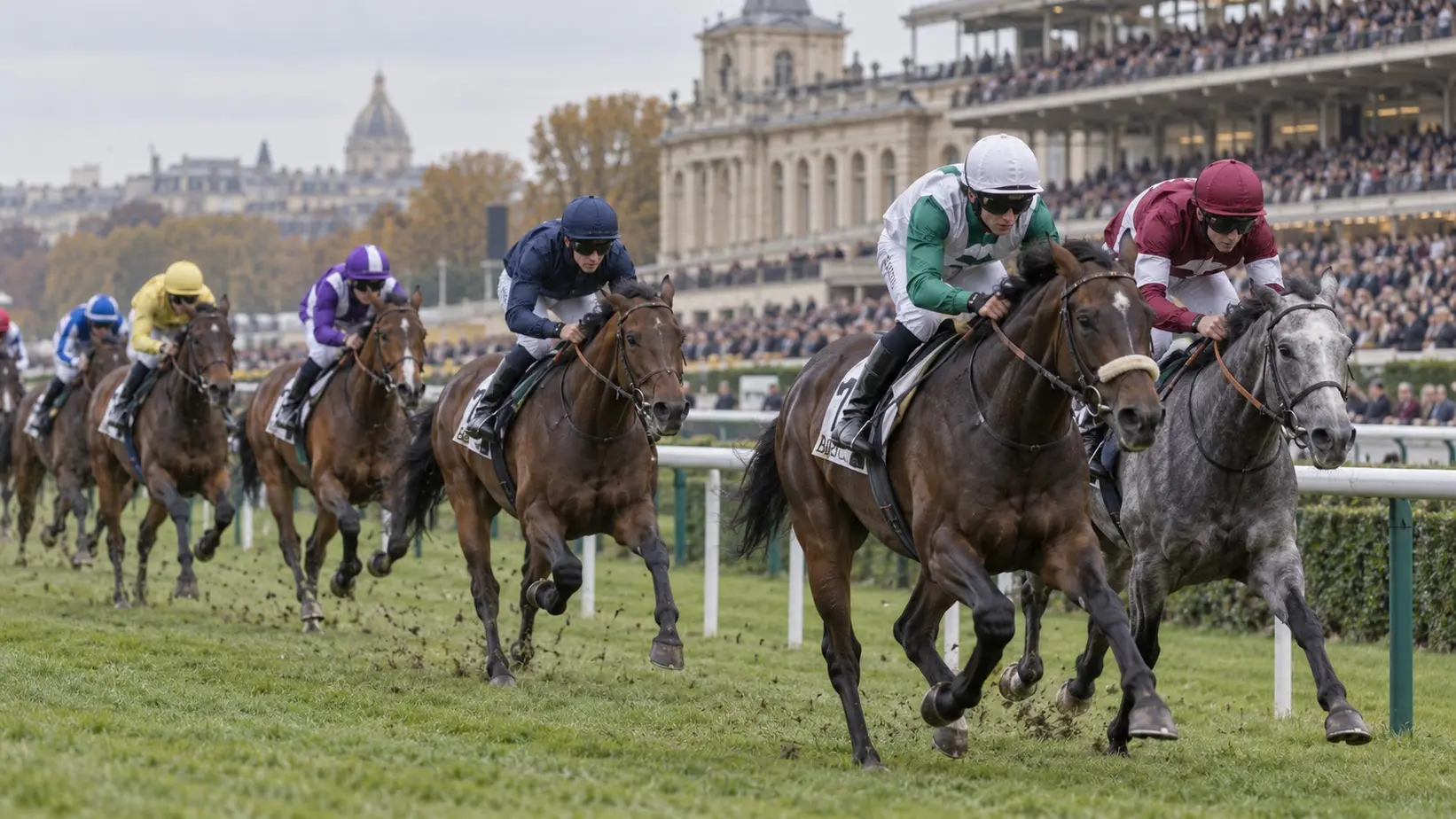
Graffard’s team carefully timed the horse’s form through the preparatory races. A win in the Prix Foy confirmed he was ready for 2,400 metres, but the goal was not to use up his peak several weeks earlier. Training between the two starts had to maintain his condition without leaving him tired. The result shows that the balance was found at the right moment.
For the owners and the breeding programme, success carries value beyond the prize money. A two-time winner of Europe’s leading race gains a special historical and breeding status. Still, decisions about the next stage of his career should be guided by health and recovery. One great victory does not automatically call for a new start if the horse shows he needs a longer rest.
The successful defence brought a historic comparison with Alleged
Barzalona had to make the right call in both years under different circumstances. A jockey cannot repeat an identical plan when the pace, the ground and the rivals have changed. The value of his ride lay in keeping the core idea while adjusting his position. Dariz was given enough room to show his speed exactly when it mattered most.
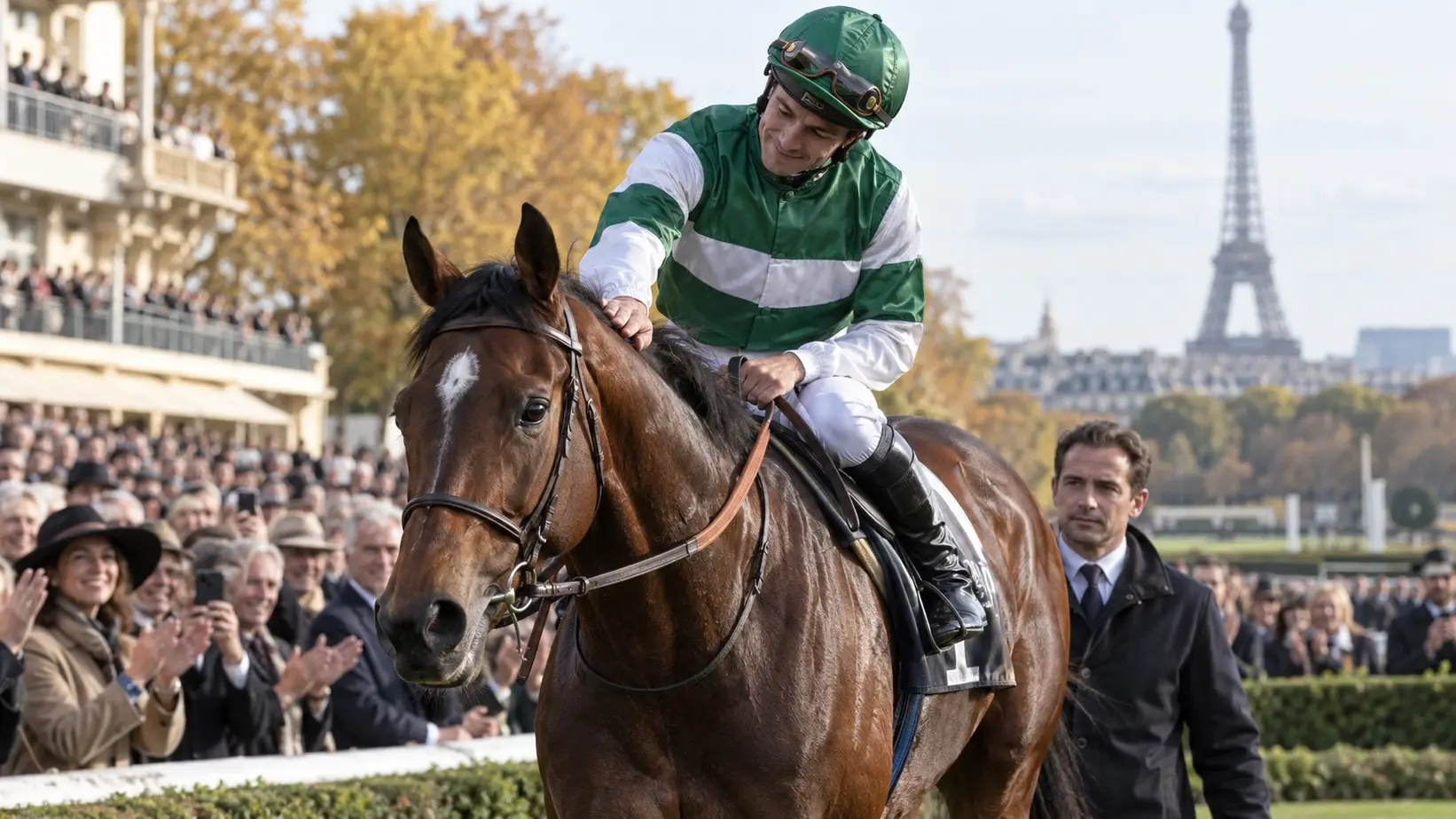
His second straight win places Dariz among nine horses to have managed to retain the title in this race. The comparison with Alleged underlines the scale of the achievement, but it does not diminish what is special about the present moment. Among 16 of the best, under the pressure of favouritism and with a clear target on his back, Dariz repeated the result. That is the mark of a great champion, not merely a winner of one exceptional week.
The post-race analysis should separate speed from circumstance. Starting position, traffic, wind, the ground and the moment the pace changed can all increase or hide the real quality of a performance. The team will therefore compare sectional times and decisions, not just the final placing. That approach shows where the result was truly earned and what can be repeated under different conditions.
Recovery for both the equipment and the athlete begins at once. Mechanics check for signs of load, while the support staff monitors fatigue, hydration and minor aches that are not fully felt during competition. The next start should not be built on extra training at any cost. It is more useful to remove one technical weakness and arrive at the gate with reliable equipment and a clear plan.
Rivals will now use this result as a new reference point. They may change the pace, attack earlier or try to close off the winner’s strongest route. For that reason, a successful plan cannot stay fixed. Its value lies in the principles of energy distribution, risk assessment and precise communication, while the specific move is adapted to the next track or route.