
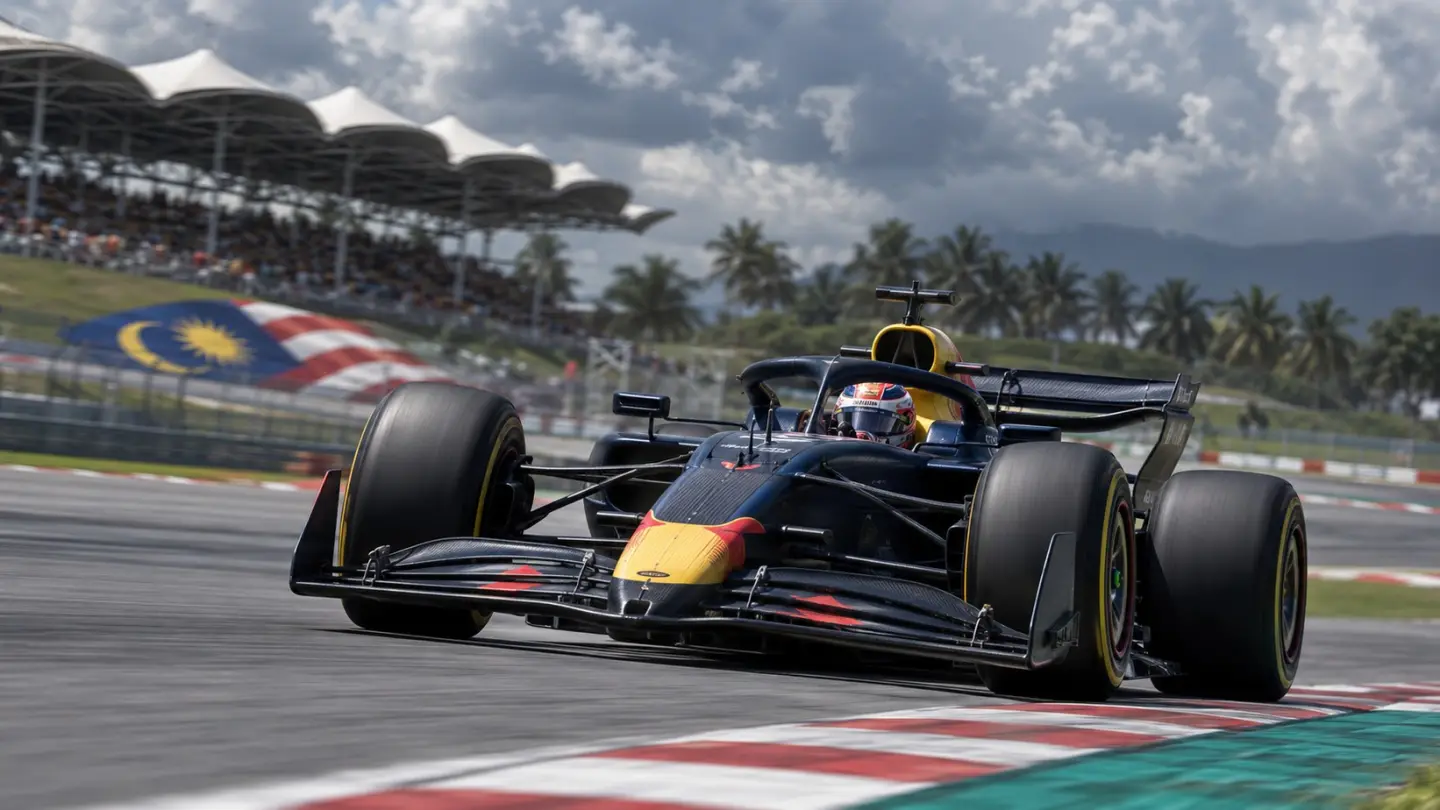
Max Verstappen took pole position for the Formula 1 race at Sepang with a lap time of 1:35.130. It is his first pole of the season and the 49th of his career. Lewis Hamilton finished second, 0.298 seconds back, while Isack Hadjar set the third-fastest time for Red Bull. The result confirmed the pace the Dutchman had shown throughout the free practice sessions and gave him the strongest starting point for a demanding race in Malaysia.
Verstappen built his advantage in the sectors where sharp direction changes lead straight into long acceleration zones. His lap did not hinge on one exceptional corner. It came down to a stable entry, a calm car through the middle of the turn and an early squeeze of the throttle. At Sepang, a mistake at the start of a sequence costs time through several corners that follow, so three tenths of a second reflects the whole lap rather than only top speed on the straight.
A 1:35.130 lap gave him a clear advantage
Hamilton put the Ferrari on the front row and kept up the pressure until his final attempt. His deficit is not small under qualifying conditions, but the start and the long run to the first corner offer a realistic chance to attack. Ferrari will have to weigh protecting the inside line against preserving the tyres. An overly aggressive duel right after the lights go out could damage the tyres or open a gap for the drivers from the second row.
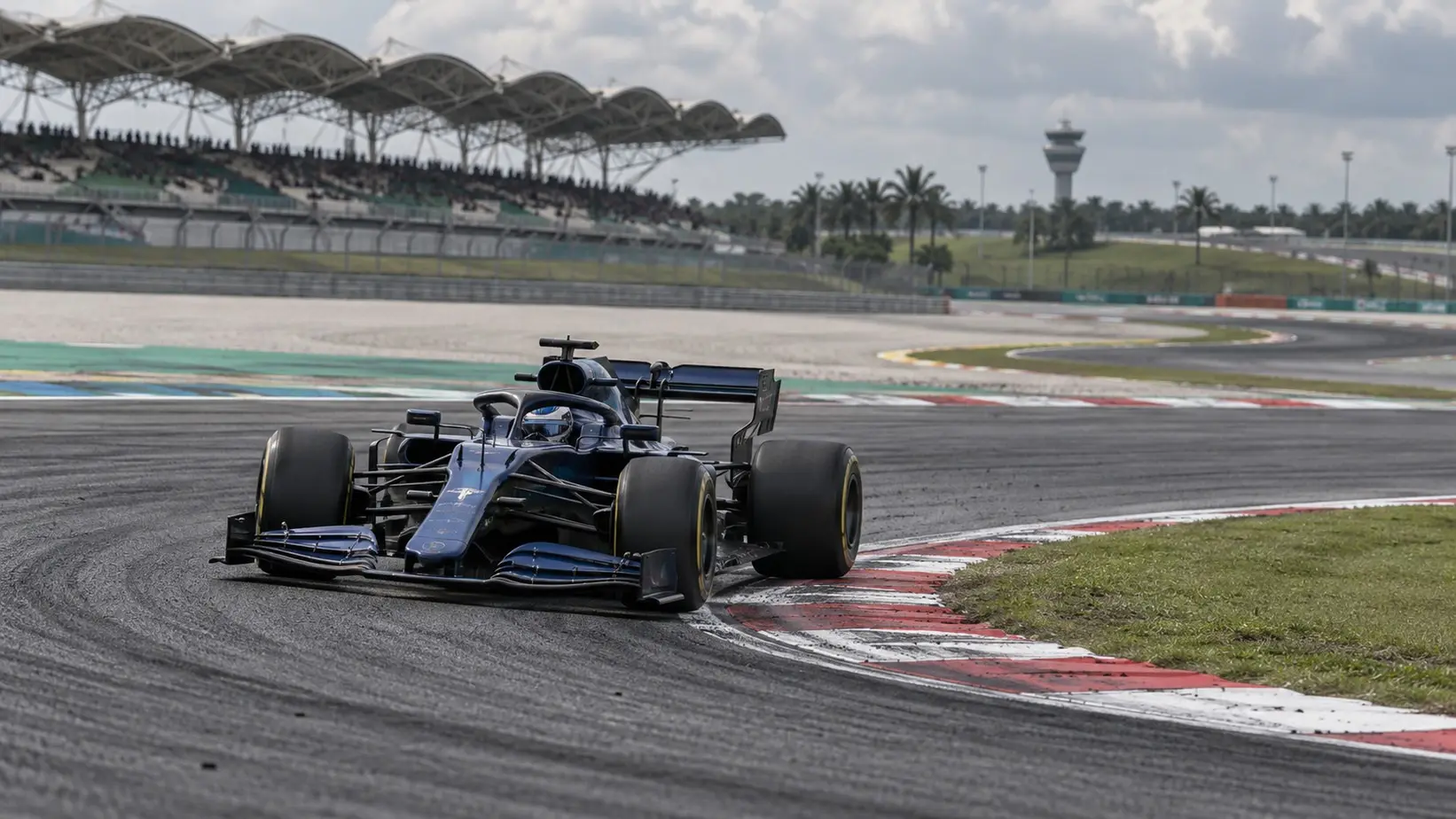
Hadjar’s third-place time showed the depth of Red Bull’s package, but because of a penalty for a change of power unit he will lose five grid places. That reshuffles the order behind Verstappen and Hamilton, giving drivers who were outside the top three a better starting position. For Hadjar, the opening part of the race will be a test of patience. A quick car offers the chance to recover, but passing through heavier traffic raises tyre temperatures and costs time.
Hadjar’s penalty reshuffles the order behind the front row
Sepang is known for its heat, humidity and the possibility of sudden changes in the weather. Pole position reduces exposure to dirty air but does not solve temperature management or tyre wear. Red Bull must choose a pace that protects the front tyres through the long corners while keeping Hamilton from getting within range of an earlier pit stop. A single safety car period or a downpour could completely change the calculations made after qualifying.
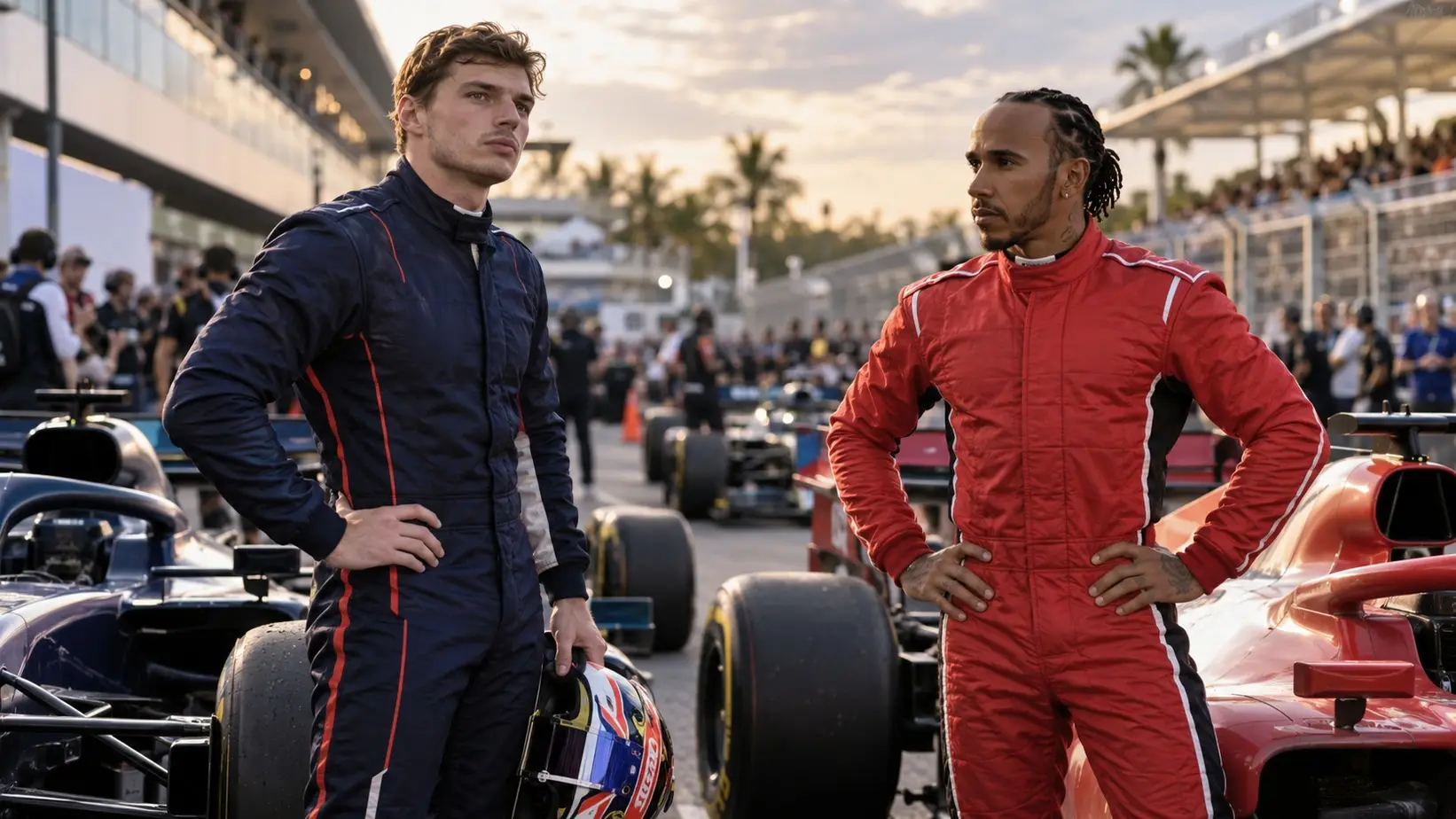
Verstappen’s first pole of the season carries psychological value, but the result of the weekend depends on the race. A clean start, a well-timed pit stop and the call on when to switch to a different compound matter more than the number of qualifying wins. Hamilton has experience of winning in changeable conditions, while other teams may gamble on a different strategy. The leader therefore cannot race only against the car directly behind, but has to keep the whole picture in view.
The most telling sign of Red Bull’s progress will be the pace over a longer stint, when fuel weight changes the car and its balance begins to shift. If Verstappen keeps his advantage without wearing the tyres too heavily, pole will become the basis for control. If Ferrari or a rival from the second row manages the tyres better, the qualifying gap will disappear quickly. One lap of 1:35.130 settled Saturday; how the conditions, pressure and strategy are handled will decide what that result is worth.
Before the start, engineers will check the track temperature, the wind direction and the chance of rain again, because each of these changes tyre pressures and the expected life of the tyres. Verstappen’s lead from a single lap remains important, but the race demands more adjustment. The best decision may be to abandon the plan prepared in advance as soon as conditions show that the initial assumption no longer holds.
Sepang’s return places extra emphasis on the drivers’ physical preparation. High cockpit temperatures, humidity and long loads through the corners speed up fluid loss and the decline in concentration. Teams therefore monitor cooling, hydration and communication as carefully as their tyre strategy. A single small error under fatigue could wipe out the advantage Verstappen built so precisely in qualifying.