
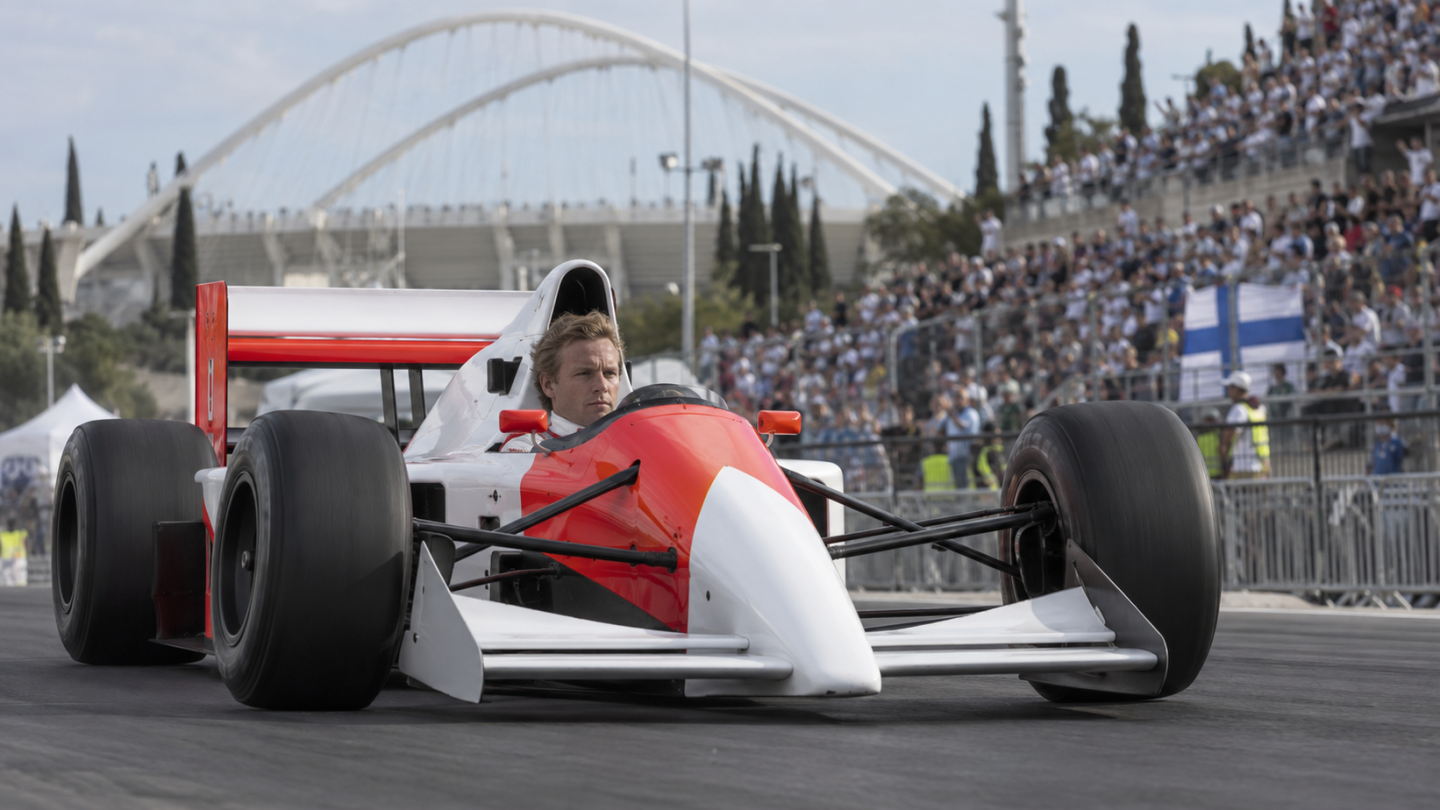
Two-time world champion Mika Hakkinen returned to a Formula 1 cockpit at an event in Athens, where he drove the McLaren MP4/6, the car in which Ayrton Senna won the title in 1991. The demonstration took place at the OAKA complex in front of spectators who could hear the naturally aspirated Honda V12 and see a car from an era without hybrid power, complex electronics or today’s safety systems.
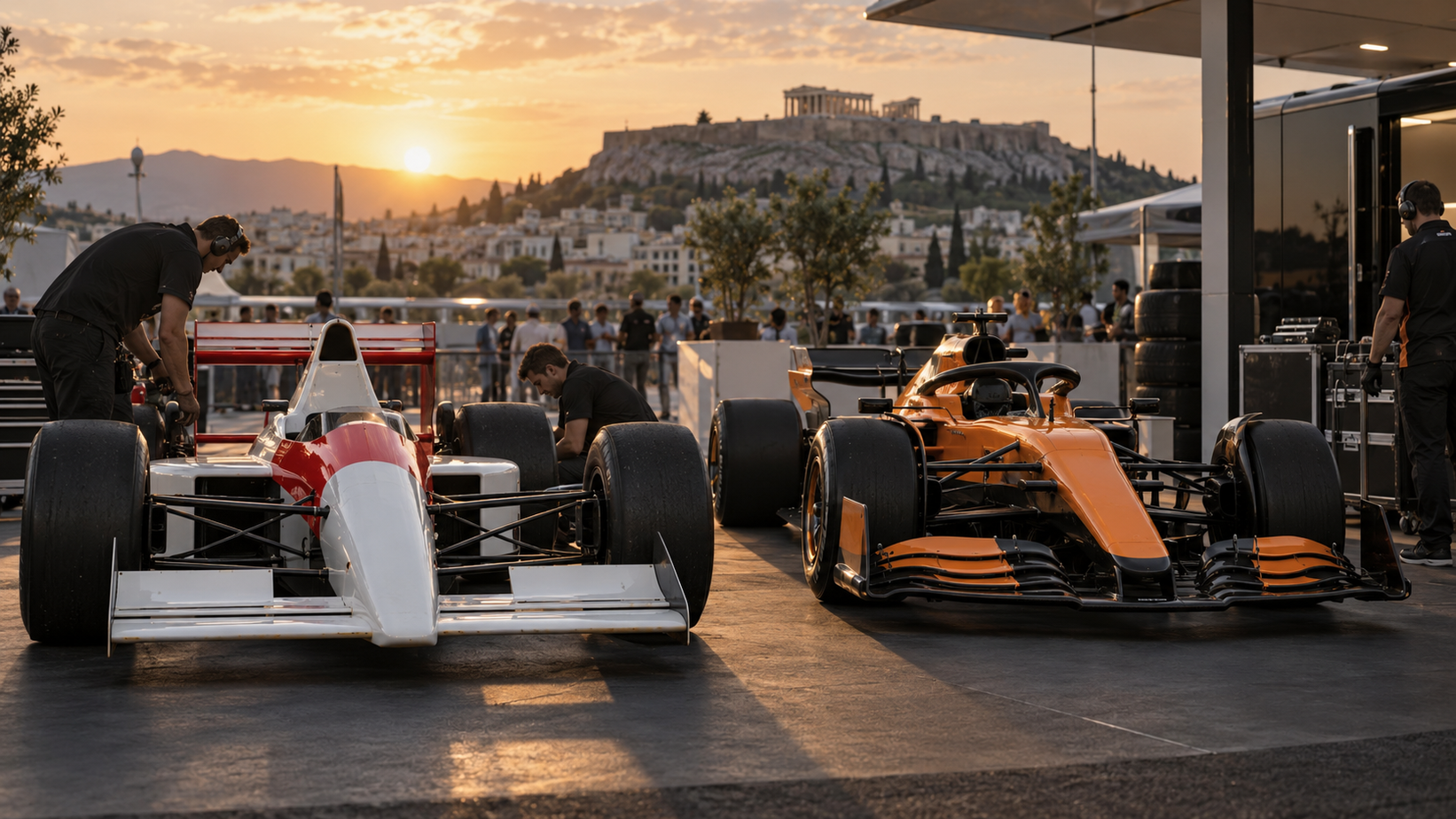
In the 1991 season the MP4/6 won eight races and helped Senna secure his third title. The car ran a 3.5-litre Honda V12 and a manual gearbox, which demands a different rhythm of movement from the driver than a modern machine. In Athens a newer MCL60 was also displayed, giving the crowd a direct comparison of sound, proportions and technological development across more than three decades.
The naturally aspirated V12 brings Formula 1 history back to life
For Hakkinen, driving a historic car is far from a slow lap. The seating position, heavier steering and the shifting of gears call for muscle memory to be readjusted. Tyres and brakes must be warmed up carefully, and the old engine does not tolerate the same treatment as a modern power unit. That is why a demonstration programme requires precise preparation by mechanics and clear limits before the car goes onto the track.
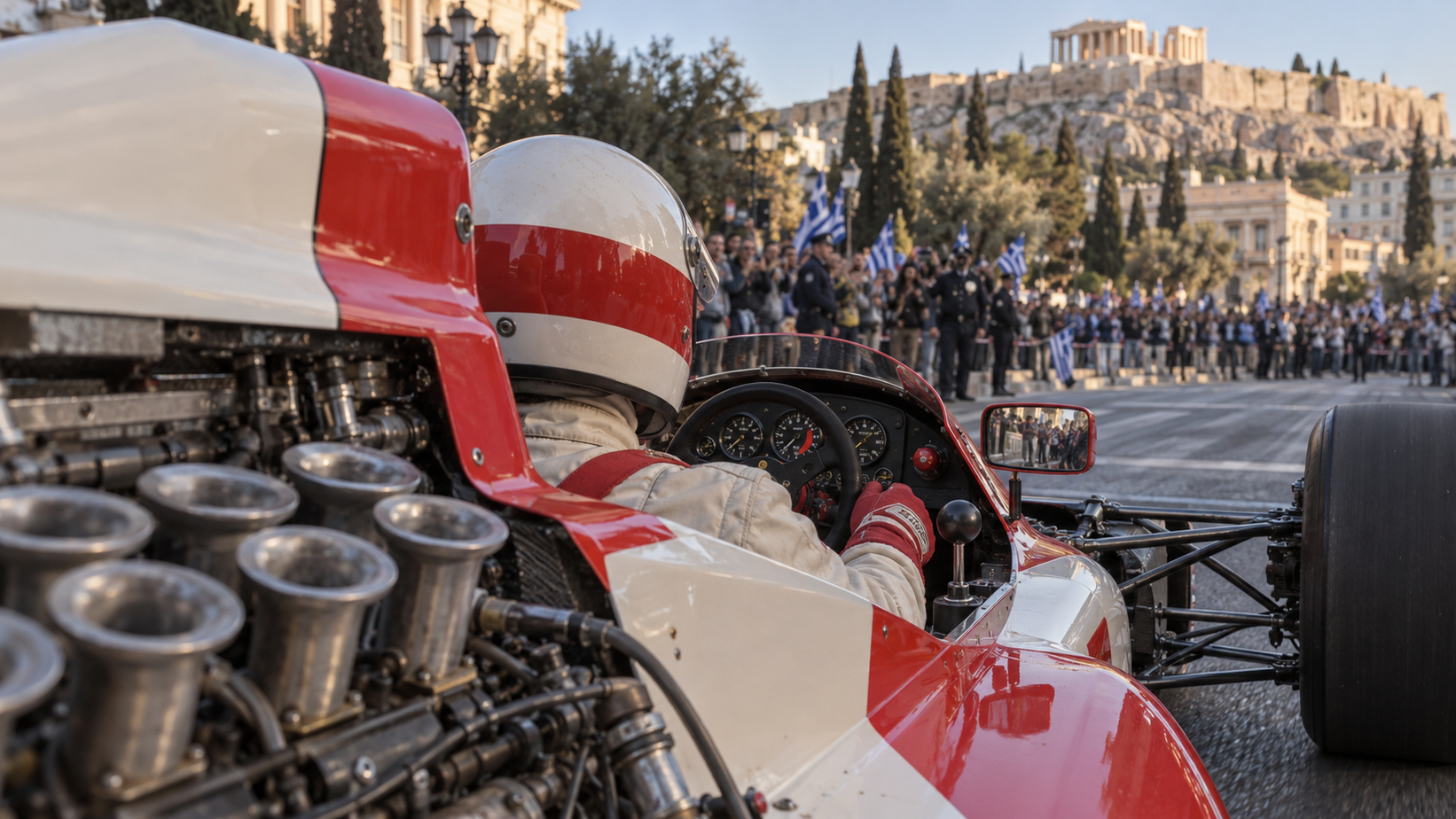
The greatest value of the MP4/6 lies not only in Senna’s name. The car marks the end of one technical era and shows how speed was built through mechanical grip, aerodynamic cleanliness and the immediate response of the engine. Modern cars are far safer and more efficient, but a historic model makes the driver’s work easier for the public to see. Every change of speed, every steering correction and every release of the throttle can be heard and seen without a digital layer in between.
A demonstration run links three generations of McLaren
Bringing a car like this outside a traditional race weekend widens access to the sport. Fans who cannot attend a Grand Prix get the chance to see an original machine in motion, and younger audiences meet the history through real sound and smell rather than only through archive footage. The organiser must still balance the spectacle with protecting a rare car and with safety in a venue that was not designed as a permanent circuit.
Hakkinen is a fitting choice for this role because he connects Senna’s era with McLaren’s later titles. His presence gives the run sporting credibility and is a reminder that a historic car is not a museum ornament. The MP4/6 remains an important record of Formula 1’s development, and every carefully executed appearance extends its legacy. Athens therefore received more than a demonstration: it received a living lesson in a time when driver and V12 communicated without today’s intermediaries.
Looking after the MP4/6 requires parts and expertise that are no longer part of everyday racing. Before every start, fuel, oil, hydraulics and materials that are decades older than current standards are checked. The aim is not to match a former qualifying time but to preserve authentic running with a sensible safety margin. Hakkinen’s experience reduces the risk, but it does not remove the need for a detailed plan. For McLaren, such events also carry brand value, linking new fans with the people and machines that built the team’s identity. The best historic showing does not turn the past into an advert but explains why the car matters. The sound of the V12 draws attention, and an accurate account of the eight wins and Senna’s title gives the experience lasting meaning.
Careful preservation of the original components is what allows the same car to remain runnable for future generations of fans.
Comparing the MP4/6 with the MCL60 clearly shows how much dimensions, aerodynamics and energy management have changed. The older car is lighter and more direct, while the newer one offers more grip and protects the driver with a more advanced structure. No comparison should be reduced to which sound is better. Each era solved different rules and technical problems, and the demonstration is at its most valuable when it makes those differences understandable.