
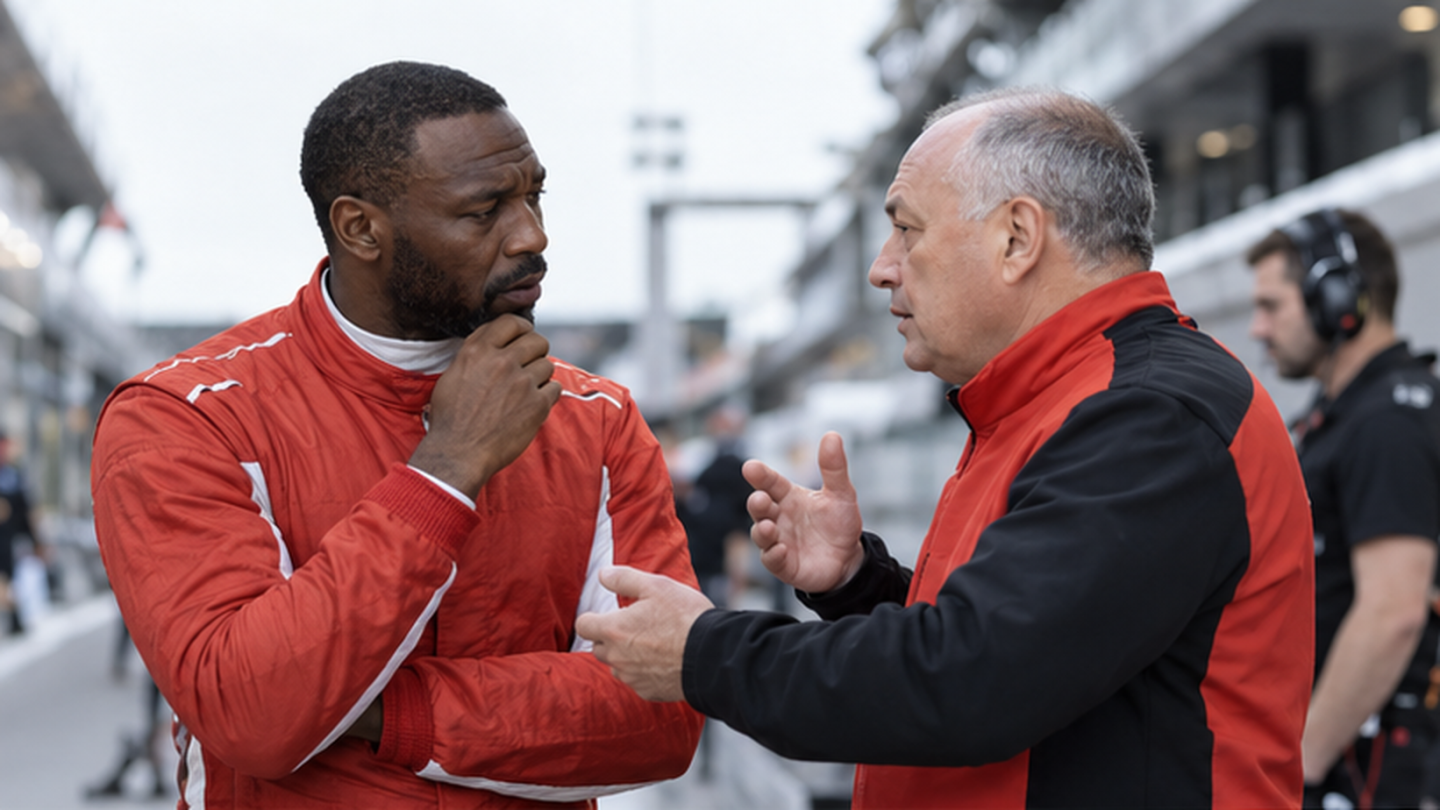
Lewis Hamilton has publicly backed Frederic Vasseur as Ferrari team boss, while also making clear the squad needs to examine its wider management structure. His comments follow a dip in form and a run of races without a podium, at a time when Vasseur’s future is being discussed again. Hamilton believes putting the focus on one individual is misguided, since Formula 1 results are built through the work of technical departments, leadership and hundreds of staff. His support therefore does not mean he is content with every way of making decisions.
Ferrari’s problem is not a complete lack of speed. The car has shown promise at certain stages of the season, but rival development and uneven performance across different circuits have reduced the payoff. When the team loses a few tenths, pressure builds quickly in Maranello and every strategic error becomes a talking point. Hamilton is trying to protect the working atmosphere while also pointing out that stability only has value when it is matched by clear accountability and faster technical responses.
Vasseur wins backing from driver and team
Hamilton describes Vasseur as a leader capable of steering the team, and Charles Leclerc has shown similar public confidence. That matters because drivers feel directly the quality of communication, preparation and reaction after setbacks. Constantly changing the team boss can slow development, as a new manager reshuffles people and priorities. Ferrari has often paid the price for short patience over its history, so continuity can be an advantage if the work produces visible results.
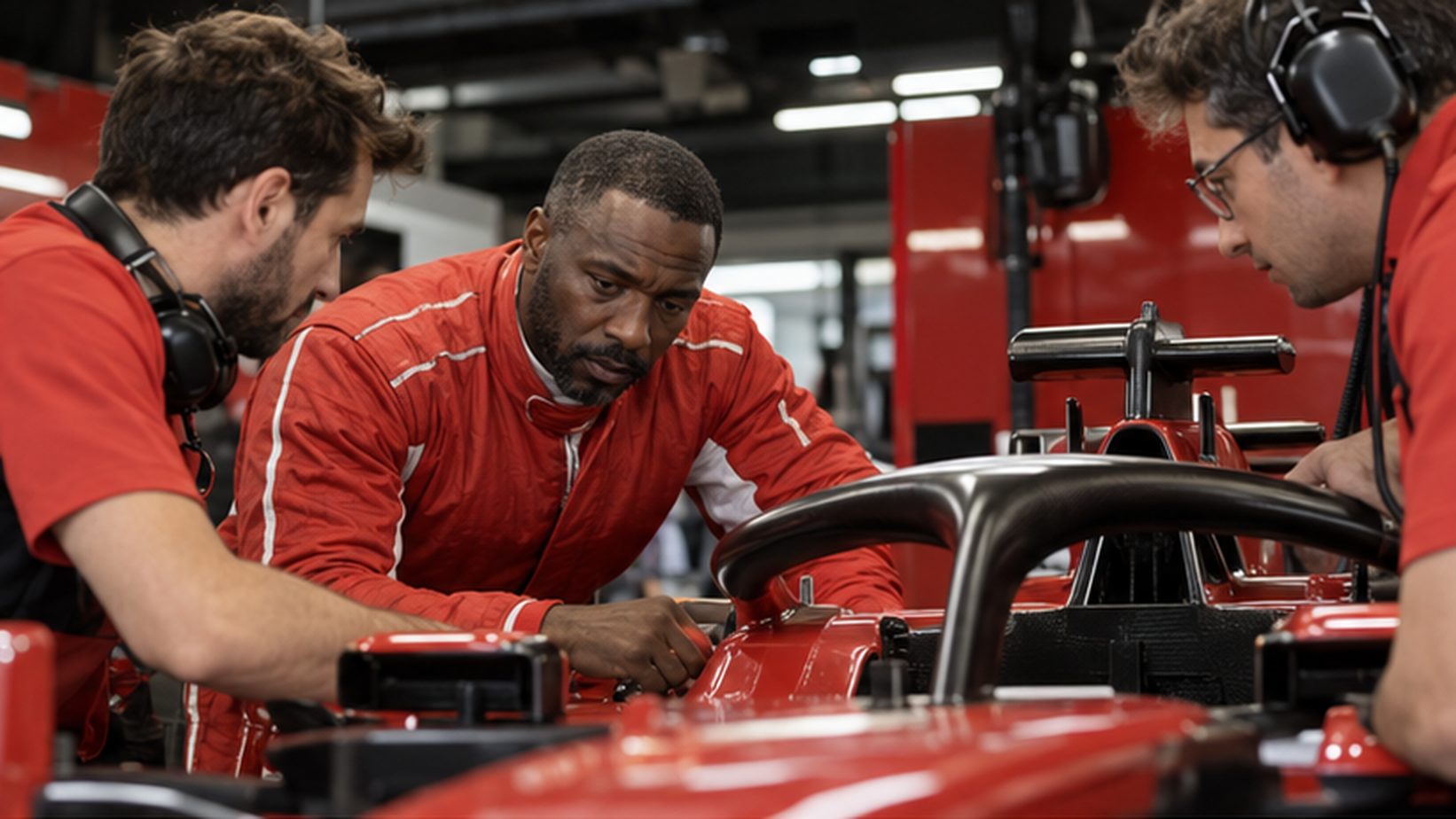
Still, a team principal does not control every key decision alone. Above and around him sit executive functions that set the budget, hiring and long-term goals. Hamilton has left room for change there. He named no names or specific moves, but suggested the distribution of authority should be reviewed. In Formula 1, a slow chain of decisions can delay an upgrade or the hiring of a specialist long enough for a rival to build a lasting advantage.
The comparison with Mercedes shows what Hamilton is after. There, Toto Wolff held broad responsibility and a direct link between the sporting, technical and business sides. Ferrari has a different corporate tradition, so the same model cannot simply be copied. The principle is clear nonetheless: people need to know who makes the final call, and how quickly the team can respond when data shows development heading the wrong way.
Results on track will decide the strength of the message
Backing Vasseur reduces short-term noise but does not remove the need for better results. Ferrari must show it understands why it lost ground and deliver upgrades that work across several circuits. One podium can lift morale, but the trend over several weekends matters more. If the car becomes more predictable and the strategy more stable, the case for continuity in the leadership will be much stronger.
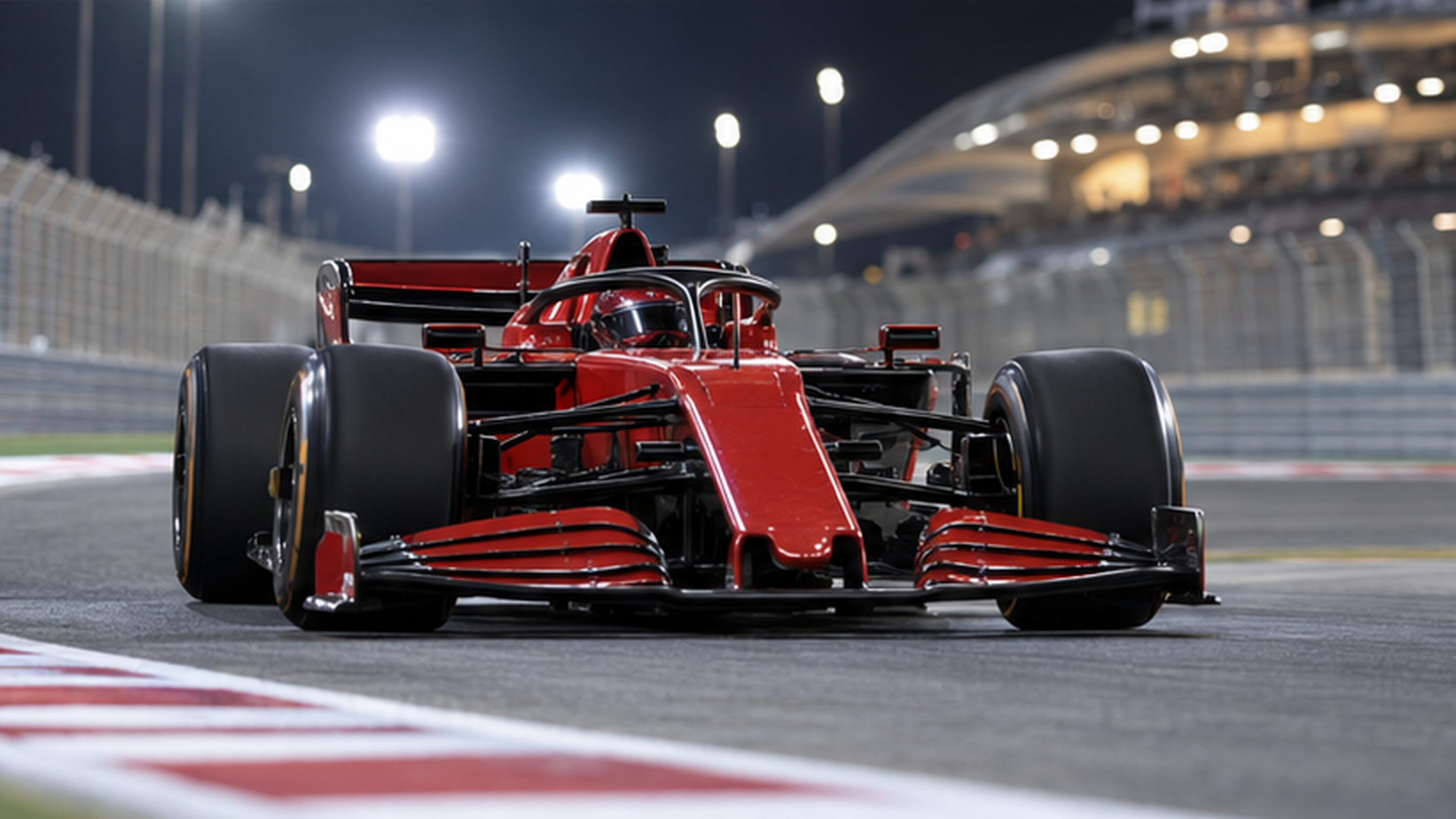
Hamilton carries a particular responsibility because he arrived at Ferrari with experience from a championship-winning system. He is expected to bring not only speed but also the standard of working that he saw at Mercedes. That does not mean he can rebuild the team on his own. His feedback is valuable when it is turned into measurable technical priorities and when engineers are given enough time to carry them out without constant changes of direction.
Ferrari now needs calm, precise analysis and decisions that show up in the development of the car. Hamilton’s message combines two ideas: Vasseur should stay, but the rest of the system must not use stability as an excuse. The coming races will show whether public support marks the start of firmer joint work or simply a temporary halt to speculation. In a team with such high expectations, the stopwatch always gives the final answer. The relationship between driver and leadership will matter when development of the next car begins. Hamilton has to separate the problems he feels behind the wheel from organisational assumptions, and the engineers have to turn that feedback into priorities. If each department gets a measurable target and a deadline, the debate about structure can produce progress. Without such a process, a change of names will not by itself produce a faster car.