
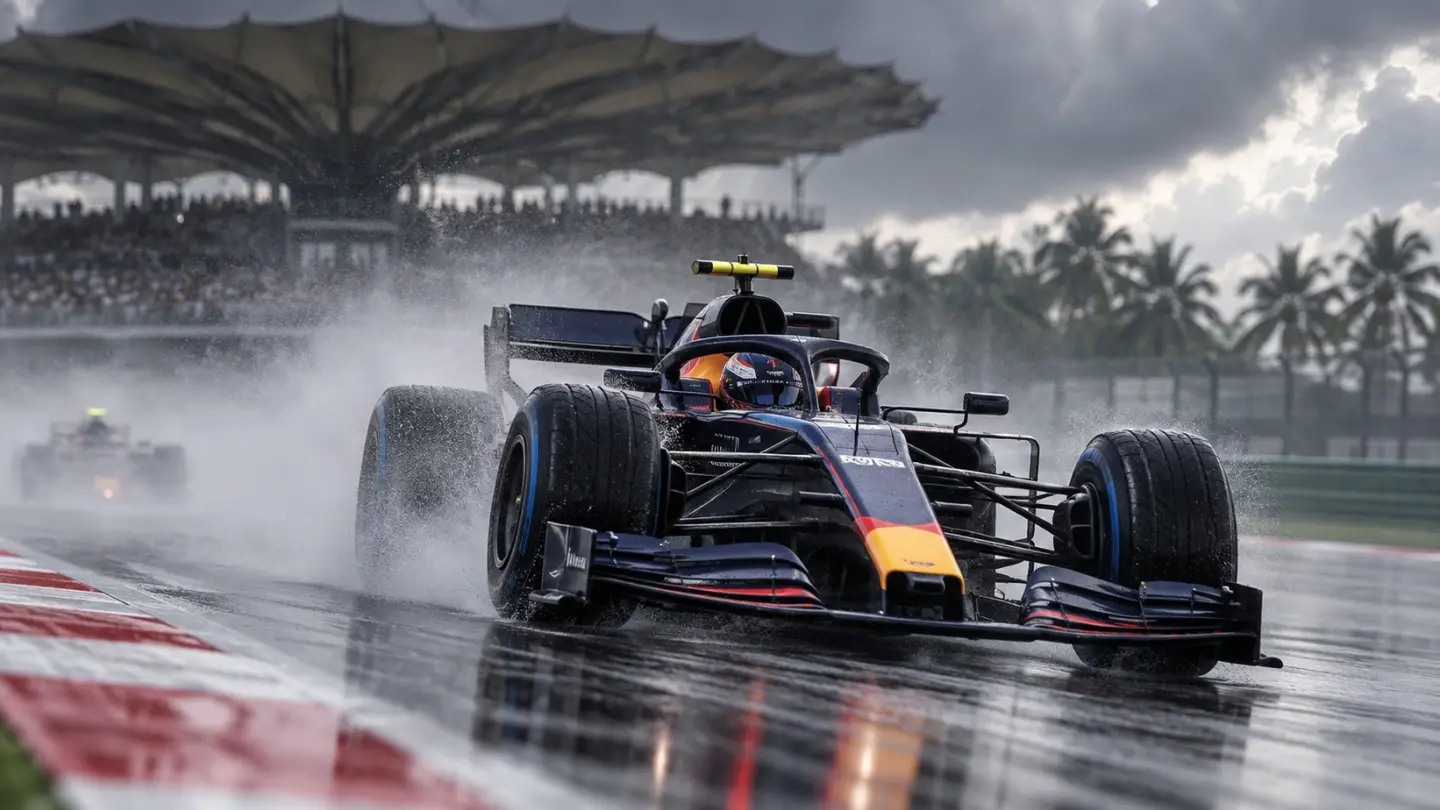
Max Verstappen won the Bahrain Grand Prix, which in 2026 was held at the Sepang circuit in Malaysia. The Red Bull driver completed 55 laps in 1:47:14.808 to take his first win of the season. Andrea Kimi Antonelli finished second, while Lewis Hamilton took third, 4.919 seconds behind.
The race was shaped by rain, shifting amounts of water on the track and several tyre decisions that had to be made without full data. Sepang dries quickly along the racing line, but the areas outside it stay slippery. Verstappen avoided any major mistake in those conditions and kept his tyres within their working window as lap times changed quickly.
The victory carries extra weight for Red Bull, as it is the team’s first win of the season and the first triumph for the new Red Bull Ford power unit project. The result confirms that the package can finish at the front when strategy and temperature management work together. A single weekend is not enough, however, to prove that every problem from the earlier part of the season has been solved.
Changing conditions rewarded calm decisions from the pit wall
Antonelli used his second place to seize every opportunity without taking unnecessary risks. In changing conditions a young driver has to balance attack and car preservation, especially when grip varies from corner to corner. His finish shows progress in reading a race, not just outright speed over a single qualifying lap.
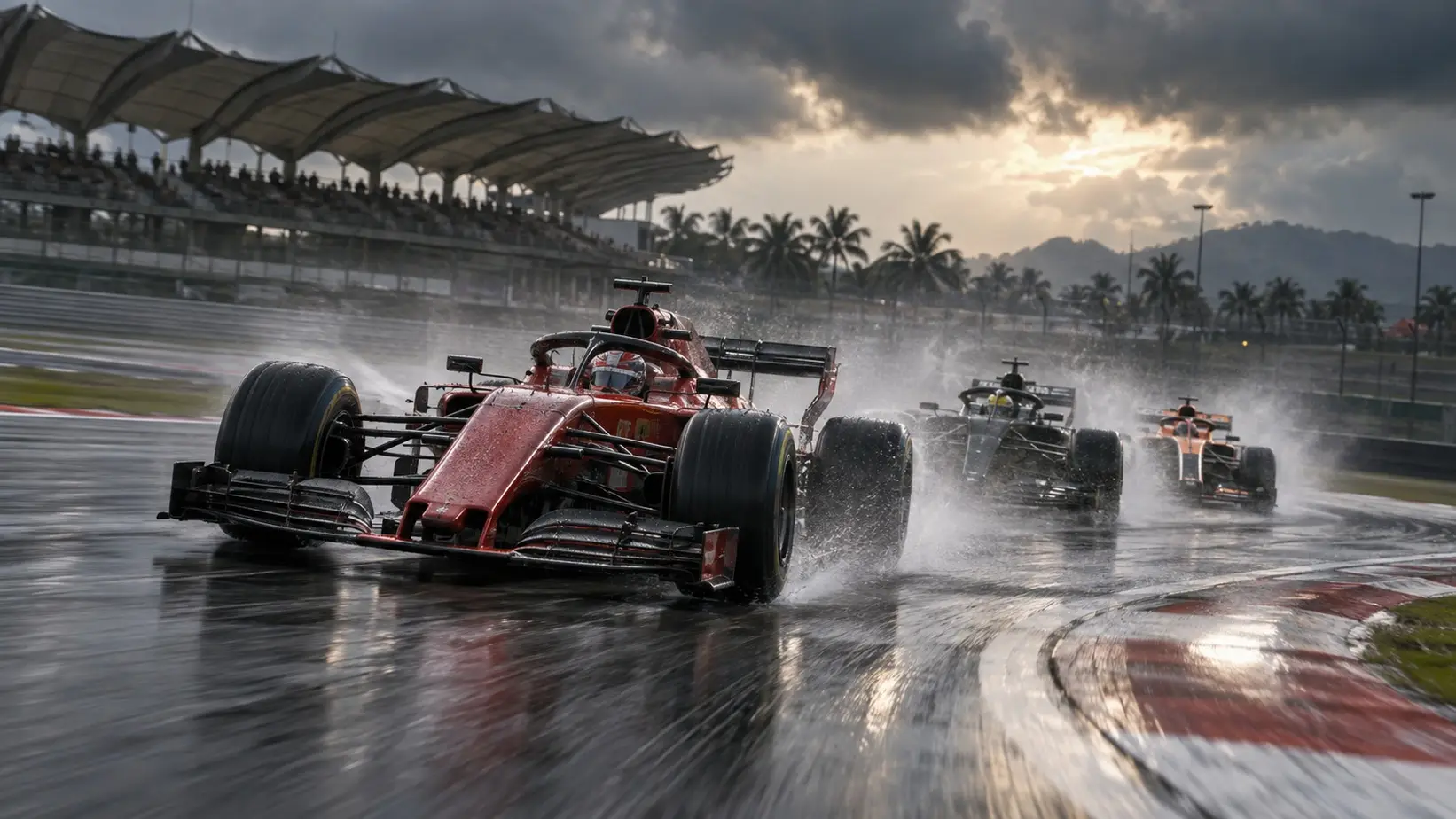
Hamilton completed the podium in third, with the gaps remaining small right to the end. A late safety car bunched the order again and erased part of the advantage that had already been built. Verstappen therefore had to prepare for the restart, bring his tyres up to temperature quickly and stop Antonelli from getting a tow on the first long straight.
Energy management mattered just as much as mechanical grip. On wet sections, aggressive throttle application increases wheelspin and rear tyre temperatures, while on the dry line a driver wants to accelerate as early as possible. The most successful drivers changed settings from lap to lap and kept enough battery in reserve to defend or attack on the straights.
The late safety car did not stop Verstappen
Red Bull will try to separate the car’s progress from the advantage Verstappen built in unstable conditions. If the pace stays competitive on a fully dry track, the win could mark a real turnaround. If not, Sepang will remain an example of how top-level risk management can make up for part of a technical deficit.
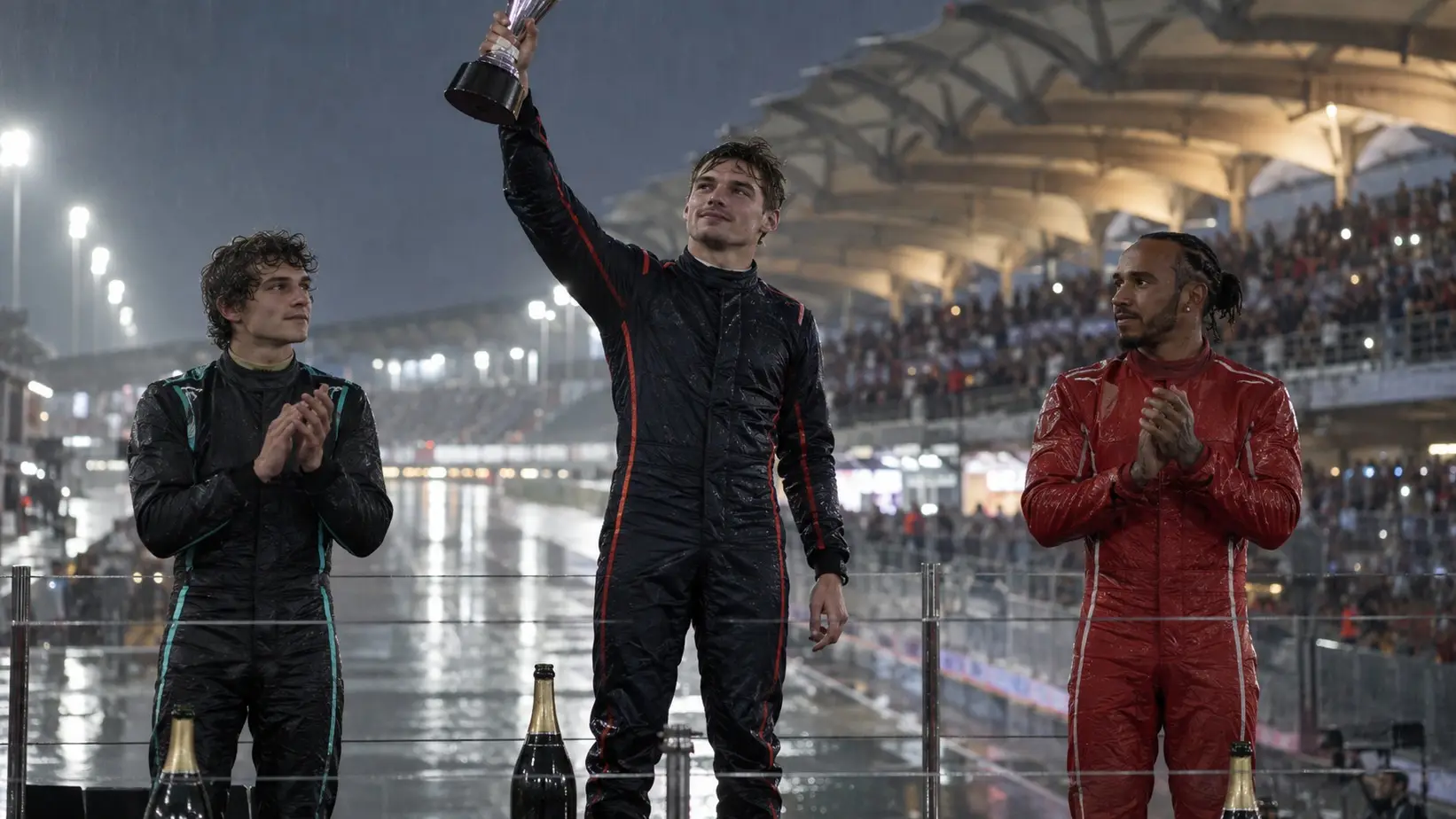
Mercedes collected a strong haul of points through Antonelli and Hamilton, but will review where the chance of victory slipped away. Track position, the timing of the switch to the second compound and the restart preparation are small margins that in a close race are worth several seconds. Two drivers on the podium nonetheless give the team more reliable data for the next weekend.
Verstappen’s first win of 2026 changes the tone of the season and gives Red Bull a result to build on. Most importantly, the victory came through several different phases, from the rainy start to the late safety car. The next race will show whether the new power unit and chassis can repeat that speed once conditions stop adding extra uncertainty.
For a full assessment it is worth watching Red Bull’s dry-weather pace, rear tyre wear and the time lost or gained through pit decisions. That data will show whether the result came from a pattern that can be repeated or from a few exceptional moments. The final score describes the outcome, but it does not reveal how stable the plan was when the balance of power shifted and a rival tried a different solution.
The immediate task is for Verstappen to confirm the win on a track with stable conditions and a different tyre load. Success will depend on preserving the strongest part of the current performance and fixing the weakness that has been seen without making major changes. That approach draws a clear link between this result and the next challenge, rather than treating each outing as a separate story with no measurable follow-up.