
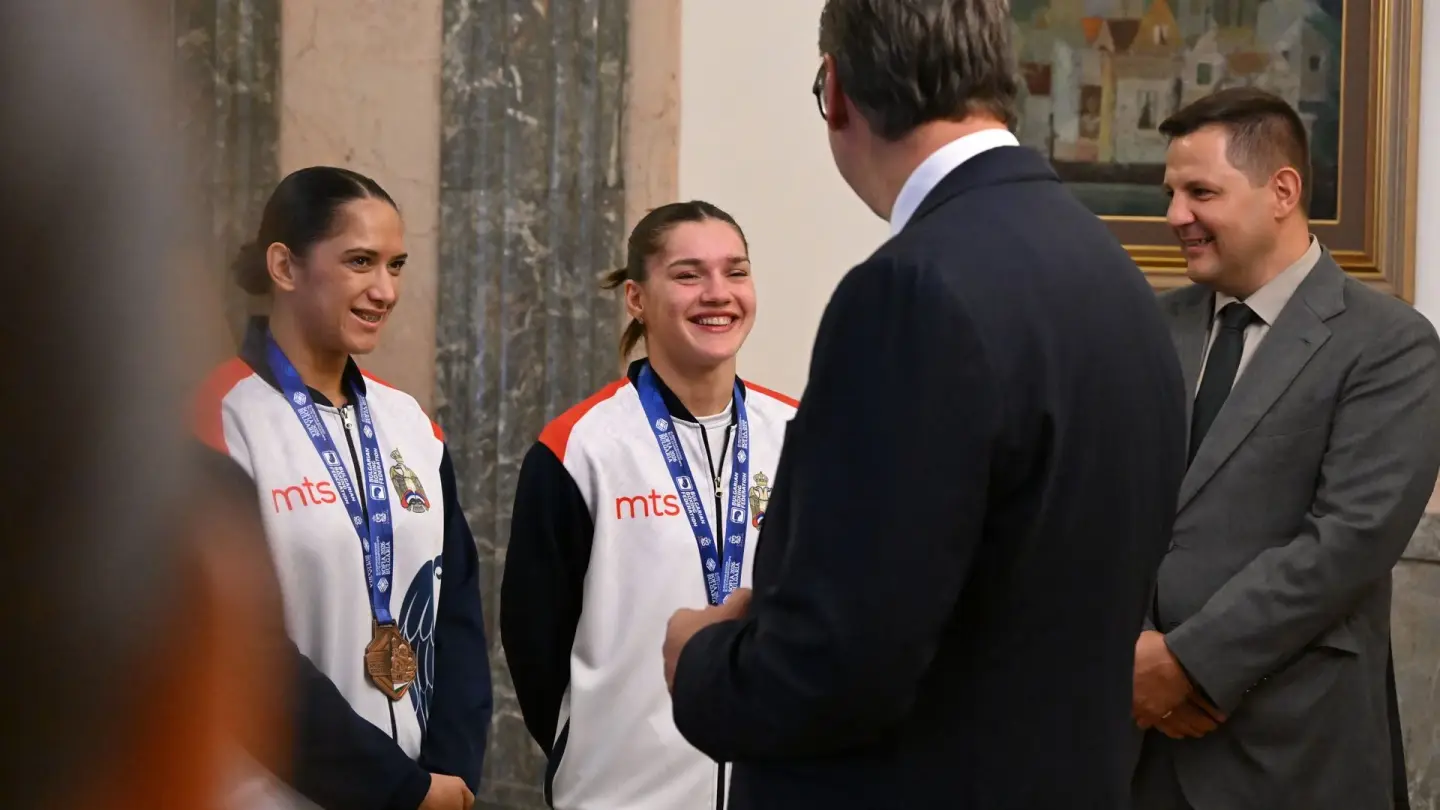
The Serbian boxing team came home from the European Championships in Sofia with four medals. Sara Ćirković and Kristina Kuluhova took gold, Rastko Simić claimed silver, and Milena Matović earned bronze. In Belgrade, where the medallists were received, the outcome was framed as confirmation of the work of the entire squad rather than four isolated achievements.
Ćirković and Kuluhova defended their European titles
Sara Ćirković and Kristina Kuluhova successfully defended the European titles they had won in Belgrade in 2024. Defending gold is often harder than winning it the first time, because rivals arrive with a clearer plan and more footage of earlier bouts. A champion can no longer surprise opponents with a familiar weapon alone. She has to keep her edge while adding a fresh response for rivals who have studied her closely.
Two titles show that the Serbian squad has more than one reliable working model. Ćirković and Kuluhova do not need to box in the same style to reach the top. What matters more is that the coaching staff can tailor preparation to each weight category, the height of the opponent and the tempo of the rounds. That kind of flexibility points to a developed programme rather than a lucky tournament.
Simić and Matović extended the medal haul
Rastko Simić won silver, while Milena Matović finished with bronze. Their results gave Serbia four medals in total and fourth place among nations in the overall standings. The placing matters because it shows the medals came from several weight classes. A team with one champion can have a memorable moment, but a team with four medallists has the foundation for continuity.
Silver and bronze are not merely missed chances at gold. Every elimination bout produces data on conditioning, control of distance and how a fighter reacts after losing a round. Simić can break down precisely what was missing in the final, while Matović can work out how to stretch a tournament by one more bout next time. The medal confirms the quality, and the footage provides the training plan.
The Sofia result also belongs to the team outside the ring
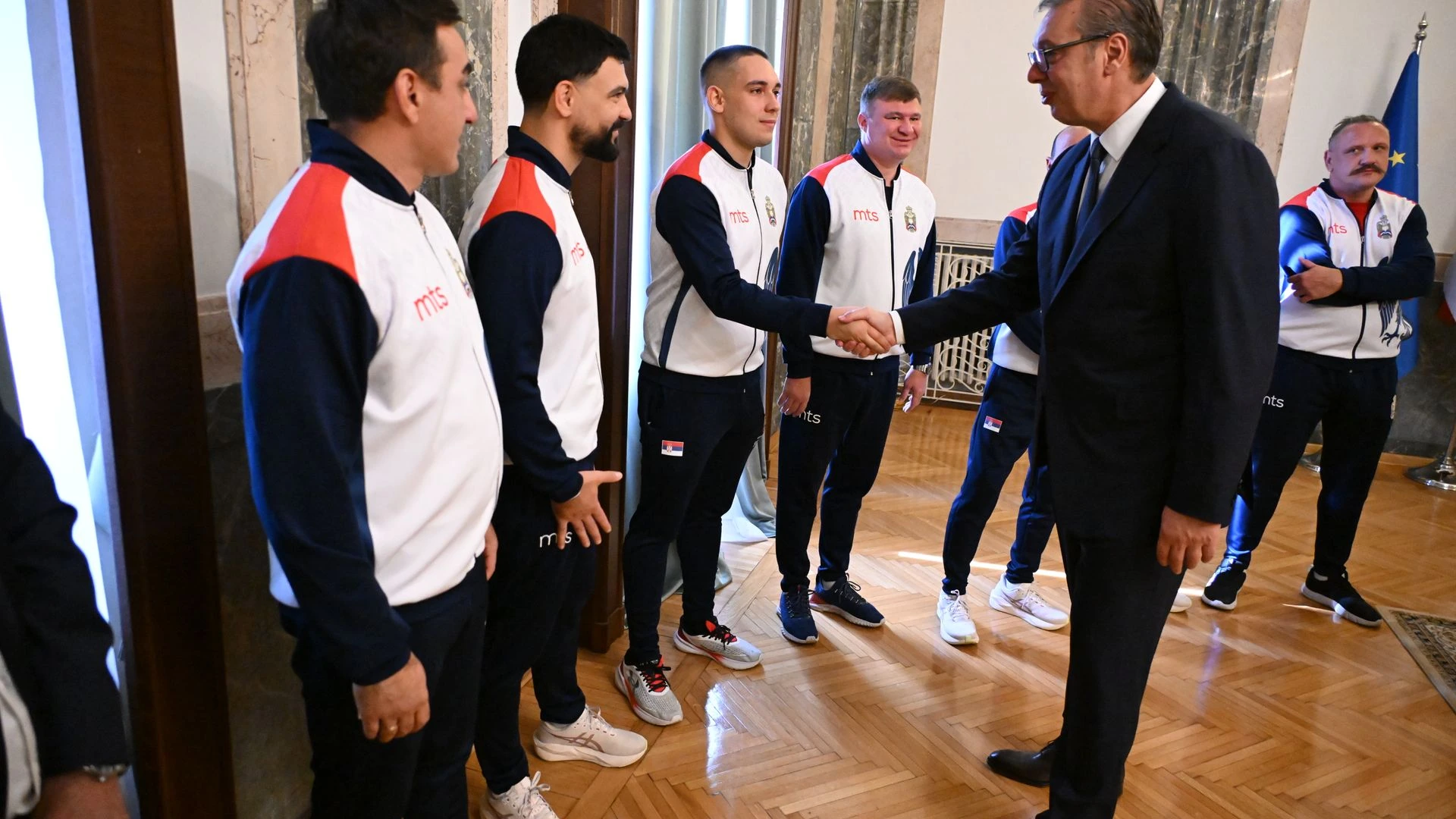
At the reception were the selectors, coaches and federation representatives. Their contribution is invisible in the final table, but it shapes the quality of preparation between competitions. The coach tracks technique, the conditioning specialist manages the training load, and the medical team makes sure the boxer enters the ring healthy and within the weight limit. If one part fails, a fighter can hardly make up for the problem over three rounds.
It is also important how four different athletes prepare as a single national team. Shared sparring and analysis can speed up learning, but the programme has to respect differences in weight and style. Success in Sofia suggests a good balance has been found between a common standard and individual plans.
| Athlete | Medal |
|---|---|
| Sara Ćirković | Gold |
| Kristina Kuluhova | Gold |
| Rastko Simić | Silver |
| Milena Matović | Bronze |
The medal is not the end of the Olympic cycle
The European Championships are a major goal, but preparation continues towards Los Angeles 2028. The road to the Olympic Games demands stability across several seasons, qualifying tournaments and careful health management. A boxer cannot hold peak form all year round. Main tournaments need to be identified, followed by recovery periods and blocks in which technical changes are introduced.
Sofia has provided a good starting position. The two champions have confirmation that their style still works against Europe’s best. Simić and Matović know they are close to the decisive bouts. The next step has to be concrete: a better exit from the corner, a calmer final minute of a round, or a sharper response to an opponent who switches guard.
Four medals could draw new athletes into clubs
A strong result is worth most when it brings new women and men into boxing clubs. Beginners need a safe gym, trained coaches and competitions suited to their age. Medals can be motivating, but they must not become a reason to push children into hard sparring too early. Long-term development protects talent better than early pressure for results.
In Sofia, Serbia won two golds, one silver and one bronze. That split is clear enough to show quality, yet broad enough to raise the question of the next generation. If clubs attract more young athletes while the national team keeps an individual approach, the reception for the medallists will not be the closing point of one tournament, but part of a stable system.
The post-tournament plan has to suit each medallist
With the champions, the conversation is about how to keep their hunger without taking unnecessary risks. With the silver medallist, the final bout is analysed, and with the bronze medallist, the route to the semi-final and the obstacle that ended her tournament. Giving all four athletes the same message would ignore the differences in their experience and current needs.
The shared part can remain a standard of conduct: discipline, respect for the plan and responsibility for recovery. These values build a team culture, while the technical tasks stay individual. Serbia reached four medals by combining those two levels. The next cycle should keep them without turning every boxer into the same model.