
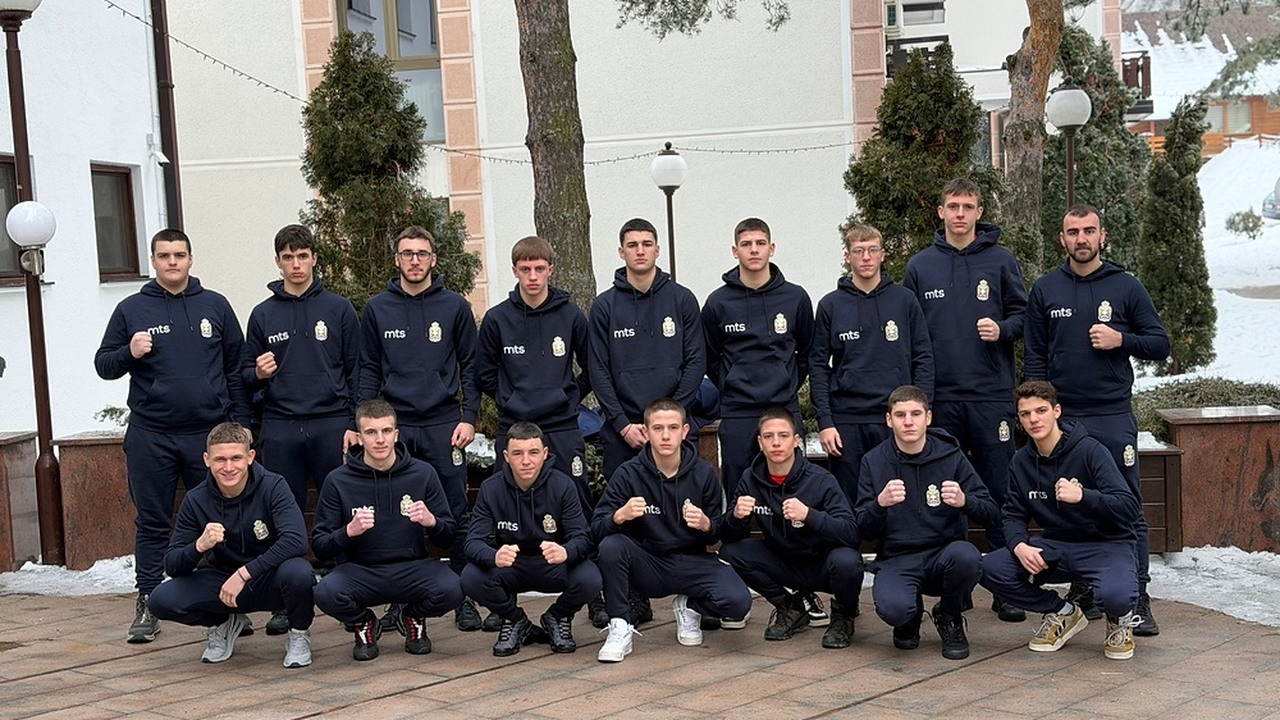
Serbia’s junior boxing team has moved into the final stage of its preparations for the European Championships. The tournament will take place in Loznica from 11 to 22 August. Serbia has fourteen selected boxers across the men’s and women’s categories.
The men’s squad began its training on Jahorina under the guidance of Branislav Jovičić. The closing phase of the work will be held at the regional centre in Loznica. Several foreign national teams will arrive for joint sparring sessions.
The women’s group trained on Zlatibor under Mirko Ždral. Four juniors worked alongside nine senior internationals. The shared camp widened the range of opponents and styles on offer.
Jahorina hosts the core of the physical work
The men’s squad chose Jahorina for its most demanding stretch of work. The mountain setting allows longer sessions away from everyday distractions. The boxers also carry out technical drills in the gym at the same time.
Jovičić oversees a group of ten juniors. The camp brings together athletes from several weight classes. Shared work creates healthy competition alongside individual technical tasks.
Conditioning remains closely tied to movement in the ring. Footwork, punch combinations and defensive reactions demand a lot of energy. The mountain camp prepares these actions for several tournament bouts.
Recovery is also part of the daily schedule. The boxers train hard but cannot arrive at the championship exhausted. The later move to Loznica brings the work closer to competition.
The men’s squad covers a broad range of weights
Luka Konovalov and Marin Petković are in the selected men’s group. Both belong to the lighter divisions of the Serbian team. Quick movement and precise combinations carry particular weight in those classes.
Aleksa Jovanović, Mihajlo Nikolić and Lazar Marković compete in the middleweight divisions. Their work includes close-quarters fighting and attacks from range. Different partners make it possible to rehearse both situations.
The group also includes heavier juniors with different physical demands. Their sessions place more emphasis on controlled power and balance. Speed still decides matters, as junior bouts develop quickly.
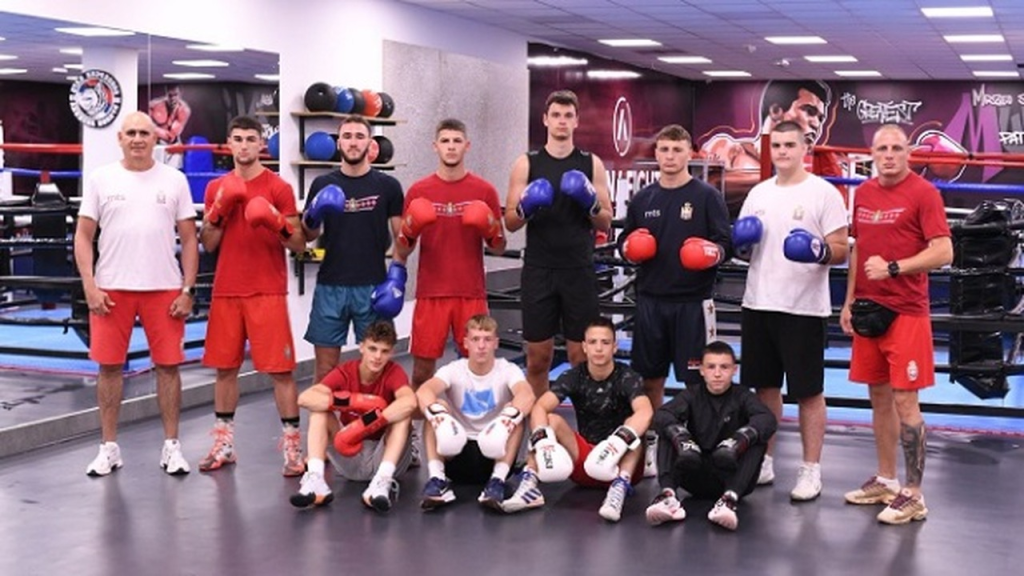
Young Serbian boxers and coaches gathered in the gym during the preparations.
Ten boxers give Serbia representation across a large part of the programme. A number that size requires a careful timetable of shared sparring. Coaches pair fighters according to weight, style and the task of the moment.
Four juniors trained with the senior squad
Nataša Lukić has been selected in the 51 kilogram category. Jovana Devetaković competes up to 57 kilograms. Dunja Vukšić and Sonja Vukšić represent the heavier selected categories.
The juniors joined a group of nine senior women on Zlatibor. That line-up increased the number of possible partners. The younger boxers also got to know the routine of experienced internationals.
Ždral supervised the work of both age groups. Sessions combined conditioning, pad work and controlled sparring. Each boxer also had tasks suited to her own category.
The four juniors now carry that work into the tournament in Loznica. There they will meet different European boxing schools. Hosting the event at home removes the need for a long journey before the competition.
The final preparations take place in Loznica
The national team will complete its preparations at the regional centre in Loznica. The move puts the boxers close to the championship venue. They can settle into the gym and the daily timetable.
The closing camp usually reduces the heaviest conditioning work. More attention goes to technical precision and controlled sparring. The boxers gradually work towards their official weigh-in.
Staying in Loznica removes a long trip before the first bouts. That stability helps sleep, nutrition and punctuality. Athletes can focus on their first confirmed opponent.
The local centre makes it easier for coaches and medical staff to work together. Minor physical problems can be monitored over the final days. Each boxer arrives with a different training load from the camp.
International sparring brings different styles
Teams from Spain, Turkey, Ukraine and Bulgaria are coming to spar. Each country brings its own movement, distance and attacking habits. Serbian boxers will therefore see several styles before the draw.
Spanish boxers often rely on fast combinations and active footwork. Turkey and Bulgaria offer strong regional competition. Ukrainian boxing has a deep technical tradition across several weight classes.
Sparring remains controlled and does not stand in for a full tournament bout. Coaches set the rounds around a specific technical aim. The work provides information without turning training into a result.
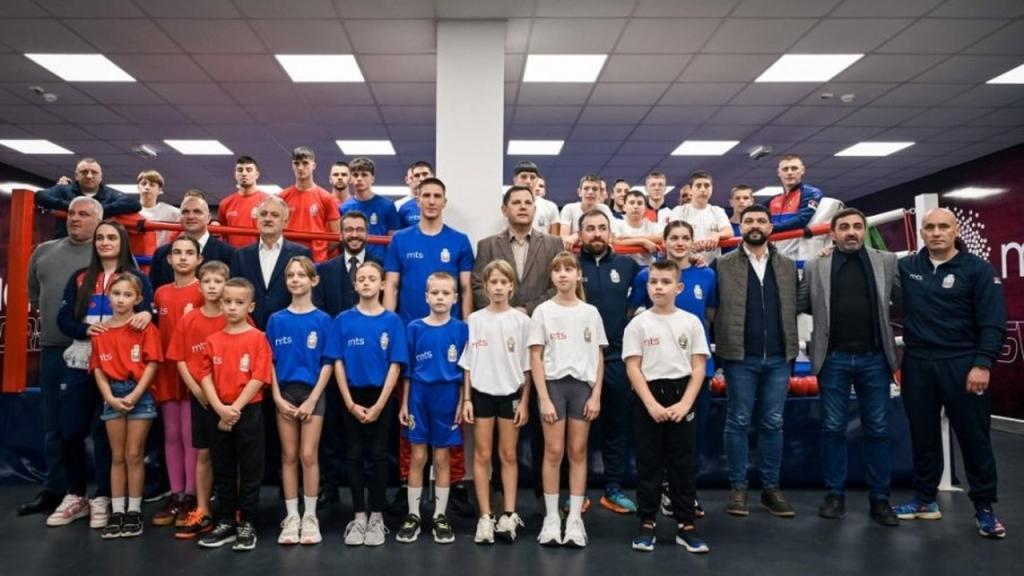
Young boxers and officials pose at the boxing centre in Loznica.
Visiting teams also benefit from the Serbian national side. Each group meets opponents outside the usual domestic circuit. That exchange raises the quality of the final stage of preparation.
The home championship brings support and responsibility
Loznica has a strong link with major boxing events. The European Junior Championship adds another important tournament to the calendar. Home supporters will follow the national team throughout the programme.
Hosting removes the travel, but it brings closer public attention. Young boxers see the flags and hear familiar voices in the hall. Still, they step into the ring alone, facing their opponent.
The championship runs for twelve days because of the large number of weight categories. Early bouts lead on to the quarter-finals, semi-finals and medal matches. Successful boxers therefore go through several recovery periods.
Fourteen representatives give the public several routes through the draw. Some categories begin with a larger number of competitors. The draw will determine the exact path of each Serbian boxer.
Preparations are now nearing the competition
The national team has completed the largest share of its physical work. Jahorina and Zlatibor served as separate bases for the selected groups. Loznica now brings the men’s and women’s squads closer together.
Coaches enter the final phase with a clear list. Serbia has ten male boxers and four female boxers. Each will compete in their own category and wait for their first opponent.
International sparring sessions bring the last unfamiliar styles before the draw. Upcoming training sessions become shorter and more precise. The championship begins after that controlled reduction in workload.
Serbia goes into the event with a large squad and a home venue. The preparations have brought together the mountains, the women’s team and foreign rivals. Official bouts will show the value of that work from 11 August.
Coaches are now working on individual details
The final days bring more work on the plan for the first bout. Some boxers prefer distance, while others are stronger at close range. Partners repeat those situations in controlled rounds.
Communication from the corner is also rehearsed before the tournament. Coaches have brief breaks to pass on clear instructions. Young boxers learn to hear them under pressure.
The home championship lets the entire Serbian team train together. Coaches of the men’s and women’s squads share space during the final phase. Medical and conditioning support stays close to all the athletes.
The first official draw will turn the preparations into concrete bouts. Until then, the squad works against several possible styles. Loznica welcomes Serbia, prepared through a series of linked camps.