
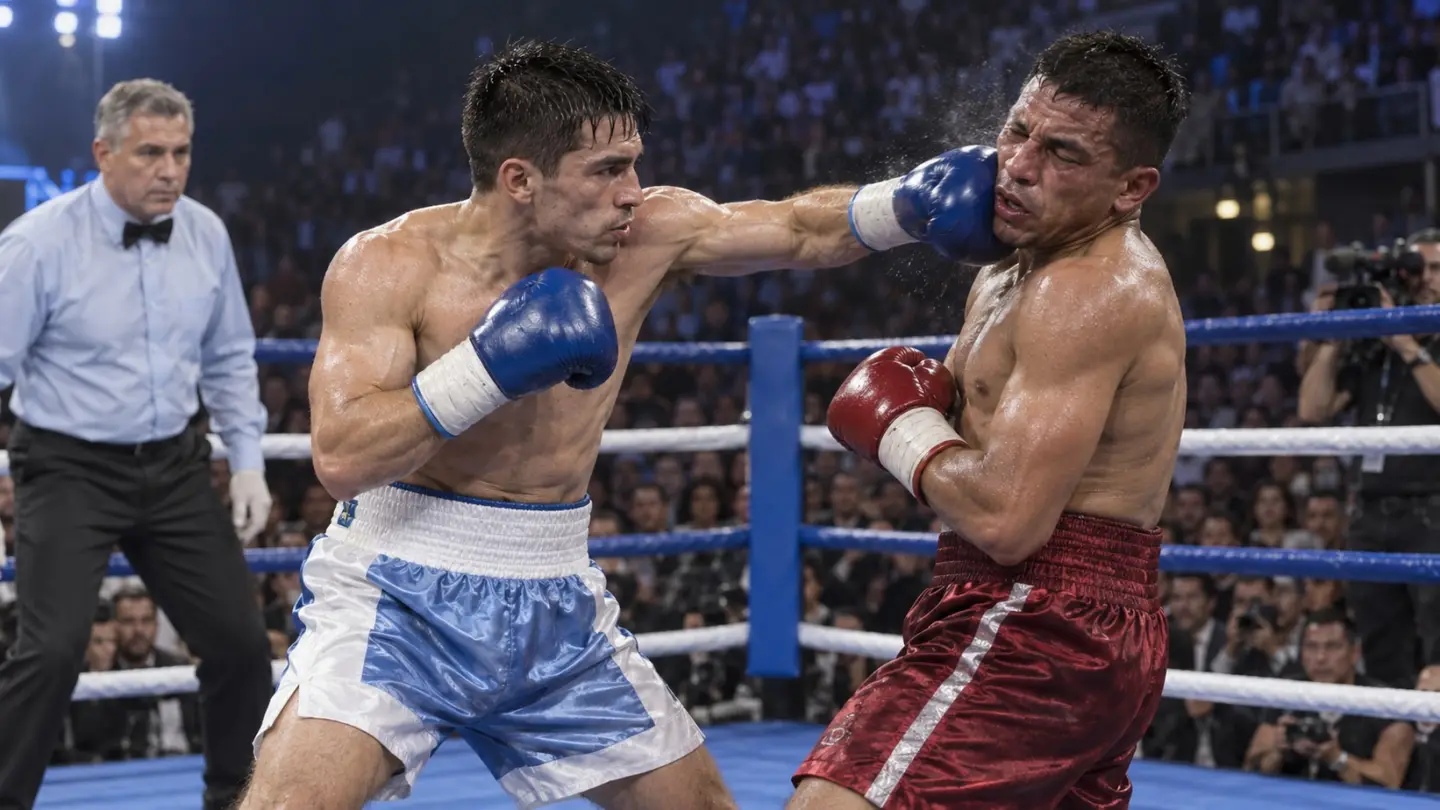
Argentina’s Diego Sánchez beat Venezuela’s Leonardo Uzcategui by knockout in the sixth round to win the South American super featherweight title. The bout took place at the Argentine Boxing Federation stadium in Buenos Aires. The 22-year-old Sánchez improved his professional record to 13 wins, one defeat and one draw, while the experienced Uzcategui suffered his eleventh loss.
The opening rounds were an exchange in which Sánchez tried to cut down the ring and limit his opponent’s movement. Uzcategui used his experience and side-stepping to avoid long spells against the ropes, but the younger boxer gradually turned up the pressure. Rather than chasing the head with a single punch, Sánchez used combinations to force his rival to raise his guard and leave his body exposed.
The turning point came in the fifth round, when Uzcategui ended up on the canvas. The Venezuelan continued the fight, but he never fully regained his balance or his confidence in defence. Sánchez did not lose control by rushing to finish the job. He waited for the next round, closed the exit again and, with a series of precise punches, pushed the referee to stop the contest.
A knockdown in the fifth round shifted the balance of power
For the young boxer, the most important thing is that the finish came from tactical work rather than a stray wide swing. Constant pressure reduced the space, body punches slowed his opponent’s legs, and his lead hand kept the rival on the line he wanted. That pattern can be repeated against better opposition, provided Sánchez does not leave his chin open after his own combinations.
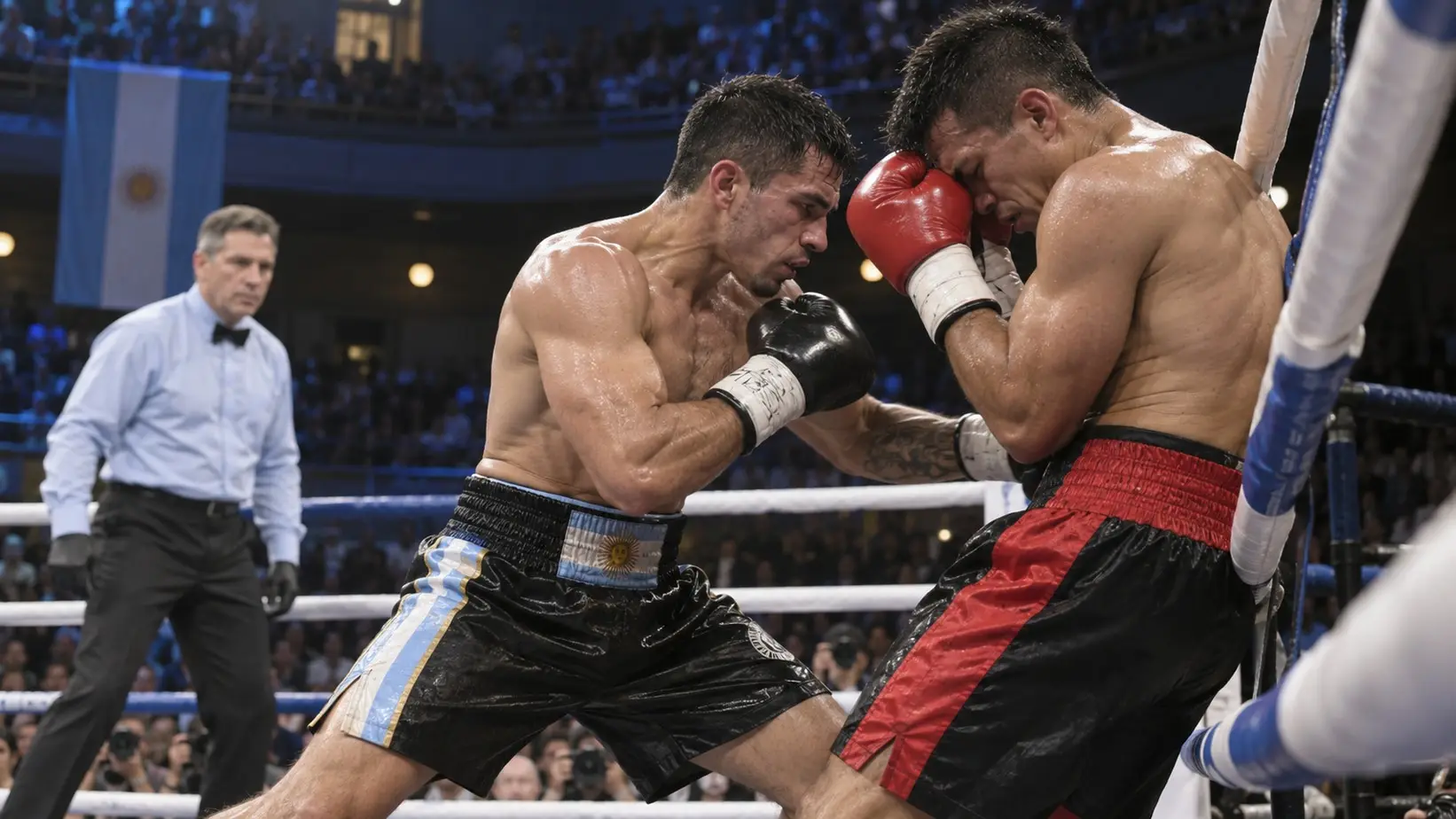
Uzcategui had entered the bout with 20 knockout wins, so Sánchez could not afford to stand and trade without thinking. The experienced rival still had the power to punish a badly timed entry. The victory therefore also speaks to judgement of distance. The Argentine attacked when his opponent was against the ropes, and after finishing a sequence he moved his head and returned his guard before the next attempt.
On the same card, Milagros Erera remained unbeaten and won a unanimous decision over Mía Soledad Nievas. All three judges scored it 99:91, with Erera capturing the WBC Latino title at bantamweight. The result gave the Buenos Aires crowd another home champion and showed the depth of the card beyond the main event.
The title opens a higher level of fights for the young Argentine
The South American belt puts Sánchez in a stronger position for regional rankings and bouts over ten or twelve rounds. His next opponent should test his defence against counterattacks and his stamina when early pressure does not bring a knockdown. Rushing into a much harder fight could slow his development, while too easy an option would add no new questions.
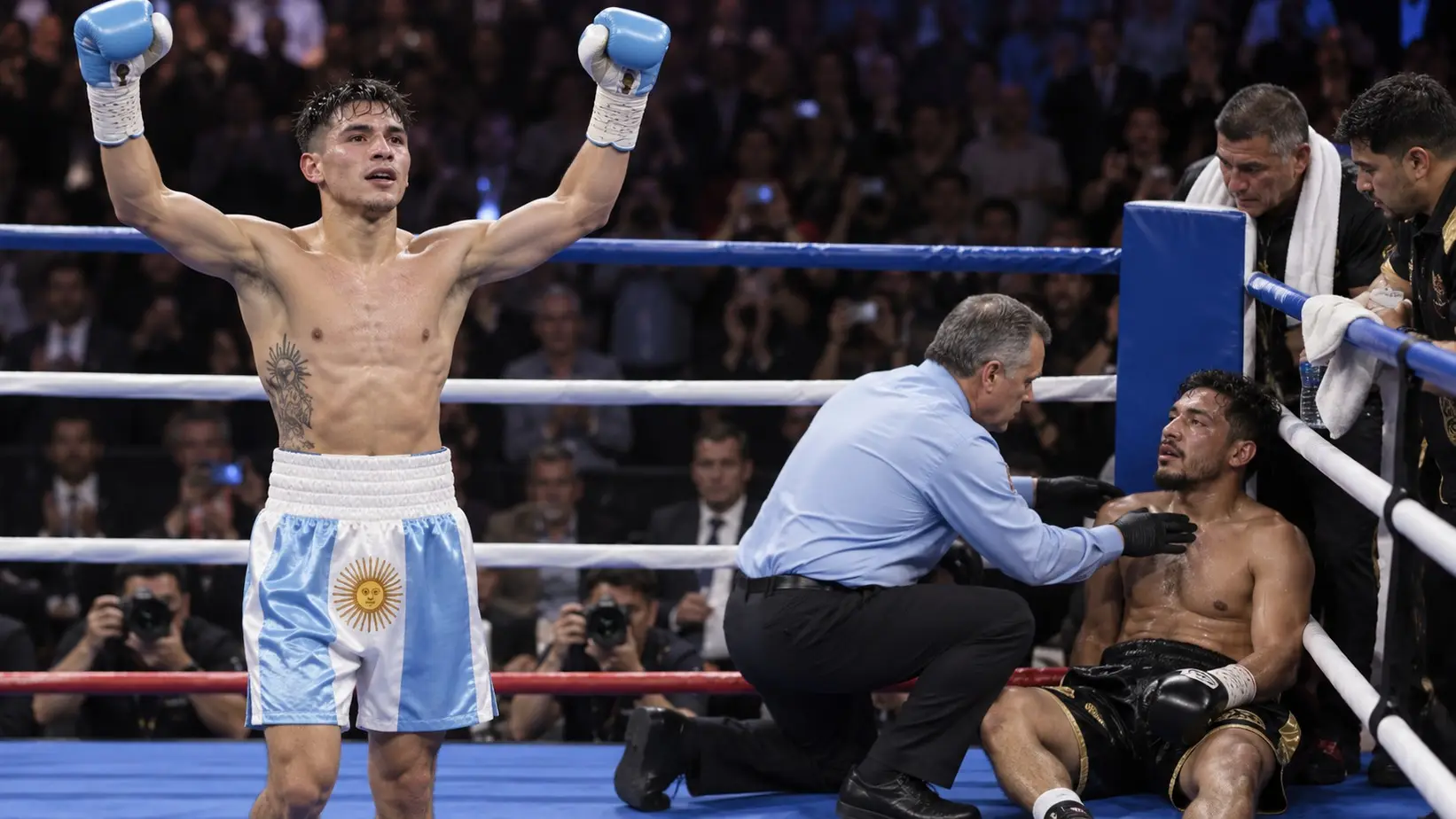
The sixth-round win gives the team clear material to work with. Sánchez now knows he can break down an experienced puncher through steady work, but the footage will show where he took punches on the way in and how much energy he spent closing the ring. If he refines those details, the belt from Buenos Aires could mark his move from domestic talent to a serious international challenger.
The next step should not be decided by how attractive the result looks. The team must compare the styles of possible rivals, the time needed for recovery and the technical weaknesses that stayed hidden because of the early success. A well-chosen next outing should pose a new question and leave the boxer enough time to prepare a concrete answer.
The video analysis must also cover the seconds in which there was no clean connection. Foot position, the way he left the line of attack, and his reaction after a miss determine how safe the plan was. The finish draws attention, but coaches can learn most from how the closing punch was set up and from the moments when the opponent nearly got a chance to counter.
A medical check remains compulsory whatever the outcome. A winner can hide an injury under adrenaline, while the loser must be given the time prescribed after a heavy blow. Only after an examination does it make sense to talk about a new camp. The continuity of a career depends on ambition keeping pace with recovery, not running ahead of it.