
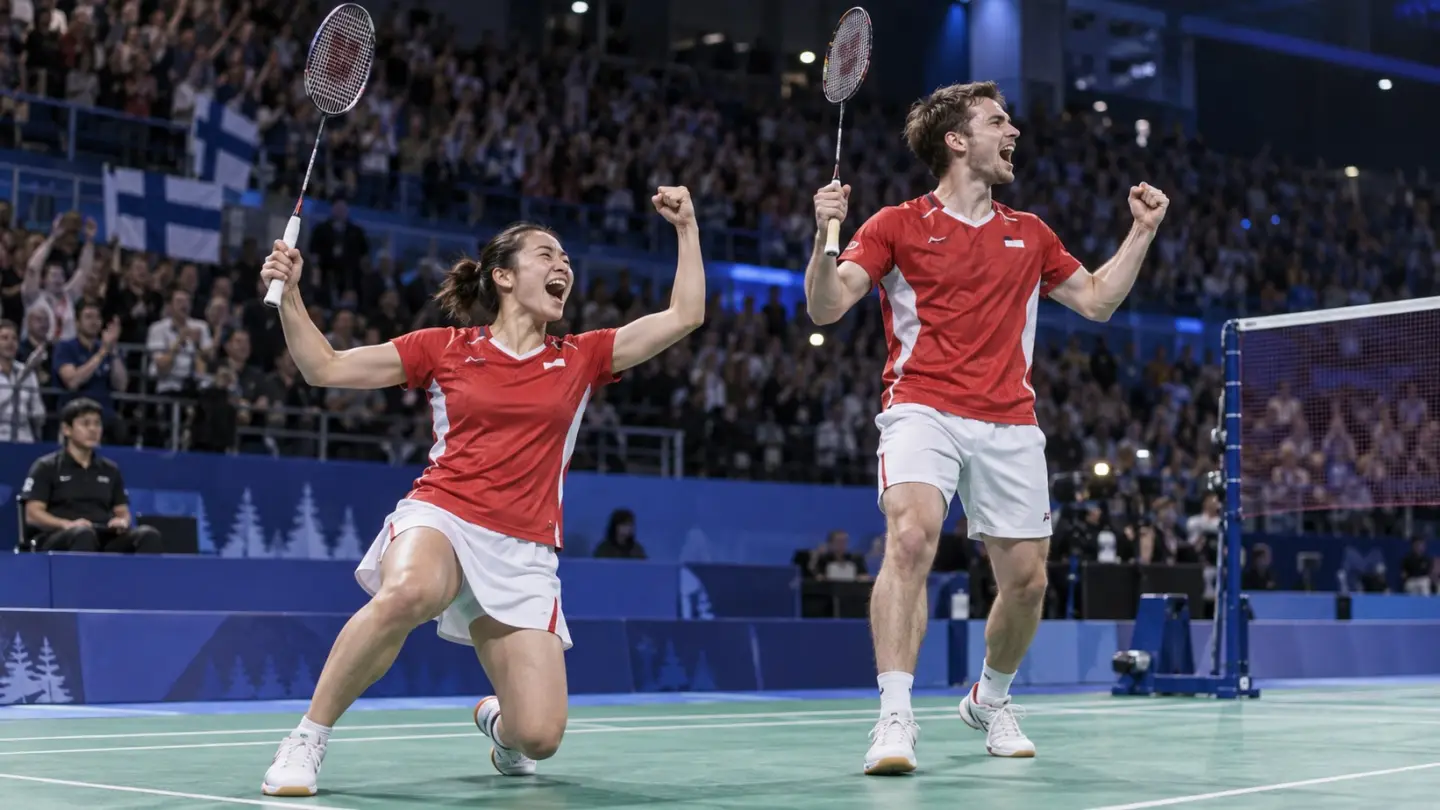
Samuel Jones and Lizzie Tolman produced one of the first big surprises of the Arctic Open in Vantaa. The English mixed pair overcame fifth seeds Goh Soon Huat and Shevon Lai Jemie 25:27, 21:18, 21:15 after 63 minutes. The underdogs dropped the extended opening game but kept up the pressure on serve and return, and turned the match around completely against the experienced Malaysian pair.
The first game offered more set points and showed just how evenly matched the duel was. Jones and Tolman did not get a reward for their strong start, yet the 25:27 loss did not stem from any major tactical flaw. Rather than overhaul the whole plan, they needed to cut down the number of easy shuttles played into the middle and settle earlier who would cover the return after attacks from the back.
In the second game the English pair made better use of Tolman at the front, while Jones was given more time to attack from the backcourt. That denied the Malaysian pair the chance to speed up the rally first. The 21:18 score was not a wide margin, but it confirmed that the balance shifts once the serve stays low enough and the first return does not lift the shuttle.
Losing the opening game did not change England’s plan
The decisive game went to the English pair 21:15, which suggests they kept both their legs and their concentration in better shape. In mixed doubles, fatigue often shows as a half-step delay at the front. Jones and Tolman were more often the first to touch the shuttle above the net in the closing stages, so the fifth seeds were forced to defend rather than build their own attacks.
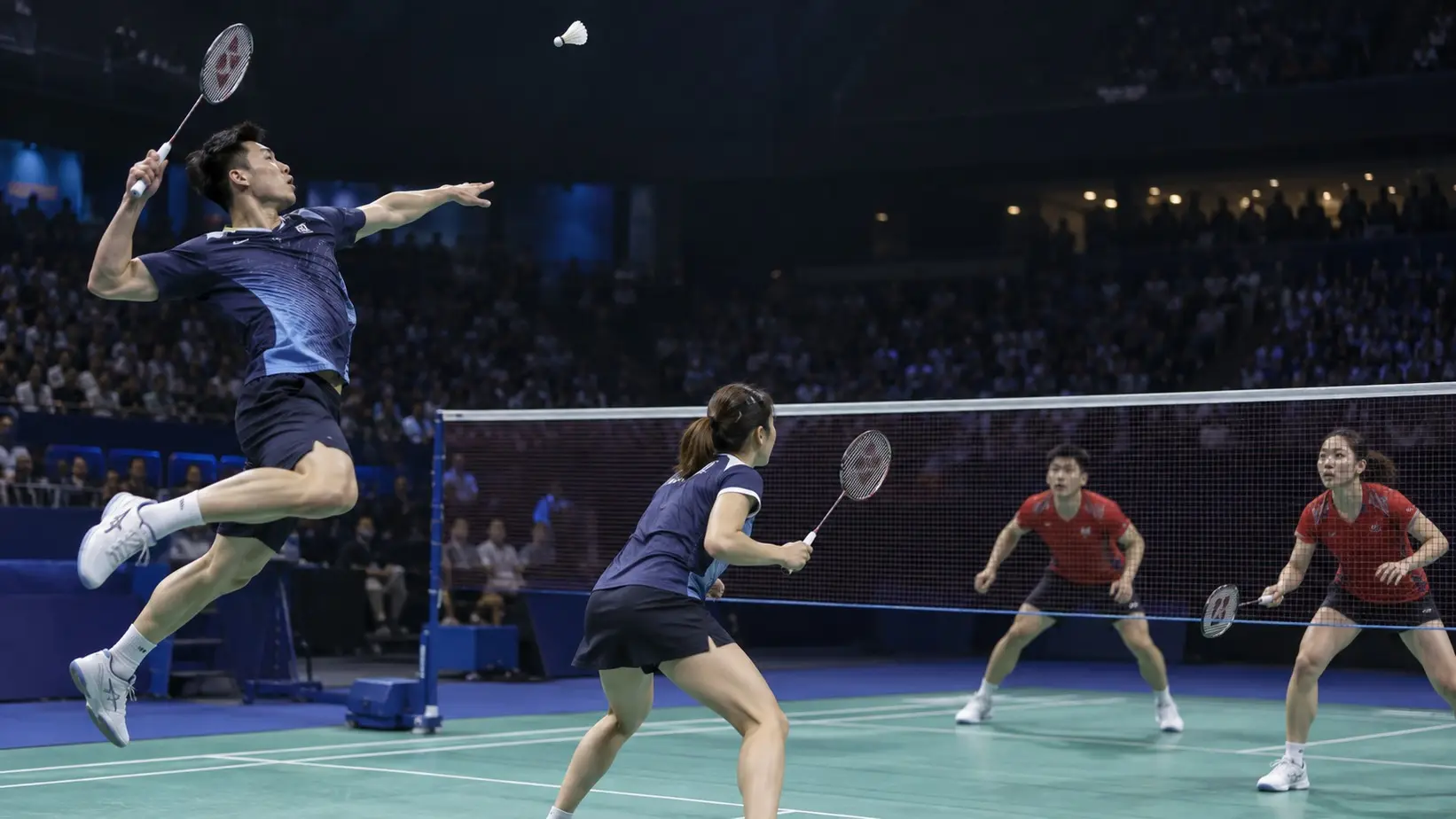
The defeat is especially hard for Goh and Shevon, as experience usually gives an edge in tight finishes. They managed to take the first game but did not turn that advantage into a calmer continuation. When the English pair shortened the rallies, the Malaysians did not change their serve pattern often enough or send the return behind Jones’s backhand to restore the balance.
The win for the unseeded pair reshapes part of the draw, but it does not guarantee an easier run ahead. After 63 emotionally and physically demanding minutes, the key is to restore energy quickly and keep the same quality on the first four or five shots. A good result against seeded opponents only carries full value if the pair repeats its discipline in the next round, without trying to finish every rally with a spectacular shot.
The third game rewarded better control at the front
To judge their next outing, it is worth tracking how many points Jones and Tolman win directly through serve, return and third shot. That figure will show whether the comeback reflected a sustainable pattern or a dip by the favourites. It is especially important how often Tolman holds the net, as moving back opens space for the opponents to attack through the middle.
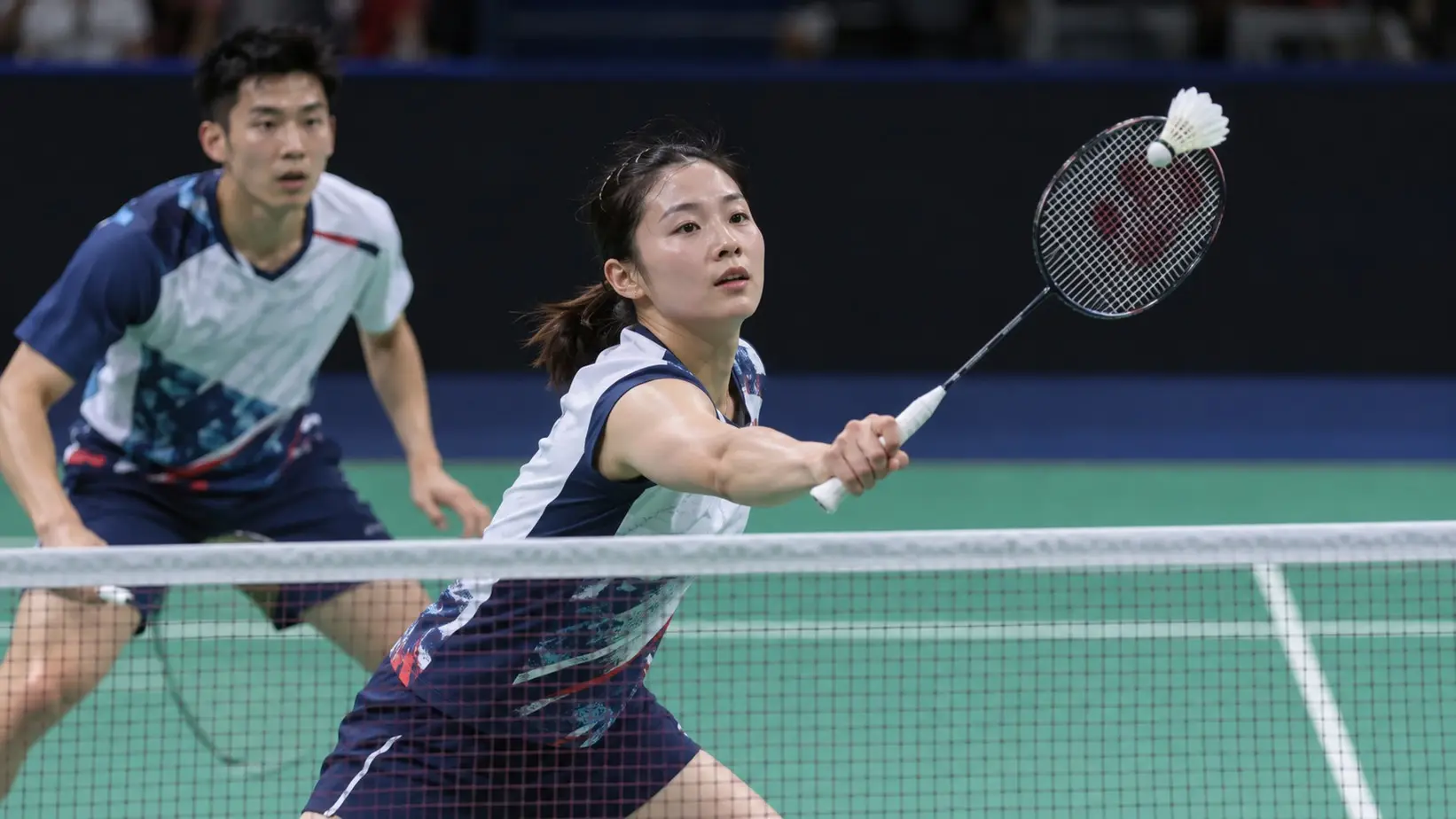
The Malaysian pair will look at the footage for moments when they lost the initiative after a quality serve. If the first attack does not bring an advantage, they need to restore their basic shape more quickly and avoid gaps between the players. A first-round defeat does not erase their quality, but it clearly shows that reputation and seeding status cannot replace precise work in every rally.
Jones and Tolman won the match because they did not let 25:27 become a psychological end. Their victory combines patience, control at the front and a stronger finish in the third game. Their next opponents now have clear material to analyse, so the English duo will have to introduce a new serving variation and keep the same composure once they are no longer underestimated.
Recovery planning should also take into account the 63 minutes spent on court. Light jogging, fluid intake and a short video review are worth more than a long extra session. The aim is not to relearn the strokes but to preserve leg speed and pick two serving combinations that suit the next pair best.
The Arctic Open schedule quickly punishes an emotional release after an upset. The English pair should treat the win as confirmation of the plan, not as the end of the tournament. The next match starts again with no advantage on the scoreboard and demands the same level of focus from the first serve.