
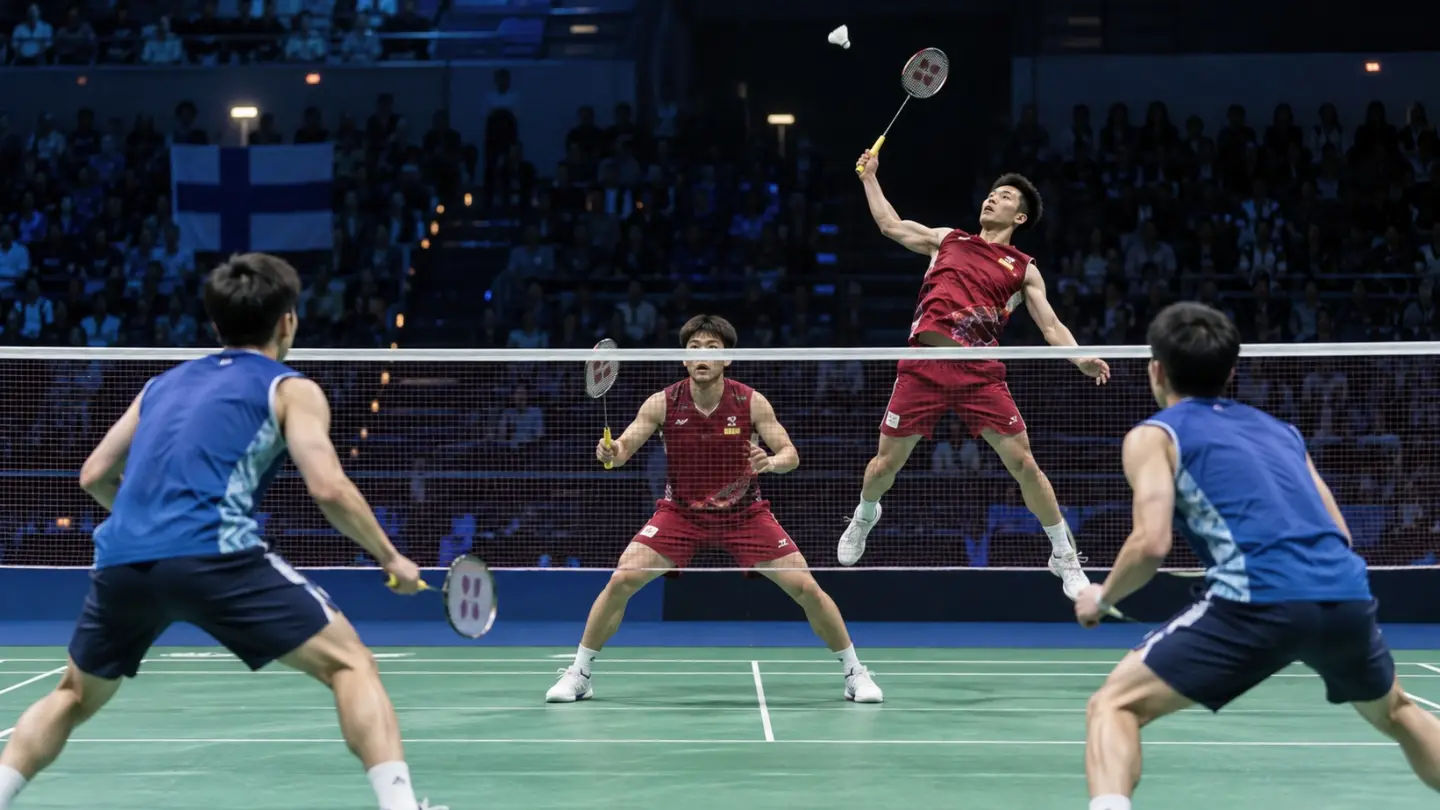
Aaron Chia and Soh Wooi Yik have booked their place in the men’s doubles final of the Arctic Open, where Lai Po-yu and Cai Fu-cheng await them. The scoreline tells part of the story, but the flow of the match shows just how steady the performance was. It is worth separating the early initiative, the response from their opponents and the closing decision, because the same final result can come from total control or from a brief turnaround. That difference shapes realistic expectations for the next test. The link between what has been confirmed and the next challenge matters more than any single standout shot.
The final is the fifth match on the programme on 11 October, on the centre court of Vantaan Energia Arena, closing out the Super 500 category event. A final score does not always reveal how an advantage was built. It is necessary to follow who carried responsibility, how each side reacted to the first setback and whether the same good decision could be repeated. A short swing can hide a weak plan, while a quiet spell without big numbers often sets up the decisive moment a few minutes later. The order of the key phases shows where the gap opened and how long control genuinely lasted.
Malaysian pair looks to take control of the first strike
The Malaysians will try to hold the attack through their serve and return, while the Taiwanese want a flat, fast exchange without letting the shuttle rise. The plan has to be clear enough to carry out under pressure. The first option makes use of the biggest advantage, and the backup must answer the reaction the opponents are most likely to make. Adding new tasks without a clear reason slows the decision down; a good adjustment changes only the part that is not working and keeps what is already producing results. The quality of a plan shows in how quickly decisions are made, how clear the roles are and where the pair stands after a failed attempt.

The biggest danger for both pairs comes from an impatient third shot, since one short shuttle can change the position of the whole rally. Managing risk decides how long a plan can survive. A neutral outcome sometimes preserves position, energy or possession for a better chance, while forcing the play without preparation opens the door to a counter. The balance between gain and danger shifts with time and the score, so the same decision is not equally sound at the start and at the close. Discipline is measured by how often the danger is spotted before it has turned into a costly error.
Taiwanese doubles punish every short defence
Attention should go to points won at the return, the number of attacks played above the net, runs after changing ends and performance in the closing stages of games. These figures make it possible to check the conclusions after the event. The final score shows the outcome, but only a comparison by phase reveals where the advantage was built and whether it can be repeated. It is particularly useful to separate the opening plan from decisions made under fatigue, because that is where the stability of technique and the quality of preparation become visible. Read together, these measures separate a sustainable advantage from a short run or a chance deviation.

A win would immediately bring the newly formed Malaysian pair a major title and speed up their progress in the world rankings. The significance does not end with the last point or decision. A good performance opens a new opportunity, but consistency is what really confirms that the change can last. A weaker result can still be useful if it produces two or three precise tasks. Changing everything at once usually hides the real cause and makes the next check harder. The next outing therefore becomes a concrete test of continuity, not just another entry on the schedule.
There is no clear favourite in the final; the pair that first wins the front zone of the court will get more chances at the closing smash. The conclusion must therefore stay tied to the evidence currently available. The best next check uses the same control points in different conditions, so it becomes clear what belongs to quality and what to circumstances. Repeating a good pattern against a new challenge gives the assessment more weight than a single striking shot. The final judgement remains tied to the same set of indicators and the next comparable official result.