
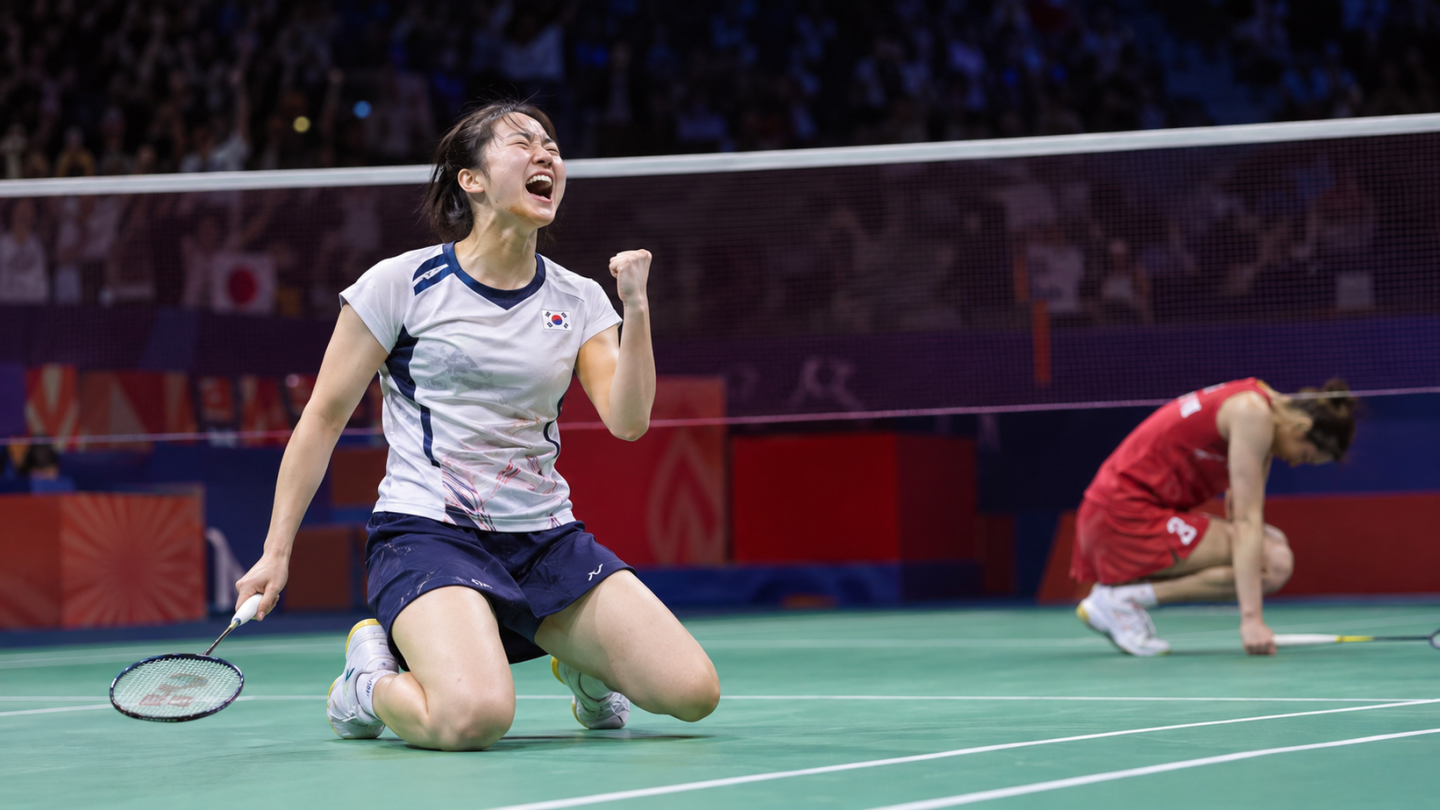
An Se-jong claimed gold in the women’s singles at the Asian Games, successfully defending the title she won in the previous cycle. In the final, the Korean outplayed Japan’s Akane Yamaguchi, one of the few opponents able to keep pace with her over long rallies and turn each exchange into a test of stamina and tactics.
The title was her eighth of an outstanding 2026 season. Her edge in the final came less from raw power than from early control of the centre of the court, deep clears, and the ability to accelerate only once her opponent had lost her balance. By the second game the gap had become clearly visible.
Korea added a second gold through the women’s doubles pairing of Lee So-hee and Baek Ha-na, who defeated the top-ranked pair in the final. Taking the two highest steps of the podium shows that the team no longer depends on a single result, and that it has both a top singles player and a top doubles pair for major team events.
Controlling the rhythm mattered more than taking risks
Yamaguchi usually punishes any weak return with a quick push into the front court, but An did not offer her short shuttles without reason. The Korean first pushed her rival towards the back line, then changed the angle and only then went on the attack. This structure cuts unforced errors and saves energy for long rallies.
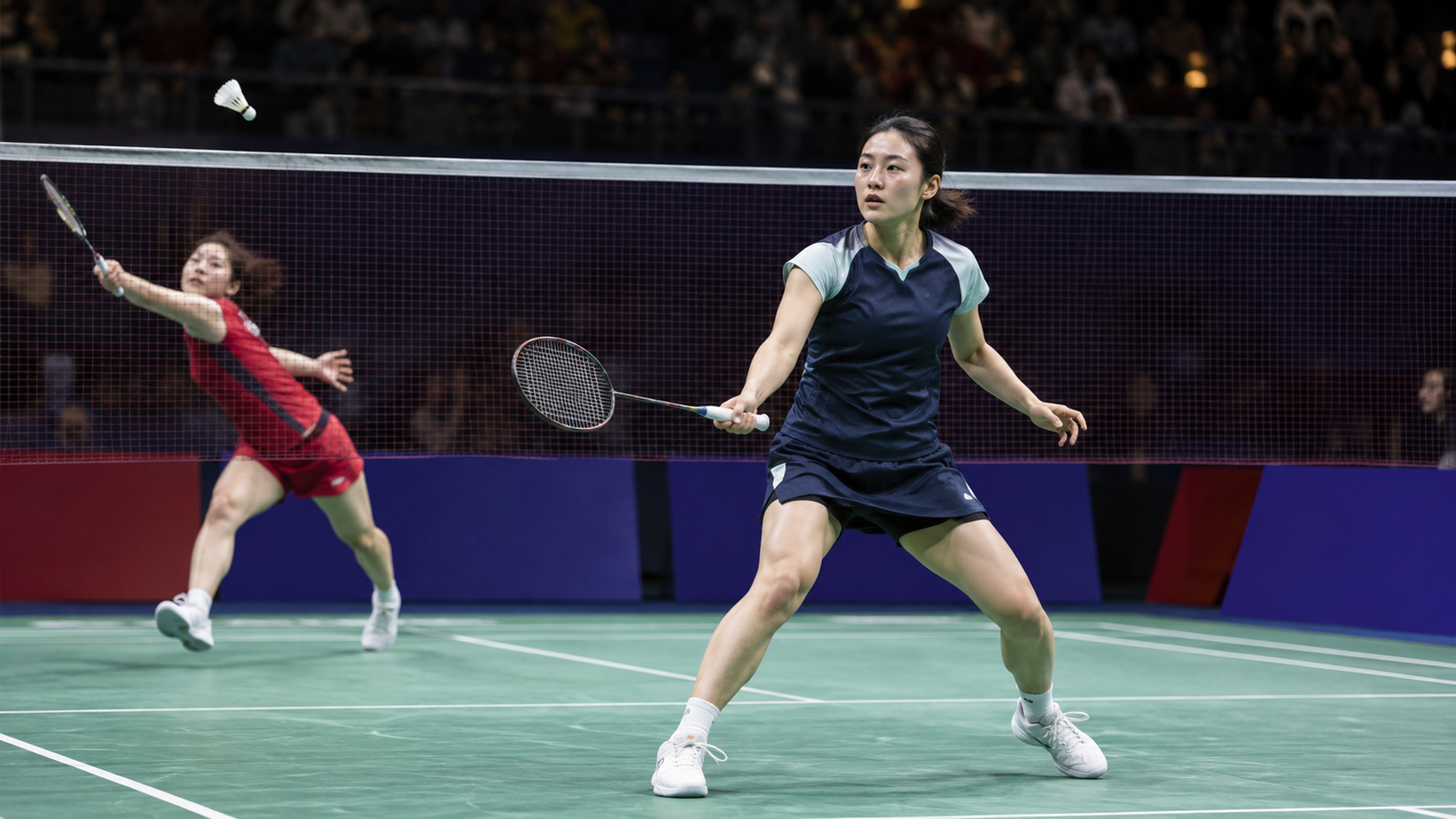
Defending the first powerful smash was especially important. When An returned such a shuttle deep enough, the attacker had to build the point again and often chose more risk. Yamaguchi therefore needed more steps to keep the initiative, while the Korean gradually took the better position in the middle of the court.
The final also showed progress in managing the score. An did not change her plan after losing a few points, nor did she try to finish every reply with a single shot. Steady decisions between the net, flat drives and high returns kept the pressure on without opening up the court unnecessarily.
An eighth title shows the breadth of her dominance
Eight titles in a single season also bring a scheduling problem. Travel, different halls and constant changes of shuttles can wear down movement quality before any obvious fatigue appears. The team must now choose upcoming appearances carefully and leave enough time for recovery, because the biggest tournaments demand freshness.
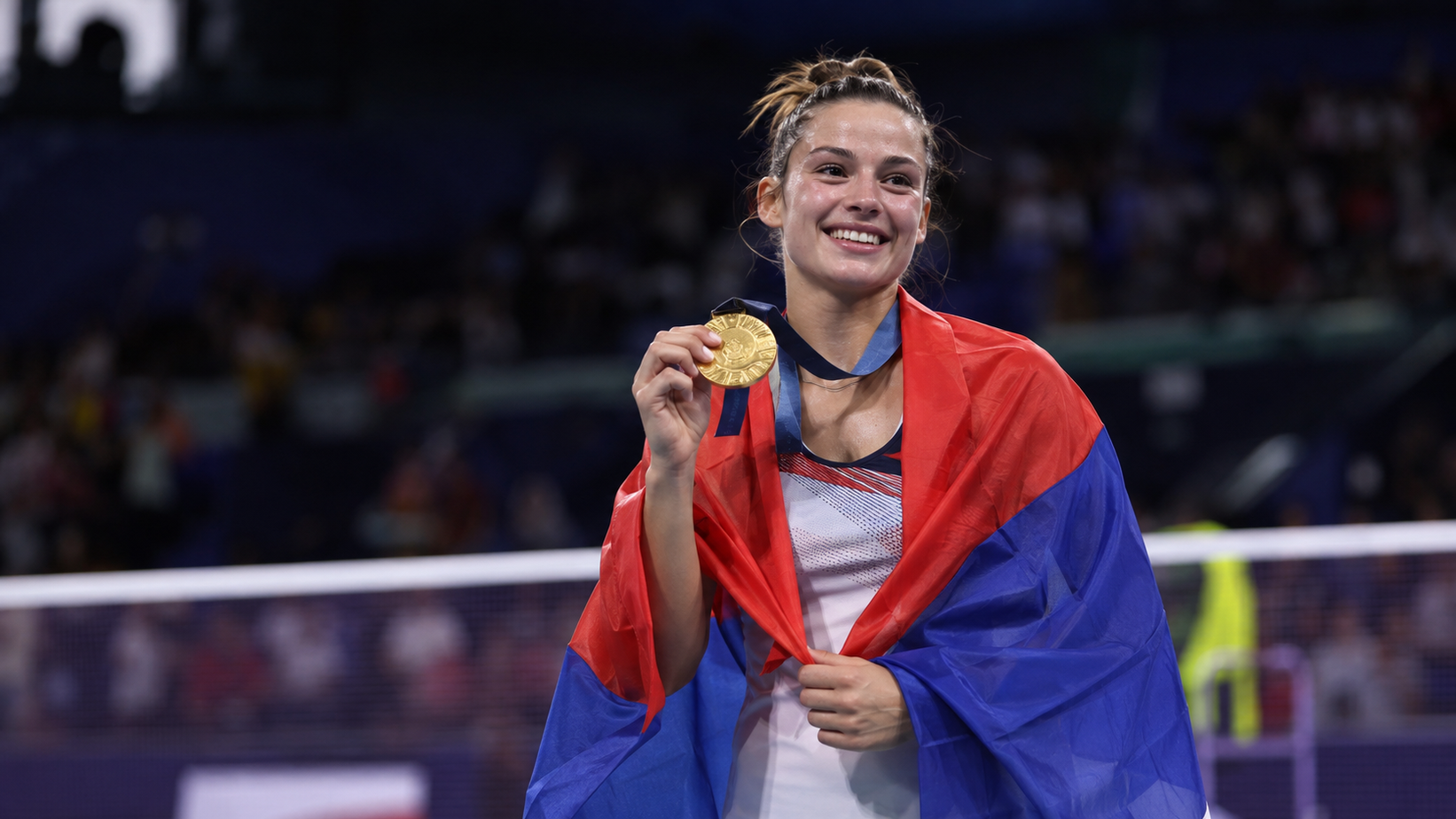
For Korea, the doubles gold matters just as much in the bigger picture. In team formats a reliable pair takes pressure off the singles player and lets the coach arrange the line-up differently. Lee and Baek showed they can beat even the best-ranked opponents when a match is decided through serve, return and the first four rallies.
An Se-jong now enters the end of the year as the benchmark for the entire field. Rivals will study her movement and look for shorter points, but speed alone will not be enough. Precision across a whole match is required, because the Korean currently punishes any drop in concentration most severely and turns small tactical advantages into a wide margin.
Her next appearance will be important for how her body responds after a demanding tournament. The coaching staff will watch the speed of her first step, the quality of her landings and her accuracy in the closing games, since fatigue usually shows first in a late arrival at the net. If these indicators hold steady, An can continue the season without a major drop. Otherwise, a shorter break would be worth more than another appearance at any cost. The next event or official result will show how far this conclusion holds under new pressure. The figures should be read together with the quality of the opposition, the conditions and the decisions taken at key moments.
It is important to separate the current result from the long-term trend: one success confirms good preparation, but only repetition shows consistency. The coaching staff should therefore measure a few clear indicators, compare them with the previous appearance, and change only what has proved to be a weak point. That approach protects confidence while leaving room for progress. The reaction of direct rivals will also matter, since preparation changes as soon as an opponent recognises a winning pattern. For that reason the analysis should also cover situations in which the original plan did not work. The best performance comes when a team or athlete keeps the core strength intact and makes a small, timely adjustment during the event.