
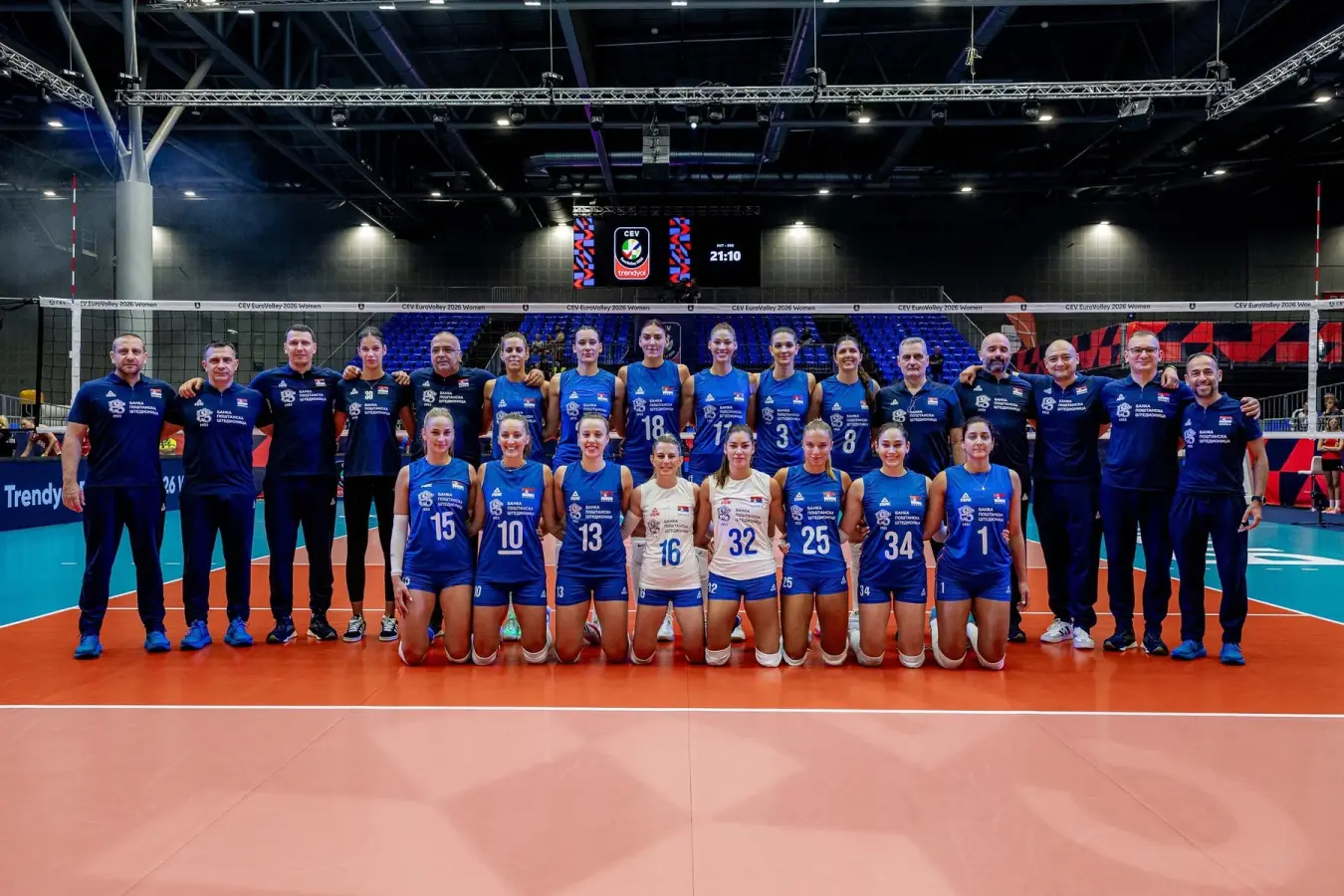
Serbia’s women’s volleyball national team won bronze at the European Championship, beating Poland 3:1 in Istanbul. Serbia took the opening two sets, Poland replied in the third, and Zoran Terzić’s team restored control in the fourth. Tijana Bošković ended the match with 29 points. It is Serbia’s ninth medal at European Championships and their third bronze, alongside three golds and three silvers.
Serbia recovered quickly after the semi-final
The bronze medal match arrived before the squad had much time to process the final they had missed. Serbia had to separate the disappointment from preparation and start with a clear serve and block. The opening exchanges showed that resilience. The players stayed calm early, remained patient when Poland edged ahead, and did not let one difficult rally turn into a string of rushed decisions.
Sustained pressure broke the first set
Poland held small advantages, but Serbia responded with a run of four points and later opened a wider gap. Continuity mattered. The serve pushed Poland’s reception away from the net, and the defence behind the block was ready for the next contact. Serbia did not rely on one spectacular point but chained together several connected plays that led to a composed finish.
| Medal match | Confirmed detail |
|---|---|
| Venue | Sinan Erdem, Istanbul |
| Result | Serbia better in four sets |
| Sets | 25:21, 25:19, 15:25, 25:18 |
| Most effective | Tijana Bošković, 29 points |
| European medals | Nine for Serbia |
A six-point run decided the second set
The second set was close until Serbia turned an 8:9 position into a 14:9 lead. Hena Kurtagić contributed with her serve, and the block was easier to set when Poland’s reception was off target. The run created room to close out the set, but the team still had to win the first attack reliably whenever Poland tried to narrow the gap.
Poland’s response in the third set changed the task
Serbia started well, but Poland found a stronger serve and took the lead. Coach Terzić briefly left the court because he was not feeling well, which added uncertainty. Poland used the moment to extend the match. Serbia did not need to deny the poor spell, only to restore the simple responsibilities before the fourth set began.
Serbia broke the fourth set after several changes of lead
No team held every early point. Poland would go ahead, Serbia would respond, and the balance would shift again. The key was that the Serbian players kept their structure after those swings. Serve from the bench and Bošković’s finishing made the difference in the middle of the set. They reached match point in good order and took the first chance to finish it.
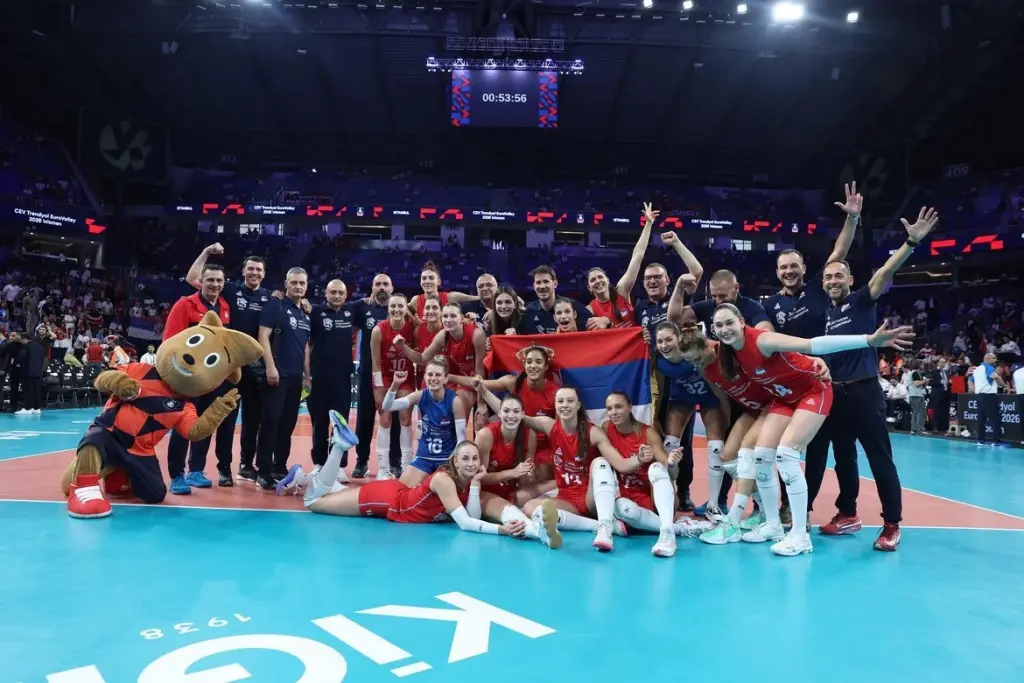
Bošković’s 29 points were part of the team plan
The setter carried the heaviest attacking load and, according to the official report, added one ace and two blocks. Still, every attack depended on reception, digging and cover. Serbia secured enough usable balls in the decisive moments. Whenever Poland put together a stronger block, the other players had to keep the rally going.
The medal history gives context to the result
Serbia now has three European golds, three silvers and three bronzes across the different national periods that the federation counts together. The symmetry is an interesting detail, but this squad won its medal through the whole tournament and a demanding final weekend. History provides a frame, but it does not replace the work needed to play the best possible match after a semi-final.
The analysis should preserve the calm of the fourth set
The next preparation can keep the serving targets, the blocking agreements and the emotional recovery they worked on in the medal match. The third set also needs an open review, because stronger rivals will try to create the same uncertainty. The bronze confirms that Serbia stayed competitive to the final day, and the main lesson is the return to clear roles.
The medal also secures a place at the next world tournament
The federation states that Serbia, Poland and Turkey, along with world champions Italy, have qualified for the 2027 World Cup in the United States and Canada. The bronze therefore belongs to a longer cycle. After recovering from Istanbul, Serbia can assess the depth of the squad, fitness and combinations for a different competition. The qualification removes one uncertainty, but not the work needed to arrive prepared.
The return home begins with recovery
After 109 minutes of match play and the whole tournament, the first decisions belong to rest, medical assessment and a gradual return to club commitments. The players do not all carry the same load, so they should not follow an identical schedule. Medical and coaching staff must exchange data on minutes played and minor problems. That way the medal remains a successful end to the national team period, not the start of an unnecessary risk in the following week.