
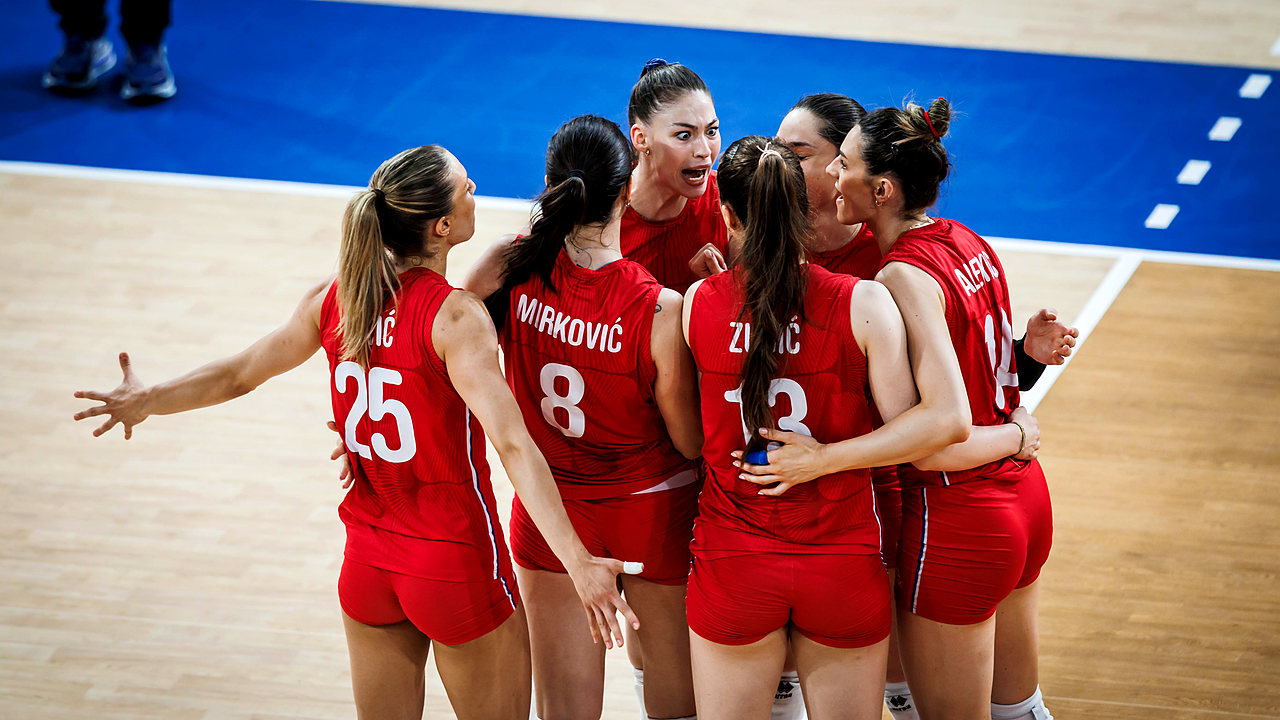
Serbia’s women’s volleyball team needed a clear response in the Nations League, and the match against the Dominican Republic delivered exactly that signal.
After a difficult stretch in Manila, a maximum win matters because it resets the rhythm of the week and restores confidence ahead of the next opponent.
What has actually changed
The headline is straightforward: Serbia secured a maximum win over the Dominican Republic in the Nations League. That is not the only thing shifting the picture. It moves the story beyond damage control, which is why this result is best read through what comes next, not just through the scoreline.
After a demanding Nations League week, Serbia needed a tidy match, and the Dominican Republic offered a clean result without wasting the squad’s energy. Against that backdrop, it matters that the result gave a clean signal after the earlier pressure in Manila. The side needed a match in which its lead did not keep slipping away.
Where the pressure shows first
Nations League weeks reward teams that reset quickly between matches. That framework calls for a cool analysis, because a quick recovery often counts for more than a single isolated performance.
In practice, everything comes down to serve reception, the first tempo, rotation balance and the ability to close a set before the pressure returns. Serve reception and the first attack are the first signs of recovery, so the next reaction cannot be purely emotional.
A win without dropping a set reduces the physical cost of the week. That matters when travel and short preparation pile up. It is the detail that shows whether the group is genuinely controlling its rhythm or simply responding to pressure.
Key details
| Area | Detail |
|---|---|
| Match | Serbia – Dominican Republic |
| Competition | Nations League |
| Main value | maximum win after earlier pressure |
| Next task | turn the response into a new stable performance |
Why the detail is more than a headline
Serbia must keep its bench involved across a congested schedule. Fresh options are essential in a format like this. Without that, the good news stays isolated and does not feed into wider planning.

The next match will show whether this response turns into momentum. One clean win is useful; a second would change the whole week. That is why the next training session, camp or match now has a clearer purpose.
The result gives the coaching staff a firmer basis for rotations. They can now separate form from fatigue more easily. That practical value is what makes this news worth noting for Serbian sport.
The result is not the only thing that matters. Serbia needed a match that looks orderly from the first set to the last.
A maximum win protects legs, confidence and room for the next lineup decisions.
The match against the Dominican Republic matters because the Nations League table punishes quickly when one bad day becomes two.
Serbia stopped that slide with a calmer and sharper performance.
The next opponent will test whether the same discipline holds when rallies get longer and the pressure rises.
For now, the response is exactly the result this week demanded.
The next checkpoint
The key point is that the next checkpoint should not be read separately from this news. In women’s volleyball, small details quickly show whether progress is real: communication, court positioning and the ability to repeat the plan under pressure.
That is why Serbia’s maximum win over the Dominican Republic in the Nations League remains more than a brief update. It provides a framework for tracking the next decision, the next match and how the coaching staff uses what it has now gained.
Serbia needed a volleyball response that looks clean rather than dramatic. The match against the Dominican Republic provided that foundation.
One more layer matters: serve reception, the first tempo, rotation balance and the ability to close a set before the pressure returns. That part does not always look spectacular, but it decides whether good news turns into a stable working pattern.
When the next checkpoint arrives quickly, the priority is that Serbia does not lose the link between plan and performance. If that link stays clear, this news carries greater weight.
The coaching staff will also measure quieter details: communication, scheduling, timely reactions and the first response after pressure. That is often more reliable than a single good result.

A good next step would connect this news to the wider programme. A weaker response would reduce it to a short update with no serious follow-up.
That is why the story is best followed through the next practical decision. The next lineup, camp or match will show whether the positive signal has really been taken on board.
A result or an appointment is worth most when it changes day-to-day work. That is the difference between a useful foundation and a headline that fades quickly.
A busier calendar gives this news added significance. Serbia does not need a dramatic answer so much as a repeatable one, built on the same details.
Repeatability is the real test. If this shows up again, the step becomes part of a clear direction rather than a single encouraging moment.
The next practical layer is how the group carries the same habits into a different setting. A result means more when it holds up against a new opponent, a new arena or a new working week.
That is why the next check has to be calm and concrete. The key question is whether the same good things stay visible when the rhythm of the match changes.
Serbia can only use this moment as a foundation if the coaching staff turns it into clear demands. Players need to know what was good enough and what still needs work.
A precise debrief after the match gives the news a longer life. Without one, the same information stays a line on the calendar rather than a step in development.
The greater value does not lie in overstating the moment. It lies in reading what the moment says about preparation, roles and the ability to respond before the pressure builds.
Those details will decide what comes next. Once they are in order, Serbia can build on the result or the decision without relying on emotion alone.
There is a human side to the story too, because every player and member of the staff has to understand how a small detail affects daily work. That is why the next training session is more than a routine continuation.
If the group passes the message on properly, the next match should look more controlled in the areas already mentioned. That is the real proof of progress.
This framework keeps the story close to the sport itself. It does not treat it as a slogan but follows the actions that can be checked on the court, in the pool or within the programme.
The next result will not explain everything, but it can show whether the direction is becoming clearer. That is enough to justify following the story further.
One particular point is how pressure travels through the national team schedule. A good answer can settle a squad, yet the coaching staff only confirms the trend over the days that follow.
So the most important evidence may be quiet: cleaner decisions, less rushing and a group that recognises the same situations sooner.
The federation angle is practical too. A development or senior result is worth most when it points to the right path toward the next selection, camp or tactical adjustment.
If that path becomes visible, the current news helps the programme organise itself better. If it stays unclear, the positive moment will be harder to put to use.
The closing read has to stay close to the people doing the work. Players and coaches must turn a public signal into habits that survive travel, fatigue and a different opponent.
That is the part fans should watch next. A result or a decision starts the story, but the daily response determines whether it gains real significance.
There is also the question of rhythm. Serbia often works through congested fixtures, so the value of any one piece of news depends on how quickly the group can process it and move on to the next task.
A controlled response would show maturity. It would also give the coaching staff a firmer basis for judging who is ready for a bigger role.
That is why this news reads more like a checkpoint than a destination. It shows what can be used now and what must be repeated before the next test under greater pressure.
The difference matters because short-lived confidence fades quickly. A stronger foundation is built when the same details remain visible across several tests.
For readers, the key is to watch for the next concrete sign rather than wait for a big conclusion. That sign might be a rotation choice, a defensive habit or the way Serbia manages a demanding stretch.