
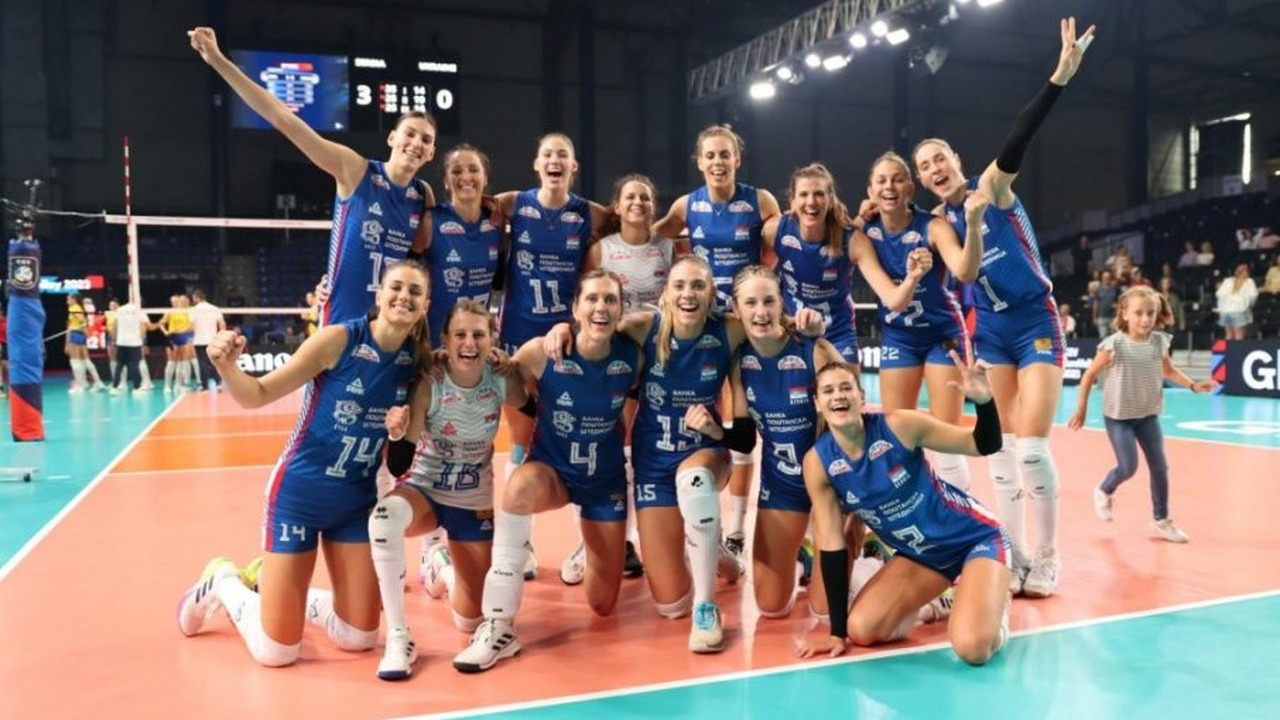
The Serbian women’s volleyball national team is wrapping up its preparations for the European Championship. The side opens its campaign in Group B against Austria in Brno on 21 August. Over seven days, five matches will be played.
Serbia will also face the Czech Republic, Bulgaria, Greece and Ukraine. The tight schedule leaves little time to recover between games. The final preparations are therefore focused on keeping the players’ play steady and their bodies fit.
Austria provides the first test in the group
Serbia meets Austria on Friday at 14.00. The opener could bring extra tension, since the squad has no earlier result from the tournament to draw on. A calm first set can set a normal rhythm for serve and reception. Serbia arrives as the reigning European vice-champion. That status brings expectations, but it does not hand out points in Brno. The team starts the match on the same level as Austria.
Pressure on serve can reduce the number of attacking options open to the opponent. Serbia also needs a solid first contact so the coach can call on every attacker. A poor reception makes it easier for the rival to read the attack. The opening match is followed by a free day. The coaching staff gets time to analyse the performance. Treatments and lighter training prepare the players for the home-side selection.
The Czech Republic and Bulgaria arrive in quick succession
Serbia meets the Czech Republic on 23 August at 19.00. The host crowd in Brno can be expected to back the opponent strongly. The Serbian players must therefore communicate clearly during long rallies. Bulgaria is the next rival, just one day later. Two matches in a row disrupt the usual recovery plan. There may be less full training between games and more analysis of video.
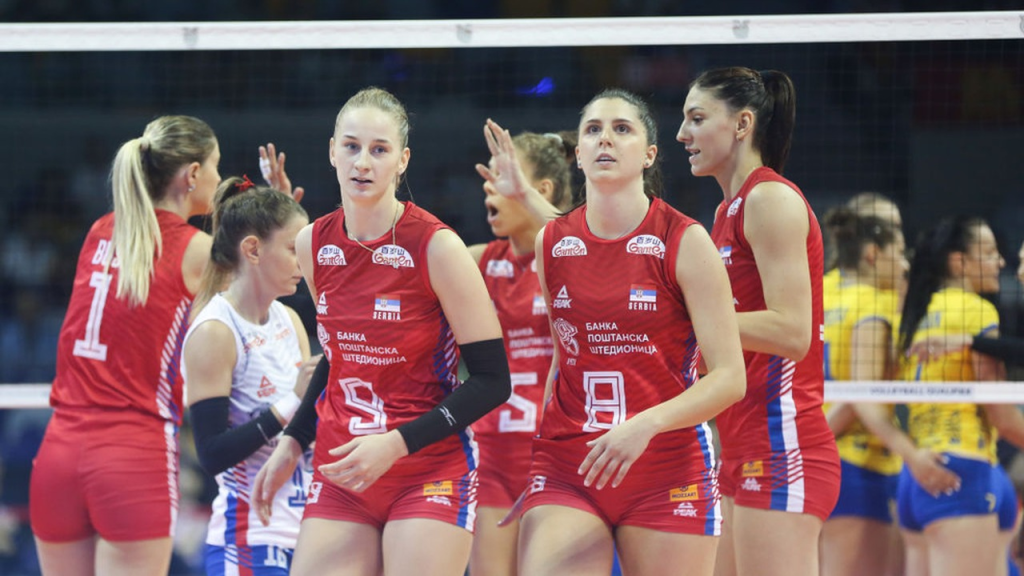
Serbia’s women’s volleyball players celebrate together during an international match.
Squad depth matters more in a tightly packed group. Players from the bench can change the serve, the height of the block or the defence in the back court.
They also ease the workload of the most heavily used team-mates. A result against one rival must not decide the next match. Each team has different servers and attacking patterns. Serbia needs a specific plan for every match.
Greece and Ukraine close the group programme
Serbia plays Greece on 26 August and Ukraine the following day. The last two group matches come back to back. The standings at that point could then shape the line-up choices. The team still has to hold its own level. Thinking too far ahead about the next stage weakens the task at hand. Precise reception and a disciplined block are used in every situation.
Position in the group determines the route through the knockout phase. Every set can affect the table when teams have the same number of wins. Serbia therefore cannot treat a lost set as unimportant. The final group match starts at 16.00. Recovery begins straight after the Greece game. The coaching staff may adjust the warm-up and meals to suit an earlier start.
| Date | Opponent | Start time in Brno |
|---|---|---|
| 21 August | Austria | 14.00 |
| 23 August | Czech Republic | 19.00 |
| 24 August | Bulgaria | 19.00 |
| 26 August | Greece | 19.00 |
| 27 August | Ukraine | 16.00 |
Simple volleyball actions carry the whole tournament
Serbia has a wealth of international experience among its players and coaches. The European Championship still rewards simple moves executed under pressure. A good serve, an accurate reception and an organised block remain the foundation. Long rallies demand patience and a few successful defences before an attack. The team sometimes has to dig the ball several times before a clean chance appears. Rushing the first difficult ball can undo all the earlier work.
The programme in Brno brings five different rivals. It also tests recovery, because four matches are played over the last five days. The coaching staff will need a contribution from every player. Serbia opens against Austria on 21 August. The route then runs past the hosts, Bulgaria, Greece and Ukraine. These confirmed fixtures define the immediate task for the national team.
The table rewards wins, points and set ratios
Teams first need wins to secure a better position in the group. When results are level, the rules then use points and set data. A win in five sets does not carry the same value as a win in three. That is why every set has a concrete worth. Serbia can improve its position by closing out matches cleanly. It can also bank useful points when a tough match goes to a fifth set.
The coaching staff tracks the table without burdening the next point. The players on court receive simpler tasks. They serve to a specific zone, hold the block and prepare the next attack.
Brno is only the first phase of the championship
The group stage does not bring a European title, but it determines progress and the next rival. Serbia must first collect enough results before it can think about a medal. In the knockout matches there is no chance to correct mistakes later. The group phase therefore offers valuable time to improve cohesion while collecting wins.
The immediate focus stays on Austria and preparation for the opening match. A steady start can ease the pressure before the more demanding part of the schedule.