
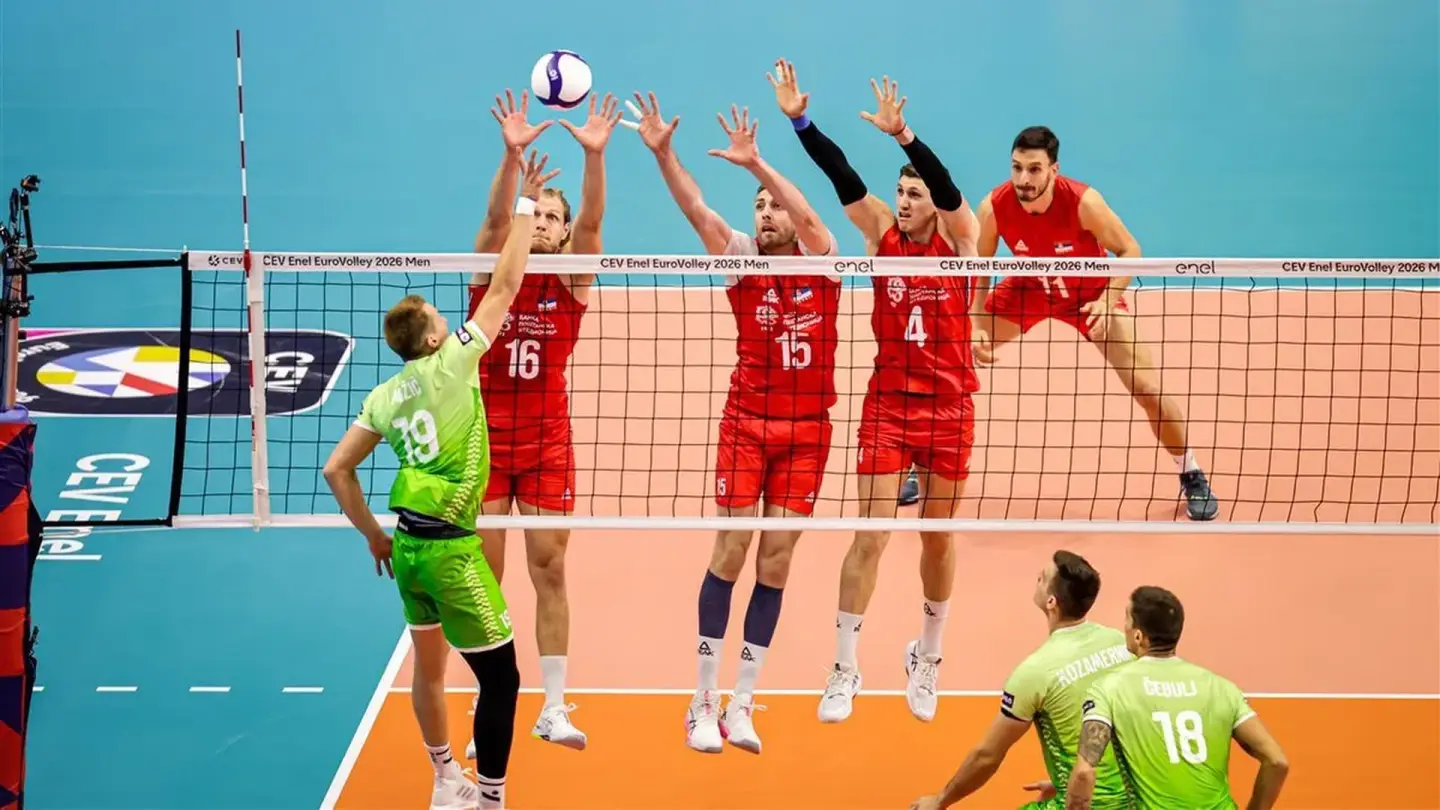
Serbia’s men’s volleyball team ended their European Championship campaign with a 0:3 defeat to Slovenia in the round of 16. Slovenia won the opening two sets with ease, while Serbia pushed harder in the third without managing to extend the match.
Slovenia’s serving set the tone from the start
A powerful and accurate serve pushed Serbia’s receive away from the net and cut down the quick attacks through the middle.
When the setter gets the ball well away from the ideal zone, the opposing block reads the direction earlier and shuts down the outside hitters more easily.
The core facts behind the Serbia loss to Slovenia are clear: Slovenia won the round of 16 in three sets, and Serbia got close only in the third. Any assessment that starts from a different premise easily mixes up what actually happened with what might follow. The safest conclusion remains the one that the source and the visible result confirm. Later data may widen the picture, but it should not overturn a confirmed fact simply because a more dramatic reading sounds more appealing.
The final check on the Serbia loss to Slovenia should separate the confirmed outcome from what still needs watching. The source confirms the event itself, while later data will show how long its wider impact lasts. Keeping that distinction preserves an accurate conclusion and stops a single unclear detail from altering settled facts. It also leaves room for a later update without suggesting that the current account is unfinished.
The first two sets produced a wide gap
The scores of 14:25 and 13:25 show that Serbia could not link a stable receive, defence and counterattack within the same rotation.
Individual points were not enough, as Slovenia quickly regained control after every short run.
The main advantage in the Serbia loss to Slovenia is that a better serve receive opens more attacking options. Its value shows up in concrete decisions rather than broad promises. A useful advantage opens another realistic possibility, leaves time to react and stays understandable under pressure. When it repeats across several similar situations it becomes part of a reliable pattern; if it appears only once, it is a good sign but not conclusive proof.
A dependable assessment of the Serbia loss to Slovenia needs linked evidence. One result can confirm the following: Slovenia won the round of 16 in three sets, and Serbia got close only in the third. The next check must track how many rotations the team keeps its quality after the first defensive action. The conclusion grows stronger when the main advantage stays visible: a better serve receive opens more attacking options. The risk should not be ignored either, since a receive pushed away from the net makes the attack predictable.
| Set | Serbia | Slovenia |
|---|---|---|
| First | 14 | 25 |
| Second | 13 | 25 |
| Third | 22 | 25 |
The third set showed a sharper response
Serbia stayed closer to their rivals and reached 22 points, which suggests the team had found a steadier rhythm.
Even so, the closing stages went to Slovenia again, who handled the balls under pressure more decisively.
The biggest risk in the Serbia loss to Slovenia is that a receive pushed away from the net makes the attack predictable. That weakness begins to affect the game well before the final moment, because it quietly reduces the number of options available. A rushed correction often creates a second problem and makes the original cause harder to find. A calmer review identifies the moment control was lost, checks the support available and changes only the part that did not work.
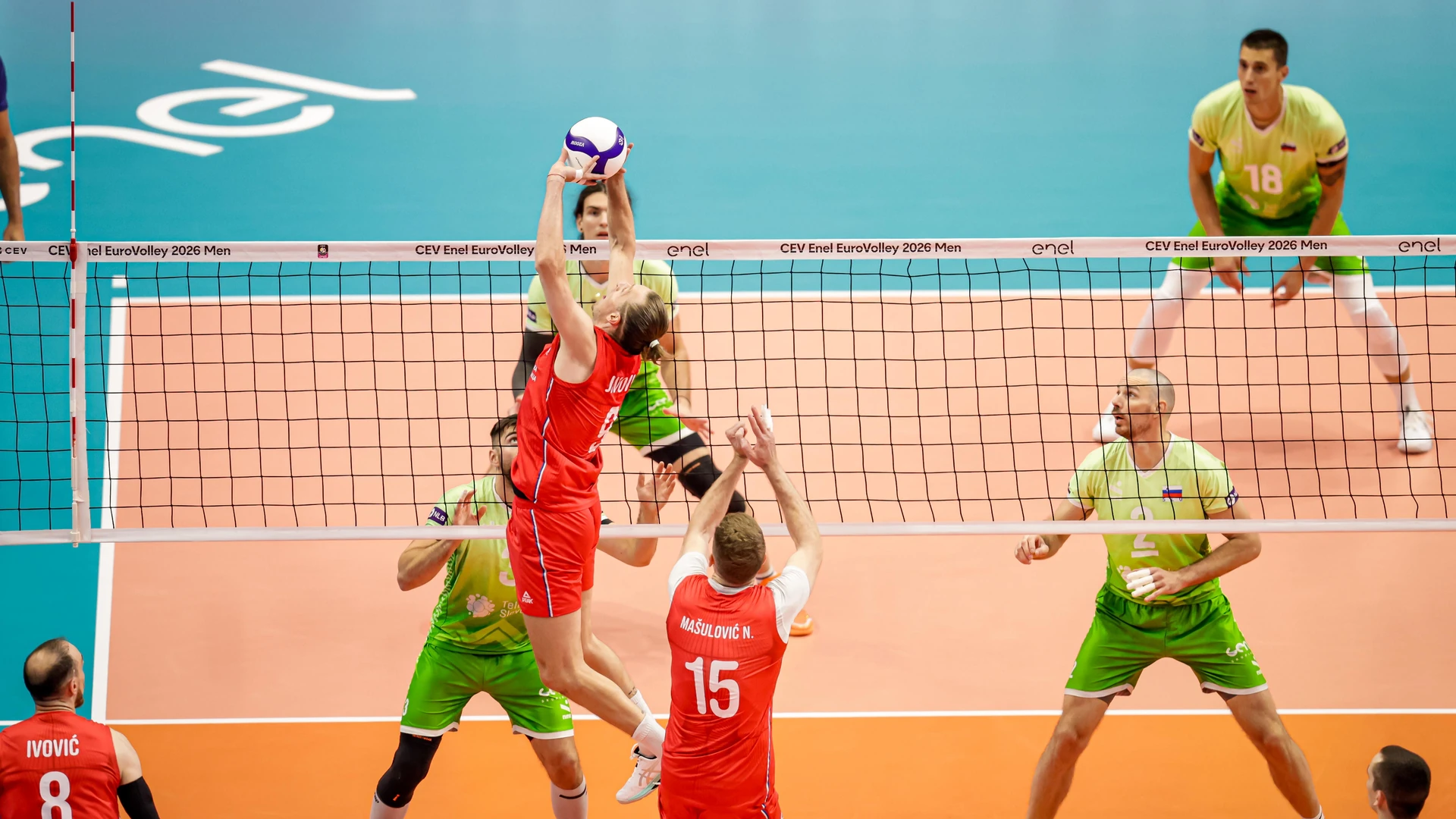
The block and the defence were not working together
An effective block does not always win the point outright, but it should funnel the attack towards a player ready in the court.
When that link is late, the opponent gets both a powerful spike and open space for a placed ball.
The practical answer to the Serbia loss to Slovenia is this: the serve, block and defence need to be linked into one clear sequence. Order matters here. First check the starting position, then carry out the intention, and only then judge the immediate outcome. Such a process does not guarantee success, but it makes the result easier to explain and repeat. That way one specific weakness does not trigger an unnecessary change to the entire plan.
The review has to cover the whole tournament
The elimination defeat remains the most striking moment, but the coaching staff should separate the problems of one match from the patterns that repeated across the event.
The next cycle requires more consistent receiving and more reliable options when the first attack does not win the point.
The clearest yardstick for the Serbia loss to Slovenia will be the number of rotations in which the team keeps its quality after the first defensive action. A single striking moment cannot answer that question, since it may depend on good timing, a favourable duel or one individual error. Several similar situations show which part remains dependable and which weakens when conditions change. A stable pattern supports the conclusion, while a sudden drop reveals a phase that needs the next correction.