
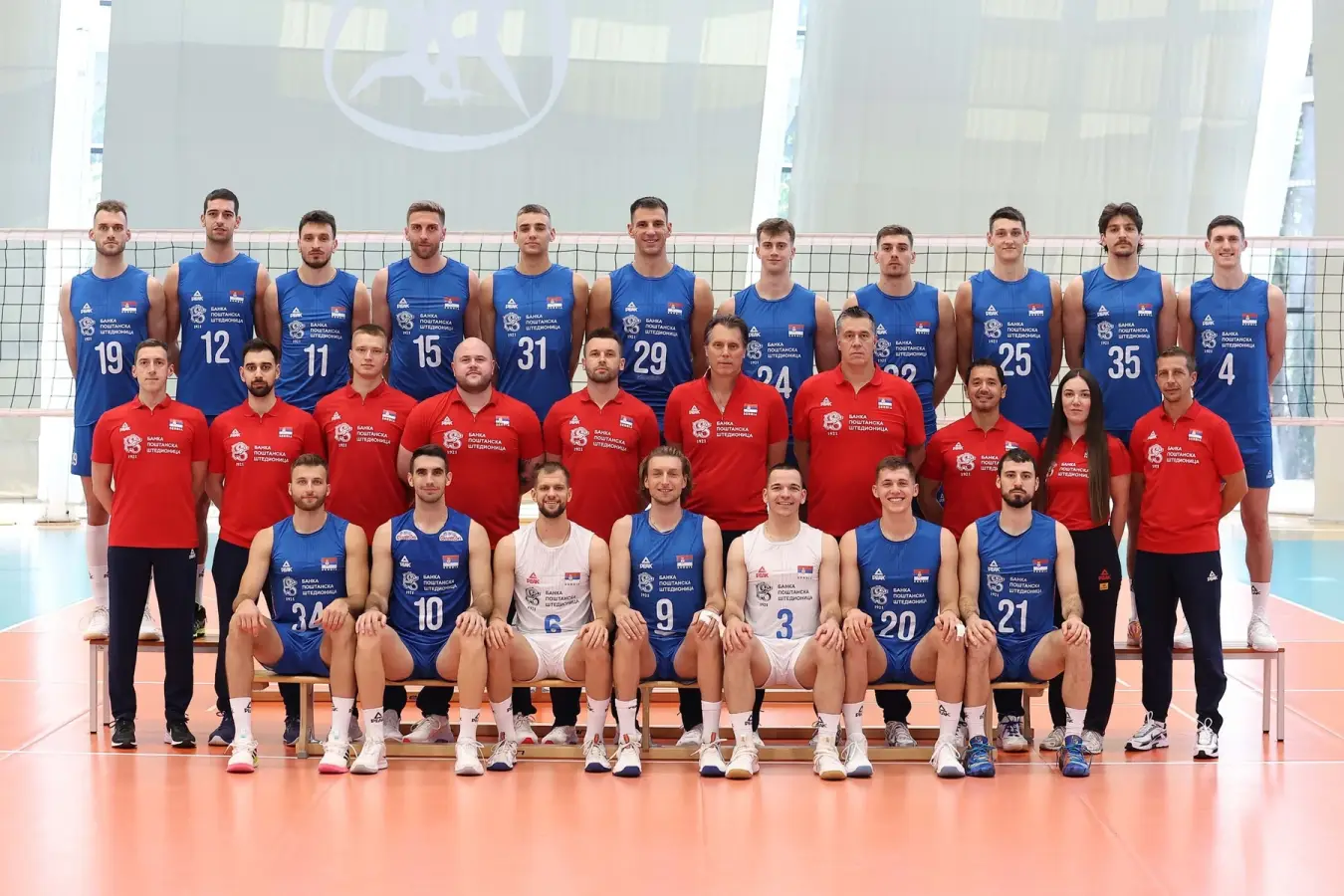
Serbia’s men’s volleyball national team has named 14 players for the European Championship in Tampere. Coach George Krecu has selected two setters, two opposite-side players, two liberos, four middle blockers and four outside hitters. Serbia begin Pool C against Estonia, then play Finland, the Netherlands, Denmark and Belgium. Five matches in seven days call for a firm starting plan, good recovery and proper use of the entire roster.
Squad balanced across five roles
Two players cover each of the setter, opposite and libero positions, while four options are available at the block and in reception. That split gives cover for every specialist role and more combinations on the court. Selection is only the first step. Everyone needs to know whether they start, support a particular rotation or come on to change the tempo.
Estonia provide the first competitive test
The opener follows travel and several days of preparation in Finland. Serbia need to establish their serving targets, reception responsibilities and first substitutions. A good start does not mean chasing an immediate big lead. A stable rotation and clear communication will show more than one aggressive run that cannot be repeated.
| Position | Selected players |
|---|---|
| Setters | Nikola Jovović, Aleksa Batak |
| Opposites | Dražen Luburić, Veljko Mašulović |
| Liberos | Vukašin Ristić, Stefan Negić |
| Middle blockers | Nedeljković, N. Mašulović, Stefanović, Kokeza |
| Outside hitters | Ivović, Kujundžić, Perić, Marinović |
Hosts bring a different atmosphere
Finland are the second rival and will have direct home support in Tampere. Serbia must prepare for the noise between points and for an opponent who knows the arena. Communication should be short and familiar. The squad needs to get a feel for the light and the space in training, because the read on a high ball can differ even when the court dimensions are identical.
Netherlands test patience at the net
The third match comes just one day after Finland. Serbia need physical recovery and a short tactical review rather than heavy training. Against a high net, the first contact must give Jovović or Batak more attacking options. If the setter keeps going to the same high option, the opposing block sets its pattern early and removes variety.
Denmark follow the only free day
A day without a match allows recovery but can break competitive rhythm. The coaching staff should keep technical work short and focus the meeting solely on Denmark. Thinking ahead to Belgium dilutes attention. Every set carries weight in the pool, so this match calls for the same discipline as encounters with better-known rivals.
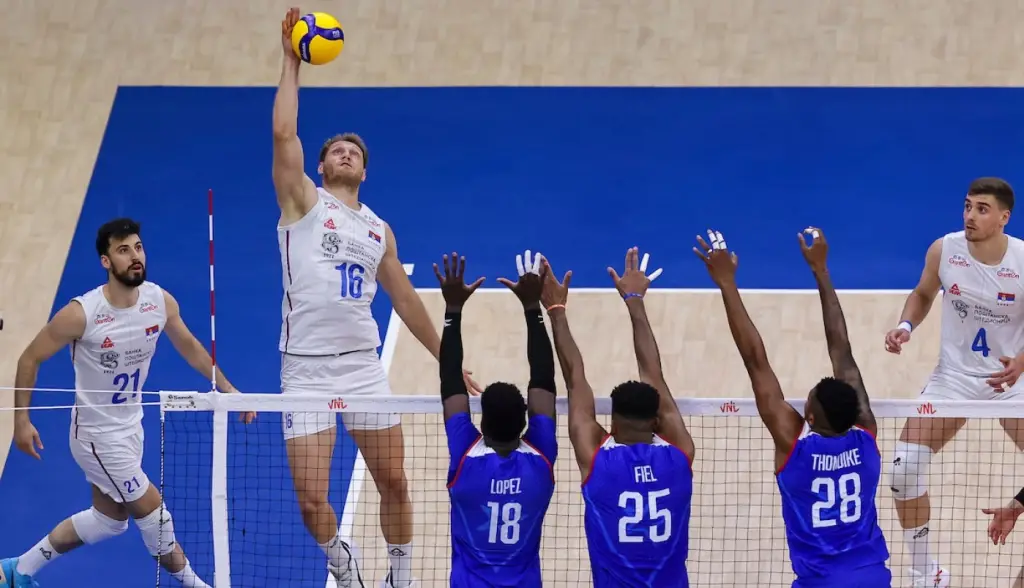
Belgium close the demanding run
The final pool match is played the day after Denmark. The table may by then show what Serbia need, but the arithmetic does not change the first task on the court. A required set or win comes from ordinary points and steady rotations. Coaches can draw on data from four matches and pick the freshest line-up without overloading tired players.
Recovery is part of the plan
Five matches in seven days leave little room for heavy work between appearances. Sleep, nutrition, treatment and a short video session become an important part of the game. Reserves must be ready, since a single physical problem changes a role instantly. Squad depth only pays off when substitutes have enough information and touches before they enter.
The first goal is to go through
The pool brings different styles and no match is automatic. Serbia need results, but also a level they can sustain through short breaks between games. A successful first week will show clear decisions on serve, connected blocking and defence, and a calm response after losing a set. Those habits provide a firmer base than any forecast made before the start.
Data from each match should guide the next decision
After every match the coaching staff can isolate reception quality, serving effectiveness and the number of long rallies in which the team kept its structure. That data is not meant to change the line-up automatically, but to show where fatigue is real and which combination works best against the next opponent. A compressed schedule leaves no time for a broad rebuild. One precise change in the rotation or in the serving assignment can achieve more than a completely new plan. Serbia can thus keep continuity and use all 14 players without losing clear roles, while allowing enough rest between appearances.