
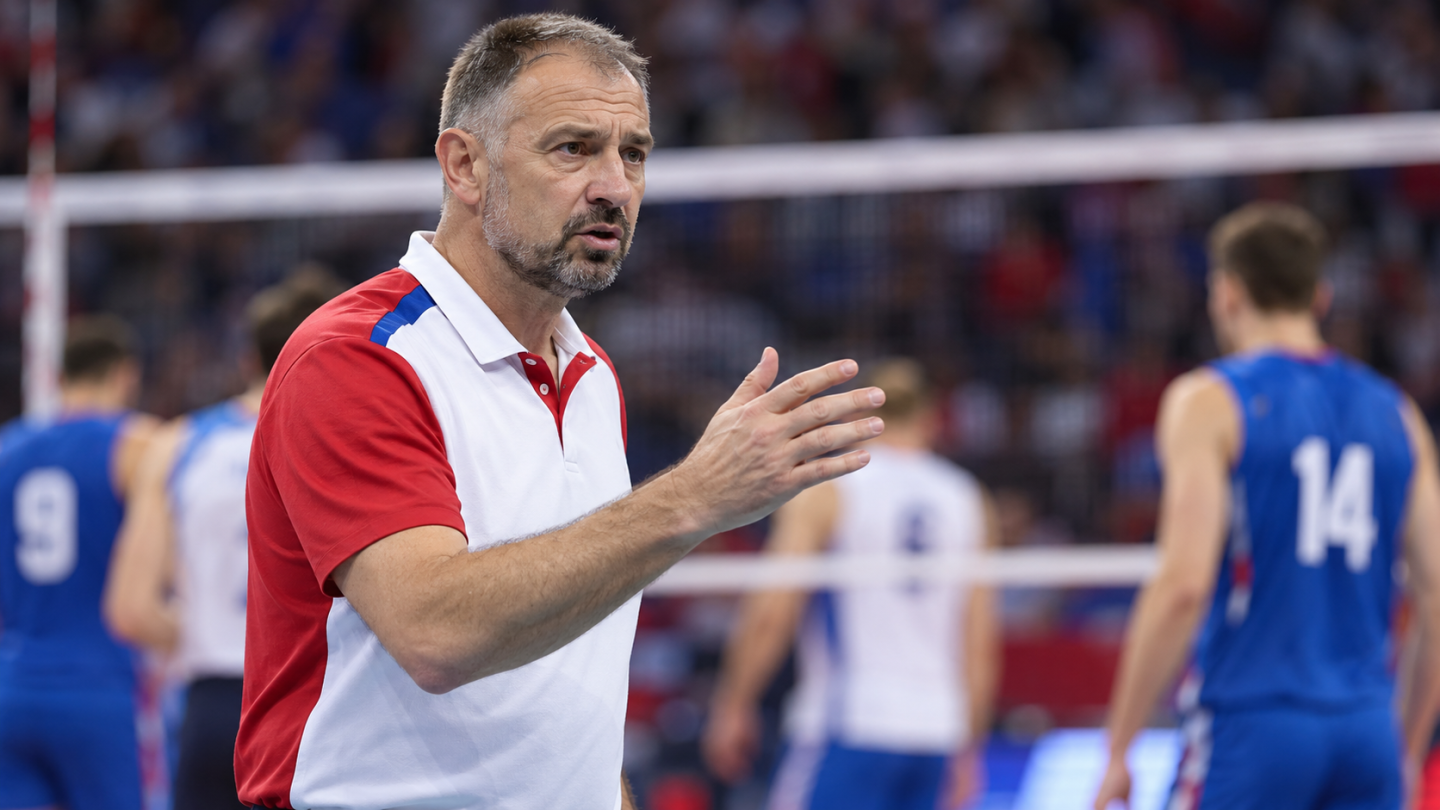
Nikola Grbić believes Serbia’s men’s national team should give young players a bigger opportunity and start building a squad for the 2032 Olympic Games in Brisbane right now. The Serbian coach made the point after another European gold with Poland, while also judging that qualifying for the Los Angeles 2028 Games will be very difficult. His suggestion is not to give up on the next cycle, but to avoid letting the team’s development depend on wearing out the same group of experienced players.
Grbić split Serbia’s season into two distinct parts. He liked the play in the Nations League, when younger volleyball players got their chance and the team at one point came close to the final tournament. At the European Championship, in his assessment, the level of play was no longer the same. Serbia ended the competition in the round of 16 with a defeat to Slovenia, which leaves an open question of whether the next squad should be built around a short-term result or a wider base for the next six years.
Poland’s model gives Grbić grounds for a warning
Grbić speaks from the position of a coach who has won ten medals in ten major competitions with Poland. The latest title was a second consecutive European Championship, and it also brought a direct qualification for the Los Angeles Olympics. Over that run Poland changed individual players, but it did not change its working standards or its internal competition. Even those who have won the biggest club trophies accept roles from the bench, because the coach distributes the workload according to what the team needs.
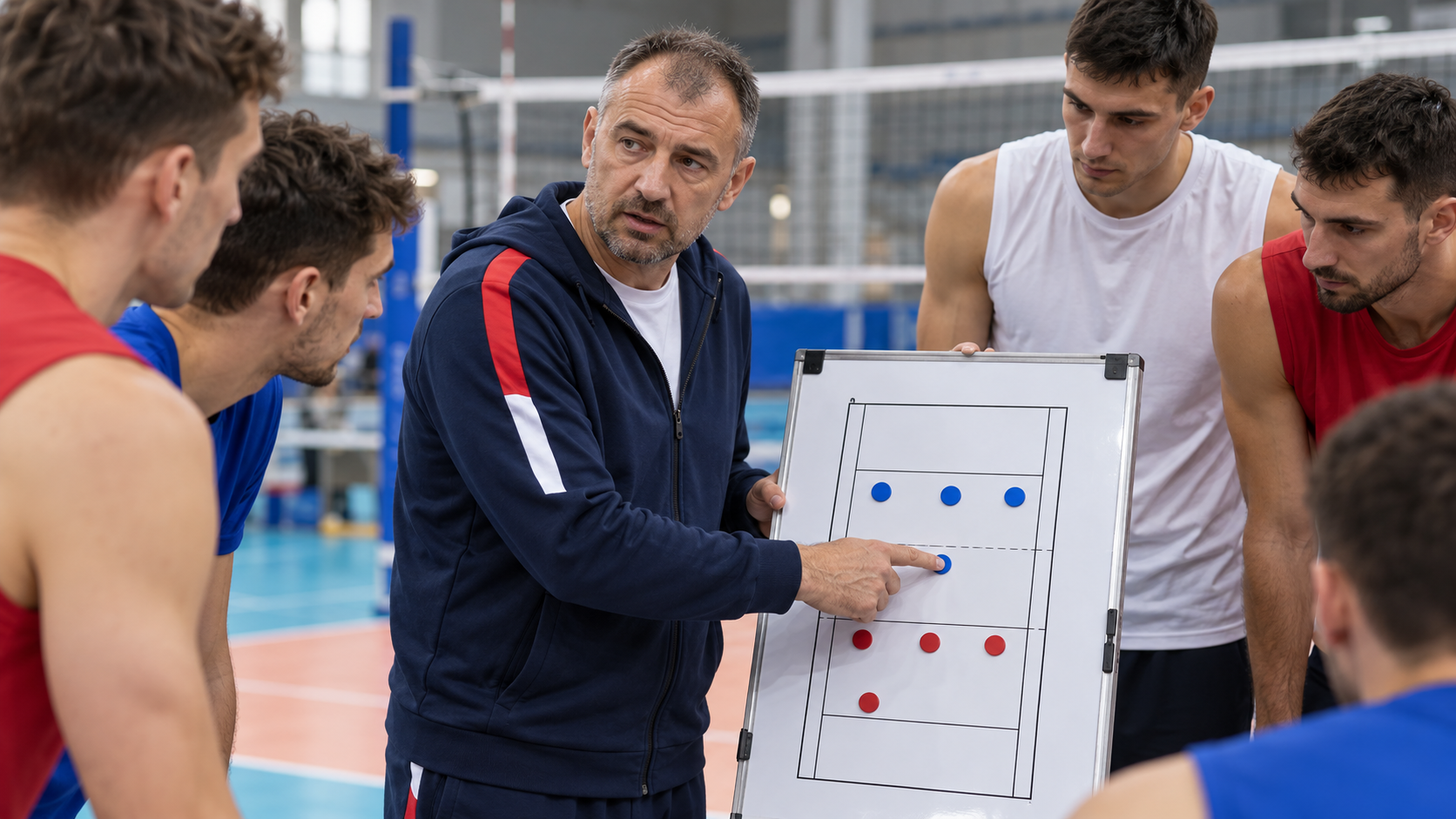
For the next Nations League, Grbić plans to give debutants a chance at the first tournament, while his best players will be focused on the World Championship. Such an approach protects results, but it also tests who can help in the next cycle. Serbia does not have the same depth as Poland, which makes development even more important. If the young players are only tried once results no longer matter, the coaching staff will get no reliable answer about how they cope under pressure.
What a Brisbane plan would need to contain
Rejuvenation does not simply mean removing experienced internationals. A useful model requires clearly defined mentoring roles, a controlled increase in minutes for younger players, and the same system of play across the junior and senior selections. The federation would need to identify which positions have the thinnest depth, how many international matches the new players should receive and how their progress will be measured. Without those steps, the call for youth stays a slogan rather than a sporting programme.
Grbić was particularly cautious that Russia’s return to major competitions further reduces the room in Olympic qualification. Serbia therefore has to keep its chance of Los Angeles alive while not spending the years before Brisbane without preparing successors. The next squad list and the Nations League plan will show whether the coaching staff takes that direction. The most valuable part of Grbić’s message is the timeframe: decisions about 2032 are not made a year before the Games, but in seasons when the new core is only entering senior volleyball.
When planning, Serbia also has to consider the club development of its players. National team tournaments provide experience, but technique and physical readiness are largely built during the club season. The federation should therefore work with club coaches, monitor the playing time of candidates and avoid letting several talents in the same position spend a year without a meaningful role. Grbić’s example with the Polish debutants shows that a player can help quickly when he already has a clear club foundation and enters a defined system. Serbia will need both patience and careful selection: not every young player is automatically ready, but without real minutes nobody can show how he handles tight finishes, serving under pressure or receiving against the strongest national teams.
It is also important that the public accepts the ups and downs such a process brings. A younger side may lose a match that a more experienced line-up would win, but the result has developmental value only if the coaching staff clearly identifies what was learned and what changes at the next gathering.