
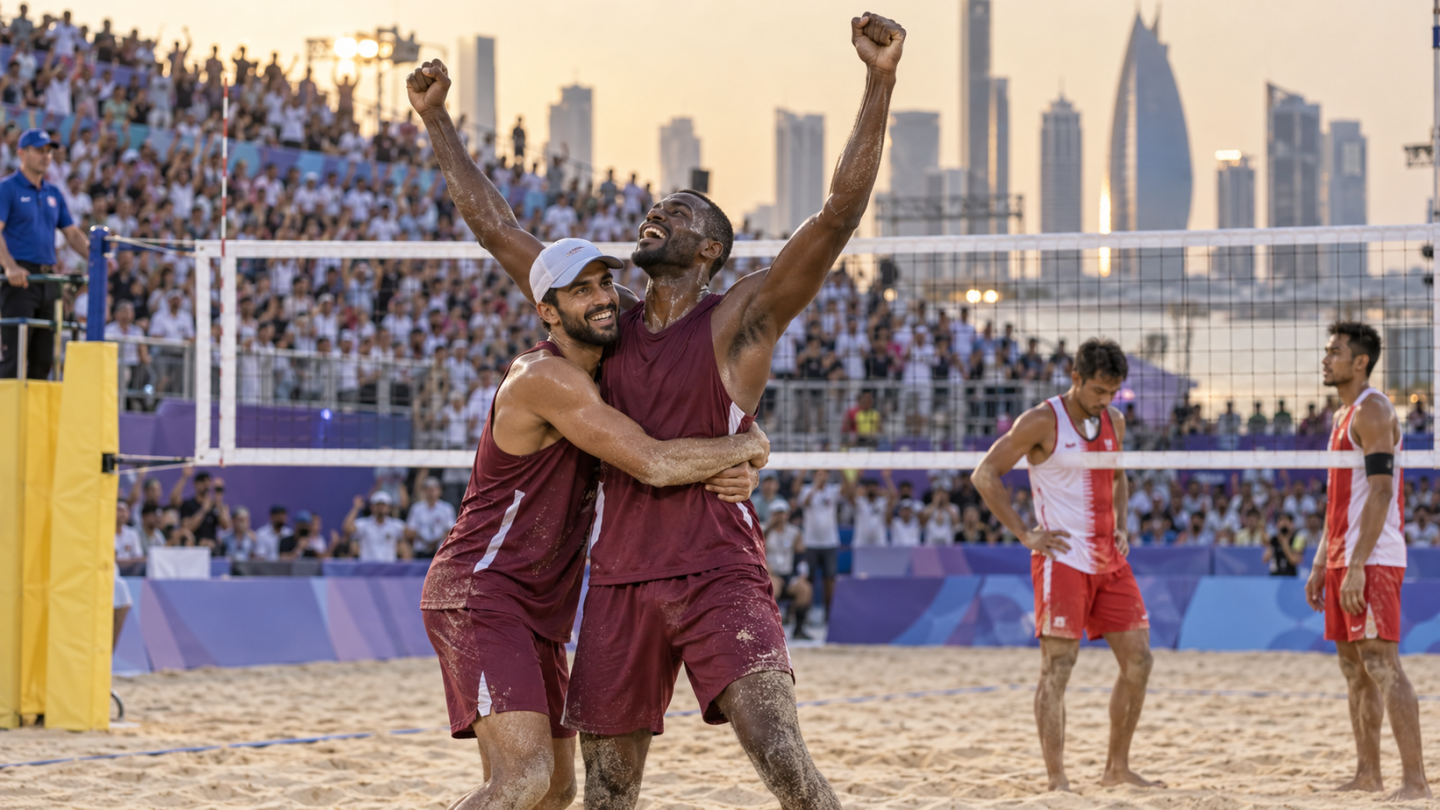
Cherif Younousse and Ahmed Tijan took gold in men’s beach volleyball at the Asian Games, beating the Indonesian pair 2-1 in the final. The win gives Qatar their third successive title in the continental event. A three-set match demanded patience and a change of rhythm, as Indonesia refused to let the favourites turn the final into a repeat of their earlier dominant displays.
The Qatari duo have played together for years at the biggest tournaments, so in decisive moments they work with a clear division of roles. Younousse can take up much of the space at the block and in attack, while Tijan keeps the balance with his defence and control of the second ball. In the final that familiar structure was not enough on its own, and the serve had to change. Indonesia were receiving the opening targets well, so Qatar had to vary their direction and depth more often.
A three-set final called for a change in serving plan
In beach volleyball the serve shapes the whole point. If the reception stays close to the net, the opponent can take a full run-up and attack the wide angle. Qatar therefore began sending the ball deeper and moving the receiver before the strike. The aim was not only an ace, but pulling the attacker away from the ideal position. When the ball landed further from the net, the block had more time to read the shoulder and the defenders had more time to set their line.
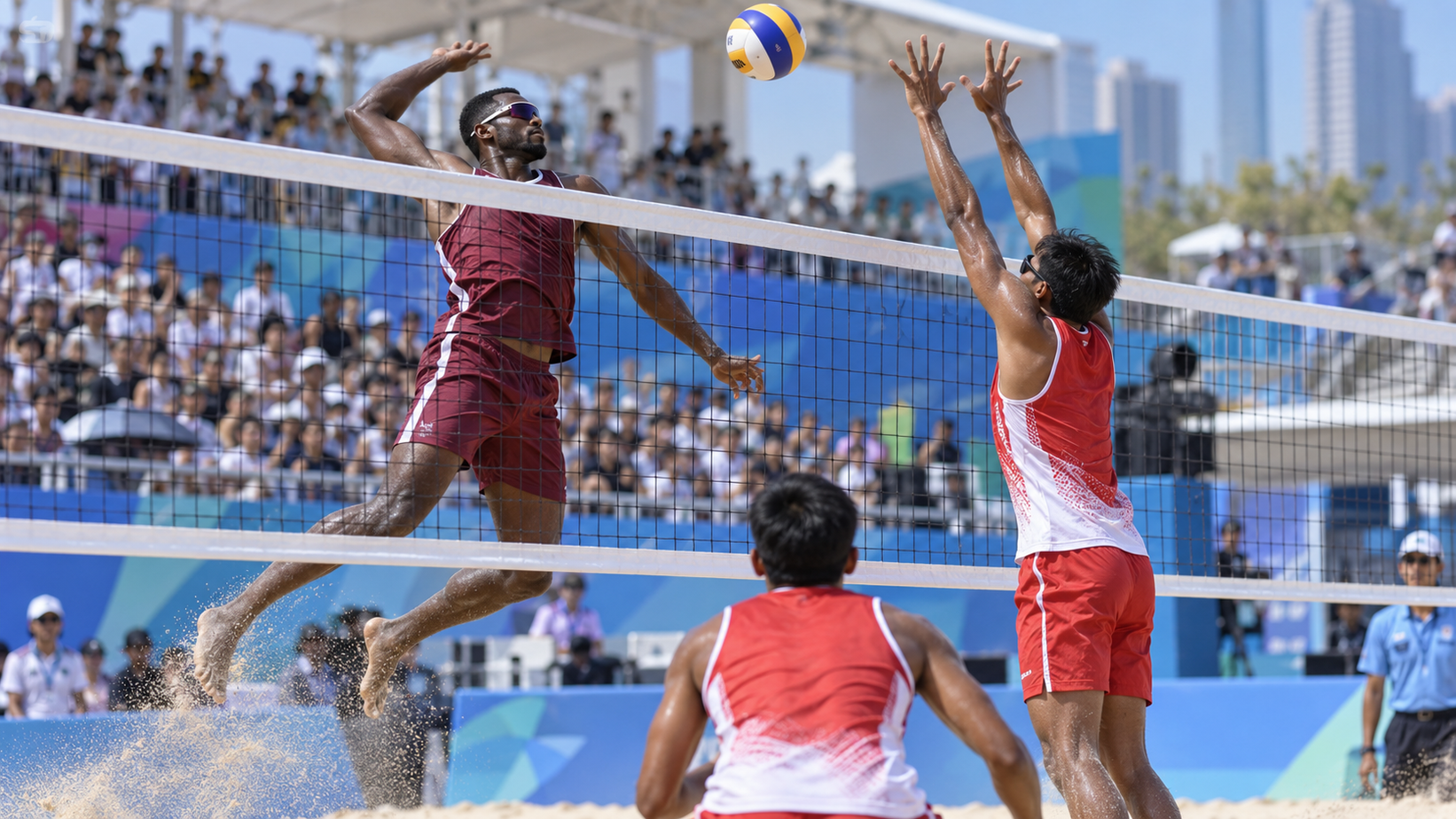
The third set leaves little room for correction, so every run of two or three points becomes significant. The experience of the Qatari pair showed in the way they kept the same routine after losing a point. A short exchange between rallies stopped both players from changing the plan at the same time. Such communication is decisive on open sand, where wind can move the serve and alter the choice of attack without warning.
A third gold confirms the continuity of the Qatari pair
A third successive gold confirms continuity, but it also sharpens the attention of rivals. Opponents have plenty of footage, know their favourite directions and prepare their serves specifically against each member of the pair. Qatar must therefore keep introducing small variations in their run-up, short ball and block set-up. Stability does not mean repeating exactly the same game; it means the core quality stays while the details shift enough that the opponent does not get a ready-made answer.
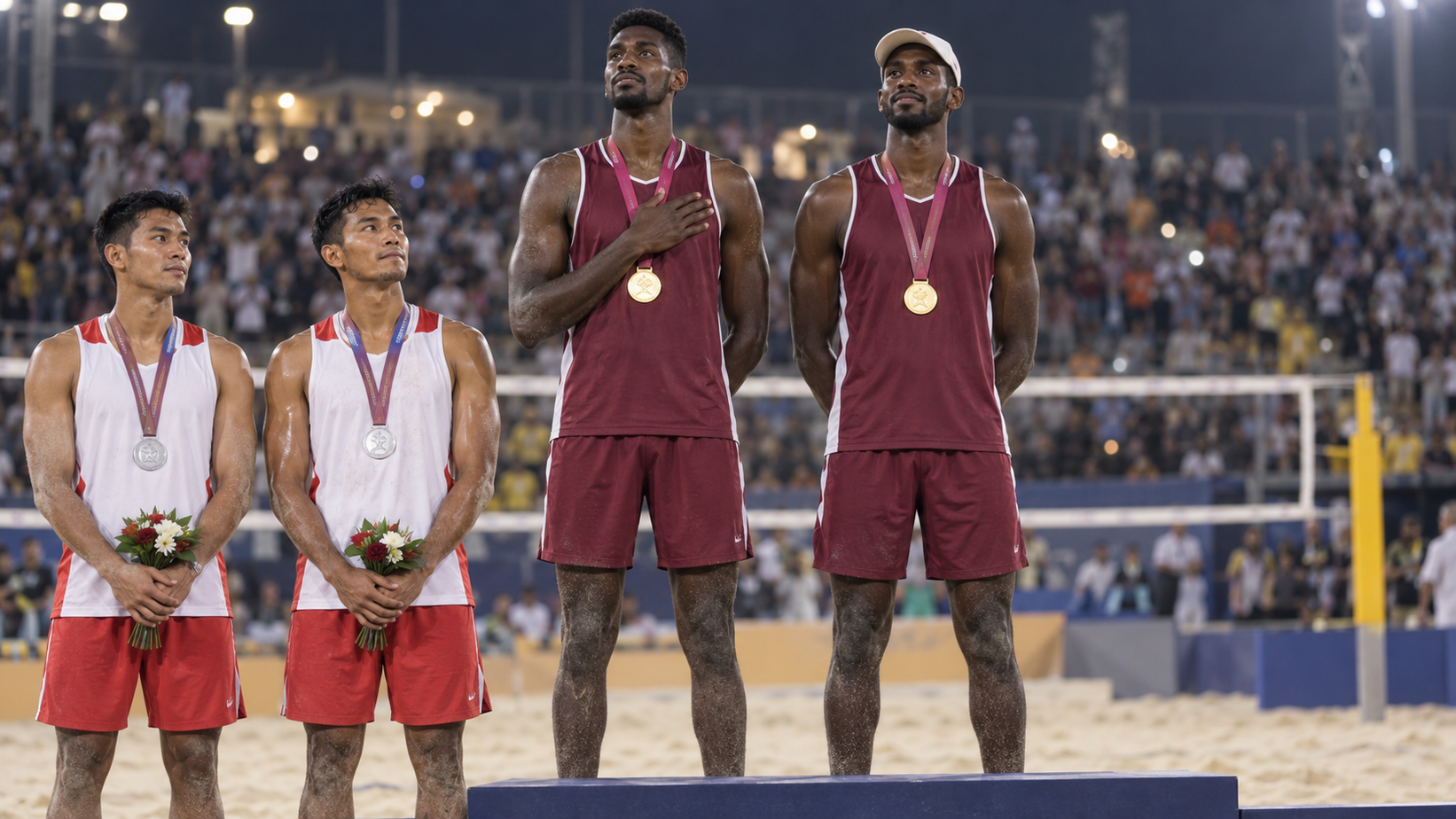
Indonesia leave the final with proof that they can take the champions to a deciding set, while Qatar receive another reminder that they can settle matches without full control. That matters more than a convincing win, since major championships rarely offer ideal conditions. Younousse and Tijan kept the title by adjusting their serving, by clear roles and by staying calm in a tight finish. That very pattern turned quality into a third straight gold.
After the tournament Qatar will be able to compare their serving sequences and the block’s output across all three sets of the final. If it becomes clear that changing the target directly reduced the efficiency of the Indonesian attack, the pattern could become important on the world tour as well. Still, the same plan will not work against every pair; wind, player height and dominant hand all change the choices. Champions have to stay flexible. The third gold raises expectations for the next major events, but it also shows that a long-term partnership brings an advantage. Younousse and Tijan know each other’s reactions after a mistake and do not waste time explaining basic roles. That certainty frees attention for the opponent and conditions. In a final that did not go smoothly, steady communication is what allowed a tactical change to become a winning result.
Physical recovery for feet and shoulders will be the priority after the sand tournament. Unstable footing increases the load on the calves, while a high number of jumps strains the tendons and back. Coaches will reduce jumping before technical contact with the ball, so the pair keep their feel without extra fatigue. The gold is a reason to celebrate, but careful recovery will decide when Younousse and Tijan can train again at full intensity without a higher risk of injury.