
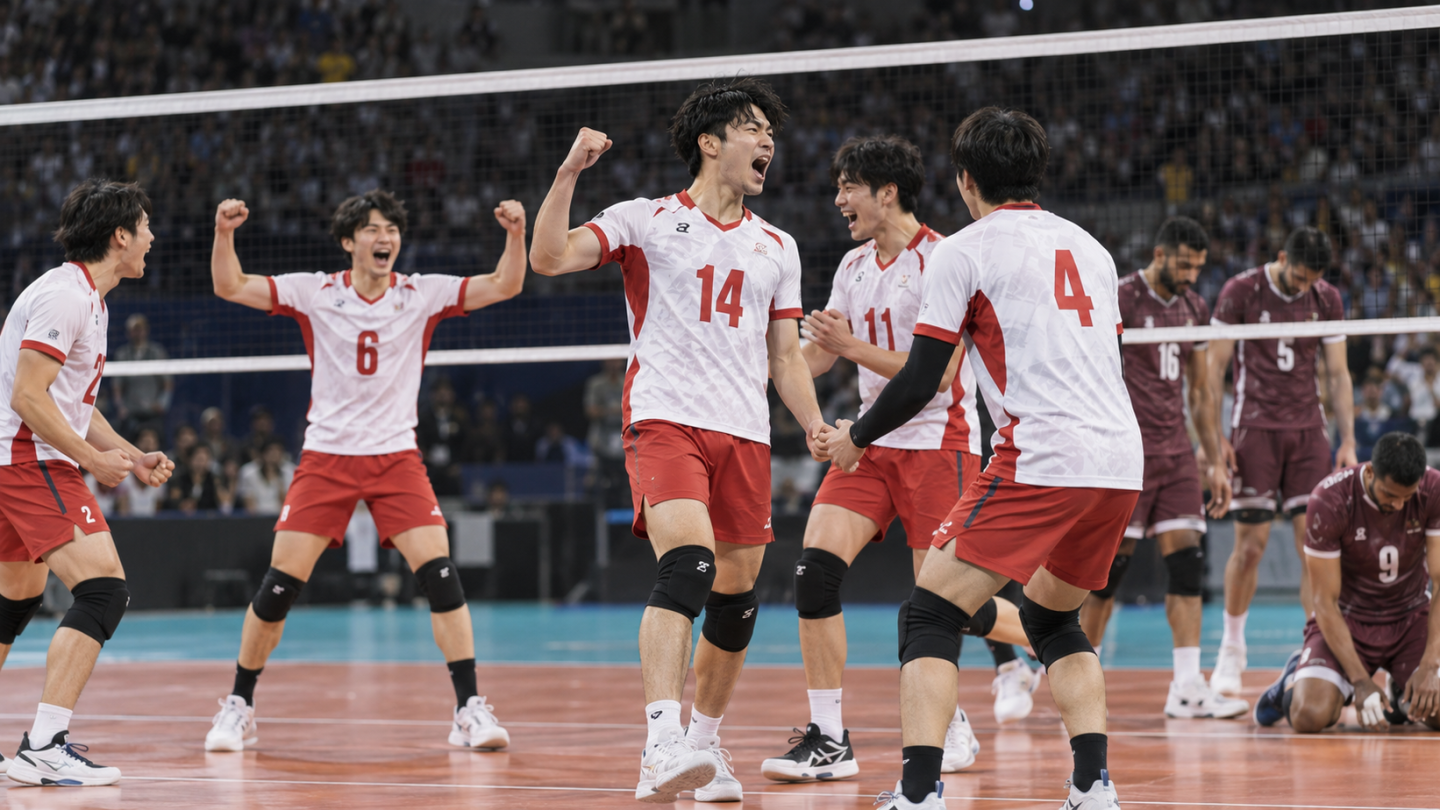
Japan beat Qatar 3:0 to book a place in the semi-finals of the men’s volleyball tournament at the Asian Games. The hosts took the sets 25:14, 25:13 and 25:12, conceding only 39 points across the whole match, and extended their run without dropping a single set.
The coach fielded a line-up with Yuki Ishikawa as the receiver, Keigo Nishimoto and Keitaro Nishikawa in the middle, Judai Kawahigashi setting and Hiroto Nishiyama on the opposite. Japan’s serve quickly pushed Qatar away from the net and made life easier for the block.
Before the quarter-final, Japan had won all three of their group matches 3:0 against Uzbekistan, Kazakhstan and Pakistan. Qatar reached the knockout stage through demanding competition, but could not build a fast attack through the middle. Japan will face China in the semi-final.
The serve pulled Qatar away from the net
Japan did not need an ace on every attempt. Their biggest gain was that Qatar were often forced to receive the ball well away from the ideal zone. The setter then has fewer options, the block reads the direction more easily, and the defence can take up its position for a counter-attack earlier.
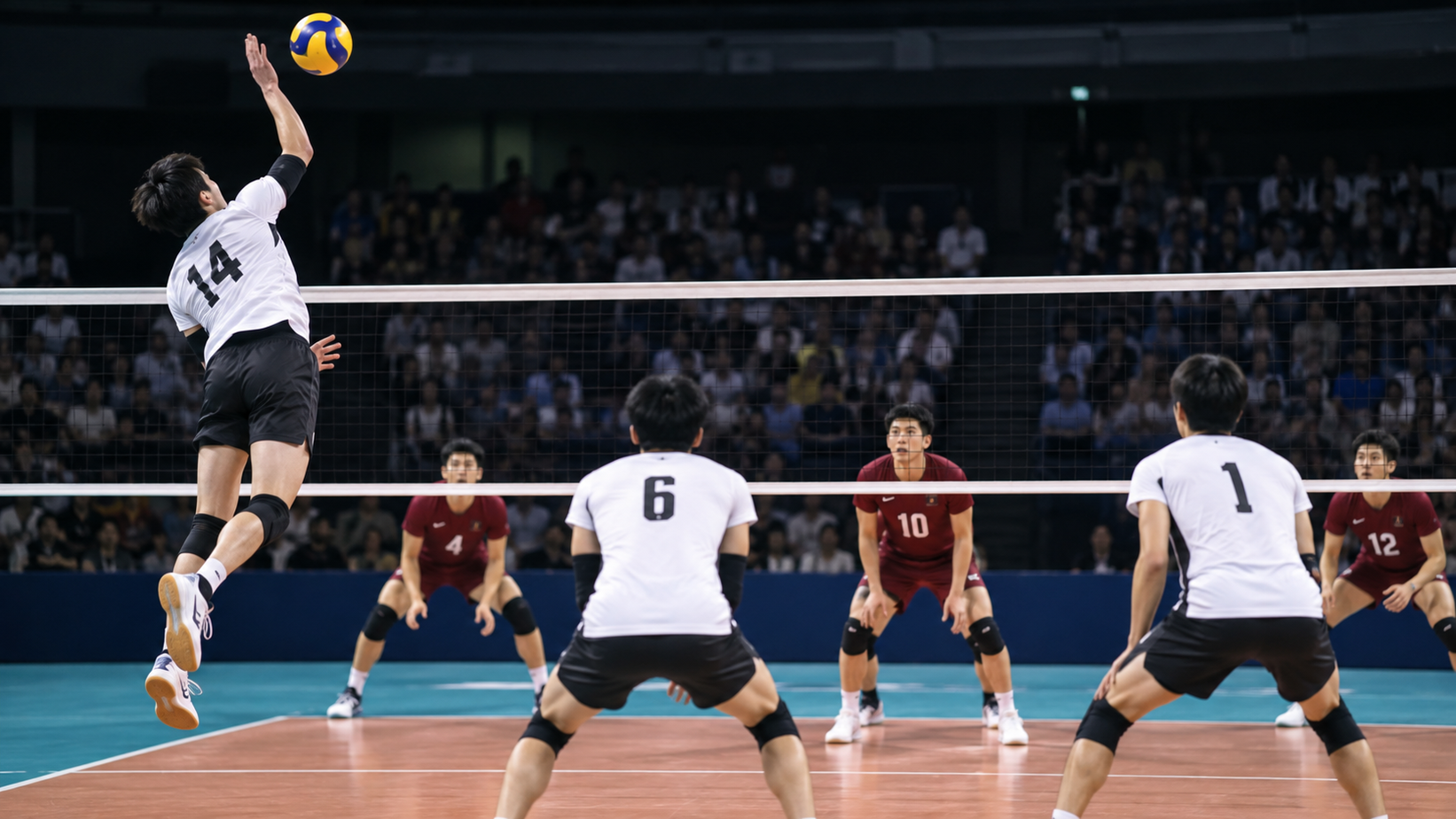
Kawahigashi used a good first ball to switch the side of the attack quickly. When the opposing middle blocker was half a step late, Japan’s receivers were left with one-on-one situations. That rhythm is especially hard on a defence already spending energy on receiving a powerful serve.
The margin in all three sets allowed the coaching staff to spread the workload and keep concentration high. In a one-sided match the greatest danger is a drop in intensity, but Japan did not allow long runs from their opponents. Every small Qatari comeback was cut short by a secure first tempo or an attack from zone four.
The semi-final against China will demand more patience
China will offer a taller block and more stable reception in the semi-final. Japan therefore cannot count on the same number of easy balls. More patience in defence will be needed, along with using the block to set up repeated attacks and varying the direction of the serve so that a single receiver cannot quickly find his rhythm.
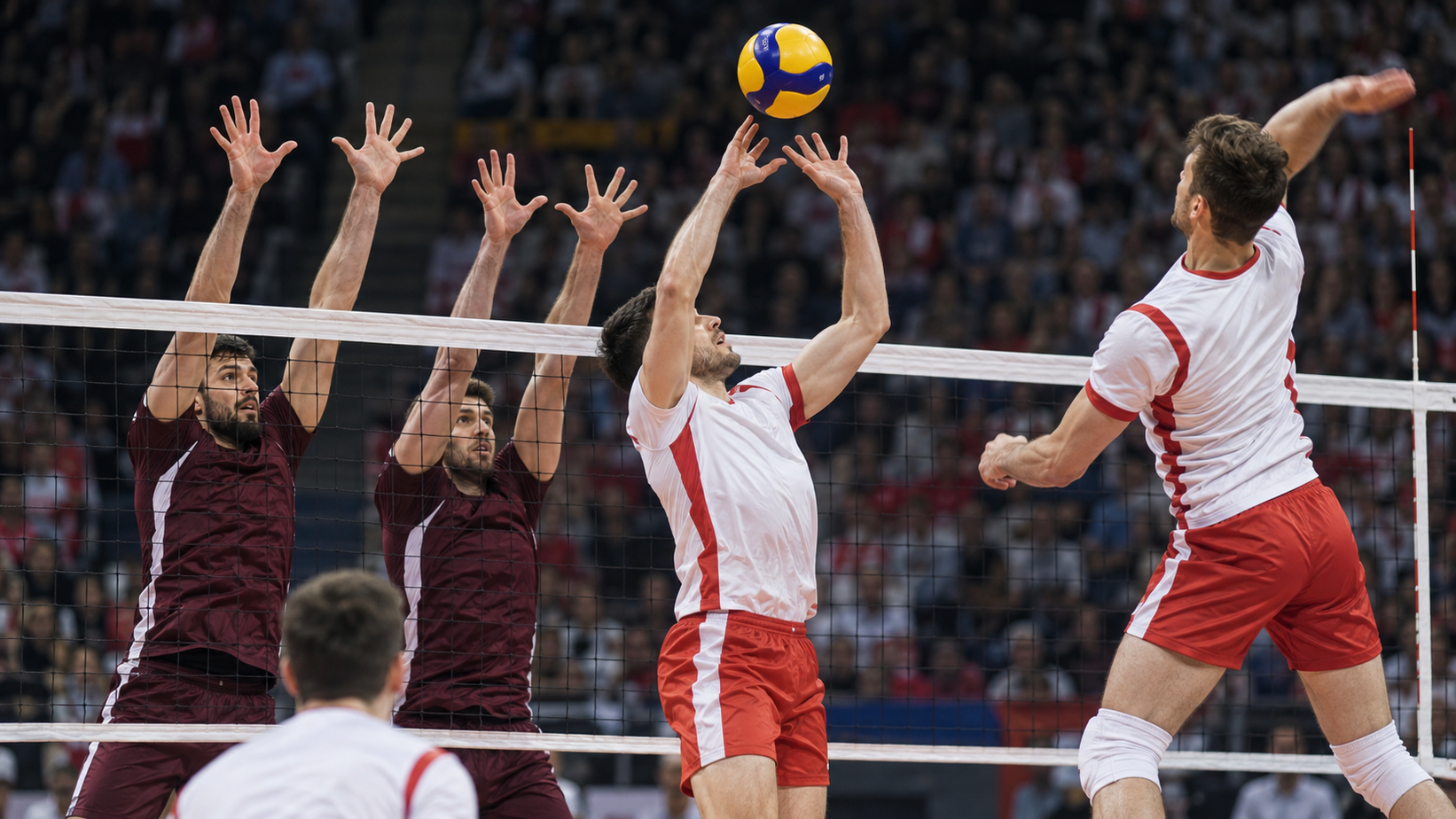
The home crowd brings energy, but also the expectation that every set will be as dominant as the quarter-final. The players must accept longer, evenly contested periods and not change their plan after losing a few points. Semi-finals are more often decided by quality at 20:20 than by the gap in the first ten points.
Four wins without losing a set confirm their form, but the true value of the run will become clear against China. Japan enter more rested, with clear serving discipline and a flexible line-up. If they keep their reception precise when the pressure rises, they will have a realistic chance to target the final in front of their own supporters.
Preparation for China should include set endings and play after a poor first ball. Japan will not always have an ideal ball for the middle, so the setter must keep several options open, including those away from the net. A high ball to the receiver should not be the only solution. Combining attacks from the back row with smart use of the block can preserve efficiency when China’s serve disrupts the basic system. The next outing or the official result will show how far this conclusion holds under new pressure. The figures should be read together with the quality of the opponent, the conditions and the decisions made at key moments. It is important to separate the current result from the long-term trend: one win confirms good preparation, but only repetition shows stability. The coaching staff should therefore track a few clear indicators, compare them with the previous outing, and change only what has proven to be a weak point. That approach protects confidence while leaving room for improvement. The reaction of direct rivals will also matter, because preparation changes as soon as an opponent recognises a successful pattern. For that reason the analysis should also cover situations in which the original plan did not work. The best performances come when a team or athlete can hold onto its core strength while making a small, well-timed adjustment during the event.