
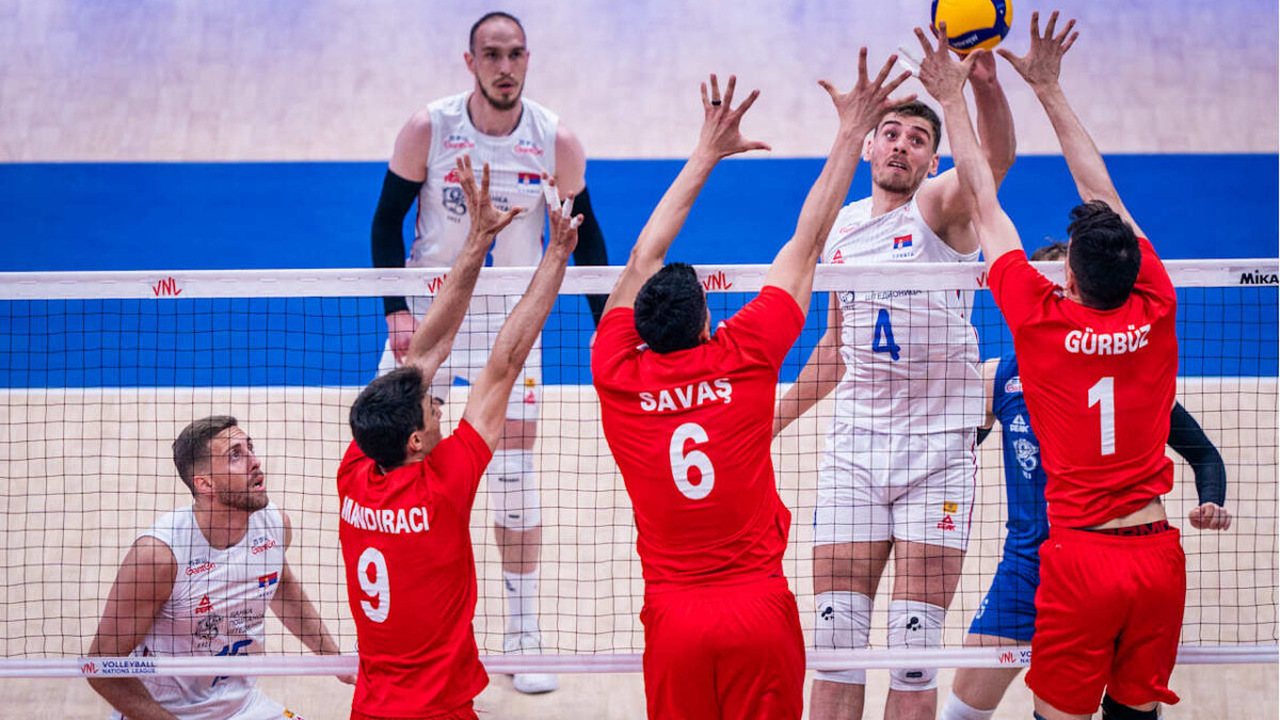
Serbia’s volleyball team opens its home week of the Nations League against Turkey on 15 July at 20:00. It is the first of four Serbian matches on home soil. Turkey will be followed by Ukraine, Germany and Slovenia. Every point could affect the final standings, so Serbia needs a strong start.
Serbia will have the backing of a home crowd and will not have to travel between matches. Even so, the team must get off to a good start. Turkey is no warm-up opponent. Serbia needs a steady reception, patient play near the net and serving that puts pressure on the opponent without long runs of errors.
The first serve sets the tone for four matches
A short run at home can change direction quickly. Serbia plays Turkey on Wednesday, Ukraine on Thursday, Germany on Saturday and Slovenia on Sunday. The schedule leaves one free day, but the main work starts straight away. A secure first result would give the coaching staff more room to manage their strength in the later games.
A poor opening night would have the opposite effect. Every later set would become harder, and the coaches might be forced to keep the same players on court for longer. That is why the first point should be seen as part of the whole week. The aim is not a perfect match, but a level the team can repeat. The first two matches are played on consecutive evenings, leaving less than 24 hours of recovery before the game against Ukraine. Serbia rests on Friday, then plays on Saturday and Sunday. Early substitutions could save energy for the weekend.
Reception must keep every option open
Turkey’s strong serving can push the first pass well away from the net. Serbia must send enough first passes close to the player who runs the attack. That allows hitters in the middle and on both sides to take part. A poor first pass makes Serbia’s next move easier to read.
The receivers also need to communicate clearly. They must decide early who takes each serve between two players. A safe pass towards the front of the court is better than a risky set near the net. A good reception leaves the setter with more attackers to choose from.
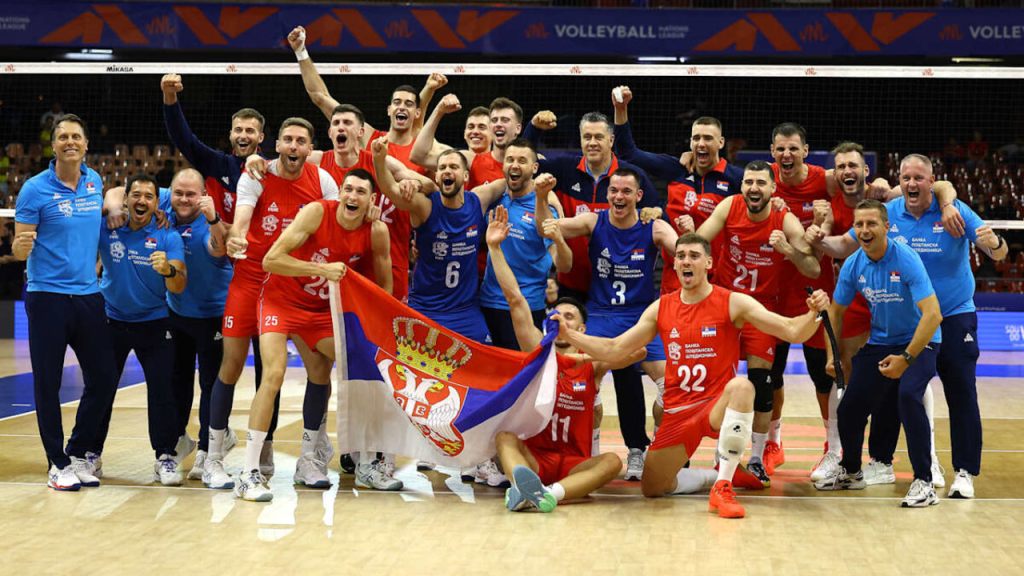
Serbia’s volleyball players during preparations for the 2026 season
Serbia can turn the net into an advantage
Serbia has enough height and power for a good block. Even a light touch at the net can slow the ball down and help the defenders. Serbian players must track who Turkey sends the ball to and move together towards the expected attack.
Turkish attackers hit quickly and use heavy angles. If one Serbian blocker is late, a gap opens in the block. If another jumps too early, Turkey can attack on the other side. Serbia needs calm movement and a clear agreement before every jump.
| Signal | Meaning |
|---|---|
| First match | Serbia – Turkey, 15 July at 20:00 |
| Continuation in Belgrade | Ukraine, Germany and Slovenia follow |
| First technical goal | Stable reception for attacks through the middle and both ends |
Serving risk needs a limit
Serbia will want to target chosen receivers and keep Turkey away from its fastest combinations. That plan is only worth it if enough serves land in the court. A run of errors hands the opponent free points, quietens the hall and removes the chance to defend. The best approach is a firm line first, and more risk only when the score allows it.
Serbia can use different types of serve. A powerful jump serve can force Turkey into a high, slow attack. A controlled serve can change direction late. An ace is not the only measure of success. A serve is also good when it stops Turkey attacking through the middle.
The bench is part of the plan for the whole week
Four matches in five days demand more than one fixed line-up. Every Serbian substitution should solve a clear problem. A substitute may bring a stronger block, better reception, a different serve or more energy in a long set. A clear role helps the substitute come on without feeling they must win several points immediately.
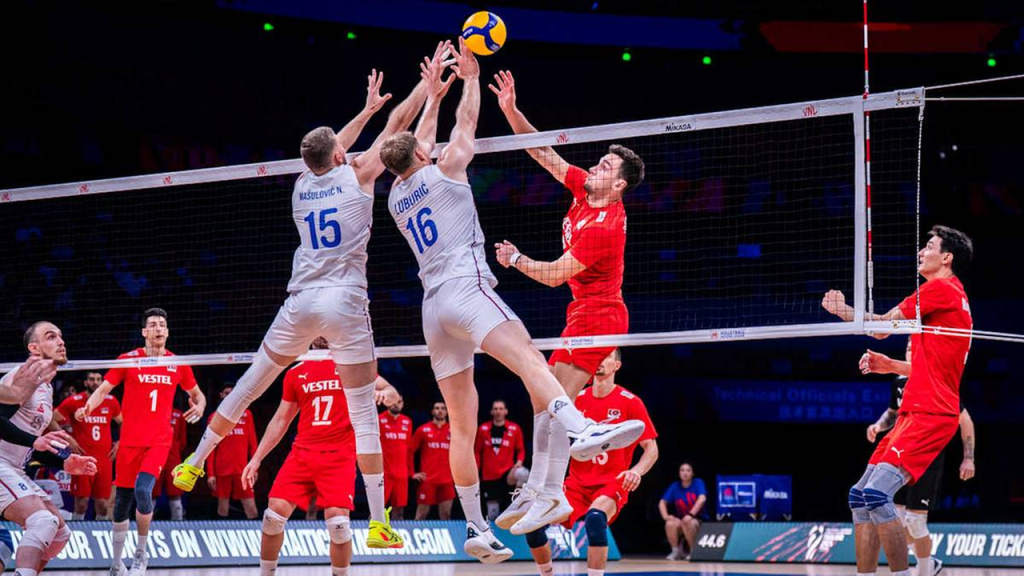
Serbia’s volleyball players block a Turkish attack in the Nations League
Coaches must rest a player before fatigue slows her movement. A late change may not solve the problem. Each match has its own result, but the physical load continues across the whole week. Using substitutes well against Turkey saves strength for Germany and Slovenia.
Good organisation matters in long rallies
The first attack will not always end the point. When Turkey defends well, Serbia must prepare the next attack carefully. Serbia should not return the ball without a clear intention. Team-mates must open up and offer a safe pass to the player who runs the attack. Hitters need to move quickly after a jump. Defenders must be ready for another strong Turkish shot. A good rotation after the first defence often settles an uncertain set.
Patience helps Serbia choose the right moment to attack. A safe high ball can keep the rally alive. A quick shot from a poor position can end up in Turkey’s ready block. Serbia should first keep the ball in play, then wait for a clear opportunity.
Players must think about the next point
Every set affects the Nations League standings. Even so, during a timeout the players must think only about the next task. That may be better reception, a firmer block or a more accurate serve. That approach helps when Turkey wins several points in a row.
Serbia must stay calm after winning a set too. The next set starts at 0:0, and Turkey will change part of its plan. It may organise its attack faster or serve towards a different player. Serbia must notice those changes early.
Belgrade rewards disciplined volleyball
The crowd can react to a heavy defensive save, a good block or a long rally. Those moments can raise the pressure on Turkey. Serbia must still follow the same plan and make careful decisions. Support should add energy, not change the players’ choices.
The match against Turkey is a chance for Serbia to improve its position in the Nations League. The team has four home matches, but first it must focus on Wednesday. Good reception, accurate serving and useful substitutions can turn the home court into a real advantage.