
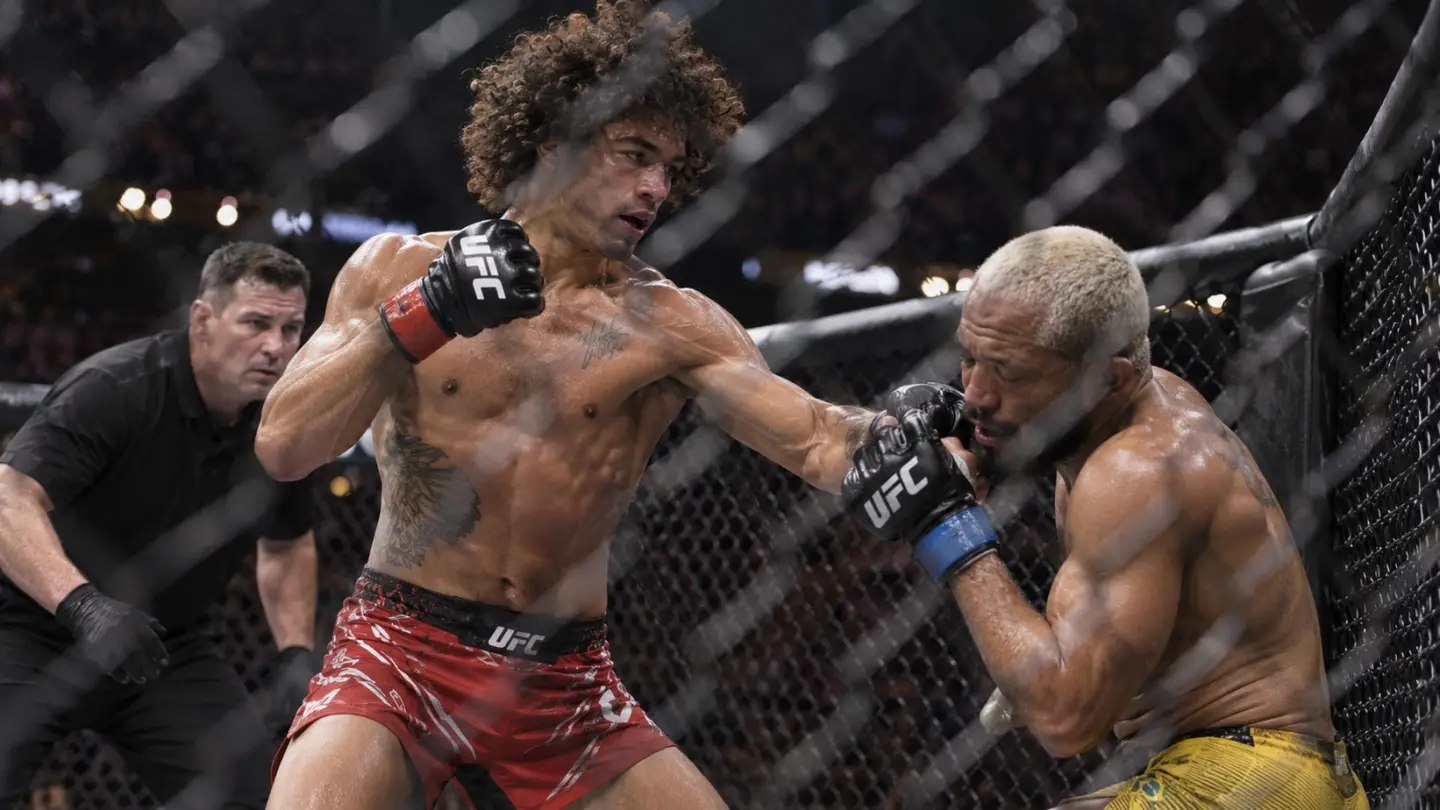
Payton Talbot beat Deiveson Figueiredo by TKO two minutes and nine seconds into the first round at UFC 332. The American fighter halted the former flyweight champion in the most important appearance of his career and did not let the Brazilian’s experience stretch the bout out. The short result does not mean the game plan was simple: Talbot first established distance, forced his opponent to react and only then raised his punch count.
The difference in size and reach was visible as soon as the two began to trade. Talbot could strike without stepping into short counter range, while Figueiredo had to cover an extra step to get close. Every such entry carried risk. The American did not simply back straight up; he changed angles and returned fire while his rival turned. In doing so he turned a physical advantage into a tactical one, not merely a visual difference.
Pressure and reach quickly closed the gap on the former champion
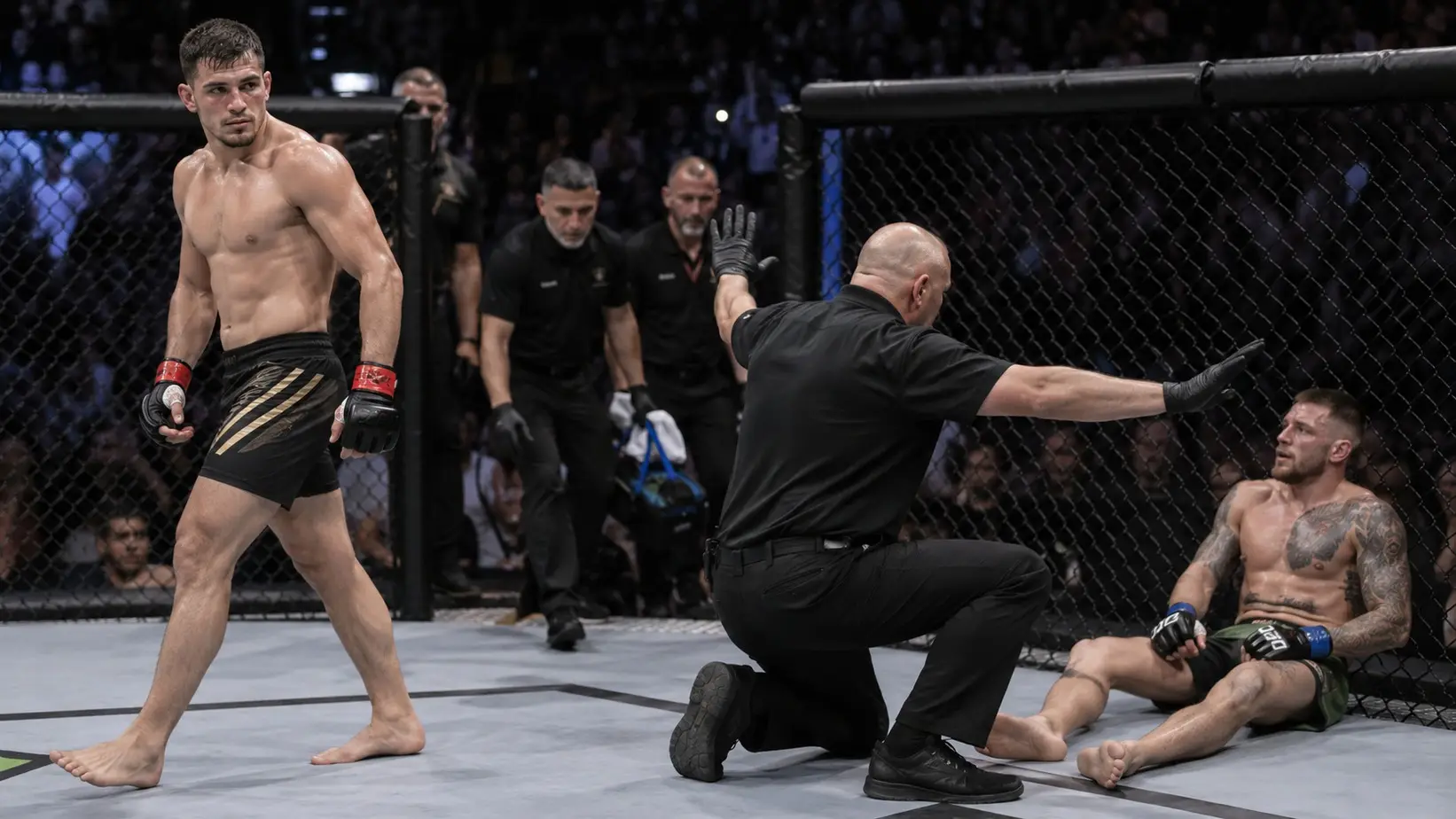
The closing sequence came when the pressure stopped Figueiredo from re-establishing his guard and balance. The referee stepped in after the former champion could no longer reasonably answer a run of clean shots. An early stoppage always stirs emotion, but the core test is whether a fighter can defend himself intelligently. Continuing without any active way out would have added risk with no clear sporting gain, so safety came before the wish for a few more seconds.
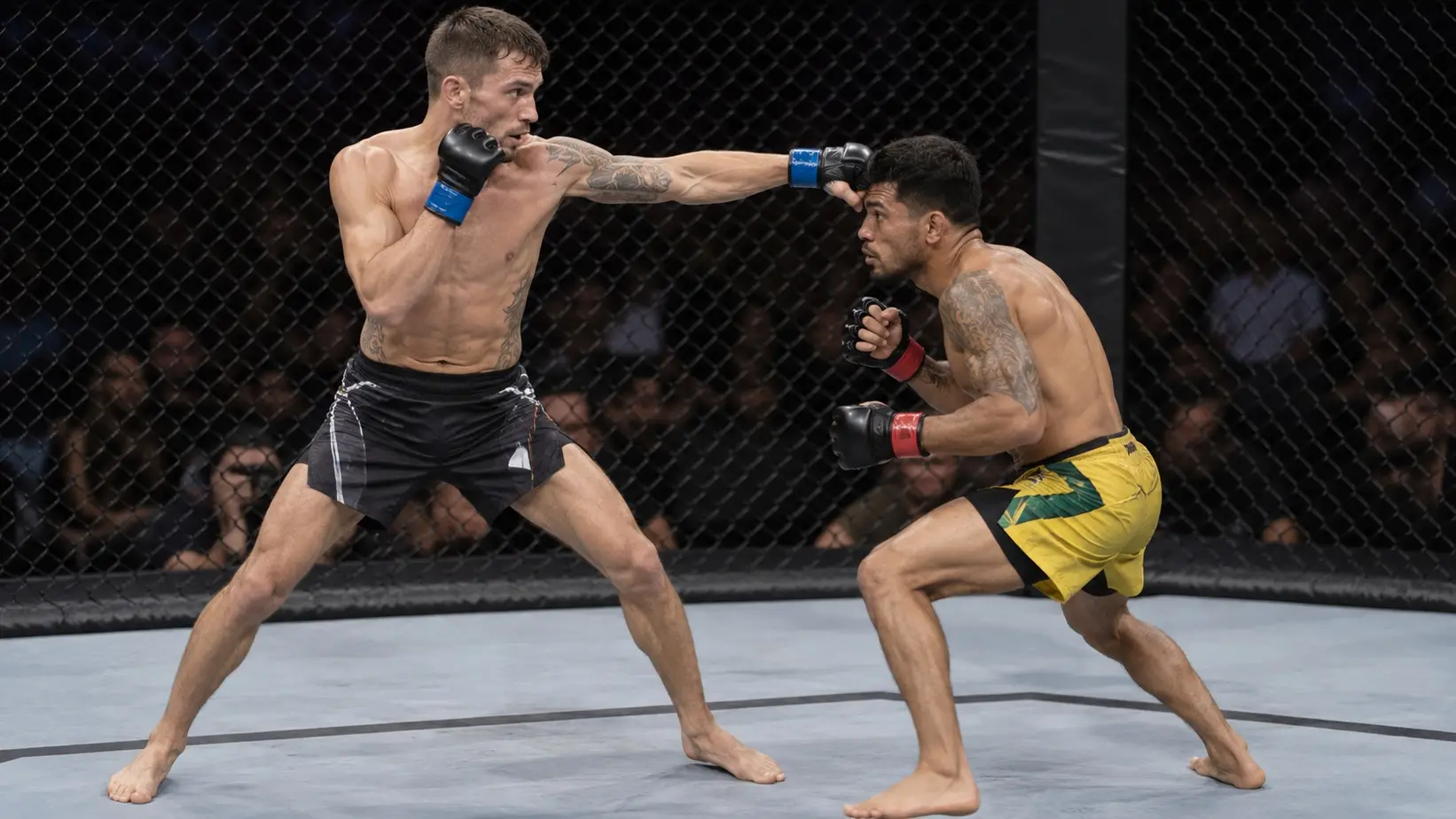
Figueiredo has solved many hard situations in his career with strength, the clinch and the threat of takedowns, but this time he did not get the chance to change the level of the fight. Against a taller opponent, the entry has to be prepared with a feint or a body shot. A straight-line attempt leaves the head on the path of a counter. His team will analyse why he did not tie his attack to wrestling sooner, and whether bantamweight has reduced the advantage he enjoyed against lighter opponents.
Victory over a big name speeds Talbot’s path through bantamweight
Talbot’s win over a well-known name brings a lot of attention, but it should not automatically make him a title contender overnight. The bantamweight ranks hold several styles that demand different answers: wrestlers with constant pressure, experienced counter-strikers and fighters who can weather an early storm. The next bout needs to be a step forward and also a test of skills that were not proven in 129 seconds. Development is safer when rank follows real experience.
In preparing for the next opponent, it is important to separate what Talbot controlled from what there was no time to see. His range, accuracy and finishing instinct were excellent. Defence against takedowns, work from the bottom and the pacing of energy over three full rounds remain less tested. Coaches will not diminish the win because of this; they will keep those areas at the centre of training while the public talks about the knockout.
UFC 332 gave Talbot the best possible result: a quick finish, little damage taken and a win over a former champion. His next decision will matter more than the celebration itself. If he accepts an opponent who forces him to widen his game, he can turn momentum into real progress. Figueiredo must weigh his future without answering quickly under the emotion of defeat. Two minutes and nine seconds changed their standing, but the long-term value will be decided by the moves made after leaving the octagon.
A medical suspension and post-fight check-up will determine when both fighters can safely return to full contact. Talbot finished quickly, but he too must go through the usual assessment, while Figueiredo should not rush toward his next appearance. A knockout changes rankings and mood, but brain recovery does not follow the promotional calendar. A responsible team first confirms health and only then negotiates a new opponent.
The bantamweight division will quickly respond with callouts and offers for a new bout, but the choice should serve a sporting purpose. Talbot benefits from an opponent ranked high enough and capable of testing several phases of a fight. Too big a leap can hide developmental gaps, while one too small brings no progress. A well-arranged next fight turns a big win into a path forward, not just a knockout clip.