
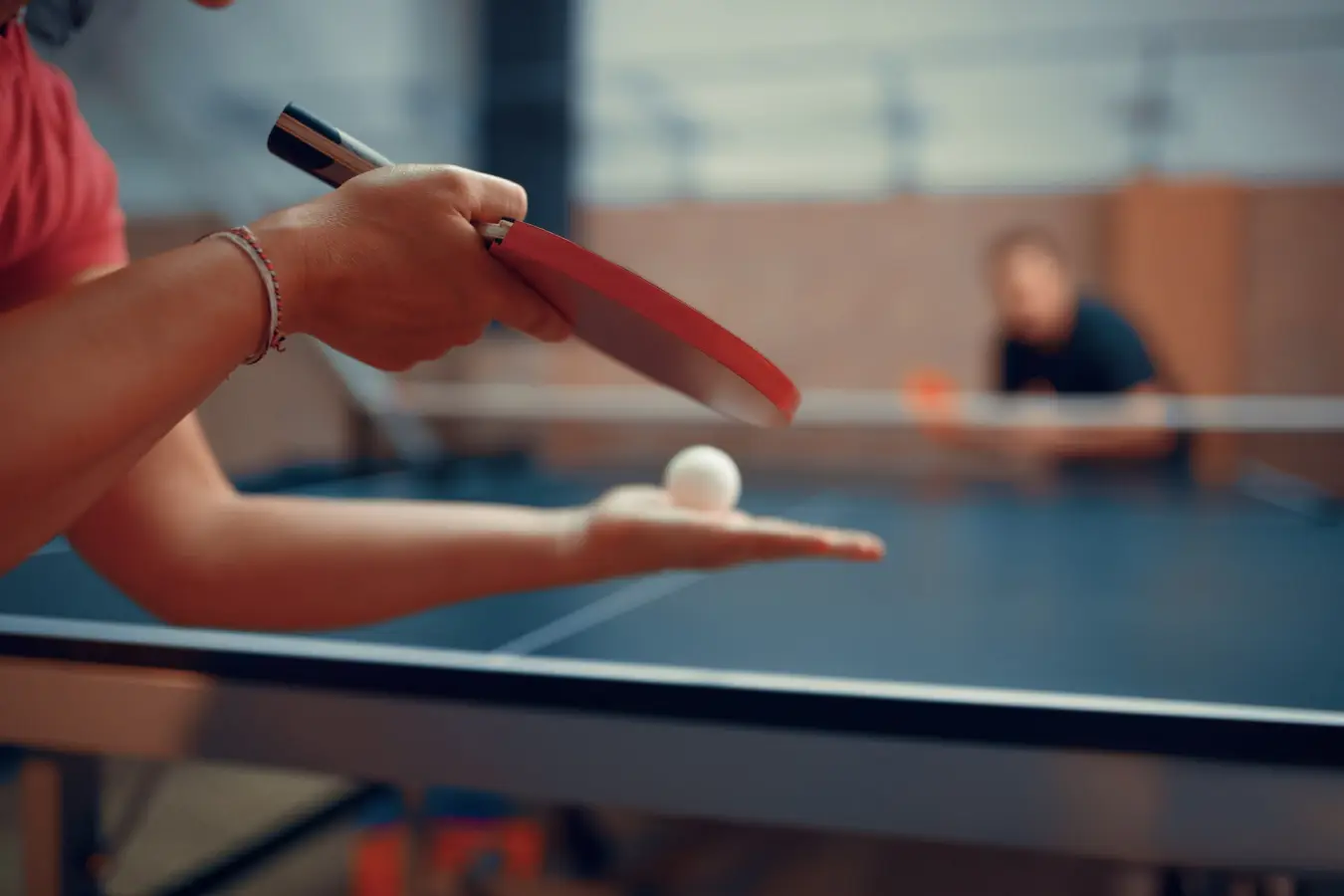
Have you ever wondered why table tennis, better known as ping-pong, attracts millions of players around the world? This lively sport, often played in family homes, schools and recreation centres, offers far more than simple entertainment. Table tennis began in the late 19th century as a parlour game among the British upper classes, and today it is recognised as an Olympic sport that demands speed, precision and strategy. Beyond being an excellent way to stay fit, table tennis sharpens reflexes, concentration and hand-eye coordination. In this blog post we will look at the history of table tennis, the basic rules of play, and how playing the game can benefit your health and social life. Finally, we will share a few tips to help beginners progress quickly in this exciting sport.
Table Tennis Rules
Table tennis, also known as ping-pong, is played on a rectangular table with a net across the middle. The aim is to win points by hitting the ball over the net onto the opponent’s side of the table. Players use bats covered in rubber to control the ball.
Core Rules
- Serve: The player must toss the ball at least 16 cm into the air and strike it so that it bounces on their own side of the table before crossing the net.
- Points: A point is won when the opponent fails to return the ball correctly, or when the ball does not land on the opponent’s side of the table.
- Games: A game is played to 11 points, and the player must win by a margin of at least two points.
- Net: If the ball touches the net during a serve, the serve is replayed.
Table and Net
- Table: The table measures 2.74 m in length, 1.525 m in width and 76 cm in height.
- Net: The net stands 15.25 cm high and stretches across the full width of the table.
Playing Techniques
Mastering the basic techniques is essential to developing your skills in table tennis. Focus on holding the bat correctly, moving around the table and striking the ball cleanly.
Holding the Bat
There are two main grips:
- Penhold: The bat is held like a pen, allowing quick wrist movements.
- Shakehand: Similar to a handshake, this grip offers better control and balance.
Basic Strokes
- Forehand: A stroke played from the dominant side of the body, used for attacking.
- Backhand: A stroke from the opposite side, providing control and defence.
- Smash: A powerful stroke used to finish off a rally.
- Spin: Adding rotation to the ball to create variety and confuse the opponent.
Movement and Positioning
- Stance: Knees slightly bent, weight on the balls of the feet, ready for quick movement.
- Footwork: Use small steps to move quickly into position along the table.
Tips for Beginners
Beginners often make mistakes that can be avoided with a few simple tips.
Good Practice
- Practise Your Serve: Spend time refining your serve, a key part of the game.
- Watch the Professionals: Study matches played by top players to understand their strategies.
- Set Goals: Set clear objectives for each training session so you can track your progress.
Common Mistakes
- Hitting Too Hard: Control your power to avoid sending the ball off the table.
- Poor Positioning: Always stay balanced and ready for the next shot.
- Incorrect Grip: Experiment with different grips to find better control.
Preparing for Competition
Taking part in competitions can be an excellent opportunity to test your skills and learn from other players.
- Mental Preparation: Build mental toughness so you can cope with pressure.
- Physical Readiness: Maintain your fitness through regular exercise and a healthy diet.
Advanced Tactics
Once you have mastered the basic techniques, you can begin to develop more advanced tactics.
Game Strategy
- Analyse Your Opponent: Track your opponent’s habits to anticipate their moves.
- Variety: Change the pace and spin of your strokes to unsettle your opponent.
Teamwork
In doubles, coordination and communication are key to success.
- Understanding Your Partner: Develop strategies that make the most of your partner’s strengths.
- Communication: Talk clearly during play to avoid misunderstandings.
Equipment Care
Looking after your equipment properly extends its lifespan and improves performance.
Cleaning Your Bat
- Rubber Surface: Clean the rubber regularly to keep it tacky.
- Handle: Keep the wooden handle dry to prevent damage.
Storing Balls
- Avoid Heat: Store balls in a cool, dry place to prevent them from deforming.
- Check for Damage: Inspect balls regularly for cracks or dents.
Conclusion
Table tennis is a dynamic sport that requires a combination of physical skill and mental strategy. Learning the basic rules and techniques, alongside regular practice, is the key to progress. Whether you are a beginner or an experienced player, there is always room to improve and enjoy the game.