
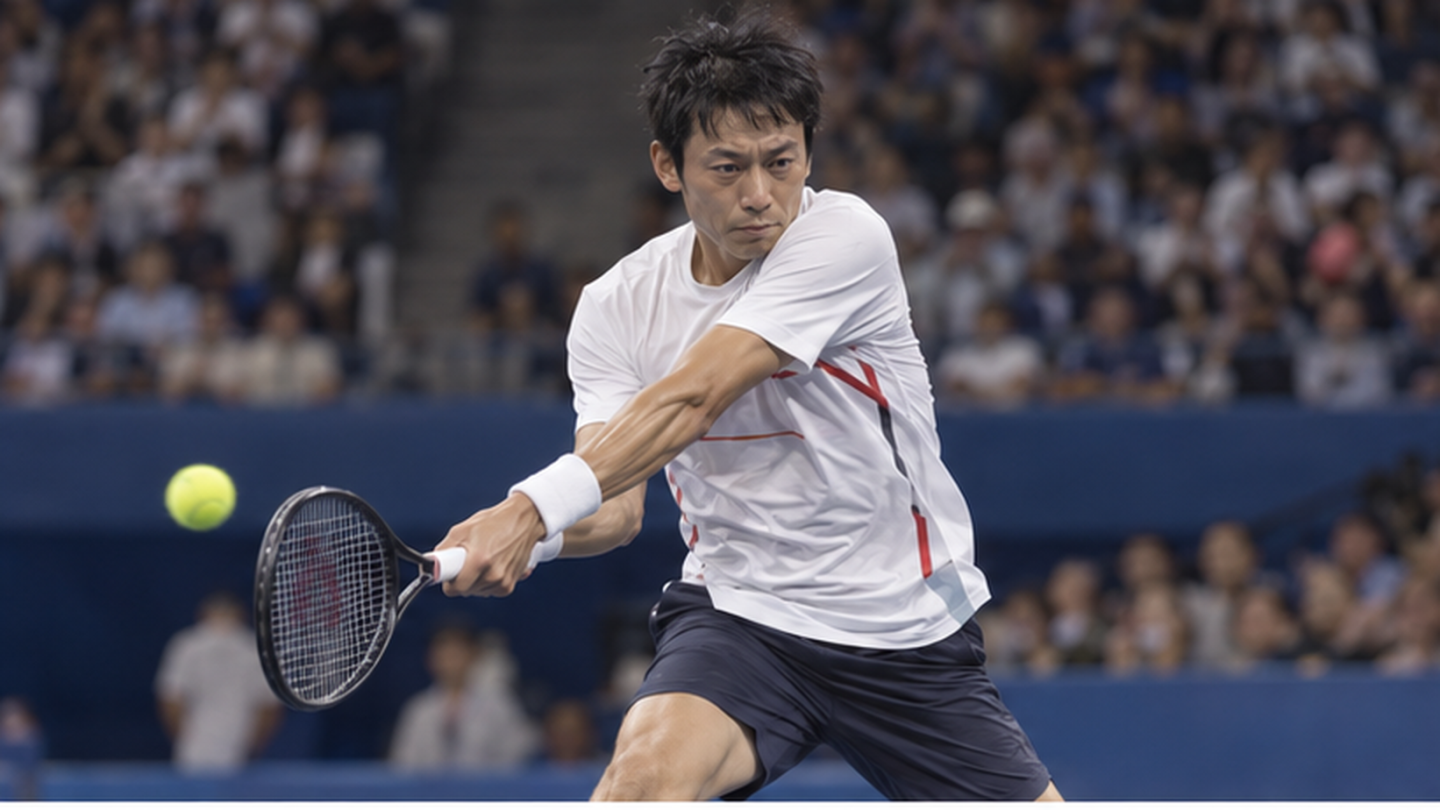
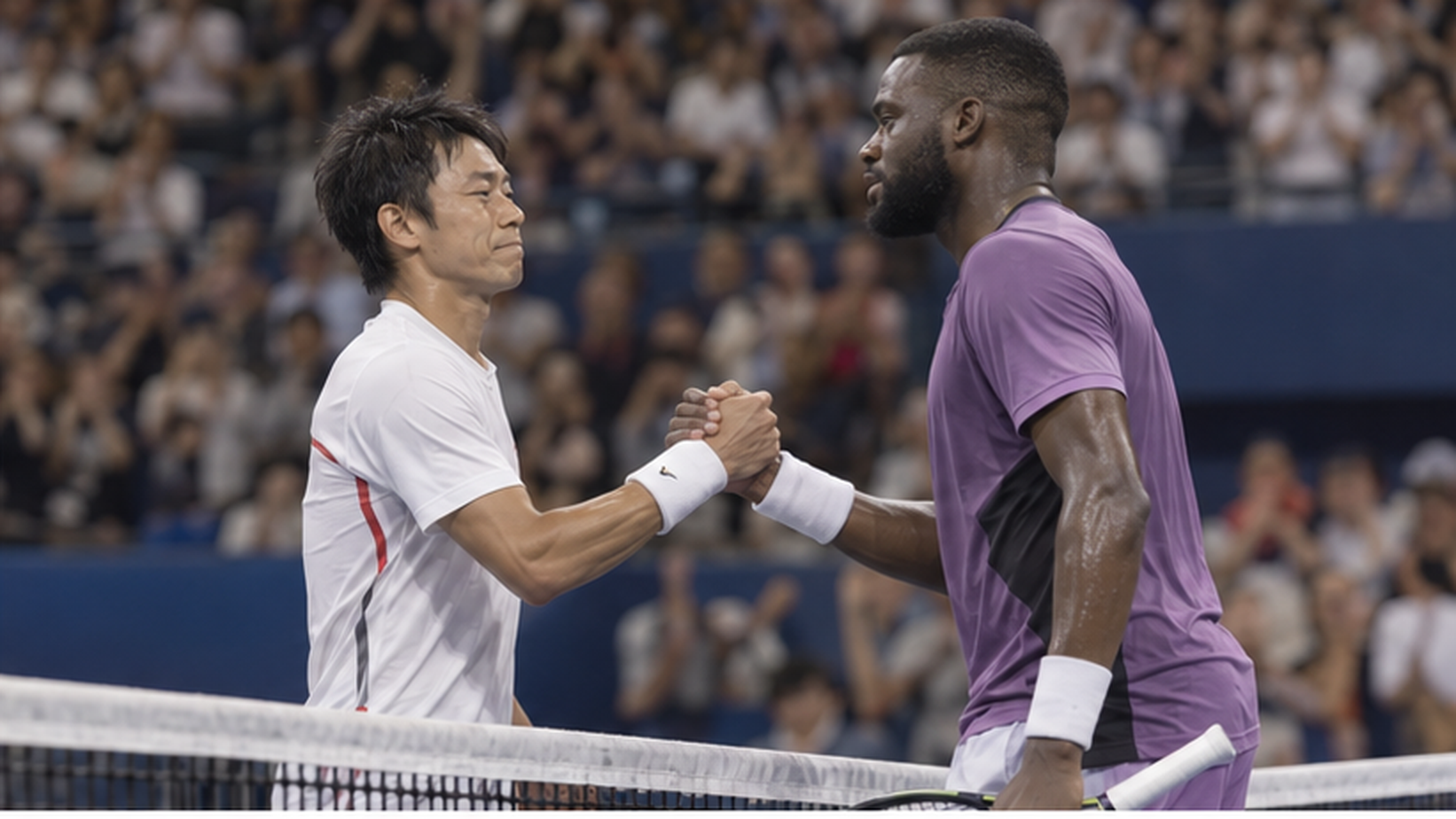
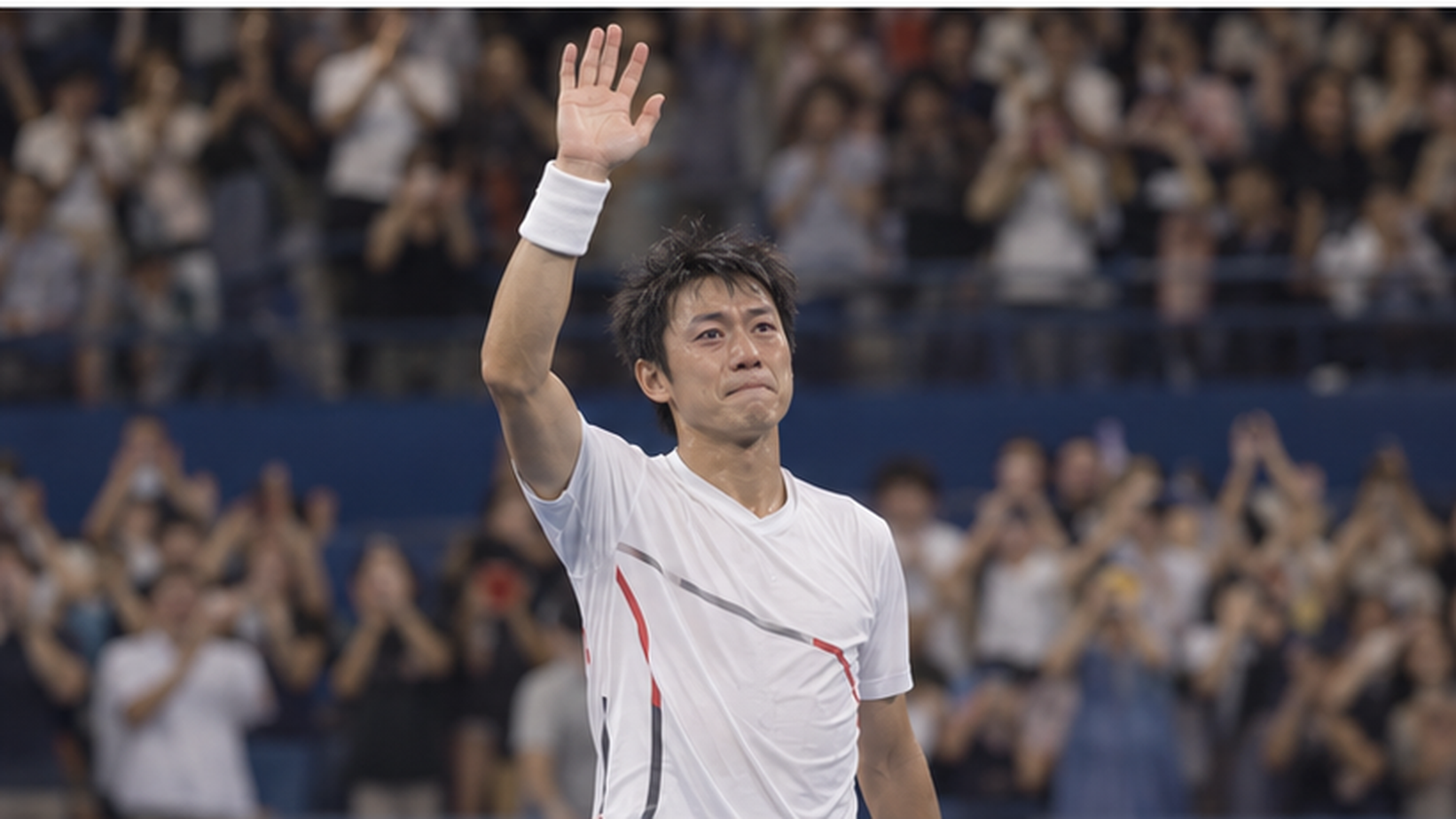
Kei Nishikori closed out his professional career with a 6:4, 6:4 loss to Frances Tiafoe in the first round of the Japan Open in Tokyo. The former world No. 4 chose his home tournament for his final appearance and received a farewell in front of a crowd that had followed him for almost two decades. The result did little to lessen the meaning of the evening. Nishikori finishes with 12 ATP titles, a US Open final and an Olympic bronze medal, making him the most successful Asian male player in the sport.
Tiafoe came into the match ranked eighth in the world and was not content to play the role of a guest at a ceremony. He served reliably, attacked short balls and broke once in each set to decide them. Nishikori showed his trademark early ball pickup and a few quick changes of direction, but he could not string together the run needed to turn the score around. The crowd still applauded every good point and stretched out the sense of farewell.
A career that changed the picture of Asian tennis
In 2014 Nishikori reached the US Open final after beating Novak Djokovic in the semi-final. It showed that a Japanese player could contend for the biggest trophy in an era of exceptionally strong competition. His success lifted interest in tennis across Asia and gave younger players a visible example. He never won a Grand Slam, but he kept reaching late stages and beating members of the Big Three.
Injuries were his greatest obstacle. His fast style, low stance and explosive changes of direction put heavy strain on his body, and long breaks interrupted his rhythm whenever he got close to the top. Nishikori rebuilt his ranking several times through smaller tournaments and qualifying events. The fact that he came back from surgery and won again at ATP level says something about a discipline that cannot be measured by trophies alone.
His bronze at the 2016 Rio Olympics holds a special place, since he beat Rafael Nadal in the bronze medal match. Representing Japan always carried extra weight, and Nishikori became one of the country’s most recognisable faces on the global sporting stage. Two titles in Tokyo tied his career even more closely to the home crowd, which made choosing this tournament for his last appearance deeply symbolic.
The farewell does not erase the competitor
Although he knew this was his final appearance, Nishikori tried to prepare for the match like any other professional commitment. The emotion was unavoidable all the same. A player has to focus on his serve and the next point while sensing that every change of ends is happening for the last time. That situation explains why farewell matches rarely offer a completely normal competitive rhythm.
Japanese tennis must now carry on without the player who for so long drew most of the attention. That opens space for a new generation, but it also shows how hard it will be to match his level. A legacy is not measured by whether a new No. 4 appears straight away, but by the number of children who start training and by the system that can support them. Nishikori can contribute his experience even if he does not take up a formal coaching role.
The loss to Tiafoe closed the statistical chapter of his career, but it did not reduce its reach. Nishikori combined speed, a precise backhand and the courage to play early against stronger rivals. He was a Grand Slam finalist in the toughest possible era and returned from injury more than once. Tokyo gave him a fitting end: a serious match, a strong opponent and a crowd that understood it was saying goodbye to Japan’s most important tennis player. The farewell ceremony lets Nishikori speak to the public without the pressure of a next match. For an athlete who spent two decades planning his life around tournaments, moving into a new routine may prove more demanding than the final defeat. Time will tell whether he chooses work with young players, an ambassadorial role or a quieter life away from the court. Whatever he decides, his career has already changed what Japanese and Asian tennis can expect.